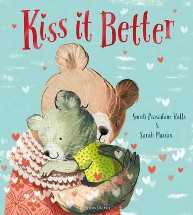
Ill. by Sarah Massini. Bloomsbury, 2016. ISBN 9781408845639
(Ages: 2-6) Recommended. This book is a joyous celebration of how
kisses can make everything better. It is filled with visual symbols
of love; there are hearts on every page and lots of physical
affection by way of hugs and kisses. The text tells and shows us all
the times when a kiss can heal ('when you're down in the dumps', 'if
you've scraped your knee') and of all the things that kisses can say
('I love you so much', 'can we be friends?', 'I'll miss you'). The
author gives different types of kisses fun names that children and
their parents will love adopting into their own vernacular; there
are be-brave kisses, cheer-up kisses and go-to-sleep kisses that
shout monsters, shoo! The warm, slightly retro illustrations have a
wonderful texture, particularly in the patterned clothing worn by
the animals, and their soft warmth helps to capture the comfort that
kisses can bring. The family of bears used in the illustrations add
to this feel with their rounded, soft and cuddly style. The rhyming
text flows beautifully in most places. It ends by reminding young
readers that 'sometimes grown-ups need kisses, too!' and that
'EVERYTHING feels better with the help of a kiss!' This is a joy to
read aloud and the illustrations are divine. It is an uplifting tale
with a simple message for young and old about how we have the
ability to comfort those we love with a kiss as well as being a
reminder to parents that the most important thing they can give to
their children is love. It also provides a vocabulary for parents to
help their children vocalise how they are feeling and what they need
to feel better.
Nicole Nelson
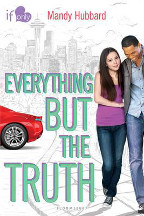
Everything but the truth by Mandy Hubbard
Bloomsbury, 2015. ISBN 9781619636606
(Age: 14+) Everything but the Truth is a novel that speaks
to the reader about the struggle between social status defined by
monetary wealth through the genres of romance and drama. This novel
by Mandy Hubbard is one in a collection of the 'If Only' line which
is a group of novels written by various authors containing the same
genres as 'Everything but the Truth'. Hubbard's novel focuses on a
teenage girl, Holly Mathews, whom has lived in a single parent
family for the majority of her life, often experiencing financial
hardship as her mother works to put them in a better monetary
situation. Holly's mother's efforts are successful when she is
employed by a very ritzy and expensive retirement home for the rich,
wealthy and luxurious, which places Holly in the perfect position to
meet the possible man of her dreams through his newly allocated
grandfather. Due to an unfortunate turn of events, Holly finds
herself in a situation where the truth about her may interfere with
the chance of romance she has stumbled into and her mother's new
job. Holly finds herself torn between doing what is best and doing
what is right. With collage around the corner and her life-long best
friend slowly becoming distant and her choice about the truth
becoming more and more urgent, Holly learns the importance of the
relationships in her life. Everything but the truth is a novel rich with moral decisions
and meaning as well as having a strong and relatable story in the
terms of financial wealth and social status. This book contains
romantic themes and may be suited to an older teenage audience (+14)
and lovers of romance and drama. Overall, this book provides a great
solution to any reader's cravings for the genres of romance and
drama in novels while still being strongly relatable and a hard book
to put down.
Sarah Filkin (University student)
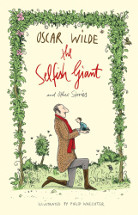
The Selfish Giant and Other Stories by Oscar Wilde
Ill. by Philip Waechter. Alma Classics, 2015. ISBN 9781847494979
Themes: Fairy tales, Moral stories. This is a collection of moral
tales that demonstrates Oscar Wilde's story-telling skills. The
stories remind us of the dangers of wealth; that generosity and
kindness are valuable attributes; that love and sacrifice are
beautiful, but not always recognised and valued. Many of the stories
are fairy tales in the sense that they have talking animals and
faraway kingdoms that interact with the characters in solving
unusual problems. The characters themselves display quirks of
behaviour that could only exist in a fairy tale. And there is not
always a positive 'happy-ever-after' ending, but often there is a
lesson that can be learned from the failings of the story
participants.
This is a reprinting of a selection of Wilde's early stories from
the late 1800s and consequently the language is fairly traditional
and is more ornately descriptive than contemporary writing styles.
Some younger readers may get lost in the descriptive detail and
language, but there is a glossary at the back of the book to
describe some of the terms used. At the end of the book there is
also some biographical detail (in detail appropriate for younger
readers), as well as a summary of each story. Simple line drawings
are sparsely scattered through the stories.
Young readers that enjoy the challenges of the intricacies and
sophistications of writing from the 19th Century will enjoy this
collection of stories.
Carolyn Hull
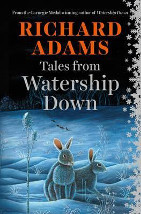
Tales from Watership Down by Richard Adams
Oneworld Modern Classics, 2015. ISBN 9781780747897
Originally published in 1996 to follow Watership Down these
stories successfully extend the experience for lovers of the
original rabbit novel. The later generations of rabbits are told the
stories of their heroic ancestors in fables which teach about
courage, loyalty and resilience in the face of great challenges and
danger. The book opens with rabbit legends, which would be very
suitable for reading aloud, followed by stories of rabbit adventures
featuring many of the characters from the original novel including
Bigwig, Hazel, Campion and Woundwort; even Kehaar the gull makes an
appearance. Some of the text seems a bit dated, the boy rabbits are
the protectors, they have all the daring adventures and get to do
the heroic deeds while the girls are helpful and sensible while
being a bit inscrutable; and the landscape is very English,
reminiscent of that inhabited by Peter Rabbit. However, for the
lovers of Watership Down, also recently re-published, this
book extends the experience and will be enjoyed by both adults and
middle school readers who don't want to let those characters go.
Sue Speck
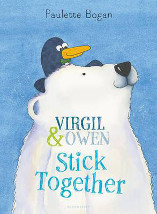
Virgil & Owen stick together by Paulette Bogan
Bloomsbury, 2016. ISBN 9781619633735
(Age: 4+) Recommended. Arctic, Polar Bears, Penguins, Friendship.
Following the successful introduction to this pair of friends,
Virgil & Owen (2014) comes this tale of their friendship as it
weathers a storm. Each of the friends is different. Virgil rushes to
school, eager to get there and not be late, while Owen takes his
time, dawdling along, counting snowballs and writing his name in the
snow. When Owen stops to tell a story to the other animals crowded
at his feet, Virgil finishes the story quickly, eager to get going
again. But then Owen remembers his lunch and takes out his sandwich
to eat. Virgil takes the food from him, and Owen suddenly growls,
making Virgil fall back and he finds he is covered with snow. Owen
drags him out and stands him up, apologising for tipping Virgil into
the snow, while Virgil apologises for making him go so quickly. The
two friends resolve to go slowly to school and remain friends.
This is a neatly resolved story of two friends coming to some
agreement after a sudden difference of opinion. It will resonate
with younger readers, many of whom will have experienced minor
disagreements with friends and acquaintances, and know that a
resolution is always possible.
The lovely illustrations enhance the tale and readers will love the
images of Virgil and Owen as they go about their daily routine.
And children will learn the things that they will do at school,
eating lunch, learning to write their name and learning numbers, as
well as having stories told to them. A perfect introduction for
young children about the delights of going to school.
Fran Knight
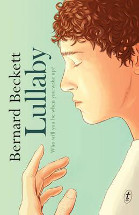
Lullaby by Bernard Beckett
Text Publishing, 2015. ISBN 9781922182753
(Ages: 12+) Highly recommended. Beckett always has an interesting
story to tell, as shown by the success of Genesis and August,
stories which challenged the reader's moral compass with scientific
and philosophical questions. Lullaby raises concerns about
medical research and psychological testing. Rene's twin brother Theo
lies unconscious in hospital with severe brain damage after a freak
accident. Over the next 24 hours, Rene is considering saving his
brother by participating in a new and experimental medical
procedure, which is being promoted by a surgeon but cautioned about
by a psychologist. Both professionals must attest to Rene's
suitability for the surgery.
While considering whether to consent, Rene reveals to the reader and
to the psychologist details of his family background, including the
loss of his parents and the relationship he has had with his
brother. Cleverly structured in this way, we learn much about the
two boys' different talents, ambitions and rivalries. The title may
suggest otherwise but this is a challenging, thought provoking and
disturbing read, set in the not too distant future when such
extraordinary decisions may be asked of us!
A highly recommended book, Lullaby is an intelligent story;
its themes inviting immediate responses, and which remain with the
reader long after reading.
Julie Wells
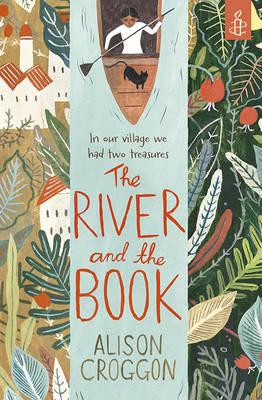
The River and the Book by Alison Croggon
Walker Books, 2015. ISBN 9781925081725
(Age: 10+) Alison Croggon is the author of the highly regarded Black Spring, and The Books of Pellinor. She is also a poet
and opera librettist. This story is a fable for our times,
beautifully written and resounding with messages that relate to the
way of the world in past and present times. Here is a village set on
a fertile riverbank, midway between mountains and a floodplain. The
village has a traditional 'Keeper' of a Book which gives the village
its identity and which can predict change. One day, a foreign
visitor comes to the village, endears herself to the villagers, in
particular, Simbala the latest Keeper, and manages to steal the
precious Book from them. It is Simbala who takes the blame and who
sets out to return this treasured item to the village. It is a quest
which takes many years; she knows too that times have greatly
changed and wonders if the book she eventually finds will come 'back
to life' for her people. The story is an analogy for colonialism and
reveals what can happen when there is often a total disregard for a
people's culture, and for the natural environment, all for the sake
of development. The River and the Book has been endorsed by
Amnesty International as contributing to a better understanding of
human rights and values.
The story is spellbinding and the character of Simbala is a delight
to heed and observe as she journeys on her determined path. In a
beautifully poetic style, the language is intoxicating and recalls
the storytellers of past ages. Katie Harnett's superb black and
white brushstrokes illustrate the beginnings of each chapter and her
coloured cover art is most attractive.
Julie Wells
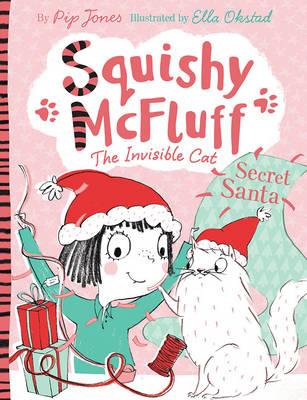
Squishy McFluff, the Invisible Cat: Secret Santa by Pip Jones
Squishy McFluff, the Invisible Cat: Secret Santa by Pip Jones
Ill. by Ellie Okstad. Faber and Faber, 2015. ISBN 9780571302567
Squishy McFluff is so sweet, you'll be smitten.
Such a clever and funny invisible kitten!
Imagine the fun of having a cat that only you can see, especially
when it is really good at inventing great things to do like playing
hide-and-seek at which he is world champion. This is Ava's luck. She
has a big imagination and is happiest when she's playing with her
cat, even though it can lead to trouble - which is exactly what
happens in this latest addition to this series.
It's nearly Christmas and Ava and Squishy are very excited. But
there are still preparations to be made, like buying the last minute
things which means going into town where all is decorations and
celebrations. The trouble begins when Ava spots the wonky star at
the top of the Christmas tree. The next day it is time to wrap the
presents and when Mum says to wrap EVERYTHING, she is taken at her
word. For someone who was trying to be good through all of December,
this might not have a pretty ending for Ava, but she has one special
thing she wants so she writes Santa a letter.
Young children will love this series from this English author as it
holds many laughs and just a little bit of naughty. Written in rhyme
it bounces along and Ella Okstad's limited-palette illustrations are
charming, capturing the essence of the text perfectly.
For those who can't get enough of him, there's a website with extra
information and more fun and games at http://squishymcfluff.com/
This is something a little bit different to offer those just getting
started on their independent reading journey who need a bit of
support through short chapters, larger font and uncomplicated
vocabulary - I think they will be eagerly awaiting the next
adventure. Perfect for putting aside for this year's Christmas
Countdown.
Barbara Braxton
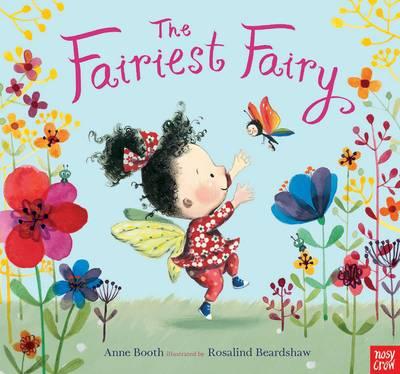
The fairiest fairy by Anna Booth
Ill. by Rosalind Beardshaw. Nosy Crow, 2015. ISBN 9780857633156
(Age: Pre-school - Yr 2) Betty was a fairy who just never got things
right,
She was always in a muddle though she tried with all her might.
No matter what Betty tried to do at fairy school, she just couldn't
get herself sorted. Even her wand was tied on with elastic so she
wouldn't lose it! And her first attempts at spells did not have the
desired results. She can't scatter dewdrops or wake up the flowers
or paint rainbows and she is terribly upset. But Betty has something
else - she has compassion and empathy and as she wends her way
through the book many of nature's gentle creatures are thankful for
what she offers.
So when it is time for the Fairy Ball, Betty is disconsolate for she
knows she will not be chosen as the fairiest fairy until.
This is a charming story - that focuses on friendship, persistence,
resilience and individuality in a setting that will definitely
appeal to most very young girls. Betty could become a role model as
she refuses to give up, putting the needs of others first when she
could be practising. Booth has chosen to write the story in rhyme so
it has that rhythm that little ones like and Beardshaw's gentle,
bright illustrations are a delightful accompaniment.
Given the continued popularity of stories about fairies that never
seems to wane as each new class of preschoolers and Kindy kids comes
to the library, this will be a popular addition to the New-For-You
display at the beginning of term.
Barbara Braxton
Illuminae by Amie Kaufman and Jay Kristoff
The Illuminae Files bk 1. Allen & Unwin, 2015. ISBN
9781760113803
(Age: 14+) Recommended. Science fiction. In the distant future of
2575, at the edge of the universe is a tiny, freezing planet known
as Kerenza IV, where a secret mining colony live in relative peace.
Then one day, a giant warship appears out of the sky and fires on
the colony without warning, killing countless civilians and
prompting a full evacuation.
Kady and her ex-boyfriend Ezra barely escape alive onto the rescue
fleet, and that's just the start of their problems. With the warship
still chasing them down, a mysterious illness spreading among the
survivors, the rescue ship's artificial intelligence beginning to
wreak havoc, and a possible conspiracy among their ship's command
crew, Kady and Ezra will have to work together to uncover the truth.
One of the best facets of Illuminae is its rich, engaging
world. The story is told through the unusual form of compiled 'real'
documents such as interviews, private journals, emails, and so on.
In the wrong hands this style could have easily felt out-of-place or
gimmicky, but here it adds another layer of realism that draws the
reader in even further.
Another highlight is the characters; they are multifaceted and
likeable, but still have realistic flaws, and both Ezra and Kady are
very enjoyable to read about. However, since the book is told mostly
in third-person perspective 'documents', it's not as easy to relate
to Kady and Ezra as it would be if it were a straightforward novel
told in first-person.
Similarly, although Illuminae is fascinating because of how
it is told - through interviews and the like - this also makes the
story lose some of its immediacy. Take for example the opening
interview where Kady is discussing her escape from Kerenza IV; while
interesting, it lacks the excitement that having it described in
present tense would generate - precisely because the reader already
knows that Kady is alive to tell the tale, and thus any sense of
danger during the scene is lost. Much of the novel is like this, but
it's a small price to pay for such an intriguing story. Illuminae is a page-turning, fascinating adventure of a
novel.
Rebecca Adams (university student)
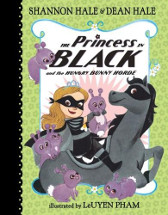
The Princess in Black and the hungry bunny horde by Shannon Hale and Dean Hale
Ill. by LeUyen Pham. The Princess in Black, bk 3. Candlewick
Press, 2016. ISBN 9780763665135
(Age: 6+) Highly recommended. Princess Magnolia is off to have
brunch with her friend Princess Sneezewort, when her glitter-stone
ring rings and she is summoned to fight monsters as the Princess in
Black. But when she and her unicorn Frimplepants, who turns into
Blackie her horse, arrive at the goat meadow they find cute little
rabbits nibbling on the grass. Even though Duff the Goat boy warns
her that they are monsters, the Princess in Black thinks that the
rabbits are really little darlings. Blackie her horse is not so sure
of their innocence, especially when they start eating the princess's
sceptre, and has to use his power to understand what the rabbits are
saying and help save the day.
This is the third in the series and is just as good as the previous
ones, The princess in black, and The princess in black
and the perfect princess party. The contrast of an endearing
princess who looks adorable dressed in sparkly pink and her bold
endeavours as a superhero dressed in black is one that is sure to
appeal to young readers. The idea that she can be comfortable both
in pink and black, taking on two demanding roles, is a sure-fire
winner. The cute little bunnies are so well drawn that they appeal
to the reader as well as to the Princess in Black, and it is a good
thing that Blackie can speak the rabbits' cute language and warn the
princess of danger.
I love the Princess in Black stories. I adore the humour,
the whimsical illustrations and best of all, my six year old
granddaughter loves them too! They are ideal for children who are
just starting to become independent readers, with short chapters,
names that can be remembered like Frimplepants and Princess
Sneezewort, and charming characters and funny plots.
The combination of humorous prose, an engaging plot and wonderful
illustrations is a winning one.
Pat Pledger
This Broken Wondrous World by Jon Skovron
Man Made Boy bk 2. Allen & Unwin, 2015. ISBN:
9781743315972
(Age: 15+) After getting attacked by a myriad of monsters, taking
down a psychotic artificial intelligence unit, and basically saving
New York, seventeen-year-old Boy - the son of Frankenstein's monster
- is looking for some downtime. With the advice of his father, Boy
goes to live in Switzerland with the human descendants of Dr
Frankenstein, hoping to attend college and live a normal life - or
at least as normal as you can get for the child of a literal
monster.
What he doesn't expect is to be contacted by the infamous Dr Moreau
- long ago banished to a secret island - and asked to fight
alongside his fellow monsters to help overthrow the human race. With
a violent war escalating and Moreau's forces growing stronger, Boy
will have to decide which side he's on - before it's too late.
Whereas Man Made Boy drew obvious inspiration from the works
of Mary Shelley with Boy's character, in This Broken Wondrous
World there is a noticeable H. G. Wells influence. As well as
the characters of the Invisible Man and Doctor Moreau,
the story itself reads vaguely like a Wells novel, from the
descriptions of fearsome monsters, to the sense that it is much more
of a character study than an action novel, as one might expect.
While this does make it an intriguing read since the story focuses
on the son of Frankenstein's monster, it is also one of its major
flaws.
The character of Boy, while an interesting protagonist, is never
really well developed or flawed enough for him to be relatable on a
deeper level, and since the story is told through his perspective,
it makes for an occasionally slow read. This is most noticeable in
the first part of the book where he is living in Switzerland and
attending college, which drags slightly despite it being quite well
written. It is only when Dr Moreau actually appears in the story -
almost halfway through the book - that the story really picks up the
pace and becomes a truly engaging read. This Broken Wondrous World is an enjoyable, if ultimately
flawed read.
Rebecca Adams (university student)
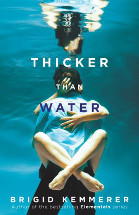
Thicker than water by Brigid Kemmerer
Allen & Unwin, 2015. ISBN 9781743318638
(Age: 14+) Recommended. Mystery. Paranormal. Thomas Bellweather's
mother has been murdered and he is the prime suspect. His new
stepfather, Stan, is a cop and his colleagues are very suspicious of
him. The only person who is prepared to believe in his innocence is
Charlotte Rooker, whose three brothers are cops. Her best friend had
been murdered many years before and she wants answers to both of the
murders.
Written in alternating chapters with the voice of Thomas and
Charlotte, the reader gets to know both of the characters very well.
Thomas is a damaged boy and gradually the author, who has a great
capacity to describe male protagonists, lets us know what his life
has been like. It is not difficult to become supportive of him as
his voice seems so honest and his love for his mother very real.
Charlotte is very protected by her three brothers, but she is strong
enough to form her own opinions about Thomas and his involvement in
the murder. The romance takes second place to the tension that the
mystery generates, but it will satisfy those who enjoy a romantic
touch in their reading. Stan, Thomas' new stepfather, is also a
well-developed character and the reader can sympathise with his
actions as he tries to come to terms with his changed family
circumstances.
Kemmerer ramps up the suspense in this exciting thriller with a
touch of the paranormal that is very surprising. There is a lot of
excitement, some shocks and an ending that the reader won't expect.
It is a gripping mystery and leaves the reader wanting to know more
about the characters and hope for a continuation of Thomas and
Charlotte's story.
Pat Pledger
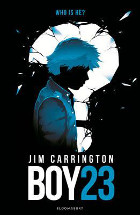
Boy 23 by Jim Carrington
Bloomsbury, 2015. ISBN 9781408822777
(Age: YA) Highly recommended. Themes: Science Fiction; Survival;
Adventure. This is a story with a mystery that does not get fully
revealed until right at the end, involving a naive boy with no name,
who lives in isolation. His existence is supported by The Voice with
whom he has no physical contact. From the beginning of the book we
are part of Boy23's release from captivity. Blindfolded and
abandoned with only a few basic items, he needs to survive and to
escape from those who are desperate to recapture him. The Voice
becomes his only means of support until he meets Carina in the
religious Children's home where he has found temporary refuge. His
unusual physicality leads to suggestions of a miracle.
The book is told with alternating voices - with the Boy, The Voice
and Carina each telling the story from their perspective, with the
past revealed through dream sequences or reflections of what has
gone before. This is an alternate world, with influences of World
War II Nazi occupation and a post-apocalyptic disaster combining to
create a place in time and history that is unique, but non-specific.
The language of the community is German, but Boy23 has been taught
English by The Voice. Carina is bi-lingual and her own painful past
gives her a reason to support the remarkably gifted Boy in his
escape from powerful opposition.
This is wonderfully exciting book, a mystery adventure that will
captivate a Young adult audience. The German language spoken by
characters within the book is not translated and we get a feel for
the confusion of the Young boy as he seeks to understand what is
happening around him. (Students of German will enjoy using their
language skills to add an extra layer of meaning. It is not
necessary to translate, as the story becomes self-explanatory, and
we make meaning from context.) There is some violence as part of the
action of the book and a sexual assault is alluded to, but no detail
given. Young readers will be captivated by the excitement of the
escape attempt.
Highly recommended for YA.
Carolyn Hull
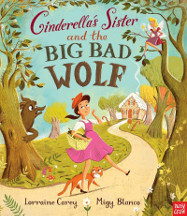
Cinderella's sister and the big bad wolf by Lorraine Carey
Ill. by Migy Blanco. Nosy Crow, 2015. ISBN 9780857633132
Once upon a time (although quite recently in this version),
Cinderella lived with her stepmother Mrs Ugly and her three
stepsisters. But this isn't a traditional or even a flipped story
about Cinderella. It's about the youngest Ugly sister, Gertie.
Unlike her mother and sisters who lived up to their name, Gertie was
kind and gentle and very hard-working. While Cinderella lazed around
and did nothing, Gertie did all the chores of the original story.
Gertie's niceness was the cause of great shame and despair in the
Ugly family and so she was hidden away not allowed to go anywhere
with them. So when an invitation comes to attend the Grand Ball,
there is no question of Gertie going - unless she can prove that she
can be bad and mean. But to be bad and mean will take lessons so she
is sent to the Wicked Queen who is on her way to deliver a poisoned
apple to Snow White. Unable to help herself, just as Snow White is
about to accept the apple, Gertie warns her that it is poisoned. The
Wicked Queen is furious and immediately sends Gertie home to her
very angry mother. Gertie's pleas for a second chance see her
protecting Hansel and Gretel from the Wicked Witch and again, sent
home in disgrace. It is not until she meets the Big Bad Wolf who is
determined to eat Little Red Riding Hood that her chances of going
to the ball improve.
This is an hilarious twist on a range of familiar fairytales with a
most delicious ending. The bright, trendy illustrations bring it
into the 21st century and into the world of today's young reader.
They will delight in revisiting characters they've already met and
seeing a whole new side of the Cinderella they know and love.
Apart from being fun to read for its own sake, this would be an
ideal story to use as part of an investigation into perspective
because not only is the story told from a different character's
point of view, bringing it into modern times offers a range of new
possibilities too. Thus it will have a broader appeal than just the
very young who are fairytale fans.
Barbara Braxton