Bodley Head, 2015. ISBN: 9781782300533
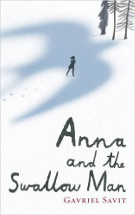
(Age: 12+) Highly recommended. Anna and the Swallow Man
tells of the heartbreaking search of a little girl for meaning after
her father, a professor of linguistics, disappears in Poland nearing
the end of 1939. The country is in turmoil and bears and wolves are
everywhere, determined to maintain control of the nation while
Germany's forces expand. The story centres on Anna, whose life is
about to change forever. A little girl with nothing more to lose,
and everything to gain.
Having been left in the care of a German shopkeeper, Anna expects
her father to return at any moment. When he doesn't return, Herr
Doktor Fuchsmann refuses to have her in his shop any longer. Ever
the good girl, Anna respects his wishes, waiting outside of the
shop. Instead of her father appearing, Anna is approached by a tall,
slender man in fine clothes and a red neck tie. Curious about her,
he begins asking her questions, switching from language to language,
unaware that she can understand them all. United by their
multi-lingual talents, Anna follows the man out of town; hence, her
new life begins.
Life is hard. Days are spent walking, foraging and avoiding patrols.
Like her father, the Swallow Man is incredibly knowledgeable. He
teaches her about the birds in the wetlands and how to be deceptive.
He shows her how to get what she wants, what she needs, from people
without ever having to ask. He teaches her how to survive. He has
become everything to her. A friend. A mentor. A father. But can he
maintain such a relationship when even her real father could not?
Like her Swallow Man, she must do all that she can to stay alive,
never to give in.
Already, this novel has been said to sit together with The Book
Thief and The Boy in the Stripped Pyjamas. I would
highly recommend it to all readers above twelve. While being set
among very real events, the story possesses qualities of magical
realism and enough intrigue to keep a reader guessing.
Kayla Gaskell (age 19)
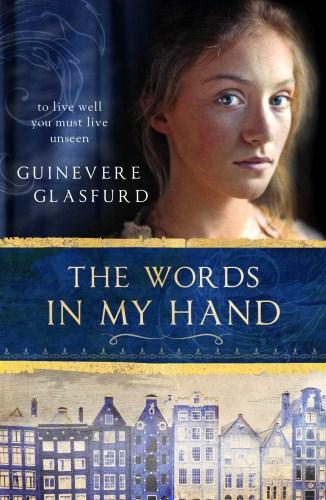
The words in my hand by Guinevere Glasfurd
Two Roads, 2016. ISBN 9781473617865
(Age: 14+) Recommended. The Words in my Hand is an
interesting historical fiction about Dutch maid, Helena Jans, and
her time with the philosopher, Descartes. At the time however,
Descartes lived a life of danger, continuing to write and publish
against the wishes of the church. Because of this, their affair had
to be suppressed, least the church seize the sin and campaign
against him.
The story follows Helena and her journey to her first placement as a
maid, in the house of Mr. Sergeant. The only one willing to have a
literate maid, Mr. Sergeant decides to test Helena's literacy by
offering her a quill and ink and instructing her to write. Finding
her severely lacking after their first session, Mr. Sergeant
dismisses her and leaves her to the usual duties of a maid.
Determined to better her writing, Helena hoards old quills and boils
beetroot to make ink, for paper, she used her body, scrawling words
by night, and covering them by day. Despite the hard work, she lived
a comfortable life . . . until Descartes arrived. Their affair began
innocently enough with conversation, but quickly progressed. She
first became his student, leaning to write and perform arithmetic in
secret. She learned of science, of French, and of love. But for
Descartes, she was all alone in the world and her life would never
be the same again.
This is the story of a scandal and of the imagined life of Helena
Jans, pieced together through a variety of records. Glasford works
hard to make her Helena a real and believable character who most
women could relate to. Unfortunately some of the French in this
novel goes untranslated, and so might challenge readers, however I
would still recommend this novel for girls aged fourteen and up with
an interest in philosophy and history.
Kayla Gaskell (University student)
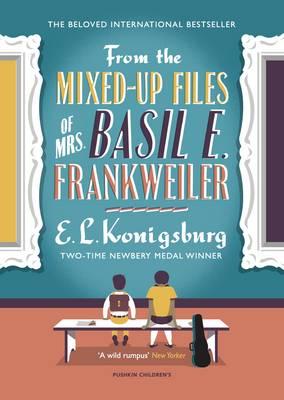
From the mixed-up files of Mrs Basil E. Frankweiler by E. L. Konigsburg
Faber Factory, 2015. ISBN 9781782690719
Mrs Basil E. Frankweiler wishes to change her will and is writing to
her lawyer Saxenberg to explain her changes and the reasons for
them. To make things perfectly clear, she then writes the story of
Claudia and James Kincaid, two children from Greenwich who are never
going to enjoy the sort of wealth she has but who cross her path
after a series of intriguing adventures.
Claudia is tired of being the eldest of four and decides she will
run away to make her parents take more notice of her and she chooses
her middle brother Jamie to go with her, not only because she likes
him the best but he is the one with the money - mostly gained from
cheating at a card game with his school mates. They complemented
each other perfectly. She was cautious about everything but money;
he was adventurous about everything but money. Deciding that hiding
in plain sight is probably the best option Claudia chooses the
Metropolitan Museum of Art in New York and armed with $28.61 they
set off on their life changing adventure.
All goes well for them until Claudia is struck by the mystery
surrounding a new statue that is drawing huge crowds to the Museum.
Is it really by Michelangelo? Determined to solve the mystery while
still maintaining their daily routines like putting on clean
underwear, Claudia and Jamie have to use all their wits,
intelligence and money-sense to remain undiscovered until Claudia
decides to visit the statue's previous owner Mrs Basil E.
Frankweiler, a somewhat eccentric old lady who seems to understand
both children very well.
Originally published in 1967, it won the Newbery Medal the following
year for the most distinguished contribution to American literature
for children and has become a modern classic for independent
readers. Not only that, the Museum gets so many questions about the
book that they have devoted a whole issue of the Museum Kids
newsletter to it; there is a movie made of it and the Internet is
sprinkled with lesson plans, reviews and other guides. Regardless of
perhaps appearing to be a little old-fashioned for today's readers,
nevertheless it is an engaging story that those who are ready for
and wanting a solid read. I'm glad I left it till I had time to give
it its due.
Barbara Braxton
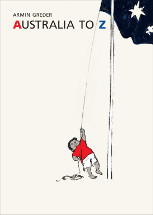
Australia to Z by Armin Greder
Allen & Unwin, 2016. ISBN 9781760113186
(Age: Yr 5 +) Australia to Z is Armin Greder at his
uncompromising, most confronting best. From the creator who brought
us The Island which really turned a spotlight on our
treatment of newcomers, comes this totally different alphabetical
look at Australia which is just perfect for getting students to have
a look at what it means to be Australian. While 'soft'
investigations focus on icons, anthems, heroes and food, Australia
to Z takes a much tougher look starting with the A for
Aborigine looking out and seeing a First Fleet ship on the
horizon to the deliberately juxtaposed B for Boat People
showing more recent arrivals.
This is political commentary brought into the lives of children so
they need to think and investigate. Why has Greder chosen 'calories'
for C, 'Ikea' for I, and 'Rupert' for R? But there are flashes of
humour to lighten it too, with K being for the kangaroo that springs
from nowhere in the night to take out the front of your car, and the
ominously raised finger of the umpire for O for Out! And finally,
there is Z for Zoo but the illustration is not what you would expect
- but is perhaps the most poignant of all. This really is Australia
under the microscope as the title page image suggests.
The choices make us think about how others see us, and with Greder
being a Swiss immigrant, his perception may be sharper than others.
But the inclusion of Advance Australia Fair almost as an
appendix is a masterstroke - how different are the words we sing to
the life we live?
Often in an 'alphabet book' the illustrations are more important
than the text itself, but in this one the two are interdependent.
Yes the text is biting but it is the powerful illustrations that
accompany it that add the extra punch. Why are Rupert's eyes blank?
What does the picture of the Digger represent? With bold black
strokes and a minimal palette, each image says all it needs to say
and leaves a lasting impression long after the page has been turned.
Working in a highly multicultural school which has a significant
population of children who come to learn English for the first time
so they can work comfortably in their neighbourhood schools later,
it never ceases to amaze me how these kids get along and understand
each other so well without a common language let alone skin colour.
There are many quotes and memes online that state "Children are not
born racist - they learn to hate" and that is certainly my
experience. Using Australia to Z in a focus on identity and
belonging would be a most powerful way to raise issues, investigate
and discuss them because knowledge leads to understanding,
understanding leads to tolerance and tolerance leads to acceptance.
Maybe this year's Year 5 and 6 students will be a turning point as
they create their own with the theme "what could be" . . .
Barbara Braxton
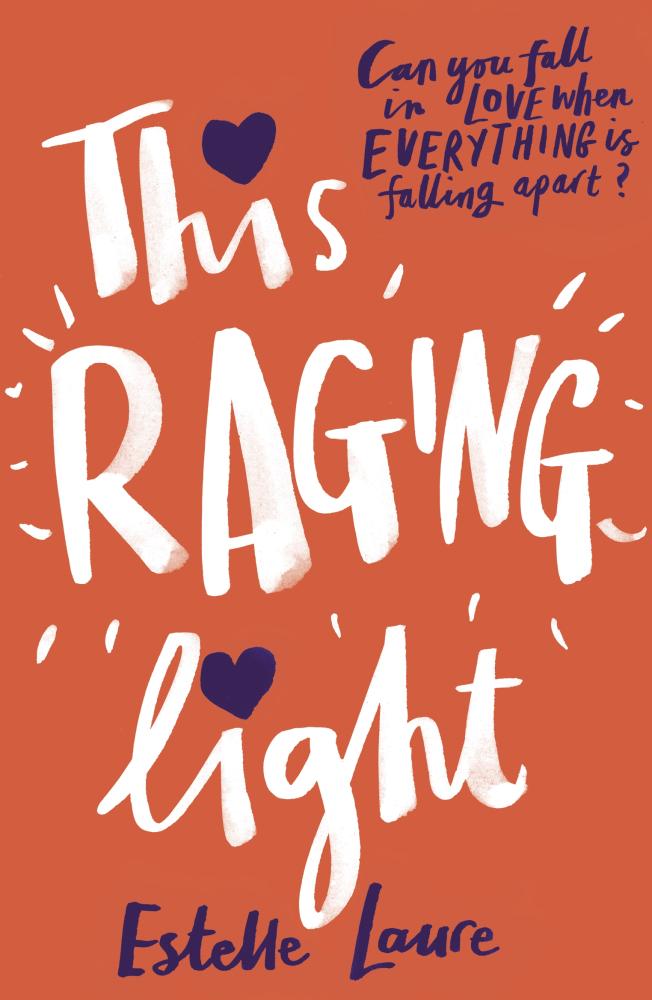
This raging light by Estelle Laure
Orchard Books, 2015. ISBN 9781408340271
(Ages 14+) Recommended. Mild coarse language. "How is it
that one day Digby was just my best friends twin brother and then
the next he stole air, gave me jitters, and twisted my insides up?"
(Publisher). Dad's gone, mum's missing, bills to pay and there is
Wren to look after. Now in my senior year everything is happening.
There are mysterious Angels delivering gifts to the house, gifts
Wren and I greatly need and I have no clue who is giving them to us.
Digby has a girlfriend but I can't stop thinking about him or having
feelings for him.
When I started this novel it was hard. The writing style was
confusing and difficult to keep track of, but after a few chapters I
realised that is exactly what it is like inside the mind of teenage
girl's mind who is in love and in a hopeless situation and after
that it was really amazing to read. Halfway through and towards the
end it is just one big crazy roller coaster. I really wanted to know
who the 'Angels' were and wanted to know why they were helping
Lucille and Wren when Lucille hadn't told anyone other than her
friends about what was happening. At the end I was emotional but a
bit confused, but definitely a recommended book.
Cecilia Richards
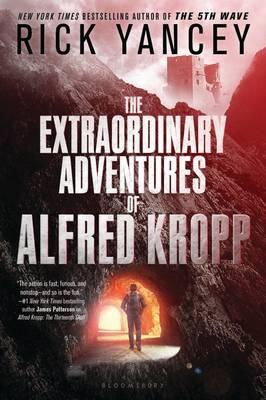
The extraordinary adventures of Alfred Kropp by Rick Yancey
Bloomsbury, 2015. ISBN 9781619639164
(Age: 13+) Highly recommended. This book is a really great read. It
is a delightful mix of fantasy, adventure and action.
The story is told by Alfred Kropp. Alfred is in High School and
likes to read or listen to music in his room at home. Because he is
very tall with a large head (and the nick name 'Frankenstein'), it
is very noticeable that he doesn't fit in at school or on the
football field. He has a really good heart, and despairs of the many
ways he can find to be a 'screw up'.
Life had not been kind to Alfred in his first fifteen years, and the
reader feels compassion and empathy for him as he is convinced by
his Uncle Farrell to take part in a scheme to repatriate the famous
sword Excalibur. This is the beginning of an adventure that involves
knights, monks, fabulously expensive fast cars, helicopters, sword
fights and violence.
The book is a powerful exploration of good versus evil.
The last knight, Bennacio, finds hidden depths in Alfred, and the
reader discovers Alfred is not just very funny, but well up to the
challenge of saving the world. Bennacio tells Alfred: 'No battle was
ever won, no great deed accomplished, by wallowing in guilt and
regret.' Time and again throughout the story it is evident that no
matter how well you 'screw up' there is the opportunity for
redemption and atonement.
The characters in the story are compelled to discover what they hold
dear, to be true to themselves - and to make a stand. There are many
defining moments for Alfred that contribute to the inevitability of
his final stand.
Originally published in 2005, this book has two sequels: Alfred
Kropp: The Seal of Solomon and Alfred Kropp: The
Thirteenth Skull.
Linda Guthrie
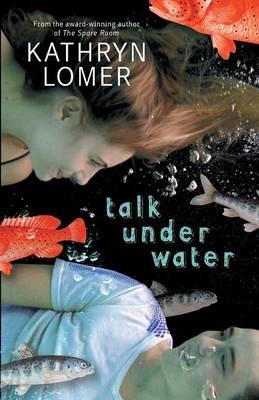
Talk under water by Kathryn Lomer
University of Queensland Press, 2015. ISBN 9780702253690
(Age: Teens) Recommended. Will and Summer meet online and strike
up a friendship based on coincidence. Summer lives in Will's old
hometown, Kettering, a small Tasmanian coastal community. Both
Will and Summer are missing a parent and needing a friend.
Summer isn't telling the whole truth about herself, but figures it
doesn't matter if they never see each other in person, right? When
Will returns to Kettering, the two finally meet and Summer can no
longer hide her secret. Can Summer and Will still find a way to be
friends? (Publisher)
Witnessing Will and Summer meet for the first time in person was
certainly not what I had anticipated at all, although it was very
entertaining. The blossoming rollercoaster relationship between Will
and Summer was incredibly beautiful and so sweetly unique; how much
Will was doing for Summer by learning sign language and Summer being
able to open herself up to someone about her father.
Both characters were beautifully created and continued to develop in
a realistic manner whereas many books rush the character
development. Will and Summer caused the readers to feel their
emotions, but not exaggerated emotions; realistic emotions.
The storyline was one that I have not seen before but it was very
interesting and adventurous as it was mostly based around the
Tasmanian coast. The cover gives the reader almost a sense of wonder
through Will and Summer being underwater but also the sea creatures
added to create that feeling of being underwater.
I also adored how the author incorporated the explanations of some
sign language words, it got me trying them out myself; plus the sign
language alphabet at the back of the book has me very intrigued!
I would recommend this book to readers 16+ who love a book that will
make you think and allow you to not only to discover a whole new
language but also to witness what online meetings can turn into when
you meet in person - the person isn't always as they seem.
Jemma Hadley (Student)
Monkey business by Leslie Margolis
Annabelle Unleashed series. Bloomsbury, 2015. ISBN 9781619637993
(Age: 10 - 12) Recommended. Themes: Girls Fiction, Friendship,
Fundraising, Music Festivals. Annabelle's life is undergoing some
significant changes; her family's moved to a new home, her mother is
about to have a new baby and one of her best friends Rachel is
acting strangely.
During their first sleepover at Annabelle's house, the girls hear
about the Panda Parade an upcoming music concert starring all their
favourite singers and groups. Claire, Emma, Rachel, Yumi and
Annabelle decide they all want to go, unfortunately, the concert is
in a town two hours away and the tickets are expensive. The girls'
parents decide they must all find $150 each to pay for their weekend
away.
After several failed attempts - lemonade stands and car washes,
creative friend Claire comes up with a brilliant plan involving
sewing, socks, buttons and ribbons. Agreeing on a work plan is
difficult when Rachel is always disagreeing and putting Annabelle
down. Surprisingly, their sock-monkey enterprise takes off and keeps
them busy both at school and home. When it's time for Annabelle's
twelfth birthday party, not everything goes to plan and Rachel has a
part to play in the disaster. Preteen life definitely has its ups
and downs, but both friends and family are there for Annabelle.
Author Leslie Margolis realistically portrays the fun and dramas of
Annabelle's life, her friendships, Oliver her first boyfriend,
school life and family relationships. Teamwork, resilience,
listening and supporting friends are important values explored here.
Rhyllis Bignell
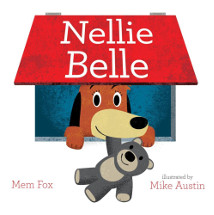
Nellie Belle by Mem Fox
Ill. by Mike Austin. Scholastic, 2016. ISBN 9781760274108
(Age: 3+) Recommended. Rhyming song, Animals, Safety. With
repetition on each quartet of pages, kids will have great fun
answering the questions Nellie Belle is asked. At first she is asked
if it is fun in the yard. She is illustrated looming large on the
first page, her bear in her teeth, amongst the flowers and dirt
which she digs. But there is a hole in the fence and she is shown
looking through it.
The next pages take us out into the street, where a similar
questions is asked. Is it fun in the street? as she meets and greets
many she sees. But she spies a sign pointing her to the beach, so
the readers will know that the next pages will involve the beach and
sure enough, she is asked if it is fun at the beach.
Prediction and repetition are the order of the day as the dog,
Nellie Belle fills her time in the yard, the street, the beach and
in the sea. Readers will love following the animal through her
adventures, and take joy in being able to predict what might happen
next. And the next four pages are a surprise as the pages are
becoming a little darker and she finds herself in the park with eyes
staring at her. The readers will love being just a little concerned
for Nellie Belle but really enjoy the warm snuggly feeling at the
end of the book.
I loved reading this out loud, following the repetition and rhyme of
the lines, watching the detail Austin gives to each page, adding to
the storyline. The humourous touches, leaving teddy by the hole dug
in the garden, the hole in the fence, the sign to the sea, the
meeting with the seal, the eyes in the dark and then retracing her
steps back to her house and bed, will not be lost on the audience as
they read. They will take delight in recognising the sorts of things
met in the garden, street, beach, sea and park, and adults will be
able to lead later discussions into thoughts about being safe.
Fran Knight
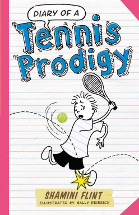
Diary of a Tennis Prodigy by Shamini Flint
Ill. by Sally Heinrich. Allen and Unwin, 2016. ISBN 9781760290887
(Age 6+) Recommended. Themes: Tennis; Humour; Family. Marcus is in
turmoil. His father, a writer of motivational books, has found him a
new sport to in which to become a success. (Other books by Shamini
Flint in this series demonstrate that this is sport #9). Marcus
however is very aware that sport is not his strength, but he takes
on tennis lessons because he really doesn't have a choice.
(Fortunately Marcus mother is able to give advice, even though his
father seems blind to Marcus' frustrations.) Marcus is successful at
proving that he is not the next Roger Federer! He is able to use his
Father's own motivational inspiration to sidestep the impossible
route to Tennis stardom!
This series is much loved by younger readers for its humour, and
they will enjoy this latest addition to the Diary series. They will
also love Sally Heinrich's quirky illustrations of the hapless
Marcus and his misadventures on the tennis court. 'Game, Set &
Match' to Flint and Heinrich. Flint has targeted the young reader
who is avoiding large blocks of text, but still enjoys the
opportunity to read a humourous story. Much of the story is told
within speech bubbles, so the young reader is learning to read the
visual text of the cartoon genre.
Recommended for independent readers aged 6+.
Carolyn Hull
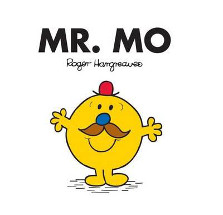
Mr. Mo by Roger Hargreaves
Mr. Men series. Penguin, 2015. ISBN 9781409389057
(Age: 3-6) Recommended. Mr. Mo is the nicest gentleman in all of
Dillydale; he's helpful and kind to all the townsfolk. He always
speaks truthfully: 'No Mr. Tickle your fish was not that long!' He
reminds Mr. Greedy that 'a gentleman puts more into life - than he
takes out.' On the first of November, Mr. Mo visits the barber just
to have his moustache trimmed. Unfortunately, he's so relaxed he
falls asleep and his whiskers are all gone and his manners have
disappeared as well.
His friends are surprised by the change in his behaviour. He slams
Mr Nosey's nose in the baker's door, he spreads mud on Mr. Perfect's
clean floors and is rude about Little Miss Splendid's hat. Luckily,
as his moustache grow back, his manners also reappear.
Mr. Mo friends surprise him at the end of Movember when they become
the Mo Bros!
Twenty percent of every Mr. Mo book sold helps support men's health
issues around the world. This easy to read story has an important
message and opens up conversations about healthy bodies and healthy
minds, both male and female.
Rhyllis Bignell
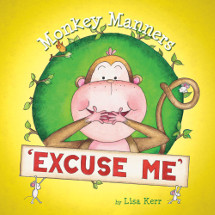
Excuse me by Lisa Kerr
(Age: 3-5) Five Mile Press IBN 9781760069780 Board book. Another in the Cheeky Monkey Manners
series, sees Cheeky Monkey learning when to use 'Excuse me'. When he
really wants to go to the park and he can't get his mother's
attention, Mr Owl suggests that he just says 'Excuse me' and perhaps
his mother will listen to him. And it works! While he was at the
park, he keeps doing things like bumping into his friends on the
slide or sneezing on their faces and his friends say 'Excuse you,
Cheeky Monkey'. It takes his friends a few reminders before Cheeky
Monkey finally remembers to say 'Excuse me' after a big burp.
The examples given in the story are a fun way for young children to
learn how to say Excuse me and when it is appropriate to use the
phrase. All the examples are ones that they would be familiar with:
a trip to the park, sliding down the slippery dip, playing in the
sandpit and sneezing at the sand, and listening to stories.
The five page spread is just long enough for the young child
listening to the story to get the message and not be bored and the
colourful illustrations add lots of humour to the narrative.
This series is an effective and fun way for parents and teachers to
re-inforce good manners.
Pat Pledger
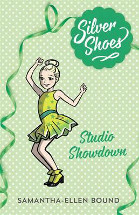
Studio showdown by Samantha-Ellen Bound
Silver Shoes series, bk 8. Random House Australia, 2016. ISBN
9780857989093
(Age: 9+) Recommended for young female readers. Themes: Dance;
Friendship; Conflict resolution. The young girls in this book love
to dance - they are passionate about it. Their lives revolve around
dance classes, learning new dance styles and learning how to get
along with their dance school friends. Paige is the focus in this
book, as she prepares for a Ballroom competition with her dance
partner, Benji. At the same time the Dance studio begins to prepare
for a major Dance Performance, and Paige and her best friend are
asked to choreograph a routine for younger students. Unfortunately
they don't communicate well and the friendship shows signs of
fracture in a 'Studio showdown'.
This book will be enjoyed by girls aged 9+. Book 1 in the series has
the girls as 10 year olds, but by this book (#8) we are beginning to
see them express romantic interests. The resolution of issues
amongst friends is gentle and unsophisticated.
A brief explanation at the end of the book describes the Dance style
- Jive.
Carolyn Hull
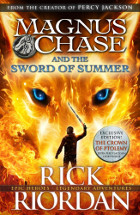
Magnus Chase and the Sword of Summer by Rick Riordan
Penguin, Random House; 2015. ISBN 9780141342429
(Age: YA) Recommended. Themes: Norse Mythology; Adventure;
Overcoming obstacles; Bravery. Rick Riordan takes the reader on an
adventure into Norse mythology with the character Magnus Chase.
Magnus is a young teen who is living a miserable existence -
homeless and orphaned in horrifying circumstances, when he becomes
caught up in an adventure into the world of mythology. His life of
adversity and endurance on the streets prepares him for the journey
into the world of the dead, with dwarfs, giants, Valkyries and other
mythological figures. He becomes a key to prevent significant
disaster from overtaking all in the alternative worlds of Norse
afterlife.
This is an amazing and magical adventure/quest story. Rick Riordan
has mastered the genre of mythological adventure. Young readers who
began the journey of discovery of Mythology with Percy Jackson will
be delighted that there is another area of mythology to explore in
this latest mystery exploration. Riordan writes with humorous
moments scattered through the text, and even weaves current cultural
references (eg a Powerpoint presentation by a Norse god) into the
alternate worlds. Essentially though this is an engaging and
exciting quest adventure, requiring the central character to display
great bravery as he faces extreme opposition with the help of a few
faithful side-kicks, all of whom are unlikely heroes, but display
their worth as they support Magnus, the reluctant hero.
This book is quite a lengthy tome, and is well crafted. It is worth
recommending to YA readers who like this style of
magically-influenced fantasy. It is exciting and entertaining even
for an adult reader, but will be most enjoyed by fantasy lovers, who
also enjoy discovering aspects of mythology from other cultures.
There is another book in the series due in 2016.
Carolyn Hull
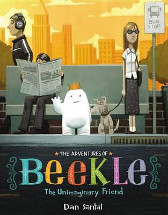
The adventures of Beekle by Dan Santat
Hachette, 2016. ISBN 9780734416834
(Age: 4+) Recommended. Inclusivity, Imaginary friends, Friendship,
Patience, Courage. On the island where imaginary friends are
created, one such friend is waiting. Others are taken up by their
new friends and go away to be with them, but not so this fellow.
He decides that he should do something about his predicament,
something totally unexpected, something unimaginable. He goes to
hunt out a friend himself.
He wanders through the city streets noticing something about the
city which he does not like. People do not talk to each other,
people pass others on the street not noticing them at all. He spies
another imaginary friend and follows it to a place where children
and their imaginary friends are playing. He waits for his friends
but no one comes. He sits in a tree and eventually something
wonderful does happen.
This lovely story of finding a friend, of finding someone just like
you, someone who shares your interests, games and passions, will
have wide appeal to everyone in the class. It not only speaks to
those with an imaginary friend, but those with friends of all sorts.
Some may not be like themselves, others may be just like them, but
all are friends who share interests. It is only when this imaginary
friend finds his partner that he also finds his name, Beekle.
The digital illustrations by award winning artist, Dan Santat, are
most entertaining. Children will find lots to keep them interested
and alert to nuances of meaning. I enjoyed the pictures of the
children and their imaginary friends doing things together and I
particularly liked the layered meaning of the word 'imaginary' which
will lead onto discussions about words.
The author won the Caldecott Medal, 2015 for this book.
Fran Knight