Brother and sister, Isaac and Ivy Ramey take drugs for different reasons. The novel begins with the overdose of one, made ambiguous by their similar names. The teenagers’ respective backstories flesh out the plot throughout the rest of the book but the reader’s apprehension is palpable knowing one will not make it.
The other two main characters are the actual drugs they take, who are personified as Gods inhabiting a whole endless nightclub party/underworld where opioids are embodied youthful gods marking potential addicts for their sport and scoring higher as they groom victims. Roxy is Oxycodone (Isaac’s pain relief) and Addison is really Adderall (Ivy’s meth-based medication to treat her ADHD).
When not at school, training or hanging out, the human siblings find themselves in need of the medications more and more and eventually progress to the VIP room where the ‘Gods’ introduce them to harder drugs. Other drugs make their presence felt. e.g. Naloxone cares for users who overdose. Alongside the main plot are interludes from other drug addicts as the natural conversational tone of the drug (gods) demonstrate what they do and how they make their humans feel. Thus this novel potentially emphasizes the opioid crisis without glamourising it. Roxy lures Isaac away from his old life but we also see her salve his grandmother’s pain after an injury. These passages show the benefits of these medicines for palliative and mental health.
The authors sustain the illusion of chemical compounds as Gods operating in a different plane as does British author Neil Gaiman in his fantasy novel, American Gods (2001). Rick Riordan’s Percy Jackson series was also transferred to screen using this same device.
Should this powerful yet confronting novel find a home in a secondary school library? Given the authors warn that some readers may find it cathartic and intense, it could still be criticized as gratuitous even in the appropriate seniors M15+ shelves.
Themes YA, Realistic Fantasy, Mythology, Drug Abuse, Addiction, Brothers and Sisters, High School, Misfits and Underdogs.
Deborah Robins
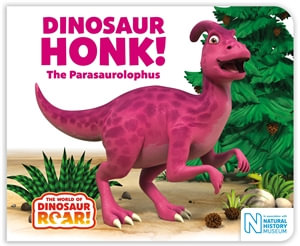
Dinosaur Honk! The Parasaurolophus by Peter Curtis
Dinosaur Honk! is another in the very popular The World of Dinosaur Roar! series and features the Parasaurolophus, a dinosaur that makes a honking sound like a goose. Dinosaur Honk loves to make a noise, waking up everyone and even making the rainforest floor shake. But sometimes she warns others of danger approaching and even uses her honk as a signal to start races between the dinosaurs.
Told as a rhyming story, Dinosaur Honk is a fun read aloud and fans of the series will recognise other characters like Dinosaur Boo, Dinosaur Whizz, Dinosaur Flap and Dinosaur Thud. Written in association with the Natural History Museum, the young reader will learn about the Parasaurolophus, especially from the double page spread at the back of the books which gives interesting facts about the dinosaur and then asks the reader to go back and find the features in the book. A helpful pronunciation guide is also given, and little children will love learning this new word. Bright and colourful illustrations are a feature of this series and Dinosaur Honk has a particularly appealing smiling face.
Another addition to a fascinating series will be eagerly read by pre-schoolers.
Themes Dinosaurs.
Pat Pledger
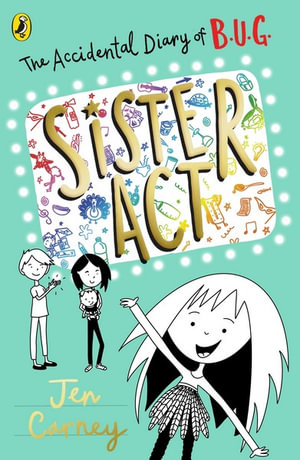
The Accidental Diary of B.U.G. Sister act by Jen Carney
The Accidental Diary of B.U.G. Sister Act is the third immensely funny diary of Billie Upton Green, written by Jen Carny. This fresh and modern book will have many readers in stitches of laughter. Written in a similar style to Tom Gates, by Liz Pichon, this novel will undoubtedly have everyone wanting to read Billie’s memoirs again and again, as they LOL!
Billie is bubbly, vivacious and a true lover of biscuits! Throw in her pure honesty and humour and she is instantly loveable. Her secret diaries share wishes, worries and words in the funniest way possible. If you haven’t read her other diaries, don’t worry because you can jump right in with this one! Right from the start you will feel like you known Billie forever. However, there are definitely no secrets to her, and at times the reader may get to know more than they actually bargained for!
Sister Act sees Billie desperately wanting her new sister to come and live with her and her two mums, but the whole process isn’t as quick as she would like! Then there is her Great Gran who didn’t even know she had an adopted sister, and of course Billie thinks she needs to meet her! All of this craziness is happening, and on top of that Billie has big ideas about the school musical, which has to be the best ever! How will Billie ever cope with waiting for her sibling, what will happen when Great Gran finally meets her unknown sister, and will Billie get to be a part of the school musical and make everyone proud?
Jen Carvey has written and illustrated a highly entertaining novel that will be loved by many. The quirky, doodle style images throughout are brilliant, and genuinely add to the hilarity of the story. This extremely fast paced ‘talk a mile a minute’ novel will keep you entertained and page turning to find out more about what Billie could possibly be thinking next. Carvey has written a highly relatable, modern and inclusive novel that will appeal to anyone who loves a great laugh.
Themes Relationships, Problem solving, Rights and Responsibilities.
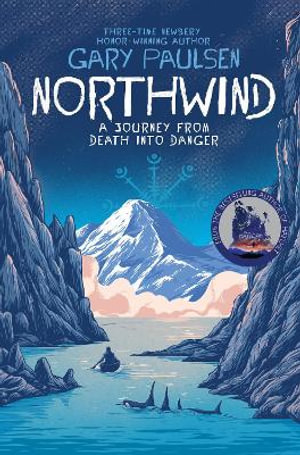
As Northwind unfolds, the sheer intimacy and power of the description of the wilds of the far, far north alerts the reader to the notion that this book is written by one who knows. And so it is. Paulsen, Newbery Honour prize winner, beloved author of the Hatchet series and over 200 other books of which over 35 million copies have been sold worldwide, died recently - in October 2021. This adds poignancy to reviewing his last book.
Northwind, published early in 2022, exemplifies his finest writing. Indeed, at the age of 82, Paulsen knew how to evoke the northern natural world, the nature of life, endurance, survival and death and the workings of the heart and mind of a remarkable teenage boy called Leif. And how did Paulsen know ... the reader knows that no-one could write with such authority without experience. Young readers would benefit from researching Paulsen's life. He has lived his books. He has survived in the wild as a teenager. He has learnt to make his own clothes, build his own shelter and catch his own food. He owned a ranch in Alaska, he sailed the Pacific and he enjoyed dogsledding. He is a role model for self reliance, resourcefulness and endurance. These skills and attitudes emerge in his characters. Leif in Northwind is an inspiring example.
Set back in time, the story follows Leif, an orphan boy who has endured a cruelly, spartan life aboard sailing ships and amongst hardened men. A sinister disease kills everybody he knows, including a young boy who he tenderly tries to save. He is terribly ill himself but survives - this being the first of a number of rugged challenges that he overcomes throughout the narrative. An older sailor who had shown him kindness gives him basic tools and tells him to take a cedar canoe, go north and never look back. Thus begins an adventure that addresses starvation, living off the land and sea, battling the elements, bear attacks and many other fearsome challenges.
Written in the third person, the narrative describes Leif's journey. At times the reader is privy to Leif's thoughts which reveal a growing understanding of the purpose and nature of life and death. The writing moves with the beat of the heart; it moves powerfully in tune with the movement of the northern current and the chop of the oars. With strength and courage, Leif battles through awe-inspiring landscapes of fjords, islands, rugged coastlines, crashing waters, icebergs and ocean. A distinct feel of Norse mythology permeates his thoughts and his world. He finds solutions, he takes on terrifying challenges and as he learns he moves from being an outsider to being 'of' the place.
In an author's note at the end of the book, Paulsen explains how Northwind grew out of his own life. A captivating adventure story, Northwind needs to be placed in the hands of young people so that they can experience the wisdom, courage, fortitude combined with tender-heartedness and fine morality that flows from the pen of the outdoors man and author Gary Paulsen into his characters. Leif is the kind of role model that young people hunger for.
A highly recommended coming-of-age adventure/survival story.
Themes Survival in the northern wilderness, Norse mythology, Historical adventure, Life and death.
Wendy Jeffrey
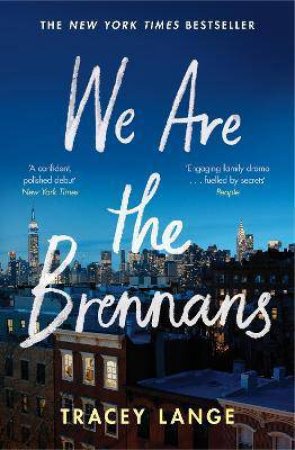
We are the Brennans by Tracey Lange
Pan Macmillan, 2021. ISBN: 9781529094459. (Age:15+)
This narrative draws the reader deeply into the lives of the Brennan family, based in the modern world of New York City, where all of the children spent their childhood. Right from the start we realise that this family has many secrets and the individual members of the family continue to hold those secrets close to their heart. They do care for each other, but they also feel a sense of the need to share the secrets with some of the family while hiding them from others. When one parent leaves them, the family feels divided and that rift bears down on each member, engendering drastic change for them all. Yet, with their shared Irish heritage in mind, each member feels the emotional need to come back to some kind of unity, even though each member carries the burden of untold events of the past. The family is traumatised by the the combination of loyalty and interest, tinged with the fear of others discovering secrets that they cannot bear to reveal.
As the ties of loyalty and dedication have caused issues over the years, so it is clear that they must now reach out to support Sunday Brennan, when she agrees to return to New York after a highly traumatic event that she experienced in Los Angeles. In her need to seek shelter within her family, her expectation of their support begins to draw the family together. It becomes evident that even though they are not used to revealing aspects of their lives to family members, the realisation of the way in which the divide has traumatised the family at last begins to change the way they feel and interact. Tracey Lange enables us to begin to grasp the individual members’ feelings of fear in the need to reveal what has happened in their lives, and so we perceive a developing sense of connectedness, imbued with the dawning awareness of developing love and care for each other.
This story is placed vividly in the modern world that Lange describes as she exposes how there are so many hurdles in this world that interfere with maintaining strong family unity and love. This novel would be most suitable for adolescent readers, as the issues are appropriate for older readers.
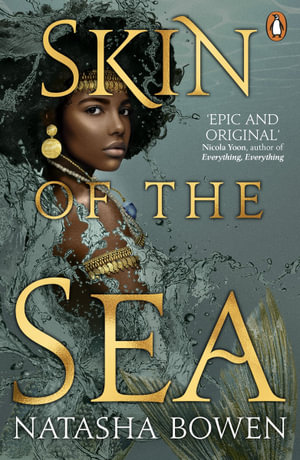
High Fantasy buffs will unwittingly discover this historical fantasy since these Gods, mermaids and creatures from Nigerian mythology are largely unknown to many readers.
Set off the coast of West Africa in the 15th century, soon after the Portuguese colonial slave trade began in earnest, Simidele (Simi), one of the newest Mami Wata (Mermaids created and commanded by the Osira, Yemoja) makes a serious mistake. A young man, Kola, is cast into the sea in irons but he is still alive. Unprepared for a living human, Simi intervenes to save him from death by drowning - overstepping the instructions of her Osira to simply harvest the souls of abducted Africans who have perished.
The quest which follows attempts to undo the harmful affront to the supreme being, Oldamere, and is geographically if not temporally epic. Kola has his own to navigate and the two team up to save their nearest and dearest (Kola’s twin siblings on whom the fate of his homeland depends) and ultimately their respective realms. Love may be burgeoning but the gods decree it an impossible one. Will Simi, Kola, Salif, Yinka and Issa find the sacred rings and will Taiwo and Kehinde unharmed?
Without a sociogram or hierarchy, readers rapidly decipher who is who, regardless. From powerful Osira’s like Yemoja, Olokun, Osun, Osanyin, Orif and Esu with their respective roles assigned to them by the God, Olodumare; to intermediaries like the local Babalawo. Add in Yumboes or Bakhna Rakhna (fairies), mythical creatures including; Ninki Nanka, Mami Wata, Abada or the Sasabonsam (hyena people) and be transported in the manner of high fantasy. Which mythical creature will be your favourite?
There’s an official trailer but for all the background information to this compelling new series watch Natasha Bowen’s conversation with best-selling author Nicola Yoon.
Simi is not only the black mermaid vying for representation in literature but she teaches us so much more. It’s a history lesson to show that there was a rich black culture, knowledge and history eons before slavery.
Simply, Bowen has created a bold new heroine for modern children of all cultures as she couldn’t see herself in the tantalizing Disney mermaids, as a child. A powerful YA debut infused with west African mythology, the Skin of the Sea series should excite fans of Namina Forna, author of The Gilded Ones.
Themes YA, Epic Fantasy, Mythology - West African/Nigerian, Mermaids, Black Representation.
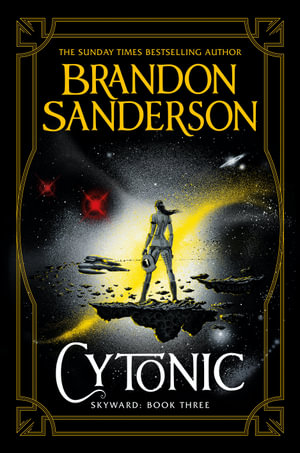
The Skyward series continues with an action-packed third instalment, Cytonic. Pilot and understated action hero Spensa Nightshade (call sign Spin) has just fled a political coup in which she was framed for murder, into a portal called ‘Nowhere’. Along with her once-spaceship-now-drone, M-Bot, Spensa enters Nowhere and discovers a land of many fragments surrounding a brilliant sun, called the Lightburst.
Spensa meets Chet Starfinder, a human pilot like herself who has been in Nowhere for almost 200 years. Together, they travel through the dangerous, pirate-ridden and fragmented lands, hoping to find the information and help Spensa needs to return to her home planet of Detritus and continue the fight against the aliens determined to exterminate what is left of humanity. However, she finds that the longer she remains in Nowhere, the less important those desires become. Gradually, Spensa begins to lose all sense of time and to forget why she entered Nowhere in the first place…
Cytonic continues everything that is positive about the Skyward series: striking world-building, intricate plotting and a large cast of interesting characters. However, there does seem to be more character building than is necessary for the third novel of a four book series. Some of the action too seems to be almost repeating what has happened in the previous books, just with different settings and protagonists. The overall impression left is that Cytonic is a ‘filler’ book before what will surely be a spectacular conclusion to the series in the last novel. Nevertheless, fans of the series will greatly enjoy Sanderson’s newest offering. The Skyward series is recommended for adults and young adults alike.
Themes Science Fiction, Adventure, Space, Aliens, War, Friendship.
Rose Tabeni
Rebellion of the lost by Amie Kaufman and Ryan Graudin
The World Between Blinks bk 2. HarperCollins, 2022. ISBN: 9781460757635. (Age:9-13) Recommended.
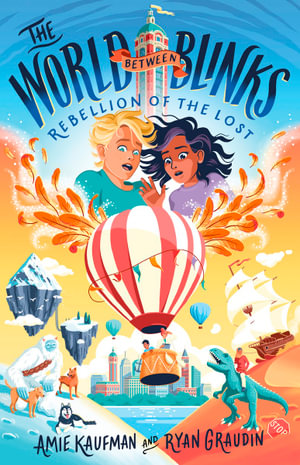
The World Between Blinks: Rebellion of the Lost is the second in Amie Kaufman and Ryan Graudin’s young adult and pre-teen fantasy adventure series.
The story begins with a report of the previous book, The World Between Blinks, then immediately launches into action. It has been six months since the return of cousins Marisol and Jake to their normal lives. Marisol is home with her family in Bolivia and Jake is in Australia. They keep in touch via FaceTime and try to adjust to their usual, non-magical realities. That is, until Marisol is unexpectedly and mysteriously arrested and pulled back into the World. This time, however, her older brother Victor is taken too, and Jake soon follows. The three find a World that is very different from the one they knew before and become embroiled in a struggle to set things right.
Like the first novel in the series, Rebellion of the Lost is both educational and entertaining. Historical figures and important events are woven into the story, for example, Amelia Earhart and Queen Nefertiti. The delivery is as fun and engaging as in the first novel and the historical aspect does not detract from the adventure. Rebellion of the Lost is a highly enjoyable sequel to the World Between Blinks and is recommended for younger readers.
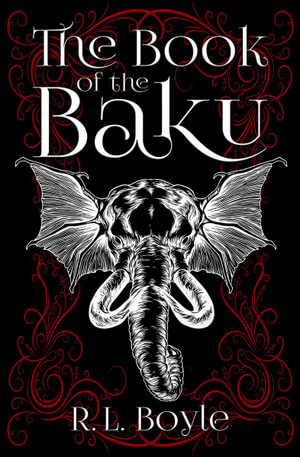
Sean is now mute, traumatised by his past and unable to move beyond what was a hidden horrible life with his drug-addled mother in a poverty-riddled locality. Now in care with his formerly estranged grandfather, who lives with his own griefs and challenges from the past, Sean must deal with the nightmares of many, and their stories of night time terror that have been fed to The Baku. The Baku is an ancient creature of corruption that horrifies and destroys in a dark and foreboding way and is revealed in a book written by Sean’s grandfather. The Baku invades Sean’s life, just as he seems to have found a glimmer of hope. Can he escape the Baku’s attempts to destroy him?
In a dark, psychological way there is great depth to this tale as it weaves its way through nightmares of many children, and the nightmare life of Sean and also his grandfather as they deal with guilt and grief. For Sean there was a life of hardship that is unfathomable, that was given moments of uplift because of art and some ‘hard-as-nails’ friends from the rough side of town. But for most of this book the reader is led through a disturbing horror story of chilling terror. For those who like the horror genre this will appeal as it weaves stories from childish nightmares into Sean’s real-life daytime nightmare of trauma. The revelation of more than just a horror story comes slowly and is also a powerfully written metaphorical exploration of psychological trauma. I am greatly impressed at the potent, tense and moving story by this debut novelist, it is not an easy read and some younger readers would recognise their own night time terrors in the dreams fed to The Baku. This is not for the faint-hearted.
Highly recommended to mature readers aged 15+.
Themes Horror, Nightmares, Trauma, Family dysfunction, Grief, Guilt, Drug taking.
Carolyn Hull
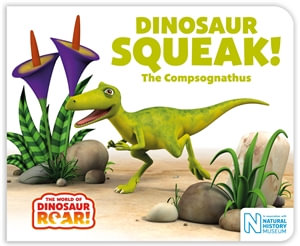
Dinosaur Squeak! The Compsognathus by Peter Curtis
Another book in The world of Dinosaur Roar! series, (including Dinosaur whizz! The coelophysis and Dinosaur Whack! The Stegosaurus) will delight young fans of dinosaurs. A very sturdy board book, this production in association with Natural History Museum, is full of facts about the Compsognathus, a tiny dinosaur the size of a chicken, who has to make sure she isn't trampled by all the big dinosaurs walking about. Dinosaur Stomp, the Triceratops has enormous feet but she jumps out of his way, while the greedy Diplodocus, Dinosaur Munch gets a shock to see her hiding by a rock. She survives being hit by the long tail of Dinosaur Whack, the Stegosaurus, and makes her friend Dinosaur Roar, the Tyrannosaurus, proud of her ability to look after herself.
The rhyming narrative makes this a perfect read aloud for young children, and the bright illustrations show what the habitats and plants of the dinosaurs' world were like. Older readers who love dinosaurs will also be attracted to this book, its easy style, words in bold print and complementary illustrations, making it a story for children just becoming independent readers.
The introduction of all the big dinosaurs that could be perilous for little Dinosaur Squeak will reinforce their names and their illustrations will be most attractive to the book's young audience. A double page spread at the end of the book provides information about the little dinosaur that will fascinate adults as well as children, for example, Compsognathus means 'elegant jaw'.
This is a very attractive series, sure to find many interested readers.
Themes Dinosaurs, Compsognathus.
Pat Pledger
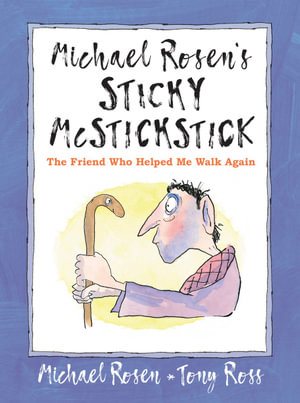
Michael Rosen's Sticky McStickstick by Michael Rosen. Illus. by Tony Ross
A story of resilience, Sticky McStickstick is the name given by Rosen to a walking stick which becomes the symbol of striving and perseverance to get better and leave hospital. The picture book relates Rosen’s own story, getting COVID in 2020, being asleep for forty days and waking to find that his arms and legs did not work.
In the tale, the hospitalised man peers out from his bed, frightened and alone. Three staff come in to get him out of bed. But they cannot. The next day they try again and get him onto a frame. After that they try a wheelchair. While in the wheelchair, he spies people outside his little world, a woman watering her plants, a man in the street. The next day he is taken to the gym, a fearful place, but designed to increase his strength. And the next day they give him a walking stick. They train him in its use and encourage him to try the stairs. Eventually he finds he can walk without the stick, but the stick is still there if he needs it. Going home he gradually learns to do without the stick; he learns to make a cup of tea, shakily at first; he climbs the stairs holding the bannister and walks in the garden with his family.
Over time he relearns all the things he has forgotten and even though his stick is still there he has little use of it. But it reminds him of all the kind people who helped him along the way, encouraging him to get out of bed, to use a frame, a wheelchair, a stick and the gym.
All readers will see the perseverance needed to overcome this illness. Rosen presents a man totally beaten and fearful of the things the nursing staff are helping him with. All readers will recognise the initial fear of doing something they are not used to, of being fearful of failure, of wanting to hunker down and ignore the outside world. It is the strength of others, their determination that gets him out of his lethargy. They keep trying with different sorts of equipment, unwilling to give up.
Tony Ross’ illustration parallel the conflict the hospitalised man is going through. His apt drawings, from the cover showing the man looking askance at the stick, and the stick offering an almost encouraging look back, readers will see themselves. The little world of the hospital is revealed with few colours, the white walls and sheets only mildly contrasting with the blues of the pyjamas and nurses’ uniforms. A little colour enters the picture when the man puts on his dressing gown, a signal he is no longer confined to bed, then when he greets his family, more colour appears. A subtle increase of the outside world and its influence.
I love Ross’ facial expressions and reader will all look closely at how his expressions change through the story.
A wonderful tale of never giving up, of the help given by others and a telling story about the effects of COVID.
Themes COVID, Hospital, Perseverance, Michael Rosen, Walking stick, Resilience, Hope.
Fran Knight
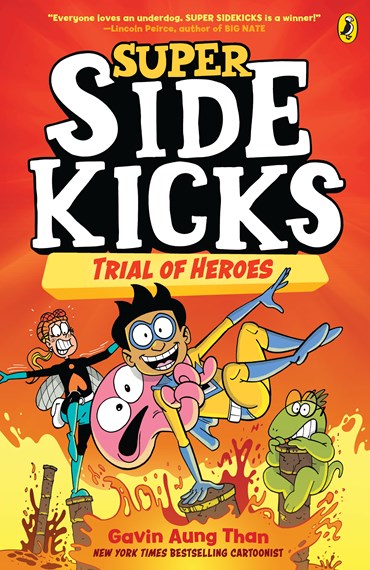
Super Sidekicks: Trial of heroes by Gavin Aung Than
Super Sidekicks: Trial of heroes is the third book in the series by Gavin Aung Than. These books are graphic novels and follow the adventures of the Super Sidekicks, a group made up of 2 humans (JJ and Flygirl), a dinosaur shapeshifter (Dinomite) and a pile of goo (Goo) who used to be a bad guy. In this story the superheroes are invited to join an exclusive club, but before they are accepted, they need to pass an extremely hard challenge. The group work together and the story culminates in a win for them and a loss for the bad guy! I enjoyed the overall sentiment of the story where working together as a team and looking out for each other is the main goal. Trial of heroes certainly had a 'feel good' element to it, especially the ending. I think children of ages 8 and above will really enjoy this story, especially the images. Gavin Aung Than is a cartoonist for the New York Times and his skills are very evident. The characters have expressions, interesting backgrounds and without them the story would certainly not be as interesting. My 9 year old son was particularly taken by this book and said: "I thought this book was funny, and it was kind of nail biting or a 'what's going to happen next' type of book. The 4 superheroes were really good and I loved the part where they were trying to beat the stone man. I particularly liked it as it was a graphic novel and I would definitely recommend this one to my friends, hopefully I can find the other books in the series soon." So overall, this book was a winner and we both agree that readers from ages 7 and up would enjoy it.
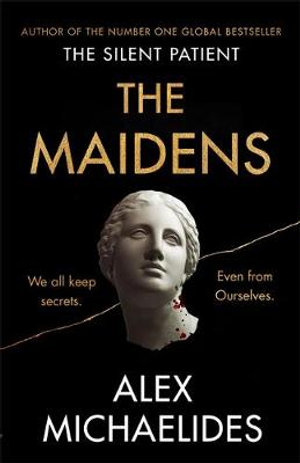
Edward Fosca is a murderer. Of this Mariana is certain. But Fosca is untouchable. A handsome and charismatic Greek Tragedy professor at Cambridge University, Fosca is adored by staff and students alike - particularly by the members of a secret society of female students known as The Maidens.
Mariana Andros is a brilliant but troubled group therapist who becomes fixated on The Maidens when one member, a friend of Mariana’s niece Zoe, is found murdered in Cambridge.
Mariana, who was once herself a student at the university, quickly suspects that behind the idyllic beauty of the spires and turrets, and beneath the ancient traditions, lies something sinister. And she becomes convinced that, despite his alibi, Edward Fosca is guilty of the murder. But why would the professor target one of his students? And why does he keep returning to the rites of Persephone, the maiden, and her journey to the underworld?
When another body is found, Mariana’s obsession with proving Fosca’s guilt spirals out of control, threatening to destroy her credibility as well as her closest relationships. But Mariana is determined to stop this killer, even if it costs her everything - including her own life.
Michaelides is back with another heart stopping thriller. This novel is full of red herrings and will keep you guessing with every twist and turn. Dark academia meets Greek mythology, this book will hook its readers from the very start. The author has such a strong command of the mystery/thriller genre, and the short chapters will keep the readers interested. His use of psychology interwoven with the book gave it an extra depth, something that makes the story unique to your typical murder mystery.
Thea Demetriou’s son Stefan has spent the last three years behind bars for causing the death of his girlfriend and childhood sweetheart Belinda. He has no memory of the incident, being completely under the influence of drugs at the time. His parole conditions require him to stay within a 50 mile limit of home and Thea’s tenured job as an academic and husband Jep’s successful coaching career mean they can’t move away and must endure harassment from locals led by the dead girl’s mother, Jill McCormack who has started SAY, 'Stop Abuse Young' a group raising awareness of dating violence. Stefan finds it hard to settle and still finds it difficult to live with the guilt and the grief at losing his soulmate. ‘I know I owe more' p104. At one stage he says to his mother 'you probably wish I had never been born' but for Thea he is ‘My boy. My child. My only.' p31. As Stefan gradually starts to make a new life for himself and finds a way to seek atonement through redemptive action, sinister incidents start to mount up and hints are given that there is more to know about the fateful night when Belinda was killed.
Told in the first person with the narrator the mother of the killer there are some echoes of We need to talk about Kevin. Thea’s obsessive nature constantly monitoring Stefan’s rehabilitation makes intense reading and sometimes we wonder if she is a reliable narrator. But unlike Kevin, Thea and Jep seem to have been model parents of a loving and ordinary child 'ordinary people whose children have done awful things' p161 and Stefan knows it 'I feel like one of those guys, those athletes of Dad’s, I’ve had it all handed to me and I didn’t live up to it.' p104.
Overall the book is an interesting but exhaustingly slow trip into the changed lives of this family through the eyes of the mother, but other characters were sketchy, especially the father and the plot required a considerable amount of suspended disbelief.
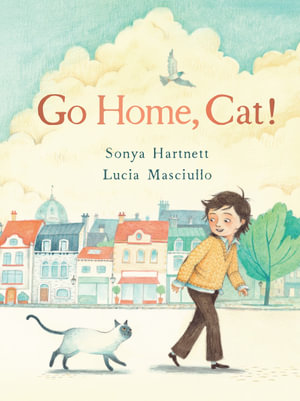
A wonderfully humorous play on the often heard excuse, ‘it just followed me home’, this cat follows her person when the boys goes to the shops.
Nicholas finds a silver coin in the garden and decides to go to the sweet shop to buy some liquorice, his favourite. But as he looks behind him, the cat has followed him.
‘Marl’ it says in greeting, ignoring all of Nicholas’ entreaties for her to go home. Nicholas dreams of the sort of liquorice he will buy, deciding that he likes black liquorice better than the red or green. He sees the cat once more, telling her to return because of the dangers she may face: a dog might chase her up the tree. Finally Nicholas spies the sweet shop across the road. He does the right thing, looking both ways before he crosses, but the cat does not. She sits in the middle of the road, causing Nicholas to make a huge choice.
A wonderfully warm story of friendship this tale will be a favourite amongst readers as they follow Nicholas in his attempts to save the cat from danger and finds that his friendship with the cat is the most important thing in his life.
The repetition of the line, ‘go home, cat’ will be heard wherever this book is read aloud as the audience joins in. And the line telling us that Nicholas ‘loved liquorice more than almost anything’ is stunningly recalled at the end when the cat snuggles into Nicholas, and we are told that she loves Nicholas ‘almost more than anything’.
The charming watercolour and pencil illustrations, nodding to times past, recall the days when a sweets shop was in the High Street, when most children ventured out on their own, and we see many playing in the streets and parks, when cars were a rarity. Young readers will love looking at the detail Masciullo provides in her street scenes and will enjoy following Nicholas’ journey with the aid of the map of the suburb on the endpapers.