A simply told story of a boy for whom life has gone awry, getting back on his feet with the help of friends will appeal to younger readers, who sometimes become aware that unexpected things can happen in life upsetting its equilibrium.
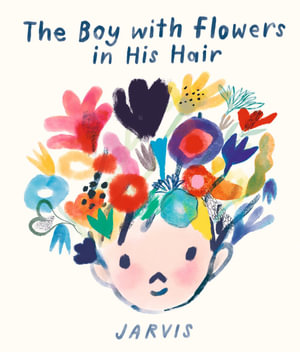
Told by David’s best friend, the story focusses on the flowers in his hair. David is the best of friends and the two are inseparable, running, jumping in puddles, fleeing form the bees, washing David’s hair. But one day some petals fall out, and that afternoon, he is quiet and does not want to play. The next day David wears a hat and when he takes it off his hair is spiky and the petals have all gone. The other children hold back, careful of the spiky branches and even his best friend finds that the branches have scratched him. But he does not mind, it is not David’s fault. Then he has an idea. He begins to make paper flowers to replace the ones fallen from David’s hair. The other children join in, cutting them out and attaching them until David’s head is covered in paper flowers. After a while a new flower grows and eventually all the flowers on his head are renewed. He is back to his old self and the best friends are doing what they have always done together.
This beguiling story reflects the changes that occur in children’s lives when something happens outside their control. David may be ill, there may be changes in his home circumstances, a friend may have died, or he may be feeling depressed. Whatever the reason for his flowers falling from his head, change occurs in all of our lives, and this charming story allows children to see that change does happen but things can be set right again. The help of friends is paramount in setting him back to his old self.
A tale reflecting the kindness of friends, the support given by them all, facilitates David’s renewal, his overcoming the hardship that has caused his distress. Children will welcome his improvement noting that we can all recover from the changes that upsets us all.
Jarvis is an author illustrator living in Manchester, UK and a little more can be read about him on his website.
The illustrations are amazing: seemingly simple, but with a complexity that stares out at the reader, as the flowers wilt and die, then are regenerated by his friends’ compassion. Each page bears a closer look: I loved the make up of the class, the broken train line, the energy of the class making the flowers and finally the storage of the spares just in case. David is safe and secure with his friends watching out for his welfare.
The Voyage of Whale and Calf is a beautifully written story by Vanessa Pirotta of the birth, the growth and migration of Whale and Calf. Born in warm Australian waters, Calf’s journey to adulthood is gently told in simple language that shares many facts about the characteristics and life cycle of Humpback Whales.
Through the story telling young readers will learn many interesting facts such as the whales eat krill, how their baleen plates push out the water once they have swallowed the krill, that they poo and feed in different areas and that poo feeds marine creatures that are eaten by the krill. The story tells of the dangers to Whale and Calf of nets, boats, and party balloons as well as the threat of Killer Whales further south. As Calf grows and the season changes, he is ready to begin his own journey back to warmer waters to begin a new cycle of life.
The full page soft, pastel illustrations by Samantha Metcalf are simply stunning and complement the text perfectly. Unfamiliar words are highlighted and their meaning accessed from the glossary in the final pages. Also provided after the story are Humpback Whale facts including a map of their migration.
This highly engaging book will provide children with easily accessible information about this magnificent marine animal. A wonderful resource for classroom teachers when looking at collecting information for report writing.
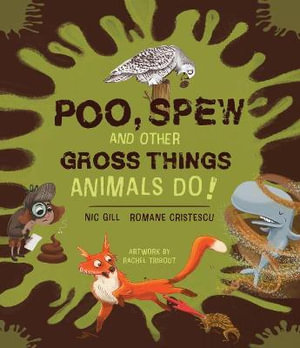
The title of this new release, Poo, Spew and other Gross Things Animals do! will immediately appeal to so many children who are fascinated by all things gross. The contents page contains eight chapters with headings that include: Animal Grossness, Poo Detectives and World’s Grossest Animals Revealed. The two authors are introduced at the beginning of the book and while both come from different career backgrounds share a passion for conservation. Scientific names of species are highlighted in italics and words in bold are further explained in the Grossary (Glossary).
Each chapter has captioned photographs and humorous illustrations by Rachel Tribout. The comprehensive information is clearly set out and easy to follow. Here are a couple of examples that the reader may be fascinated by in the Love is Gross chapter. Male Capuchin monkeys when attracting a mate take a wee-wash for the females to inhale their extra strong scent and female lobsters wee on the face of their love interest! In the Grossness as Self-defence chapter, we are informed that sperm whales poo to confuse predators and that adult turkey vultures use vomit to defend themselves when threatened while nesting. On a very prestigious note, Australia can claim to have the animal with the world’s thickest wee – spinifex hopping mouse. Apparently the wee is almost solid!
Throughout the book are Scientist Profiles of several very clever people who talk about their careers. At the end of the book is a page of how to say ‘poo’ in different languages as well as acknowledgments, an index, and picture credits.
There are just so many new and incredibly enthralling facts to learn throughout this book and children will love sharing them with their friends and grossing out the adults in their lives.
This combined effort by Hillary Clinton and Louise Penny is a political thriller based around the experience of a U.S. Secretary of State trying to defuse global terror attacks. It is a taut and tense fight against time to discover the whereabouts of nuclear bombs, and track down the mastermind behind them.
Secretary of State Ellen Adams and her counsellor, best friend Betsy, work together in an environment where it is impossible to know who is trustworthy and who is suspect, as it becomes apparent there is a high level leak in the government.
Followers of world politics will enjoy the references to former President Dunn (or Dumb) whose foolhardy policies have jeopardised U.S. security, and the British Prime Minister Bellington with hair askew. There are probably many more inside jokes for those in the know. What the novel does reveal is the high level of clever diplomatic strategy required working in foreign relations. Ellen Male is incredibly astute, calm and calculating in her exchanges with world leaders. She and Betsy are two strong women of intelligence, working together to outmanoeuvre their enemies.
Penny’s writing keeps the reader on the edge of their seat, as the clock ticks down, and Ellen and her offsiders desperately try to put the clues together, following twists and turns of subterfuge. And while the major villain seems to be an international terrorist, there is possibly an even greater evil within America itself, radical right wing groups who see themselves as true patriots, neo-Nazis, willing to destroy the country in order to perpetuate their vision.
State of terror will be of interest to readers who enjoy a good thriller, and also to those interested in world politics. The issues are very relevant to current times.
Themes World politics, U.S. politics, Terror, Secret intelligence, Extremism, Revenge.
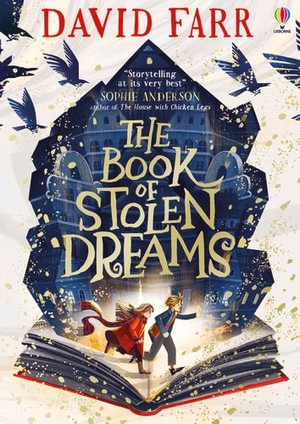
What a book! Beautifully bound in a red, hard back cover featuring a golden key and a scattering of gold stardust, with illustrations by Kristina Kister, the presentation of The book of stolen dreams is a credit to its publishers- Usborne Publishing Ltd. The care taken with the publication of this book is surely a measure of its literary worth; The book of stolen dreams is a treasure.
This is the debut book for young people for writer, director, producer David Farr who has always wanted to write for children.The power of his storytelling and the tightness of the plot and structure suggests that the idea of The book of stolen dreams has been with Farr for awhile. Such is the action and the atmosphere, one can see that this book could be well adapted to the screen and theatre. It is set variously in a kind of dystopian world complete with strange airships, like something from a Shaun Tan painting, in olde worlde English bookshops and crumbling orphanages and in a city that has had the life crushed out of it by a totalitarian military regime.
Eleven year old Rachel Klein and her brother, thirteen year old Robert are orphaned. Their once beautiful land of Krasnia is in the hands of an evil dictator, Charles Malstain, whose regime smacks of certain regimes of the past and of our time. The contemporary nature of this can only add to the interest of the middle years readership. Rachel and Robert, receive the book of stolen dreams into their care from their father who was captured and taken away. The book of dreams, which gives the power of immortality, is missing one page and the two children must track it down whilst keeping the book out of the hands of Malstain and his henchmen. They have to call on deep reserves of bravery and trust as they face terrible dangers,grief and dilemma... and a family of ghosts.
The theme of censorship, fear, the crushing of freedom and the courage of those who fight against evil regimes envelops this story. This is all heavy stuff but dear reader we have our character narrator to help us cope with the horror. Is it David Farr? It doesn't matter. The story is fearful. We need a storyteller who speaks straight to us; tells us to look up, tells us what we see, calls us "my dear friend and reader...dearest and most fond reader..." stays with us until the end and finishes the story beautifully. Such a narrator is a comfort.
Interlaced between the chapters, most of which are dedicated to our main protagonist Rachel and some to Robert, are the fifty exquisitely illustrated poems that are found in the magical book of dreams. On completion of the mission, Rachel is faced with a very, very difficult dilemma where her moral compass and belief in service to the other over herself is tested to the max.
As readers will be wanting more of the adventures of Rachel Klein, the news at the end of the book that there is more to come from the world of David Farr, is very welcome indeed.
The book of stolen dreams is highly recommended not only to the individual reader but also as a read aloud in the classroom or school library.
Themes Immortality, Dictatorships, Grief, Courage, The moral compass.
Wendy Jeffrey
The secret of Splint Hall by Katie Cotton
Anderson Press, 2022. ISBN: 9781839131967. (Age:10+) Recommended.
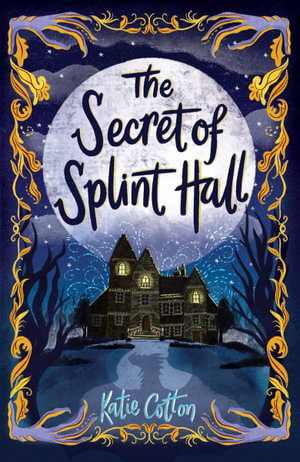
Eleven year old Isobel and her family, older sister Flora, and mother Julia, are moving to the country to live in the family home, Splint Hall, after their home was destroyed by bombs during the War - WWII. While the war has ended, the impacts are still being felt with rationing, rebuilding and adjusting to life without their father. Moving in with their aunt and her husband, the dreadful Mr. Godfrey, they find the hall to be miserable and mysterious. The girls begin to explore and start to uncover secrets and a family legacy - leading them on a adventure to discover the truth of the legacy.
Starting out with the family moving to the country, the scene is set for mystery and hardship straight away. While accurately depicting the hardships of post war life, this lovely historical fantasy adds intrigue and interest through having a variety of characters, some loveable, some detestable. The first part of the book details the new life the girls find themselves in, and sets up multiple mysteries. The second part of the book reads quickly, as answers are found and the most adventure occurs in this part of the book. The chapters aren't too long, perfect for middle grade readers. The tone throughout the book is pleasant even with some unlikeable characters. Would suit fans of The Legends of Eerie-on-Sea series by Thomas Taylor and the Land of Roar series by Jenny McLachlan.
Themes Fantasy, Historical Fiction, Great Britain, Post WWII, Mystery, Adventure, Relationships.
Melanie Pages
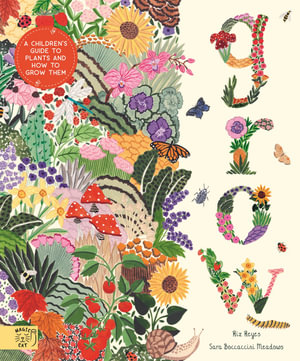
Grow! A children's guide to plants and how to grow them by Riz Reyes and Sara Boccaccini Meadows
Grow: A Children’s Guide to Plants and How to Grow Them has a striking cover that will immediately catch the eye of the reader. With the cover showcasing vibrant and colourful plants and insects, as well as embossed floral vertical letters spelling out the word ‘grow’, this book will appeal to all budding horticulturalists and gardeners. It is written by Riz Reyes, a horticulturalist, speaker and educator who grew up in the Philippines on a fruit plantation and eventually moved to the United States with his family. He studied horticulture at the University of Washington and is passionate about sharing his love of growing plants with others.
The book begins with a heartfelt introduction from the author which is followed by the contents page which has fifteen four-page chapters beginning with the mint and ending with orchids. Other plants studied are lettuce, mushrooms, daffodils, tomatoes, apples, kale, carrots, aloe vera, tea plants, maple, bamboo and pumpkins. Each plant has their hero status explained as an introduction. For example, mint is the hero of aroma and remedy, and apples are the heroes of heritage and history. Following on from this is general information about the plant set out clearly, surrounded by white space, and beautifully detailed labelled illustrations painted in watercolour. Important facts are contained in separate text boxes. Each chapter also contains information about family members, how to grow your own, as well as a potted history. On the final page is a glossary and plant classification table.
This book has a place in all libraries and would make a perfect gift for a young gardening enthusiast.
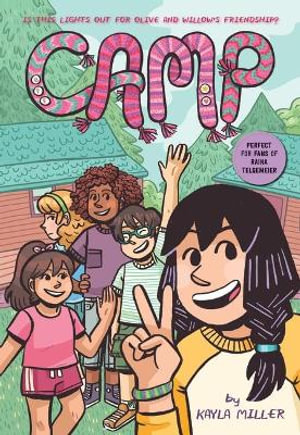
Fans of Rainer Telgemeier will devour this this new book in the Click series. Camp is an honest portrayal of a typical young friendship. The characters are artfully and honestly drawn as are their changing emotions, the highs and lows of their relationship and the intricate dynamics of being best friends but having such different personalities. Olive is outgoing, confident and sporty. She has no trouble making new friends at summer camp, but Willow is reserved and dependent on her friendship with Olive. She doesn't want to try new things or make new friends. Their journey throughout the two weeks of camp is a rollercoaster story, intricately told through both illustrations and dialogue. At times the drawings are doing most of the heavy lifting, showing the emotions of the two friends in a way that is extraordinarly evident. The story ends sweetly, with Willow managing to overcome her low self-esteem, try something new and make new friends. Both of the main characters are highly believable and relatable.
There is so much to love about this story, from the positive and encouraging support of the camp counsellors to the honest portrayal of human behaviour and the inner life of a young person in turmoil. These things are hard enough to put into words but Miller manages to nail it with just pictures and dialogue. Regardless of its American summer camp setting the themes here are just as relevant for an Australian audience. In addition, the characters depicted are physically and culturally diverse.
Themes Summer camp, Friendship, Graphic novels.
Nicole Nelson
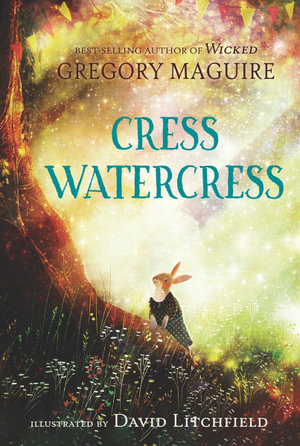
Cress Watercress by Gregory Maguire. Illus. by David Litchfield
Set within a country locality, this is the story of a rabbit family mourning the loss of the father of the growing rabbit, Cress Watercress, and her younger brother Kip. The father’s loss is never explained with any detail, but it causes the family to relocate to a strangely inhospitable and meagre accommodation in the basement unit of the ‘Broken Arms’… an old tree overseen by the owl landlord. Their new fellow apartment dwellers and the other animals nearby slowly become more than neighbours. Cress is the storyteller of this animal fantasy tale, and is learning to find her place in her family, in their new locality and with the waxing and waning grief of living without her father. There is a sweet innocence in the story, and it is easy to grow fond of the maturing Cress as she learns about life, love and family, and tries to be the best rabbit that she can be.
Written by the writer of Wicked, which inspired the musical of the same name, this is a simple fantasy tale and reminiscent of Watership Down, but perhaps without the allegorical overtones. It is naive and will be enjoyed by young readers. The dangers of the local fox, bear and snake, and the friendship with the playful squirrels are just part of the ebb and flow of life in the animal world. Children aged 7+ will recognise the struggles of growing up when things do not go smoothly or when fear enters one’s life. This is worth reading for its simplicity and heart. Illustrations are simple but reveal details that will appeal to young readers.
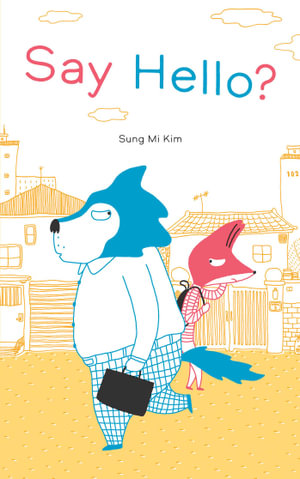
Saying hello is one of the first things a young child learns. However, in the picture book Say Hello? which has been translated from Korean, we learn of what happens when neighbours do not say hello. The Fox family has moved in next door to Mr Wolf. On the first morning of being neighbours Little Fox and Mr Wolf do not begin the day well and ignore each other when leaving the house at the same time. Both recognise they have not done the right thing but think it will be easy to make amends. This does not happen and through a set of unfortunate circumstances do not really find the opportunity to connect. Eventually Mr Wolf moves away and both breathe a sigh of relief. They do come across each other again and both make an effort to say hello and realise it was not so hard after all.
While the story seems simple, it is a powerful reminder that often we misinterpret situations and actions, and this can lead to misunderstandings and estrangement. The detailed illustrations in this story are cleverly drawn. The use of black and white outlines with bold tones for the two main characters will appeal to readers of all ages.
An ideal book to share with younger children when friendship issues arise.
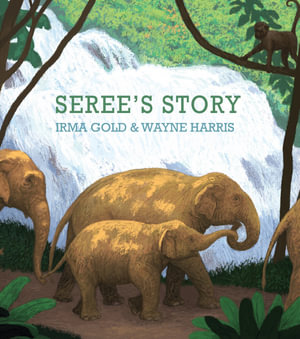
The lovely scene on the front cover of a family group of elephants will make the story inside all the more devastating as younger reader learn of Seree, kidnapped at just two years old, and put into a circus. Her life becomes one of loneliness and betrayal as she is taken from her family and the mushy banana she loves pulling from the trees.
She was made to perform three times a day, throwing darts at a balloon, kicking a soccer ball and dancing on her hind legs. In between she was chained and alone, rocking from side to side in her stall. She lived like this for years, dreaming of her mother, her aunts and grandmother in the herd she left behind. But one night three people came in with treats she had not tasted for a long time, they whispered promises in her ear and put her aboard a truck. When she stepped from the truck she could smell the fresh air and the flowers and fruit from her past. She spied other elephants and finally she heard her mother. She was home at last.
This story parallels the lives of many elephants taken from their herds and put to work. Many are beaten into submission, chained for the rest of their lives, not allowed to lie down and sleep. Some work many hours a day in the illegal forests in Thailand, while others ferry people and are used as entertainers like Seree.
The vivid illustrations parallel the story, showing Seree content with her family, unaware of the life she will be forced to lead. The images show elephants in their habitat, part of a herd, doing things as a group, always reiterating the close contact a group of elephants has with each other. Little wonder elephants in captivity sway from side to side.
Information at the end of the book gives facts about the elephants and their endangered status in Asia. Once plentiful their herds have been reduced by two thirds, through habitat loss, killing, capture and illegal use. In Thailand only 2000 now live in the wild with an estimated 2000 in captivity. The author, Irma Gold is an ambassador for the Save Elephant Foundation and puts her heart on her sleeve in this heart warming story. Seree means freedom and is an appropriate name for a little elephant who dreams of her home while forced to live away from her family. Classroom ideas are available.
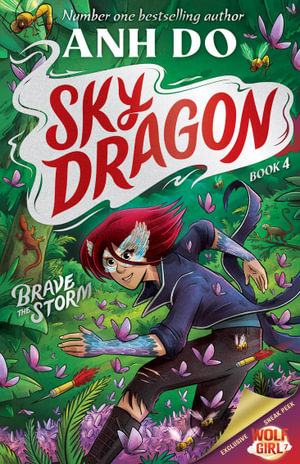
Skydragon: Brave the Storm written by Anh Do is the fourth book in this series for middle grade or older reluctant readers with graphic images by James Hart that add to the appeal. The latest adventure begins with Amber and her beloved carer Irene travelling in a campervan to escape the city and Amber’s ever-growing number of evil nemeses. Amber has concussion and has lost her power to attract insects. Irene suggests that they travel to Sennam in Asia to be free of danger and to help Amber heal and reconnect with her power. Needless to say, danger is not far away and stumbling upon a closed trail while on a rainforest hike, leads Irene and Amber into trouble with Indigenous peoples of the area and dangerous mercenaries. Amber is captured by a local girl Lin whose grandfather Khan is the Chief. He and his people are constantly trying to outwit the squad of EverCorp mercenaries who are destroying the rainforest while searching for rumoured lilac diamonds. Lin, who will inherit Khan’s chieftain role, suspects Amber is working for EverCorp and the girls get off to a rather unfriendly start. Both girls join forces to protect the diamonds and rescue Khan who has been forced to take the mercenaries to where the diamonds are. After outwitting EverCorp through sheer determination and skill, Lin and Amber, with her power restored, saves the diamonds but sadly, Khan has passed away. Running parallel to this story is Firefighter’s own search for his true identity and Amber’s belief that he may be her brother. Agent Ferris also plays an evil role in this story and is suspicious of Amber’s whereabouts however he has more pressing things to deal with when he is informed that Firefighter is missing. More will be revealed in Book 5 which is coming soon!
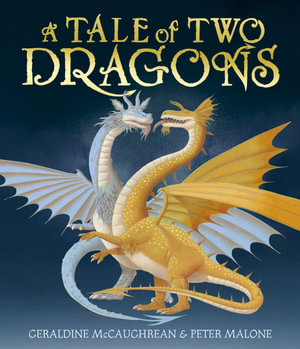
The kingdoms of Arbor with its lush forests, and Pomosa rich with farmland, are separated by a high, thorny hedge and they have no love between them. But at night, the children have taken to sneaking across the borders to thieve - some to gather fallen branches for firewood, the others to cut the corn and milk the cows to feed families. But instead of sharing their riches, the Kings decide to fight, instead... with dragons. But what kind of future will that bring?
This is a tale with an olde-worlde feel about it that carries an age-old message about sharing and co-operating rather than hoarding and fighting. Having the children doing the stealing because they hear their parents lamenting not only demonstrates the power of children living what they see and hear but opens up a discussion about the morals and ethics involved. Do you do what you know to be morally right or do you do what needs to be done?
An interesting story that could be compared to the good versus evil fairytales that were the moral compass of yesteryear.
Themes Peace, Sharing, Ethics.
Barbara Braxton
The princess in black and the mermaid princess by Shannon Hale & Dean Hale. Illus. by LeUyen Pham
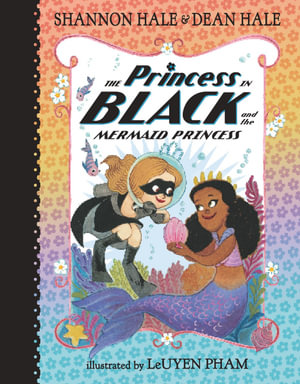
This is a wonderfully powerful series that turns the much-loved princess concept of young girls into one of agency, adventure and comraderie. This latest instalment sees the sassy Princess in Black and her friends the Princess in Blankets and the Goat Avenger delighted to meet a mermaid princess named Princess Posy. When Princess Posy finds out her new friends are heroes she asks for their help to protect the sea goats in her kingdom from being eaten by the hungry Kraken. It comes to light that Princess Posy is so busy following her princess rule of being nice to everyone that she isn't using her voice to speak up and make positive changes in her kingdom. With the support of the Princess in Black and her friends, Princess Posy learns that she already has the skills to manage her kingdom.
Full-colour illustrations and short chunks of text make these books ideal for newly independent readers. They are quirky, humorous and full of action. Most importantly, they contain incredibly positive female role-models but still cater to the many princess and mermaid lovers in this age group. It's a modern tale with a fairytale feel that will please and delight both adults and children.
Themes Mermaids, Heroes, Speaking Up, Princesses.
Nicole Nelson
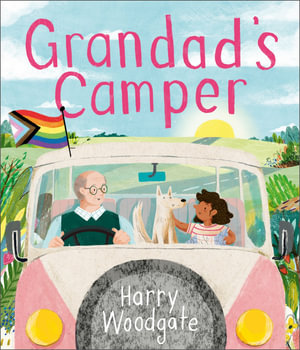
Grandad's Camper by Harry Woodgate
Andersen Press, 2022. ISBN: 9781783449927.
There's nothing she loves more than to visit her Grandad, snuggle up on the sofa and listen as he tells all her about the amazing places he and Gramps would explore in their camper. But these days, Grandad's camper van is hidden away in the garage - now Gramps isn't around any more, the adventures they shared travelling in it just wouldn't be the same. As she listens to his wonderful stories, Grandad's granddaughter has an idea to cheer him up...
This is a delightful story of a little girl's relationship with her grandfather, a bond that those of us who have been fortunate to experience it never forget. But this story has a twist because there is no grandma - rather there is Gramps, her grandfather's much loved partner. And while it is a reminder that there are many definitions and designs of "family" - the rainbow flag on the camper on the cover is an indicator- it is the little girl's complete acceptance of the situation that is heart-warming because it shows we have come a long way, albeit there is still a way to go. So while gender diversity is not the obvious in-your-face focus of the story, it is the memories that are so inextricably bound together by Grandad's and Gramps' relationship that are at its heart.
Family diversity is so widespread and little ones need to see theirs in stories, so this is another opportunity to share and celebrate.