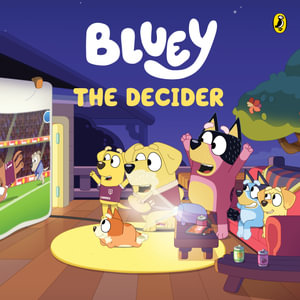
Bluey is busy writing a story using the typewriter at school when it is time for a story with Calypso. She is not happy with Calypso’s story and decides to write her own but when she comes back to get the typewriter it is gone. Meanwhile, her friend Snickers has a problem learning to sit and everyone runs away from Winton who is a space invader, so the three decide to go to Calypso to see if she can solve their issues. On the way the Terriers shoot pretend-real arrows at them, and the trio must produce several strategies to evade them. While problem solving Snickers finds that he has a fantastic sausage roll to knock over the Terriers and Winton discovers that he is not standing close anymore. Meanwhile Bluey shows Calypso a pretend typewriter that she will always have with her.
The Bluey TV show is a favourite with pre-school children and any book featuring Bluey is sure to be a hit. Children will already be familiar with the story and this book will give them the opportunity to transfer their knowledge of it from the screen to a printed book. They will also have fun lifting the flaps to see what happens. The illustrations of the dogs are cute and the humour in the story will bring lots of enjoyment for young children. Adults will also be able to talk about the importance of not pushing too close to people as Winton the ’space invader’ does and discuss how Snickers accepts his unique strengths. And of course, the power of the imagination is emphasised throughout the story. A colouring activity is available.
Themes Imagination, Typewriters, Individuality.
Pat Pledger
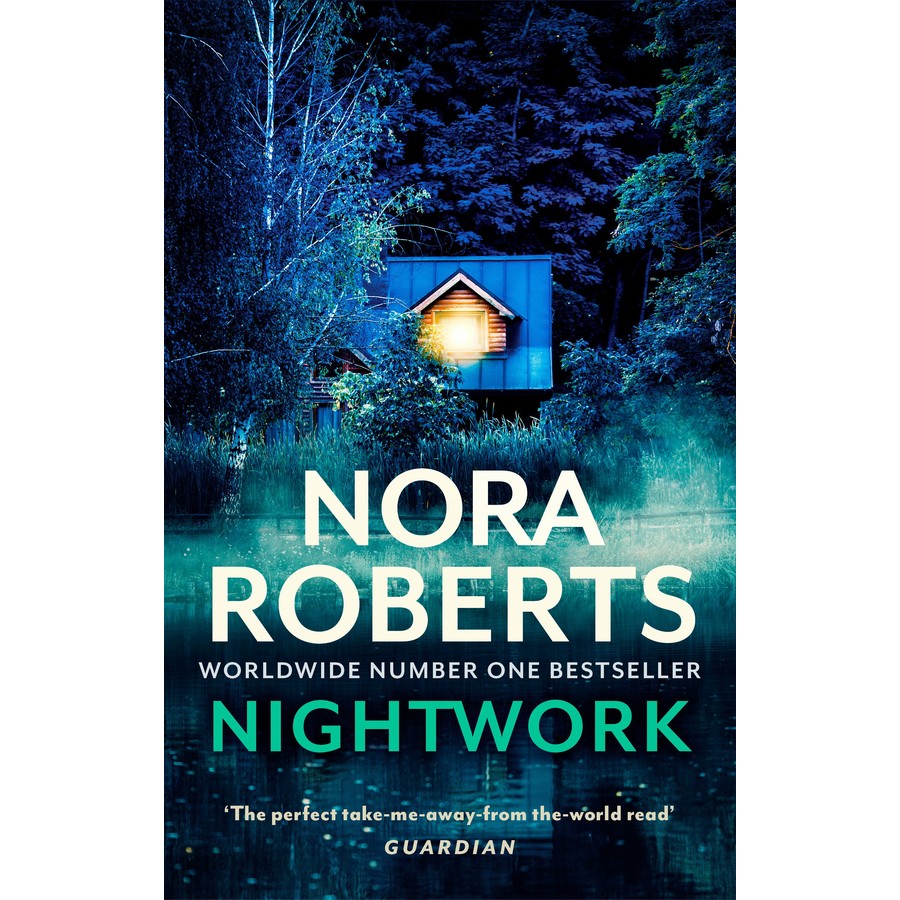
Nightwork by Nora Roberts
Piatkus, 2022. ISBN: 9780349430218. (Age:Adult)
Bestselling author Nora Roberts, who has sold over 5000 million books worldwide, returns with a stand-alone novel Nightwork. With Nightwork, she introduces a young man Harry who begins to steal when he is very young to help keep a roof over the head of his mother who is suffering from cancer. For him being a thief is a job, and it is work that he excels at. He is methodical, does his research and learns all the skills that are necessary to avoid being caught. When his mother can no longer fight the cancer, Harry finds himself rootless and leaves Chicago searching for a new life. He believes he finds it in a small university town where he meets Miranda, the love of his life, but Carter LaPorte, a dangerous man from his past, turns up and threatens everything he loves. Once again, he is on the run, and the reader is left wondering if he will ever be able to escape his past and settle down to a normal life.
As a long term fan of Roberts’ books, I found it interesting that in my view she has slightly changed the theme of this book from her usual romantic suspense, which often features a murder or stalker (Shelter in place and Undercurrents). Instead, the reader is faced with the moral complexity of empathising with a protagonist who is a jewel thief. It is easy to relate to the young Harry as he steals to keep his family afloat, but I did find myself ambivalent about his dishonesty as the story progressed and he became an adult. However, in true Roberts’ style, she moves the story forward at a fast pace and the fear that the evil Carter LaPorte will find Harry always looms in the back of the reader’s mind. This makes it very hard to put Nightwork down.
The romance between Harry and Miranda progresses from a youthful love to a more mature and understanding one and will satisfy those readers who enjoy the relationships that Roberts’ writes so well.
Readers new to Roberts’ romantic suspense will want to find others written by her, and fans will have another great escapist story to enjoy.
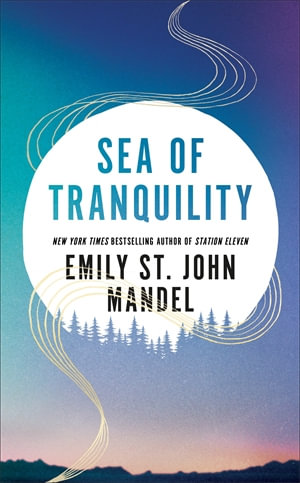
The best-selling author of Station Eleven and The Glass Hotel returns with a novel that explores the idea of time travel, pandemics, and music. It begins in 19012 with Edwin St. John St. Andrew who has been exiled from England to the very different world of Canada. While there he enters a forest where he hears a violin echoing in a large building, like a cathedral. Two hundred years later Olive Llewellyn, a famous author, is on a book tour. Her book describes a passage of a man playing a violin in an airship terminal. Meanwhile Gaspery-Jacques Roberts is tasked to find the anomaly in the time travel structure of the man playing a violin.
All of St. John Mandel’s characters draw the reader in. It is very easy to relate to Edwin, a young man in a foreign country, with no skills to survive. Olive Llewellyn’s book tour, her descriptions of the loneliness of being in a hotel room by herself and the dangers of a pandemic all strike a familiar note, while Gasper-Jacques’ investigation into the strange violin music and his trips back in time are all fascinating.
The narrative skips back and forth in time but is written so beautifully by St. John Mandel that the reader has no problem imagining the different time zones. Her connections between Olive Llewellyn’s house and novel and Gaspery-Jacques ensure that the tantalising mystery surrounding the puzzle of the violin music keeps the reading wanting to know how the characters are linked. And the conclusion when threads are drawn together in a dramatic way is most satisfactory.
I read this as a stand-alone novel and thoroughly enjoyed it but suspect that readers of Station Eleven and The glass hotel may bring more understanding to a few of the minor characters in the novel. Readers may also enjoy The time traveller’s wife by Audrey Niffenegger.
Themes Time travel, Epidemics, Authors, Relativity, Moon colony.
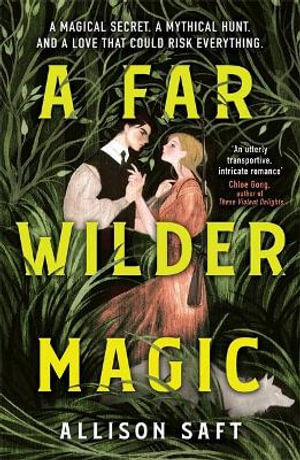
In the gothic town of Wickdon, seventeen-year-old Maggie waits for her mother to return from her alchemic searches. Then she sees the hala, a magical creature with a frightening capacity for destruction. It’s dangerous but if Maggie can present her mother with the hala’s body, the ingredient she is searching for, perhaps Evelyn will love her again.
Wes Winters is desperate for a chance at an alchemy apprenticeship. As a poor immigrant it’s his only hope for a better life. And the prize money for winning the hunt could heal his mother. But when he teams up with Maggie, they are risking not only their lives but also their hearts.
Allison Saft has crafted believable characters that were easy to relate to. Unlike many love stories there was never a time when I asked, ‘why would they do something so stupid?’ Motivations and actions flowed seamlessly together as I followed Wes and Maggie’s emotional journey. The same attention was given to minor characters such as the mayor’s son Jamie and the barmaid Amber. And I loved Wes’s family, who provided a warming picture of connection especially in contrast to Maggie’s mother.
Along with the characters I enjoyed Saft’s handling of the theme of displacement. Wes’s ambition, his desperate charm and Maggie’s aggressive isolation were all believable responses to being from an unwanted race and religion. Even Jamie’s actions as he tried to stop the despised outsider’s winning the hunt were understandable if not forgivable. A Far Wilder Magic would make an excellent book to explore the experience of immigration and prejudice.
The world building was unobtrusive and centred you in the space, but I felt it lacked magic. It reminded me of the world building of a good contemporary or historical novel rather than the fantasy it advertised. But the largest problem I found with the story was style. The third person present tense point of view was clunky and hard to adapt to. This improved as you read further and the story itself was compelling, but the style could prove an obstacle to any but the most confident reader.
In conclusion I found A Far Wilder Magic to have excellent characterisation and a well-handled theme of displacement. It had the world building of a good historical novel and could be used to expand the genre selection of an avid reader but is probably not the best choice for a less confident student.
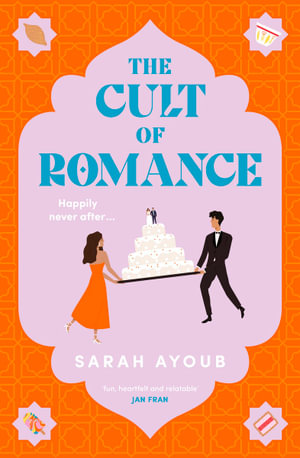
Natalie and Janet are united in their scorn of the ‘cult of romance’; they are going to be strong independent women, starting their own cake catering business after university and saving to travel together around the world. At least Natalie thought that was the plan until she discovers her friend has returned from a visit to Lebanon with an engagement ring on her finger. Natalie is horrified to discover that Janet is prepared to give it all up, and marry, young, to a man she can’t possibly know that well. On top of that Nat is expected to be maid of honour and organise the bridal events in a country she has never been to.
Ayoub’s novel moves quickly, carried along by the conversations between Natalie and her family and friends. Family for Natalie is her father and her very traditional grandmother, Tayta. There’s a bit of a mystery about her mother, who left them, whilst suffering from post-natal depression. That early rejection, plus the feeling of being caught between two cultures, Lebanese and Australian, makes Natalie determined to carve her own future, not defined by any man. So things become complicated when the groom’s best man turns out to be quite attractive, despite their initial animosity.
It’s a light and easy read, mainly because of the natural flow of conversation that Ayoub is particularly good at creating. But at the same time there are quite complex issues of identity and allegiance that are being explored. There is also a friend, Mark, who acts as a moral compass point. He is possibly gay or queer, but it is really not an issue, and not a focal point of the story; he is just a really good friend, who is always there for Natalie. I liked the way that it is his personality, not his gender, that defines him; he is a true friend.
For the most part, the novel rings with humour, with references to the romantic comedy ‘My best friend’s wedding’. Natalie is a strong and feisty character, the kind of person who lands herself in trouble in spite of herself. But the themes are serious and reveal the real dilemma of identity for migrants caught between two cultures.
Anderson Press, 2014. ISBN: 9781783440870. (Age:10+) Recommended.
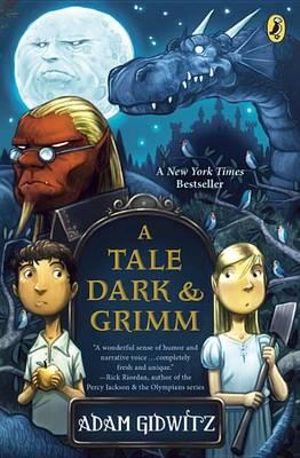
This book was first published in 2010 before being reprinted in 2014 with a new cover illustration. It is the first of the Grimm trilogy which also includes In a glass Grimmly (2012) and The Grimm conclusion (2013). The series has returned to the limelight more recently due to the release of a Netflix series based on book one in October 2021, and so has the potential now to reach a whole new generation of young readers.
However this book is not for the faint hearted - it is dark and bloody and more closely follows the original tales of the brothers Grimm rather than the sanitised versions most children have heard by kindergarten. The language and vocabulary used are rich, descriptive and sophisticated yet even readers who do not understand particular words will be able to follow along.
The dark content could have been quite unpleasant if not for the narrator's 'voice' throughout the book which speaks directly to the reader. The narrator injects great humour, warnings and tension at vital break points in the story. The result is that readers who might otherwise lose interest are kept hooked, and those who choose to continue are desperate to know what happens next. They are ready for the violence, action, blood or hard choices that follow.
Broadly, the story is a much-expanded version of Hansel and Gretel, and has the children facing great adversity. From the people and situations they encounter throughout, they learn about making difficult decisions, about what loyalty and faithfulness mean, and about their own relationships with each other and with their parents.
And of course, at its heart this is still a fairy tale. So it also includes multiple instances of good vs evil - although sometimes the line between the two sides is not as clear-cut as you might expect. This could provoke some interesting discussions about how to decide what is ‘good’ when there are negatives on both sides.
An excellent teachers' guide contains lesson plans for each chapter, including vocabulary, comprehension, discussion points and a choice of final project activities.
Themes Fractured fairy tales, Bravery, Good vs evil, Siblings, Relationships.
Kylie Grant
Fantastically great women artists and their stories by Kate Pankhurst
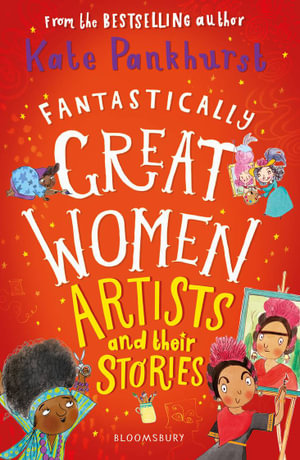
The Fantastically Great series by Kate Pankhurst is further enhanced by this new addition about eight diverse women artists and their stories. This interesting and extremely readable book looks at the lives of Elisabeth Louise Vigee Le Brun, Frida Kahlo, Amrita Sher-Gil, Kathe Kollwitz, Dame Laura Knight, Faith Ringgold, Peggy Guggenheim and Australian First Nations artist Emily Kame Kngwarreye.
Emily Kame Kngwarreye, the artist who never stopped Dreaming, was a proud Anmatyerre elder. Her early life was spent in service to white families in an area called Utopia by the white settlers but known to Emily and her clan as Alhalkere. Emily began painting later in her life and at the age of 80 her paintings became renowned both nationally and internationally. Her remarkable story is one of great belief in her clan country and her people. A truly amazing woman.
Each artist’s story is written in accessible language and includes bold and highlighted words, speech bubbles, humour, and graphic-designed images throughout. There is a contents page, an introductory chapter about Women in Art, a double page gallery of the artists, a detailed glossary and Further Reading pages. This book would be a wonderful addition to a school library, in particular for Years 6-9, who may research famous artists. As I was reading about each of the women artists, I was searching the internet for their work so I was able to understand their style. A very worthwhile activity for all readers.
Themes Women, Artists, Biography, History, Facts.
Kathryn Beilby
Sophia the show pony by Kate Waterhouse. Illus. by Sally Spratt
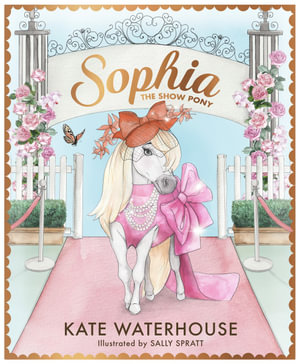
Kate Waterhouse from the famous horse racing family, has written a gorgeous rhyming book about a pony who follows her dream. Sophia is a show pony, beautifully adorned in all the finest fashion money can buy. There are hats and bags galore, designer dresses and coats, magnificent jewellery but Sophia secretly yearns for the freedom to race in the hills. She makes a bold decision to follow her dream and asks for guidance from her friends, Grace and Frederick. They gently advise that racing is not for her, and she reluctantly decides to give up on her longed-for dream and make the most of her life as a fashionista. At the premier racing event of the season, the Giddy Up Cup, Sophia is in contention to win the best dressed cup until the wind changes everything. Will Sophia have the chance to follow her dream and run her own race?
The detailed water colour illustrations by Sally Spratt are simply quite stunning. The inclusion of so many cleverly drawn animals and other items on each page will engage younger readers. This lovely book would make the perfect gift for children who love ponies or fashion. A great tie-in read when Australia’s major racing event takes place on the first Tuesday in November.
Themes Ponies, Fashion, Rhyming, Horse Racing, Following your dream, Animals.
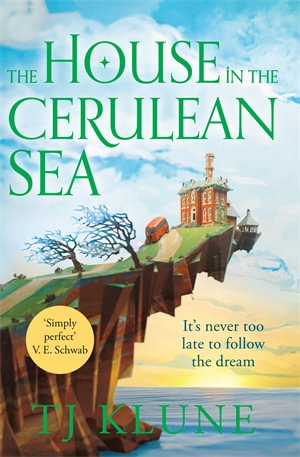
Linus Baker is a quiet man, living a solitary existence with his cat Calliope. He is employed as a case worker by the Department in Charge Of Magical Youth (DICOMY), investigating government orphanages that house children with magical abilities. When Extremely Upper Management sends him to the island of Marsyas to undertake a probe on the children’s well-being and the suitability of the manager, Arthur Parnassus, he discovers that the children all have complex magical abilities, and that Arthur is hiding a secret. As he gets to know the children, he begins to appreciate their powers and recognise that love that can be found in this unusual family. The reader is left asking whether Linus will recommend to Extreme Upper Management that the children in this orphanage stay with Arthur where their magical powers will be nurtured.
Each of the characters is fully realised and very engaging. Linus is very uptight when he first arrives, but the caring atmosphere of the island brings out the best in him. He encourages the children in their dreams and even manages to discard his tie and dress up as an explorer and play a game with them. Arthur is a gentle father figure and the growing relationship between Linus and him is sensitively handled by Klune, a previous winner of the Lambda Literary Award. The children are wonderful. Talia is a gnome who loves gardening. Sal is an extremely shy boy who has been abused in previous placements but who can write wonderful stories; Theodore who is a wyvern, guards his hoard, especially Linus’ buttons; Phee is a forest sprite while Chauncey is an unknown who longs to be a bellhop. Lucy, short for Lucifer, is a six-year-old with dangerous powers and was described by Extremely Upper Management as the Antichrist.
There is sparkling conversation and subtle humour, leaving the reader feeling good and wanting to know more about each of the people on the island. However serious issues are threaded throughout the novel. Klune examines the fate of children who are considered dangerous and do not fit into what society considers the norm. He demonstrates how easy it is to allow bigotry and stereotypes to dominate a group but that there is always hope especially if just one person will stand up for justice.
The house in the Cerulean Sea won the Alex Award and the Mythopoeic Fantasy Award in 2020 and is sure to appeal to readers of fantasy.
Themes Islands, Orphans, Orphanages, Social workers, Family, Difference LGBTQI people.
Pat Pledger
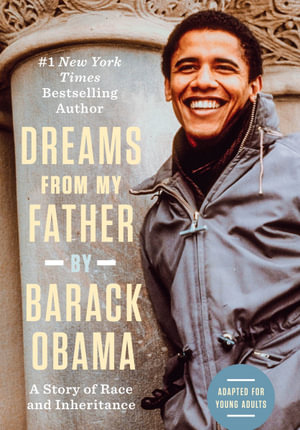
Dreams from my father: Adapted for Young Adults by Barack Obama
Text Publishing, 2021. ISBN: 9781922458445. (Age:13+) Recommended.
Barack Obama wrote his memoir soon after his study years at law school and when he was just married. He had not entered politics. Obviously a young man with a great sense of social justice at the time but also very keen to understand his past, he set about telling his story with a view to encouraging his readers to consider the same. At a time when a new school curriculum is being released for Australian schools, with more focus on international historical perspectives, this is a valuable addition to school and personal libraries. In his newly written introduction to this ‘young adult’ edition, Obama stresses how important our knowledge of history is to the formation of inquisitive, observant and analytical minds. The reader follows the life of this President-to-be, as he journeys through words, with his mother from Kansas to Hawaii, with his father and extended family to Kenya, with his stepfather and half sister to Indonesia, all the while examining his heritage to understand himself better. This edition features a concise family tree and coloured family photos. Obama writes with humility and generosity; also starkly aware of the injustices of the world around and his desire to do as much as he can to alleviate inequality. This memoir continues to inspire and the young adult reader will enjoy his story: it is easy to read and his thoughtfulness comes through so beautifully. He would like the young to feel inspired as he was to share their stories and ‘to value the stories of others’. Teaching notes are available from the publisher.
Themes Autobiography.
Julie Wells
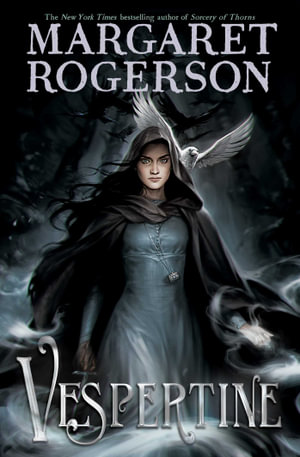
Vespertine by Margaret Rogerson
Simon & Schuster, 2021. ISBN: 9781398508545. (Age:13+) Highly recommended.
Artemisia is a girl training to be a Gray Sister, one of an order that helps souls to pass on. She is troubled and lonely and must deal with whispers about her past and her scarred hands. When the convent is attacked by soldiers who are possessed by spirits, she is forced to defend it by awakening a revenant that had been imprisoned in a saint’s relic. As she faces danger and dark mysteries, she gradually gets closer to the revenant, while struggling to overcome another ancient and very powerful spirit who brings death to her world.
Artemisia’s actions in battle guided by the revenant Rathanael bring her recognition that she does not want. She begins to have a following of people who call her a saint and believe that she can save them. She also discovers that she has loyal friends in Marguerite, Charles, and Captain Enguerrand, all willing to put their lives at risk to help her in her task of finding out what the priest Leander was trying to do.
Told in the first person by Artemisia, readers will learn about the horrors of her childhood, the kindness of Mother Katherine at the convent and the growing understanding between her and the revenant. She must accept that she is a vespertine, one who can control a high relic if she is to save her world. It is easy to think of her as a Joan of Arc figure, a young woman who could lead armies and who is considered a saint.
Rogerson has been recognised for her novel Sorcery of thorns (Best fiction for young adults 2020) and Vespertine is equally as engrossing. Readers who enjoyed reading about nuns in Robin LaFevers' His fair assassin series, and Maresi by Maria Turtschaninoff, will want to pick up Vespertine, while those who liked Naomi Novik’s Scholomance series will enjoy reading about another young heroine.
Themes Nuns, Ghosts, Good and evil, Friendship, Saints.
Pat Pledger
The fast 800 keto: Eat well, burn fat, manage your weight long term by Dr Michael Mosley
The fast 800 keto builds on Mosley’s successful The fast 800 and is an easy to read and follow book explaining up to date science of weight loss. The book starts with an introduction of how we got fat, why we need to eat more protein and then goes into the science of keto which I found useful in understanding how the body reacts to eating the sugar found in many processed foods. It describes the effect of a keto diet when your body goes into ketosis and burns up fat instead of sugar leading to weight loss. Mosly goes into detail about the fast 800 Keto programme. It combines keto with intermittent fasting, which readers will be familiar with if they have read The fast 800 and stresses the advantages of a Mediterranean diet. Emphasis is given to the importance of preparation before beginning the diet by having the right food on hand. Advice is also given about how to maintain a good weight long term.
The recipes given by Dr Clare Bailey are easy to follow and meal planners are set out with 3 meals a day and 2 meals a day when doing intermittent fasting. I enjoyed the Rapid bircher with apple and cinnamon, and Wok-steamed white fish with pak choi. There is a chart to record Before and after measurements of weight, waist and blood pressure, and an extensive bibliography and good index are also included at the back of the book.
The cover states that it is possible to ‘lose up to 6 kg in 21 days’ and following the advice in this Australian and New Zealand edition would give people aiming to lose weight a scientific basis to do so. The fast 800 Keto is sure to prove popular and I will be using many of the recipes included in my regular meal planning.
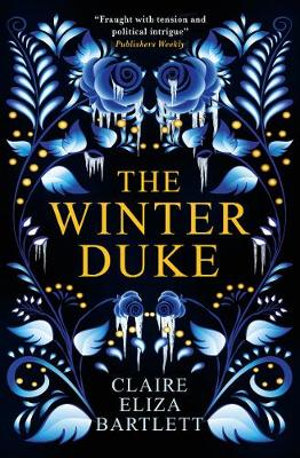
Ekata is just days away from leaving her home. Days away from freedom and the life she has looked forward to for years. An unimportant and forgotten middle child in a dangerous and vicious family, Ekata just wants to survive long enough to flee south and spend her days surrounded by those who value knowledge and peace. However, someone or something has other plans. Suddenly, and very much against her will, Ekata becomes the Duke of Kylma Above, tasked with ruling the kingdom, preventing an invasion, curtailing treason and discovering a cure for the magical illness which has incapacitated the rest of her family. And then there is Inkar, the girl who should have been her brother’s bride…
The Winter Duke is a satisfactory young adult fantasy offering some unique ideas and plot points. Bartlett has created a distinctive and atmospheric world. While most of the book is spent in the ducal castle, the reader gains a real sense of the cold and harsh environment of Kylma Above. The inclusion of magical elements and creatures and a complex familial and societal structure is also interesting.
Where the novel fails however is in its characters. Main protagonists do not necessarily have to be likeable for readers to be able to enjoy a book. Bartlett has clearly tried to style Ekata as a character relatable to her audience, with flaws and insecurities like those suffered by most teenagers. However, she is almost comically unconfident, reckless, credulous and petulant. As the story progresses, it becomes increasingly difficult to root for a character this exasperating. Moreover, secondary protagonists, including Ekata’s love interest and her most dangerous enemy, are more caricature than character. The book’s villain, for example, is brash, vulgar and innately ‘evil’, without much explanation or reasoning to explain why.
Overall, The Winter Duke is a solid young adult fantasy novel, which will no doubt please some readers of the genre, but it is not without its flaws.
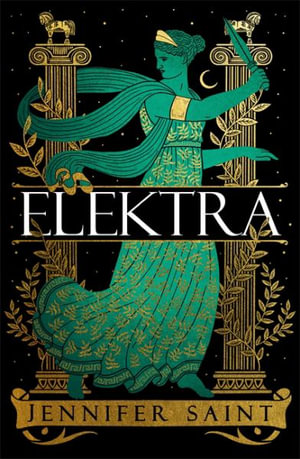
Stunning! Jennifer Saint really knows how to take the framework of a Greek myth and breathe life into all the characters, their emotions and motivations. I thoroughly enjoyed this book and read it in one sitting, rapidly turning the chapters between the three characters, Clytemnestra, Cassandra and Elektra. The central storyline is the well known tale of the abduction of Helen of Sparta, by Paris, prince of Troy. But in this book, Helen is a rather vague and enigmatic creature and the focus is most definitely on the three women on the edge of the story: Clytemnestra, sister of Helen, and wife of Agamemnon, leader of the army that sailed to retrieve Helen; Cassandra, princess of Troy, doomed seer of the future; and Elektra, the stubborn young daughter of Clytemnestra and Agamemnon.
Saint’s writing provides insight into how a wife can come to detest her husband and seek his death, how a solitary woman can be disparaged and reviled, and how a naive daughter can cling to belief in her father despite clear evidence of his cruelty. Saint brings to life the inner world of her characters, and they become very believable. And in the process, she reveals how each of these women struggles within a world where women are treated as a commodity to be won, bartered, scorned or sacrificed.
There is no man who is completely trustworthy; the world of men and women is so structured as to prevent any sense of equality or power. However, Clytemnestra, Cassandra and Elektra, each are strong and determined women and they fight against men, and against gods, to take their place in the world. It is a fiery tale of anger and passion – riveting reading!
This latest novel is even better than Ariadne – highly recommended.
Themes Greek mythology, Women, Power, Revenge.
Helen Eddy
Great big softie by Kaye Baillie and Shane McG
New Frontier, 2022. ISBN: 9781922326485. (Age:4+) Recommended.
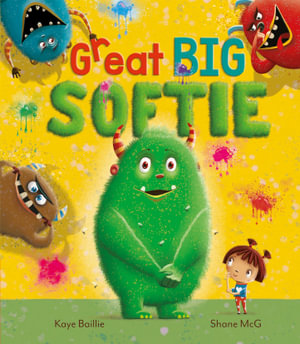
Elliot, a monster with a great big soft heart, is desperate to fit in with the other more mischievous monsters. Those monsters cause mayhem amongst the people in the neighbourhood, so Elliot decides to join them. He trashes a shop, eats all the churros from a fast-food van, causes the swimming pool to be closed for the day and frightens a little girl with a huge growl. Elliot’s monster friends award him Monster of the Week for his dastardly deeds, but Elliot does not feel at all comfortable with what he has done and decides to make amends. He goes to the little girl’s house and returns her missing turtle. It is not enough though, so he bravely apologises to the little girl and the other people he has upset - his most daring deed ever. Elliot realises that belonging to a group needs to feel right and he learns a valuable life lesson about respect.
The engaging illustrations in this book are bright and colourful with diverse characters.