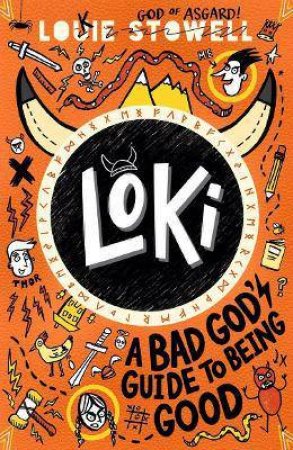
Loki: A bad God’s guide to being good is about Loki who has been banished to earth by his father, Odin as punishment after he performs one nasty trick too many in Asgard. Louie Stowell has taken the Norse god of mischief from mythology and written a very funny story to explain the steps Loki must take while on Earth, to clean up his act and avoid eternal life in a torturous pit of angry snakes.
Loki uses the first part of the book to explain what life is like for a Norse god who is trying to make do in a very human household as a weedy 11-year-old boy, what school is like, and how a family works. Although he is monitored closely by an interactive diary that keeps his score, Loki finds it difficult to stop playing pranks, and soon his score is so low he has to find a very grand gesture to redeem himself and avoid eternal unpleasantness. Along the way, he learns about friendship and loyalty, and what it means to trust someone to be a friend.
The book is in diary style, part text and part cartoons that will appeal to Middle primary students, with lots of illustrations, jokes, and speech bubbles. Stowell is releasing a sequel to this book later in 2022 called Loki: A bad god’s guide to taking the blame. The publisher has provided detailed Teacher notes which are helpful when using this book in a classroom situation.
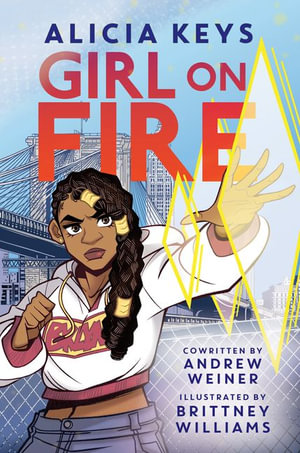
Lolo Wright is a bright, 14 year old living in a Brooklyn public housing neighbourhood with her 16 year older brother James, her grandma and her father who has started a business “The Wright Movers”. At school Lolo gets some name calling for being a good student but nothing like the rejection Michael “Runt” Warner experiences when he wants to join the football team and is told by the coach to come back when he has grown. The rejection leaves him angry and open to the offer of joining the gang of powerful “Skin” who is planning to expand his local protection and drug ring. When Michael bumps into Lolo in the school corridor on his way to confront Skin’s gang, Lolo has a moment of mental connection with him and she experiences his anger and power. Later, when James and Lolo call in to a local shop on their way home they are unaware that it has just been held up. When the police arrive they assume James is the criminal and wrestle him to the ground. Lolo is so angry she explodes with power forcing the officer to release her brother. The supernatural powers shock and scare Lolo and her brother tells her that their absent mother told him baby Lolo had energy flowing through her, "The Holy Current”. Lolo dismisses this as her mother was crazy, however Skin soon becomes aware of Lolo’s powers and wants to sign her up to his gang, using pressure on the family she loves. As Lolo learns to master her power and navigate the threats to her family she also has to deal with the expectations of school and friends. As she grows into her powers she learns to stand up for herself and others while making the right decisions. Her father’s high expectations and firm but kind upbringing see the family reach out to the less fortunate and withhold judgement while offering support.
There is enough violence and action to appeal to comic lovers and move the story on at a fast pace but it is always balanced by more thoughtful interactions. The strong colours and quality production make the most of Brittney Williams’ excellent graphic style with interestingly detailed urban backgrounds and settings with dark, menacing bad guys and consistent, well developed characters. Keys and Weiner offer teenagers a hardworking heroine finding her power in a difficult world, a good role model attractively packaged.
Themes Identity, Family, Superpowers, Gang violence.
Sue Speck
Bill and the dream angel by Lucinda Riley and Harry Whittacker. Illus. by Jane Ray
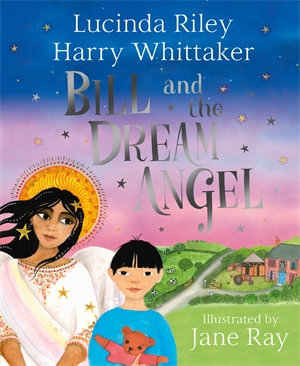
Award-winning author of adult books, Lucinda Riley wrote this picture book with her son Harry Whittaker as part of the Guardian Angels series of picture books before her death in 2021. The books are based on stories she used to tell her children when they faced challenging situations. Bill and the Dream angel is the second book in the series, the first being Grace and the Christmas angel and a third called Rosie and the Friendship Angel. This story involves a young boy called Bill and his family, who have moved from a small flat in the city to a large, converted barn on a farm. Bill is frightened by some strange noises he hears during the night and wishes to return to his old home in the city. The Dream angel hears his call for help and puts in motion the events that prove to Bill that the monsters he thought inhabited his new home are just noises that will turn out to be a wonderful, heart-warming discovery. Moving house can be a stressful time for families and this book could help to reassure children and assist them to settle into their new environment.
The illustrations by Jane Ray are beautifully executed, showing in great detail the process the family uses to unpack and arrange things to make Bill feel comfortable in his new surroundings. The inclusion of some wordless double-page spreads encourages discussion and provides details for young readers to come back to time and time again. An angel place marker ribbon is an added feature of this gift edition hardback book.
Themes Moving house, Fear, Owls, Farm life.
Gabrielle Anderson
The greatest thing by Sarah Winifred Searle
Allen & Unwin, 2022. ISBN: 9781250297235. (Age:12-17) Recommended with guidance.
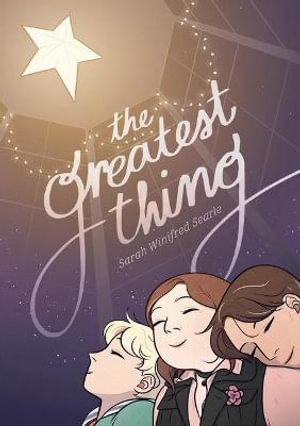
Winifred is a shy year 10 student and the start of this school year is even more difficult without her two best friends who are attending different high schools. Feeling alone and anxious she is approached by Mathilda Martel, who asks her to join their group. Tilly and Win used to be friends but had drifted apart, now she introduces Win to her friends and takes an interest in her wellbeing. The highlight of Win’s day is her independent study period with a favourite teacher who will mentor a personal project, making comics, in return for Win helping out other students in photography class. Her other love is Art class. Unexpectedly Win finds she enjoys helping other students and develops a new friendship with outgoing confident students April and Oscar who break through Win’s armour of anxiety, depression and low self-esteem, while acknowledging their own. The three harness their individual talents, Oscar the writer, Win the illustrator and April publisher to create a series of zines. Although they all are wrapped up in their own problems, the stories are a great success. The darkroom becomes a safe zone where they can discuss some of their issues with supportive friends, but sometimes that is not enough and outside help is needed. Supportive teachers, parents and professionals make an important contribution to their wellbeing.
Art is central to this graphic novel and the quiet colours are central to the emotional tone; night scenes and the rosy glow of the photography darkroom are important in the characters’ journey as they go through the uncertainty of discovering who they might be. Win’s self-effacing posture is consistently portrayed and her round face and big eyes contrast with the slender, beautiful people she admires. This is a colourful, complex, engaging story about troubled teens with a raft of issues but there is an overarching bravery in the characters courageously facing an uncertain future. There is a content note at the beginning warning of triggering aspects and at the end there is a page of mental health resources and a note from the author about this being a fictional account of some issues she had in high school. There is also a page about her zines and a section of the book describes how a zine is produced. Some guidance might be wise when recommending this book as the challenging content is not immediately apparent.
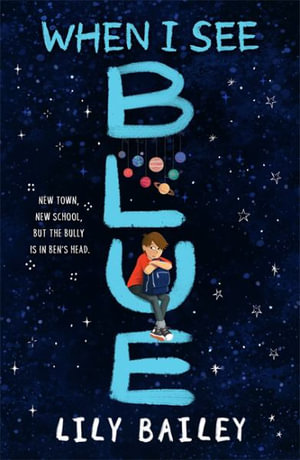
Ben is 12 years old and he has OCD (obsessive compulsive disorder). His family have moved to London for his father’s new work and they all hope for a fresh start. Ben’s OCD manifests itself in his constant need for things to be in multiples of 4, wearing particular clothes and arranging food on a plate so it doesn’t touch. These behaviours are done to prevent bad things from happening. At his new school he struggles to not draw attention to himself so he can avoid the bullying he experienced in the past. However, his mother is an alcoholic and no amount of attending to his rituals can save the worsening family relationships. Fortunately, April, a fellow student, has some insight into Ben’s situation. She takes him under her wing and encourages him to take risks and get counselling. Gradually he challenges his own thinking, has greater self-acceptance and inner strength. Things come to a head when April becomes very distressed and ends up in a life-threatening situation.
I found this very serious story compelling reading. The author, Lily Bailey, has personal experience with OCD and campaigns for people to understand it better. She writes respectfully and convincingly and since it is written in the first person you can really get into the way Ben thinks and changes. At times the neglect of his mother and father and the cruelty of other students is believable and heartbreaking. However, the friendship with April, care by some of the teachers and the therapist are heartwarming. Ben and April are such great young people. This story is an important vehicle for developing empathy for those with OCD and for sufferers themselves to have hope. Considering the mature themes of When I see Blue, I believe this book is best suited to young middle years readers. It is similar in themes and tone as Kate Gordon’s book Aster’s Good, Right Things.
The award-winning Bluey is back with a jigsaw book that will be fun for fans of the TV show. Each double page spread has a small section of text describing the puzzle and asking the reader to see what happens when the puzzle is turned over. The four puzzles are of familiar Bluey episodes. There is a fairy ring, Bluey and Bingo play Mum and Dad, a cheeky bin chicken watches Bluey and Bingo sneak up on Mum and Dad and finally Bingo is dreaming about an adventure in space.
The puzzle pieces are large and made of heavy cardboard and fit into the page. Adults might have to be careful to keep the pieces of each puzzle separate so that young children could do the puzzle.
I can see grandparents who love jigsaw puzzles having a lot of fun with this book, teaching their grandchildren how to complete a puzzle, and in this case, have the fun of turning it over and having a second picture completed.
Themes Jigsaw puzzles, Games.
Ten minutes to bed little fairy by Rhiannon Fielding and Chris Chatterton
The Ten minutes to bed series is very popular, and the latest in the series, Ten minutes to bed little fairy is sure to captivate little children and send them off to bed in ten minutes. Poppy is a little fairy who has very small wings that make it hard for her to fly high. She flies low to the ground, then onto a flower and finally when it is only a few minutes to bed her confidence grows and she can fly into the night sky. Then she spies a little gnome who is lost and can light his way home, just before the ten minutes to bed is over.
This series is very appealing. The rhymes make it an enjoyable read aloud and the idea of ten minutes before it is time to get into bed is one that parents could enjoy. It is good to see that Poppy grows in confidence and begins to challenge herself as she flies and the fact that she can help the gnome find his way home is joyful.
The illustrations are bright and cheerful and have lots of minute details that children can find. There are tiny fairies on mushrooms, frogs in a pond and a ladybird and bees to find on many pages. Spiders lurk amongst the leaves and Poppy’s happy expressions as she flies higher are lovely to follow.
Bluey and Bingo's fancy restaurant cookbook by Bluey
Penguin, 2022. ISBN: 9781761045769. (Age:4+ with adult support) Recommended.
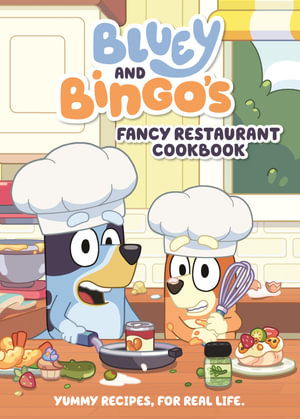
Parents, grandparents and children will be familiar with the well-known and much-loved Bluey series on ABC KIDS. All over the world, the Bluey phenomena is further heightened by the huge marketing range of books, toys, clothes, games and more. Now there is a newly released cookbook titled Bluey and Bingo’s Fancy Restaurant Cookbook. This bright, colourful and humorous book is presented in a spiral bound format with easy-to-wipe-clean pages. The book begins with tips to be read with an adult about safety, hygiene, allergens and mess. This is followed by a page of all the things needed including a whiteboard marker to tick off the ingredients. Recipes included are omelettes, Shadowland cupcakes, poffertjes, Nana’s ice blocks, Bingo’s fairy bread, sausages and salad, fish and chips, prawn kebabs, pizzas, spring rolls, curry, ice cream, pavlova and a challenging duck cake. All recipes have a difficulty rating, a list of required ingredients, plus clearly set out numbered steps to follow the recipe. Throughout the recipe pages are engaging illustrations and comments from Bluey, Bingo and friends. There is a page for creating your own menu as well as your own recipe.
An entertaining cookbook best shared between an adult and young child.
Themes Bluey, Recipes, Children, Cooking.
Kathryn Beilby
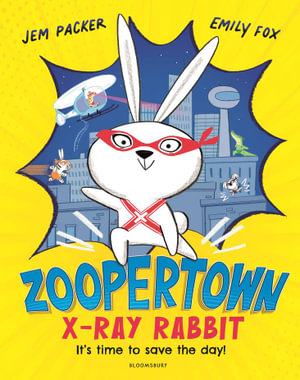
Zoopertown X-Ray Rabbit: it's time to save the day! by Jem Packer and Emily Fox
Bloomsbury, 2022. ISBN: 9781408898338. (Age:3+)
The Zooperheroes are on the mystery of the missing food. After their breakfast disappears and Go Go Gorilla’s giant banana birthday cake cannot be found X-Ray Rabbit is on the case. She spies a banana skin and that sets her off on the trail of the thief who is stealing all the food. Will her amazing x-ray zooperpower be enough to solve the case?
Children who love superheroes will discover some very unusual ones in this book. Not only is there X-Ray Rabbit but Crash-Bang Koala, Zip-Zap Giraffe, Snap-Crack Croc, Zoom-Zoom Zebra feature too as well as the Zoopercopters that come to the rescue! The adventure is fun, and the narrative flows along building up the tension of the adventure. X-Ray must meet the Forest of Fright, dodges super-creepy critters, jumps over hissing, slithering snakes and comes to the Atrocious Tower of Terror, and finally all the Zooperheroes solve the mystery.
Readers will have fun guessing who the villain might be, the story reads along smoothly and is very enjoyable. The cartoon like characters are delightful and the illustrations contain humour and wit.
Children who enjoy this book may like to look at the BumbleBunnies series by Graeme Base.
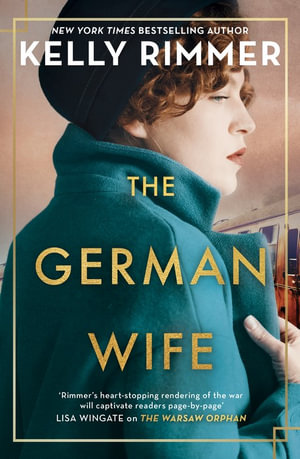
References are at the heart of Rimmer’s powerful and challenging historical novel, and these take us into the different worlds of Lizzie and Sofie, the two protagonists in this story, placing us initially in the United States in 1950, in Lizzie’s story, and in Europe with Sophie. Each chapter is focussed on one of the two characters, Rimmer varying the placement and focus throughout the novel. We are drawn deeply into their lives, particularly in the vastly different worlds, the challenging times and events that both women face. The story of Lizzie, in the USA, is included as indicative of the suffering of the poorer people at that time, particularly if they had no working male partner, or little in the way of family support. This is part of the whole narrative, and revelatory of that time.
We are drawn deeply into the world where ‘invaders’ in Germany attacked the homes and stole many of the belongings of the Jewish families, ironically often fighting over what they stole. We read about those who attacked many homes with planned terror attacks in Berlin, poisoning the local water, and claiming the need for ‘racial purity’. Clearly, as they became more vicious in their attacks, the SS smashed the homes, chasing the mothers and children often, and either leaving the people homeless or placing them in prisons. We learn that hundreds of Jews were attacked, many murdered, and many suicided. Gradually the Nazi Party brought in new legislation, which enabled them to ‘enshrine in law without Parliament’s approval”, that they could take Jewish people from their homes and workplaces and murder many of them. When tens of thousands were arrested, imprisoned or simply killed, this was the key that changed the world for Jews in Europe. When Germany invaded Poland, claiming that it was in self-defence, many Jews were killed or imprisoned, and many murdered as time went on.
Sofie travels to meet her husband, Jurgen, whom she had not seen for 5 years. Thinking that she would be safe, Sofie is astounded at the racial/religious discrimination that she faces in the US, noting even the discriminatory practices in the southern states, particularly focussing on the bans on coloured people banned from access to many of the shops. The difficulties faced in the US, post-war, are outlined throughout this narrative, particularly the poverty, discrimination, and the difficulty of women in finding work that pays sufficiently well to survive. Choosing to move, Lizzie’s life changes completely, and, having little, Lizzie must find work, somewhere to live, and to start her life again.
This book is suitable for adolescent and adult reading.
Themes Nazism, Scientists, World War 11, Germans in the United States.
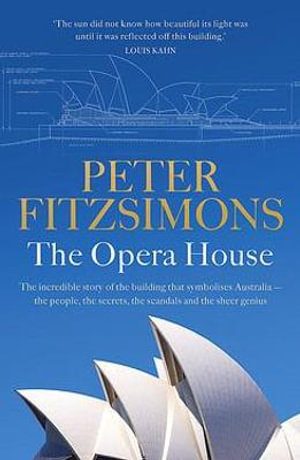
Subtitled “the extraordinary story of the building that symbolises Australia – the people, the secrets, the scandals and the sheer genius” we get a hint of the tone of this book. Meticulously researched with over 50 pages of endnotes and a preamble of 28 pages the reader is also made aware of 14 previous books on the subject before any Opera House content appears. The early part of the book is marred by the detailed raking over of Eugene Goossen’s unfortunate predilection for unconventional sex, followed by the equally detailed account of the kidnapping and death of the child of a winner of the Opera House lottery which was invented to fund the project. However, this is a great story about vision, the realities of public spending decisions, tenacity, collaboration and excellence. The significance of Bennelong Point is interesting, as is the connection to the creation of Australia’s symphony orchestras. The building itself, with its pyramid base and processional flights of stairs, just gets more extraordinary as it develops from the imagination and creative genius of architect Utzon, to the point where he has integrated a fifth façade, viewed from above, in relation to the Sydney Harbour Bridge. p. 72. The original, 1940 concept of sail roofs proves difficult to achieve in practice until the 1960 solution whereby each roof is a section of a sphere, enabling production of identically curved modules to be clad in specially commissioned white tiles; an elegant and practical solution. But the sudden death of NSW Premier Joe Cahill, champion of the project, leads to a change of government which marks the beginning of the end for Australia’s venture into architectural excellence. Budget constraints and assumption of control of the project by others lead eventually to Utzon’s resignation and the completion of the interior by others. This is a story most Australians will be familiar with but here we have 560 pages of detail covering every aspect of the subject. The unkind tone sometimes left a lot to be desired, flippant subheadings like “13 June 1962, London, in the distance, the fat lady warbles” p. 224, referring to Joan Sutherland, are inappropriate while on page 326 “the pursed purser” is too clever for its own good. When the last of the 1,056,006 tiles p. 437 completes the roof of the Opera House in March 1967 the full impact of this beautiful building becomes apparent. “When you see this building, you see Utzon” p. 437.
This book confirms that without the conjunction of a unique set of circumstances and the vision of one architect, Australia would not have the iconic Opera House. I have not read anything else by this author or on this subject and I am in awe of the research that has gone into this book but less keen on the style.
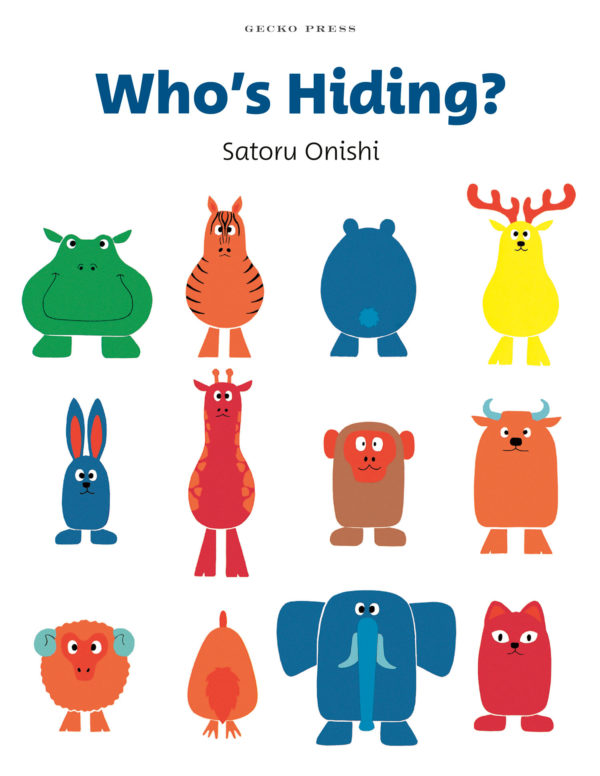
With 18 very cute little animals featured, this board book is sure to appeal to every young toddler who loves animals. Adults too, will have fun with children as they go through the book, finding the animal or animals that are hiding on a double page spread, and working out the ones that are crying, or backwards, are happy or angry or showing other emotions.
Animals include a combination of zoo animals, pets, and farm animals such as dog, tiger, hen, cat, elephant, lion, kangaroo and so on. The illustrations are labelled on the first double page spread and to add to the fun, the last double page spread is black with just the eyes shown, and the reader is questioned 'Who’s who?' It is fairly easy to find which animal or animals are hiding on the page, but when the reader is asked to identify the emotions, much more attention must be given to facial expressions and details. This could lead to discussion about emotions, how being angry, sad, happy feels. The concept of backwards could also be examined.
The illustrations are delightful, all coloured in vivid tones and the facial expressions are appealing.
The sturdiness of the book will ensure that it survives some constant handling as the interactivity of the puzzles is sure to intrigue its readers.
Who’s hiding is likely to become a family favourite, providing much enjoyment and fun.
Themes Animals, Puzzles.
Pat Pledger
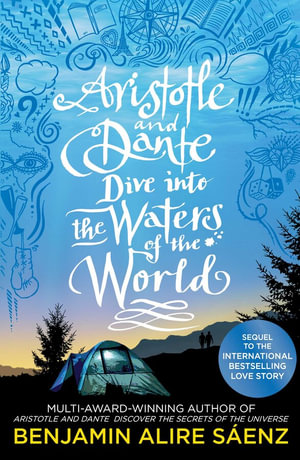
Aristotle and Dante dive into the waters of the world by Benjamin Alire Saenz
Simon & Schuster, 2021. ISBN: 9781398505278. (Age:Young Adult)
In the previous book it seems 17 year olds, Aristotle Mendoza and Dante Quintana discovered one another and have fallen in love. Here both are in their final year at different schools in El Paso Texas and must keep their relationship secret; it is enough to endure the entrenched racism towards Mexicans but they would be mercilessly bullied as homosexuals. This is particularly so as AIDS sweeps the country, polarising public opinion. Both are from loving families, Dante has no siblings but his mother is pregnant. Ari has twin older sisters, an older brother in prison for murder, and a dog. Since acknowledging he is gay, Ari is discovering more about himself and his family. He is able to grow closer to his Vietnam veteran father and talk about his imprisoned brother. But at the centre of his life is his love for Dante and the uncertainties that lie before them. Negotiating life they need to draw their own map of the world they want to live in. Told as a first person narrative though Ari’s eyes and his journal writings, this coming of age love story gives a voice to all the beautiful, thoughtful, philosophical things we might all wish we could articulate to describe our feelings. But it felt inauthentic and manipulative as if the author had an agenda of things he wanted to say and pushed the narrative around to fit. The plot seemed to lose traction as the proponents flailed their way through the last year of school and characters seemed to appear and disappear when their part of the agenda was over. The book is purportedly set in the 80s when Aids was rampant but there was no other sense of this. Some troublesome gender issues have been pointed out at length online but it will be welcomed by those who fell in love with the previous book, Aristotle and Dante Discover the Secrets of the Universe, which was very well received.
Content warnings: Gender issues, violence, death, drug death, homophobia.
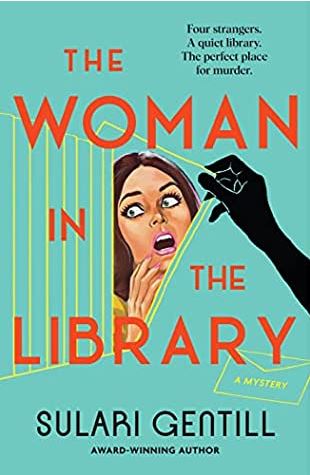
Utterly brilliant, this highly original mystery novel will have you puzzling until the end. It begins with a letter from aspiring author Leo, writing from the Boston Public Library, to bestselling Australian author Hannah, asking about how her latest novel is going. And then we have Hannah’s writing, a work in progress, about four people who actually meet in that library, drawn together when they hear a woman scream. Thus Gentill creates a story within a story. It’s a little confusing at first, but readers are encouraged to persevere, for it becomes the most fascinating brain twister, that explores all the possibilities of mystery writing. It is that extra layer that raises so many interesting questions about authorship and writing.
My preview edition of the novel came with 4 playing cards, each card a possible suspect: Winifred, Cain, Marigold and Whit. Each has their own secrets. Like a game of Cluedo, I was challenged to read the novel until page 235, then stop, and make my guess: who killed the woman in the library? Even if your edition of the book does not have the cards, it is fun to make a guess at that point. How would you solve the mystery?
There are constant reminders that we are reading a mystery story that unfolds as it is being written, and there are many possibilities that could be developed. At the same time, Hannah’s relationship with Leo seems to become darker and darker. How genuine are his offers of help, and where is it leading?
I thoroughly enjoyed this book and would recommend it to mystery lovers, and especially to readers who are also interested in the art of storytelling. It provides fascinating insight into the world of authors and writing, and is fun as well, and very very clever.
Themes Mystery, Murder, Writing, Writers.
Helen Eddy
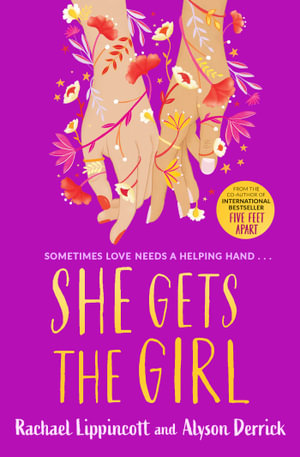
She gets the girl by Rachael Lippincott and Alyson Derrick
Simon & Schuster, 2022. ISBN: 9781398502635. (Age:13-17) Highly recommended.
'Alex is headstrong, with a dash of chaos and a lot of flirt.'
'Molly is completely in love with the impossibly cool Cora. She just....hasn't actually talked to her yet.'
An absolutely heart-filled, warm, cosy hug of a book, with always necessary and completley beautiful LGBTQIA+ rep.
Alex and Molly, polar opposites - Alex with her chaotic ways, Molly with her organised structures. Alex, always struggling to open up to the girl she loves, though trying to prove that she's not a selfish flirt, like her ex suggests (though I firmly maintain she never could've been!) Molly, head over heels for Cora, but not being sure about how to even approach her. Enter Alex, who hatches a plan to help Molly win Cora's heart, in the hopes that she'll prove to her ex that she's ready for commitment.
All that it'll take for both of them to get their girls is a five step plan.....
Oh. My. Word. This book drew me in like a big, warm embrace and I honestly did not want to let go! I loved the dual narrative between Alex and Molly, how beautiful both their alternating chapters were, Alex's especially really tugs at readers' heartstrings as we learn about (quite early on) her Mum's struggles with alcoholism. That college is meant to be a fresh start for both Alex and Molly, for Molly to make friends (she's only ever really opened up to her Mum before) and for Alex to work towards her goals of working in medicine, never having to worry about money again after having, well, not the most comfortable childhood. By the same token, it was really interesting reading about Molly's Mother's dislike of being Korean and how Molly felt bad about being Korean, at times, too, it just shows, all the more, how the characters are written as so unflinchingly real, you just want to reach into the pages and reassure both of them that everything will be okay! Without treading on the spoilery waters too much, I will say that I instantly found myself wanting Alex and Molly to get together, their spark is so electric right off the cuff!