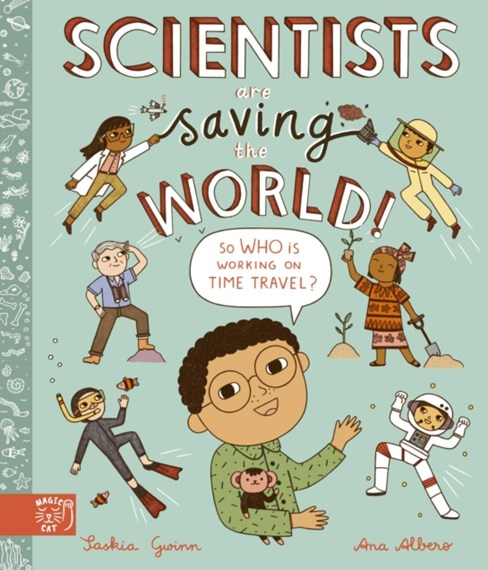
Scientists are Saving the World! is a wonderful new graphic style picture book that will provide an excellent introduction for young readers to the world of science and the role scientists play in our lives. Bright and colourful images are complemented by simple accessible text clearly written and well-spaced out.
Written as a story, the book begins with a young child asking the question, “If all the scientists are saving the world right now…who is working on time travel?” His mother’s response takes the young boy and the reader on a connected journey exploring a variety of different scientists and their discoveries. Mary Anning, palaeontologist is the first one mentioned. She discovered her first dinosaur when she was 12 years old. This is followed by astronauts including Leonid Kadenyuk who was the first Ukrainian citizen to go to space. Perhaps one of the more unusual and unfamiliar scientists are the acoustic biologists who listen to animals and record their sounds. Katy Payne recorded elephants trumpeting and with her husband discovered that hump-back whales sing songs. Many of the scientists mentioned in the book are trying to protect Earth from climate change. Biologist Wangari Maathai grew up in Africa and started a campaign to encourage local women to plant more trees. She was the first African woman to receive the Nobel Peace prize in 2004.
In the final pages of the book are 24 brief snapshots of the scientists mentioned and could be used as a ‘gateway’ for further investigation and research. Teachers may find this book a valuable resource to share with students when looking at the STEM curriculum.
Themes Scientists, STEM, Protecting the Planet.
Kathryn Beilby
Flipper and Finnegan by Sophie Cunningham. Illus. by Anil Tortop
Albert Street Books, 2022. ISBN: 9781761180071. (Age:4+) Recommended.
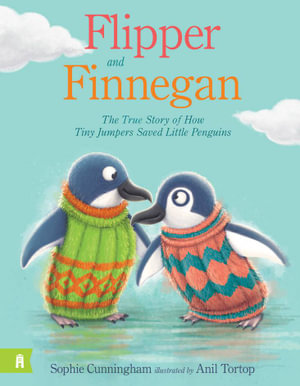
Subtitled ‘The true story of how tiny jumpers saved Little Penguins’ readers will look closely at the colourful knitwear adorning the penguins on the cover. Beguilingly the story opens giving readers information about the lives of these Little Penguins, found on the southern coast of Victoria. Readers will learn how they fish and dive, and of their nightly parade watched by thousands of tourists every year on Phillip Island, and of course, why they are called Little Penguins.
There are dangers lurking in the water but they learn to avoid them until one day a dark cloud hangs over their patch of the sea. They come up for air only to find themselves covered in oil. Meanwhile at the Wildlife Centre, Prasad and Mac have heard of the oil spill. Flipper finds herself covered in oil, oil she cannot clean, and she cannot find Finnegan, so she goes back to a new barrow only to find herself trapped. She struggles to escape but stops when she realises there is another occupant in the cage, Finnegan. Back at the Centre the only thing available to stop the penguins preening themselves and ingesting the oil that covers their bodies is a jumper. A call is put out on radio, TV and the Internet to ask for help, and even the oldest man in Australia knits. After that it is bath time, where all 10,000 feathers are cleaned with soapy water.
Once cleaned, the Little Penguins were rested up and fed before being released.
A story that gives lots of information, added to with the pages at the end of the book. Colourful illustrations of the lives of Little Penguins add to the wonder of the story which promotes environmental concerns and the impact of disaster on the natural world. When people band together a solution can be found.
Themes Environment, Little Penguins, Victoria, Oil spill, Disasters, Knitting.
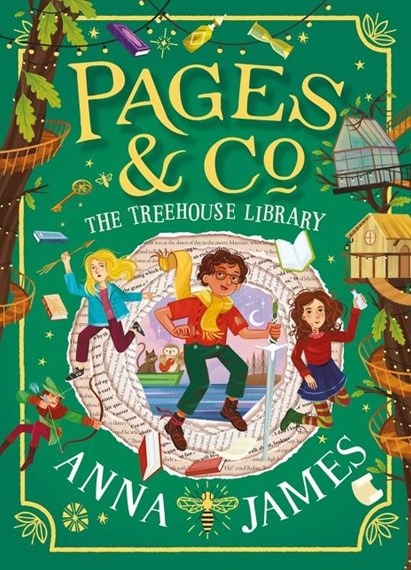
"From outside on the busy north London high street, Pages & Co looked like an entirely normal bookshop, but once inside it didn't quite make sense how everything fitted inside its ordinary walls. The shop was made up of five floors of corners and cubbyholes, sofas and squashy armchairs, and a labyrinth of bookshelves heading off in different direction. A spiral staircase danced up one wall, and painted wooden ladders stretched into difficult-to-reach corners. Tall arched windows above made it feel a little like a church when the light spilled in and danced on the air. When it was good weather the sun pooled on the floor and the bookshop cat - named Alice for her curious nature - could often be found dozing in the warmest spots. During the summer the big fireplace behind the till was filled to bursting with fresh flowers, but at it was October, a fire was roaring there."
Does this not conjure up every booklover's dream of a magical place, a bookstore where magic and mysteries, adventures and escapades beckon? And for it to be the home of Tilly who prefers the company of book characters to the people in real life and, although not having been outside London, is a seasoned traveller within the pages of the books that abound on the shelves for in the first in the series she discovered her father was a fictional character and she, herself, was half fictional. There is much more to her grandfather and grandmother and the family's history and lives than she ever imagined. Bookwandering is what this family does, and it might explain the mysterious disappearance of her mother and the absence of her father. As she and her best friend Oskar search for her missing mother, they meet the powerful but sinister Underwood family, search for the mysterious Archivists and encounter the Sesquipedalian, a magical train that uses the power of imagination to travel through both Story and the real world. It is owned by Horatio Bolt who specialises dodgy dealings as a book smuggler trading in rare books, and his nephew Milo...
In this, the second last in this series, Tilly and Milo hurtle towards their final showdown with the Alchemist, and the stakes are higher than ever - though there is always time for hot chocolate! Milo Bolt is ready to be the hero of his own story. With Uncle Horatio trapped in an enchanted sleep by the power-hungry Alchemist, he sets off with his new friend Alessia to find a cure and save them all. Their journey leads them to the magical treehouse - home of the Botanist, the Alchemist's sworn enemy. Against the clock, they hunt for the cure: foraging in the Secret Garden, challenging Robin Hood and confronting the mighty Jabberwock.
But the Alchemist will stop at nothing to unlock the powerful secrets of The Book of Books, and Tilly, Pages & Co. and the whole world of imagination are under threat as a battle for the fate of bookwandering is set in motion..
Created for independent readers or perfect for classroom read-alouds, this is a series that really needs to be read from the first one in order so that the subsequent adventures have context but it will have the book lover hooked from the start, regardless of their age, and wishing they too could bookwander into the magical, mystical world of their favourite characters. Miss Now 12 is going to be delighted when her copy arrives in the post as she has been hooked on this from the start.
And if you have readers looking for similar stories about magical bookshops, suggest The Bookseller's Apprentice and The Grandest Bookshop in the World. to tide them over while they are waiting for the final of Pages & Co., probably about this time next year. In the meantime, those who haven't ventured into the doors of this magical place have time to catch up!
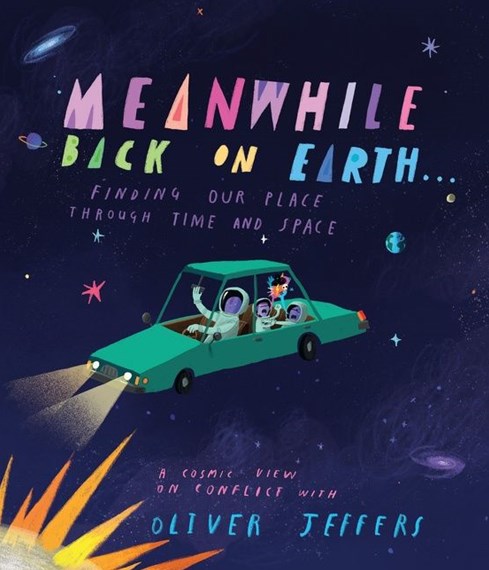
An outstanding view of Earth from space is constructed in this highly original perspective of our place in space by internationally applauded author illustrator, Oliver Jeffers.
A father takes his two children in the car travelling initially to the moon. Driving at 37 miles an hour, they will take one year to cover the half a million miles. From the moon they look back at Earth one year ago, and see people cannot agree on what to do about the world’s problems. The family travels on to Venus, seventy eight years away. Looking back they see that Earth 78 years ago was besieged by war with tanks, soldiers, planes dropping bombs, with an atomic bomb seen in the background. Driving on for another 150 years take them to Mercury and looking back they sees the carve up of Africa, as European nations fight over this continent. Mars is 170 years away, and adult readers will be predicting what conflict Jeffers may allude to as the family arrives on the red planet. Four nations again are fighting over a small piece of land jutting into the sea. Not much has changed.
And so on we go, the readers taken on a trip around space, seeing what planets are in our solar system and how far they are from each other, giving children a unique perspective of our place in space. And more importantly a perspective on what we have achieved over millennia, as each turn takes us back a number of years, revealing the incessant conflict which has occurred.
A children’s guide to the universe and a brief history of the conflicts of the world are presented in a way that is most accessible, as the children are in a car with their dad, driving between planets. The vastness of space is broken down into manageable chunks, the view back to Earth conceivable as the readers are all aware of the tensions that borders create.
Jeffers was born and raised in Northern Ireland and says that being in New York gives him a perspective of the conflict back home. The us and them becomes just us, as he travels back in time to when man first lived in caves, intent on survival, and nothing else.
Beautiful images of space throughout this story will give all readers pause for thought as each of the planets radiating from Earth comes into view. The small car and its three occupants journey across space and time taking the willing readers with them, sharing a view of the trouble the world has built for itself, finding in the end that there is no place like home.
The endpapers offer an outline of our solar system with Earth’s distances from each planet and a time line reprising the conflicts alluded to in the text. Adults and children alike will be intrigued and provoked, initiating endless discussions and multiple readings, while quotations from astronauts add another layer of interest.
For information about this uniquely talented author look hereand be sure to check out the clip of the book on his website, or find it on YouTube.
Themes Conflict, Space, Solar system, Journey, Home.
This time, engineer Mike Lucas tackles the building of a backyard after Let’s build a house (2022) accompanied by illustrator Daron Parton who adds an inordinate amount of detail to every page, enough to keep the most inquisitive of kids happy. As with any gardening enterprise, planning is important so the first page sees dad and his daughter planning their grade. A tip truck delivers the soil which is then mixed with compost. A fence is built around the edge, luckily there is a large tree already there, a perch for the many birds in the area. The pair build a nest box and a bee hotel, then lay the irrigation system. A vegetable patch is dug and edged, a scarecrow erected, a pond installed and flowers planted. All done, it is time to rest in their new backyard.
All the fun of creating a useful backyard is shown in this rhyming text as dad and his daughter work on developing their garden. Children will love seeing the efforts they make in moulding the plan to something more usefully than the bare patch shown on the first page, and will enjoy the array of things illustrated on each page.
Perhaps the school has a garden which children may like work in, or one at home where vegetables are grown. Reading this book may give them ideas for the classroom or a space at home.
The book lends itself to talking about what can be grown at home or in the school, and what the vegetable pictured are.
Harbinder Kaur, first introduced in The Stranger diaries, winner of the 2020 Edgar Award for Best Novel, returns in another riveting story. She has been newly appointed as Detective Inspector and transferred to London. She is faced with a big case – a well-known climate change denying Conservative MP, Garfield Rice has been found murdered during a school reunion. Amongst the former students attending the reunion are Cassie Fitzgerald, now a police officer, who is hiding a deadly secret, Anna a foreign language teacher who has returned from Italy to look after her ill mother, a famous actress, a rock star, and another politician. As Kaur begins her investigation, it becomes increasingly clear that there is a link to a death of another student in their final school year – a young man who fell to his death from a train platform. Then another murder is committed, this time in Bleeding Heart Yard.
The story is told in three voices, that of Cassie, Anna, and Kaur, and all bring different insights into the narrative. Cassie believes that she and her friends killed their fellow classmate and has tried to hide this from her memory. She is convinced that one of her classmates could be the murderer of Garfield Rice and the reader becomes very involved in her feelings and memories of the past. Anna has different memories and has lived abroad but finds that returning to London brings back feelings long buried. Kaur must sift through all the evidence, relying on her instincts whie beginning to trust her fellow detectives.
It is easy to picture the London that Griffiths describes. In her afterword she says that Bleeding Heart Yard is a real place, as are the streets that Kaur’s flatmate Mette travelled along. The private school that Cassie and her classmates attended is also vividly described.
This was a well written, engrossing story, with an ending that I did not expect. This series is likely to prove as popular with readers as the Ruth Galloway series.
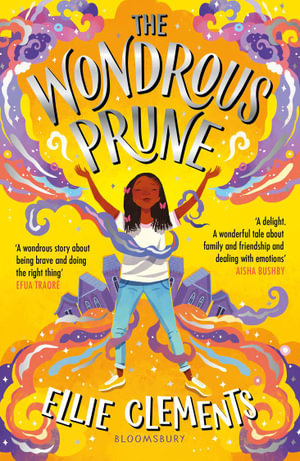
The Wondrous Prune by Ellie Clements is a heart-warming story, sharing strength, creativity and love. This charming tale will have you hooked from the very beginning. With a heroine who will capture your heart, you will be invested until the very end.
Prune Robinson is an ordinary eleven-year-old girl who suddenly discovers she has an extraordinary power. She loves to draw but is struggling with many conflicting feelings. Having just moved into her grandparent’s home with her single mum and older brother, Prune is extremely overwhelmed with emotions. Sadness from leaving behind her old friends and school life. Grief over the loss of her much loved Grandma and Poppa. Anger over her older brother’s choice in friendship and subsequent troubles. Fear at starting a new school and navigating new friendships.
When a normal day suddenly becomes one that will change her life forever, Prune is in shock and disbelief. Clouds of colours enter her life and she wonders if she has a problem with her eyes or even her brain. However, when she discovers these cloudy hues can be funnelled into bringing her drawings to life, Prune is uncertain about how to deal with this. The magical colours, that are for her eyes only, leave her confused and worried. To make matters worse, she has just found herself the target of ruthless bullying by “the Vile-lets” at her new school. Without wanting to worry her mother, she tries to deal with these perplexing situations alone. She can’t even rely on her older brother, as he has his own issues to deal with. What is she to do?
Ellie Clements has created a highly engaging and inspiring novel. Where real life and supernatural easily intertwine, every reader will be enchanted and entertained. Bringing up interesting discussion points, as it delves into the positive and negative effects people have on one another and also how to overcome adversities in everyday life, this story has a lot to offer. The Wondrous Prune is a highly relatable and relevant tale, with a little touch of magic too.
Themes Bullying, Supernatural powers, Relationships, Problem solving, Creativity.
Michelle O'Connell
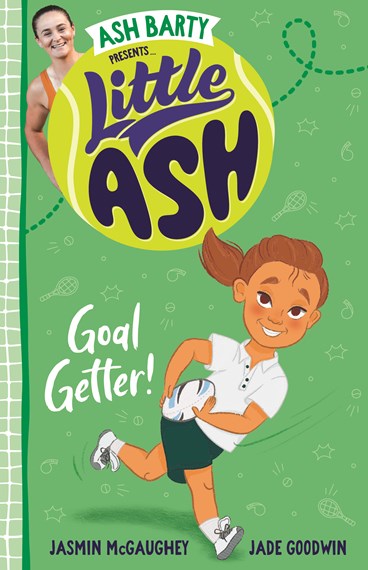
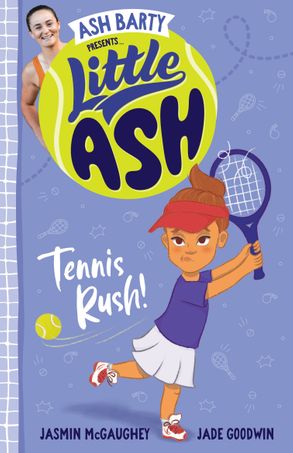
Little Ash: Goal getter by Jasmin McGaughey and Jade Goodwin
The fourth in this series of books ideal for young primary people, has Little Ash learning how to take defeat as she loses the lunchtime touch footy match. In year two, she is distraught at losing, but her friends take her to another game, lounge room golf to try out. When she loses this match she wants to give up sport altogether. Then she would never lose and so never have this awful feeling again.
Watching football that night, she is devastated when her favourite player misses the ball and the game is lost. Dad guess her some sage advice, to try her best and not worry about losing: a lesson she puts into practice the next day when she loses to James at tennis.
Each of the stories promotes open discussion between friends and family, they model supportive friends and family and promote determination and resilience. The stories are easy to absorb, do not preach and are attractive with information about Ash Barty, and the writer, Jasmin and illustrator, Jade inside the back cover.
Themes Tennis, Sport, School, Choice, Family, Determination, Little Ash (series).
Fran Knight
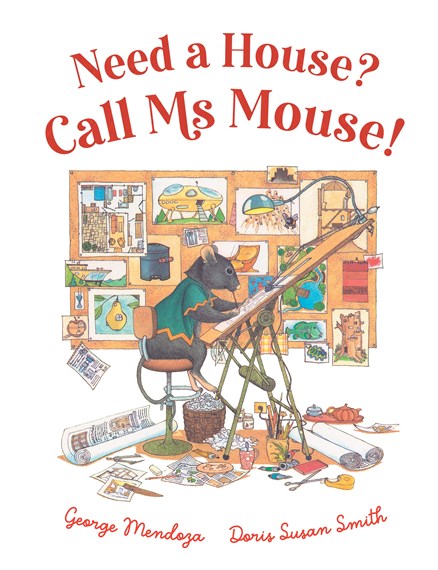
Need a house? Call Ms Mouse! by George Mendoza and Doris Susan Smith
Allen & Unwin, 2022. ISBN: 9781761066016.
The sign outside her home says that Ms Mouse & Co are "builders, designers and decorators" and certainly she has a portfolio to back her claims. All the animals want to live in a house designed by Ms Henrietta Mouse, because she is the only mouse in the world who understands exactly what makes a squirrel or a rabbit, a caterpillar or a frog feel at home.
With her faithful mouse helpers she has built just the right home for so many of her forest friends and each is shown in beautiful detail on each double spread from the spaceship for Squirrel to the underwater Atlantis for Trout to the highly tuned web for Spider. Fourteen homes in all, so what does her own home look like?
As the 2022 season of The Block draws to a close, the interest in home design and décor is rising, and I am always amazed at the number of children who not only turn up to view the open houses but who can speak quite knowledgeably about the contestants and what they have achieved. Some even aspire to be on the show themselves. So this picture book will inspire their imaginations as they think about what their own house might look like, taking into account their personal preferences and foibles, or perhaps inspire an activity that involves designing a home for an Australian animal, also considering their unique needs. Combine it with books like Puffin the Architect, and Built by Animals and there is the basis for a range of skills and strengths to come into play combining STEM and art that might even kickstart a career choice...
Themes Homes.
Barbara Braxton
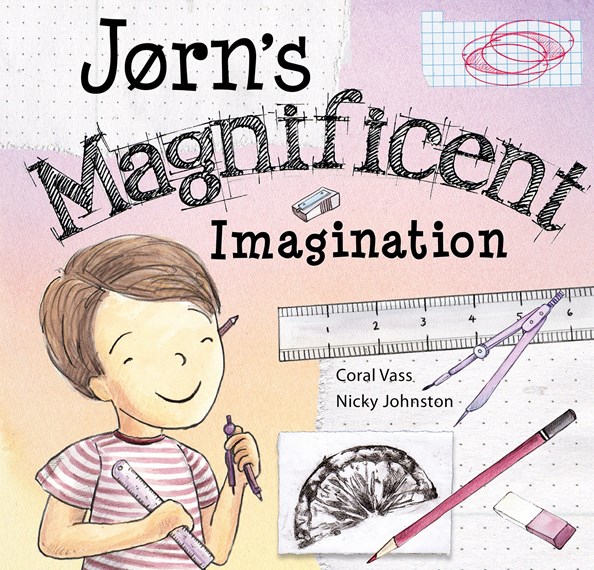
Jorn’s magnificent imagination by Coral Vass and Nicky Johnston
Exisle Publishing, 2022. ISBN: 9781922539144.
It is the backdrop to the lives of so many, draws millions of visitors from around the world, and yet is so familiar now that many don't even see it.
Who would have thought that such a magnificent structure could grow from a little boy playing with sailboats, watching swans land on water, collecting seashells and flowers, even playing with his breakfast orange peel? And yet it did and in this beautiful retelling of the young life of Jorn Utzon, the reader learns not only of the beginnings of one of the world's most recognisable buildings but the power of the imagination, and the importance of letting dreams lead us into amazing places.
Where might today's discovery take a young person in years to come? Even if it is a wet, indoors day, what might they build from "rubbish" that could become the start of something magnificent? In 50 years, will a nation be celebrating their dreams as they are about to celebrate Jorn's?
Sensitively written and illustrated in a way that doesn't reveal the mystery to the end, this is a book that not only celebrates a little life that has big dreams that come true, but inspires the reader to drift away and imagine... If Jorn could begin a building with orange peels, could they make a city floodproof by playing in their porridge and milk?
Themes Sydney Opera House, Jorn Utzon.
Barbara Braxton
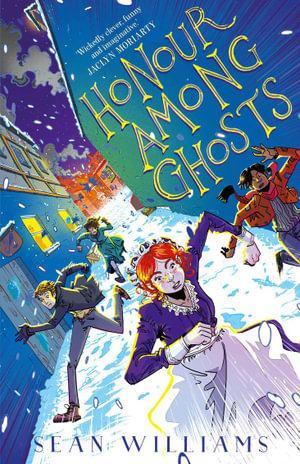
Honour among ghosts by Sean Williams
Allen & Unwin, 2022. ISBN: 9781761065767. (Age:middle grade) highly recommended.
When 12 year-old Penny’s father, the town’s monumental mason, is thrown into goal for possessing a stolen gold cup, Penny knows that he is innocent and vows to see him freed.
Mysteriously, over the next few days, at least a dozen other items belonging to the town’s rich appear in poor people’s homes. Enlisting the help of Colm, Magistrate Nightwick’s son, Mab a magical scribe’s apprentice, and Niclas, a young ‘traveller’, the four are determined to disprove the suspicion of theft that is cast on the recipients.
This middle grade mystery is set in the same mid-Victorian Irish town as was Williams' earlier Her Perilous Mansion. Here it is populated by a large cast of engaging and delightfully named Dickensian characters from all walks of life, attempting to survive a freezing winter and avoid being wrongfully thrown into prison. Over the course of the detective hunt, they express prejudices, take sides and eventually come together for the common good.
Without being heavy-handed, Williams gives a gentle nod to ‘issues’ such as recycling, gay attraction, ethnic discrimination and death taxes. He has his young protagonists question socially institutionalised inequalities and distribution of wealth, and appreciate the importance of relationships both within families and between strangers. The power of the written word and the importance of questioning authority is crucial to the plot, while the difficulties encountered by Travellers is particularly well fleshed-out and the female characters are feisty and ambitious.
While realistically recreating the social interactions and living conditions of the 19th century, Williams adds a layer of magical activity, and a cast of ghosts who are central to the plot but could concern some when recommending the book. This is a fast-paced book with bold protagonists in a well-developed fantasy world, where the characters’ actions and reflections will keep the middle-grade reader engaged.
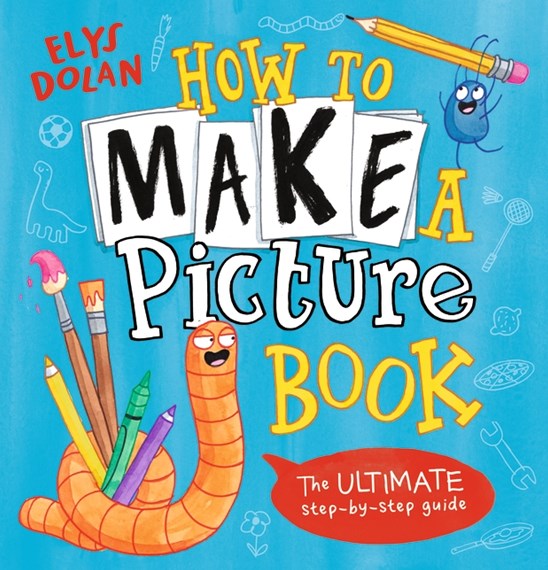
How to Make a Picture Book is a very entertaining step by step guide to the creation of a picture book. The book begins with an introduction by the author who explains the use of the “assistant” Bert throughout the book as well as explaining what a picture book is. It is full of humour and fun activities that will appeal to all ages.
The first step in the process is to find an idea. It is suggested the budding writer construct a list of favourite things and add them together to make a story idea. After that the next step is to find some characters and give consideration to not just how they look but how they might behave. The setting follows and the writer is encouraged to begin small and zoom out to expand the setting. Finally, it is time to write the story. Building blocks can help and this is clearly explained through words and pictures.
“Assistant” Bert has his own bonus pages where he shows the reader the procedure of how to physically make a picture book. This is followed by information about adding illustrations to the story and the use of colour.
This book would be a worthwhile visual resource for primary school aged children to the process of writing and constructing a picture book. It is light and entertaining and offers some wonderful ideas to help children along the way.
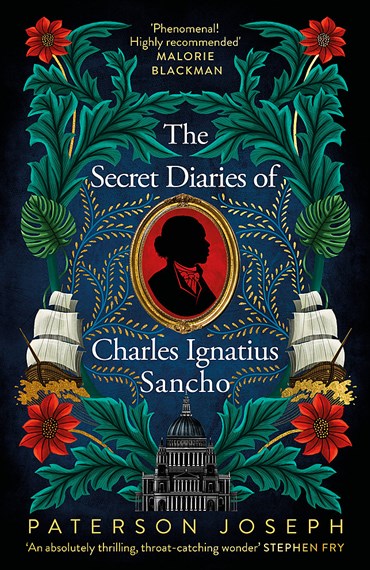
The author’s note at the beginning of this novel invites the reader to accept his version of a real person, Charles Ignatius Sancho, fictionalised to “avoid the lugubrious snares of a history-laden story, full of choice educational snippets”. In telling “the story of the Black presence in the United Kingdom in the eighteenth century” the author is telling "the tale of a lucky African orphan, who despite being born in abject slavery, rose to become a leading light of the abolitionist movement”. Then we are offered the “Prologue 1775”, explaining that this account , hidden until after his death, is for Charles Ignatius Sancho’s son, and immediately we are unsure of where the fiction and non-fiction begin and end, so the reader must surrender to the ensuing story as historical fiction. The first person diary account flits back and forth between current and past diary entries as well as in the form of letters. We learn that Sancho was born on a slave ship on the way to sugar plantations, orphaned then sent to England as a three year old where he became a servant to a household of three women in Greenwich. The sisters were well connected and Sancho came to the notice of the Duke of Montagu who encouraged him to learn to read and play music, however the sisters forbade this and he had to pursue his education in secret. Eventually he escaped but was pursued by the slave catcher as his status as the child of slaves in England equated to slavery. Like Fielding’s Tom Jones our hero is flawed, with a weakness for food, drink, gambling and a blatant self-interest, relying heavily on rich benefactors. He endures hardship, often of his own making, “self-absorbed to the detriment of my character” p197. But Sancho turns his life around for the love of his life, Anne Osborne, eventually becoming a father and shopkeeper with the right to vote.
No doubt this is an important novel, shining a light as it does on an aspect of English history previously unexamined but I found the prose, self-consciously trying for a regency flavour, difficult and too often the author tells rather than shows us aspects of the era. I was prompted to go and look at Wikipedia to read “educational snippets” about Charles Ignatius Sancho so the book has succeeded in raising awareness about this little known figure. By scanning a QR code on the cover the reader can “Discover Sancho’s London”. The author’s status as a “beloved British actor” and the topical nature of the subject matter will ensure the book’s popularity.
Book three in this wonderful series of stories for younger readers will encourage calm in the face of anxiety as Ash prepares for her first big match. She has been preparing for weeks and is ready to show off her newly acquired skills. She wakes before anyone else and has to be content watching cartoons until everyone wakes. Dad makes breakfast and Ash is about to gobble it down until Dad points out that she might get a stomach ache and that would spell disaster. As they eventually drive away from home, she remembers her favourite cap, but Dad refuses to go back for it as it would make them late. The car in front has a flat tyre forcing them to stop for a while. Ash is very frustrated. Finally they read the tournament and the administrator cannot find her name. Just in time it is spotted and Ash must hurry to the court. Dad keeps telling her to calm down and have fun. And eventually she does.
Another warm hearted story showing the problems that may ensue when getting ready for your first match, the butterflies people feel and the need to stay calm.
All wrapped up in a charming tale of Ash and her first match.
The six books in this easy to read series of stories concentrate on how Little Ash feels in separate scenarios, but all showing positive role models, behaviour and outcomes.
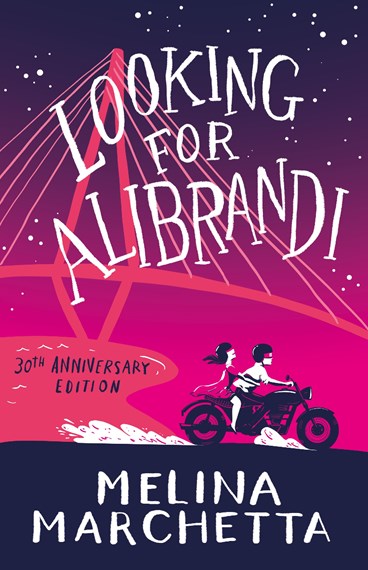
The memorable opening scene has Josephine Alibrandi struggling with a multiple choice questionnaire in her final school year and falling foul of Sister Gregory as it is from “Hot Pants” magazine. Brazening it out in front of the class Josie comes across as funny and smart with a healthy disrespect for the system. She is attending St Martha’s Catholic school on a scholarship, a school dominated by rich, mostly Anglo-Saxon Australians where her friends are Anna, Seraphina and Lee. She lives with her single parent mother, Christina in a terrace house in Glebe. Josie’s mother works so she has to go to her Nonna’s after school and they are both strict with her so she is not able to go out a lot. In spite of being born in Australia as was her mother, they maintain strong Italian cultural ties in spite of the fact that the Italian community rejected them because of her mother’s unwed status. Josie is very close to her mother and knows her father’s name is Michael Andretti and that they broke up before he knew she was pregnant so when he returns to the area things get complicated.
The story has stood the test of time and along with the issues of feelings of not fitting in, there are the timeless issues of coming of age, negotiating young adult relationships and envisioning a future pathway. There have been successful film and play adaptations and now there is this lovely hard back edition. 30 years ago a single mother was able to buy a terrace house in Glebe, there were no mobile phones, the internet was in its infancy and Aids was killing many but this is a well told story that has stood the test of time. In the preface Melina Marchetti looks back on the thirty years since the first edition and reflects on its enduring popularity. She admits it has defined her but “Best of all it has made me grapple less with the questions of who I am and where I come from”, may it help others for many years to come.
Themes Italian Australian culture, Single parent family, Friendship, Relationships, Coming of age.