The Afghans by Asne Seierstad
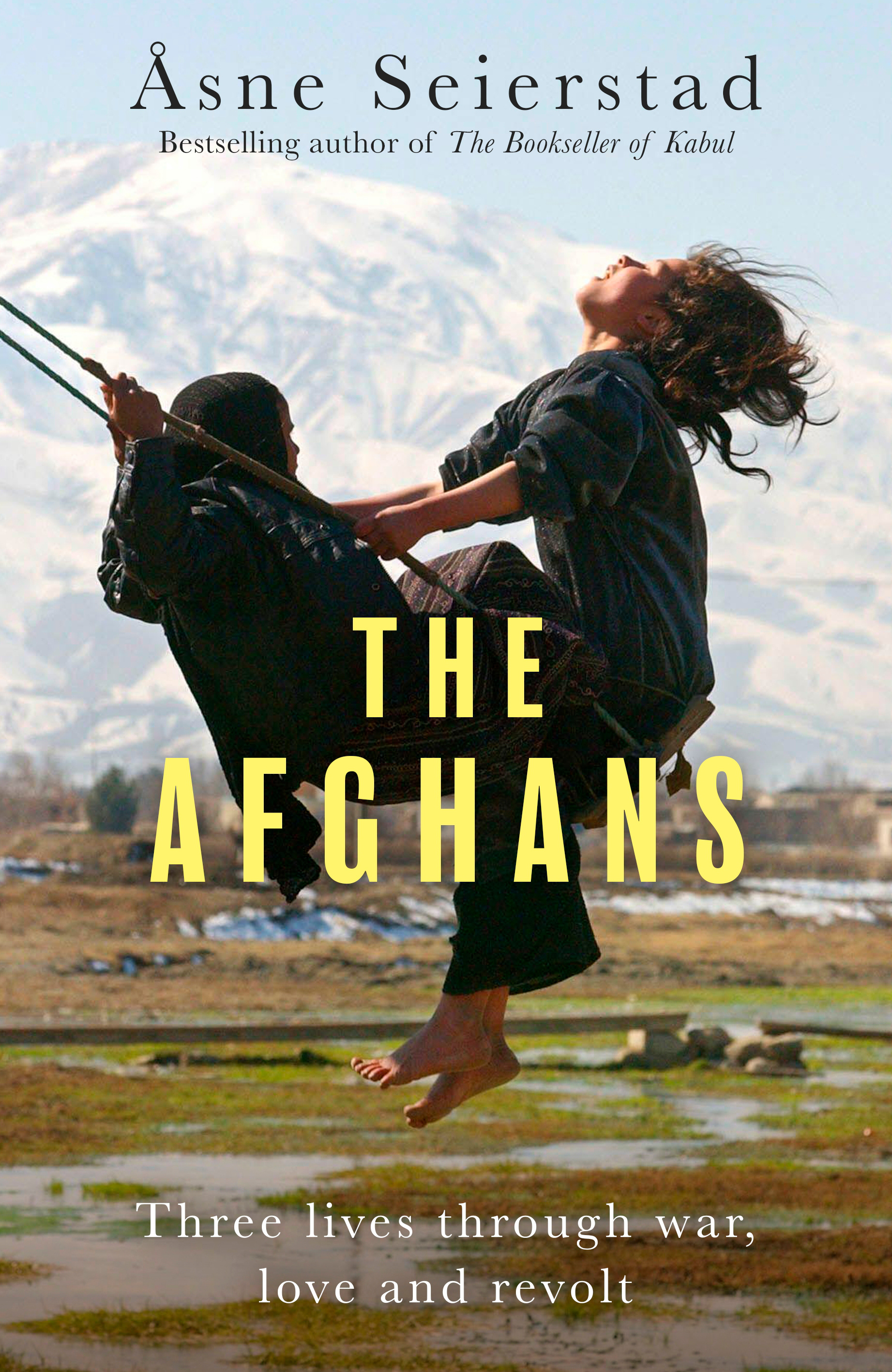
Twenty years after writing the bestseller The bookseller of Kabul (2004) Asne Seierstad returns to Afghanistan as the Taliban has returned to power. Subtitled ‘Three lives through war, love and revolt’, this latest novel investigates what life is like under the new Taliban regime. Although fictionalised, the book is based on in-depth interviews with three key persons, Jamila, Bashir and Ariana, three people from different decades, Jamila in the 1970s, Bashir in the 1980s and Ariana in the 2000s. Seierstad’s approach was to combine verbatim interviews recording what people told her about their lives, with historical context drawn from documented research. She draws on her experience as a war correspondent to provide a full picture of life in Afghanistan. A ReadPlus student reviewer of another of her works Two sisters (2018) describes how this kind of approach creates ‘an intense, enticing and furthermore investigative book, one that has sparked questions and conversations within myself but [also] internationally’. The Afghans is another profoundly interesting insight into a world that most people have only a vague idea about.
Jamila is an Afghani woman who in the years following the initial defeat of the Taliban was spared the usual fate of arranged marriage because of a crippled leg as a result of polio that deemed her not likely marriage material. It meant that she was allowed to continue her pursuit of education and she made the most of that opportunity to intensively study the teachings of the Qur’an and develop arguments based in sacred scripture that argued against the oppression of women. She used her expertise to counter the traditional restrictive practices that had no basis in the religion.
In counter to this, Seierstad interviewed Bashir, a Taliban fundamentalist fighter, as well as the women that became his wives. The reader comes to live in his world, have insight into his perspective as arbiter of all decisions, and understand how the women also are a part of this, knowing no other expectation.
Finally there is Ariana, who in the intervening years between periods of Taliban rule, experienced the freedom of pursuing the joy of higher education only to have her dreams of graduation dashed one semester short of completion, with the return of the oppressive Taliban regime. In these times, her parents retreat to a fear that marriage is the only way to ensure her safety.
Seierstad’s book raises many questions about how to move forward with the issue of women’s rights in Afghanistan. Her observations reveal how actual support for women’s education within the Taliban has been overruled by an extremist view, and suggests that the best approach is not international sanctions but engagement in respectful dialogue with the varied perspectives of the Taliban group. After all, Afghanistan is the only Muslim country that has as its policy to not educate girls. Perhaps it is wiser not to confront, not to engage in war or internal uprisings, but to facilitate communication between nations.
The Afghans is a well researched and authoritative work that readily engages the reader in real lives, and puts across different viewpoints in an understandable way. It is a highly recommended book for readers interested in women’s rights and political history.
Themes: Afghanistan, Taliban, Women's rights, Islam.
Helen Eddy