Good young men by Gary Lonesborough
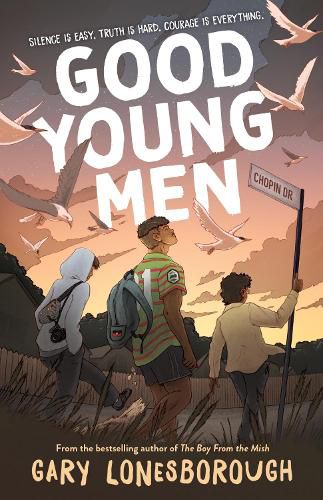
Gary Lonesborough is such a talent! He has written yet another incredibly engaging YA novel that takes you into the heart of life for Aboriginal teenagers on the cusp of adulthood in a small coastal town rife with bullying and racism. The first page sets the scene with council workers scrubbing away the latest graffiti in the shopping centre: ‘WHITE POWER’.
The book is almost three separate stories about Kallum, Jordy, and Dylan, but they are all linked together, by their earlier childhood friendship, and by the memory of Brandon, the fourth friend, now dead, shot by police. Kallum is struggling to fulfil his father’s ambitions for him to become a star football player; Jordy is trying to keep his family together whilst grieving his mother’s death and his father sinking into alcoholism; and Dylan, the one with the bad reputation, is in a kind of limbo between his separated parents. Dylan is the one who was partying with Brandon the night he died, he’s the only one who knows what really happened, and has to go on the witness stand when the murder trial takes place.
All three boys are at a crucial point, having to make decisions about how to act and where they want their lives to go in the future. For Kallum there is the added uncertainty about his sexuality and a tentative exploration of gay friendships online, something that seems fraught with danger.
Lonesborough is a master of bringing to life the world the boys inhabit. His language is literal, simply describing the houses, the furniture, the food they eat, the drinks, the conversations they have. We are taken into that world like watching a film. But somehow he also builds a tension as we watch the boys walk the street, drive cars, go to parties, and meet up with strangers. It’s a tension built from knowing the kind of danger that might occur. On more than one occasion, I found myself dreading what might happen next. I had to keep turning the pages.
In the end Good young men provides positive messages of being true to oneself, valuing family and close friendships, messages that are an undercurrent through all his books. Highly recommended.
Themes: Aboriginal community, Identity, Sexuality, LGBQTI+, Police violence, Racism, Friendship.
Helen Eddy