Circle of days by Ken Follett
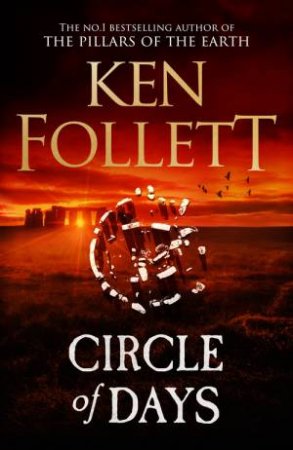
Stonehenge, a world-renowned UNESCO World Heritage site, circa 3000BCE to 2500BCE, was built partially for renown according to Ken Follett in his latest family saga Circle of days. Ken Follett is one of the world's most successful authors. His first success was The eye of the needle in 1978. In 1989, the highly acclaimed epic The pillars of the earth was published. Circle of days follows his impressively researched 2023 Kingsbridge installment, The armour of light. In this speculative story, Follett imagines and researches the lives of the Neolithic and Bronze Age inhabitants of Salisbury Plain, Wiltshire. Somehow and for some reason in this period, the most architecturally sophisticated prehistoric stone circle in the world was built. Follett has studied the construction; that of large standing sarsen stones (150 tons each) and smaller bluestones transported (somehow) from Wales featuring wood-work styling joints and aligned with the sun, making the summer and winter solstices significant for some reason.
Visitors still in these technologically sophisticated modern times, are awe-struck by Stonehenge. How could we build such a monument today, let alone the people who lived in an era before mechanisation, advanced engineering techniques when no wheels or metals were used? The questions remain: Who built it and how and why did they build it? Building on historical advice and a visit to Buster Ancient farm in Hampshire (an Archaelogical museum site), Follett has blended research and imagination to create a plausible explanation for how Stonehenge came to be, along with another great multi-generational family saga, a genre for which he is so acclaimed.
Of interest and support to the reader, in the end pages is an early aerial photograph of Stonehenge in modern times and a c.1900 rendering of how it looked when it was first completed. In addition map artwork of the region through which the stones were believed to be moved is provided so that the reader can place sites pertinent to the story.
The main characters are strong and engaging, as one would expect that the masterminds behind a feat like Stonehenge would have been. To plan, persuade hundreds of people and to have the know-how to succeed with such a "monumental" project one must assume would entail, an organised society, with powerful leadership and powerful reasons for performing such a task. Does religion drive such a movement... or hunger, need, fear, superstition, lust for glory or posthumous recognition? Follett has the answers for you. Two main characters drive the plot. Seft is a flint-miner, with a skill for masonry, carpentry, engineering and working with people. He is a commanding presence, a natural leader and good man. Joia is a priestess, sister of Seft's wife and a charismatic leader and visionary. Drought ravages the plains and terrible conflict and bloodshed is looming between the three groups of people existing in that time-herders, farmers and woodspeople. Something has to be done to avert crisis, to keep the communities prosperous and to make them an attractive stopping place on the trade route.
Follett imagines the social, economic and daily lives of these people. He presents possible behaviours around the rites of death, styles of leadership and group organisation, social dynamics, economic life, sustenance, family life and especially religious/spiritual life. In a pared back style, he evokes the simple communications, sentence structure and understandings of the people in those Neolothic times. Follett details the minutiae of daily life down to food and labour division and even understandings of measurement for example this will take you as long as a pot of water takes to boil or this distance is around the length of an arrow's flight. Rooted and dependent on nature for survival as the people were, Follett imagined that the priestesses held great power over the simple folk because of their ability to count the days and know the crucial times of the year eg Midsummer which dictated the time for planting, reaping and festivity.
Brutal and harsh, heartbreaking and heart-warming, Circle of days, true to Follett's writing is a captivating historical immersion into the people and times of the building of Stonehenge. Follett brings a human story to the mystery of Stonehenge.
Themes: Stonehenge, Neolithic lifestyle and technology, Ancient worship, Cosmic cycles.
Wendy Jeffrey