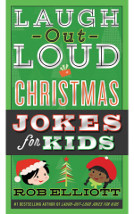
Laugh-out-loud Christmas jokes for kids by Rob Elliott
HarperCollins, 2016. ISBN 9780062497918
(Age: 6+) Recommended. Jokes. Christmas. There are lots of laughs in
this latest joke book from Rob Elliott. Kids will delight in the
wacky humour - although adults may groan at some of the jokes. There
are many of the favourite Knock Knock jokes that kids love
eg.: Knock, Knock
Who's there?
Muffin
Muffin who?
Naughty kids get muffin for Christmas
There are hundred of jokes that will delight children who love
telling jokes to each other and adults. They will have lots of fun
dipping into the book and finding their favourites and tricking
friends and family. Here is another sample: Why was the snowman so mean?
Because he was coldhearted.
Cute little illustrations are scattered throughout the book, which
is a small paperback size, ideal for newly independent readers as
well as older children.
This would be a great Christmas stocking filler or a fun book to
have in the classroom to get a smile on children's faces during the
countdown to Christmas.
Pat Pledger
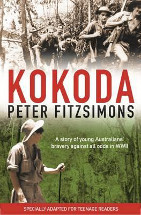
Kokoda by Peter Fitzsimons
Hachette, 2016 . ISBN 9780734417435
(Age: 12+) Recommended. Peter Fitzsimons has done an excellent job
of creating a teen edition of his book Kokoda. The text
reads like a novel yet there are no fictional elements and the work
does justice to the amazing exploits of those 'ragged bloody heroes'
without the inclusion of content inappropriate for teens. The
stunning performance of a poorly trained, inadequately supplied
militia, who fought to the death to stop a ferocious enemy, whilst
grossly outnumbered, sickened by tropical diseases and suffering
malnutrition, is the main focus of this book.
As an Australian who is proud of those who gave military service to
our country, I am simultaneously conscious of the need to avoid any
hint of glorification of war in literature. Fitzsimons shows
unashamed reverence for those who endured almost impossible
conditions in the New Guinea jungle as he recounts the courage shown
by military units and the almost unbelievable bravery of
individuals. Whilst doing so, he emphasises terrible suffering,
almost unimaginable fear and the trauma, both physical and mental,
which affected those soldiers for the rest of their lives.
The exploits of these soldiers have become legendary in the
Australian mindset and it is important that we are reminded of the
historical facts, to help us remain grounded, avoiding myth and
imaginative dramatisation. In explaining the significance of the
'chocolate soldier' militia and the enormous respect that the 39th
Battalion earned, Fitzsimons does not shy away from acknowledging
the fact that the 53rd Battalion largely failed its military
objectives and did not serve with distinction. Importantly, the
author notes that these servicemen had completely inadequate
training and suffered from terrible organisation and planning in the
early stages of the operation. Similarly, Fitzsimons is to be
commended for having the courage to openly criticise the Australian
General Blamey for his arrogance, ignorance and incompetence during
the campaign. Further, the author is also bold enough to voice that
General Douglas MacArthur was similarly incompetent and that many
Australian and American lives were wasted due his idiotic orders
influenced by an inflated ego and an unawareness of reality due to
being nowhere near the action. This is important, given that
MacArthur was accorded heroic status by a tame press and film
industry.
I recommend this book to teenagers of 12+ years and to adults who
will enjoy it whilst learning a great deal.
Rob Welsh
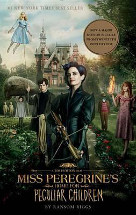
Miss Peregrine's home for peculiar children by Ransom Riggs
Quirk Books, 2016. ISBN 9781594749025
(Age: Young adult) Recommended. This is a quirky fantasy tale of a
young boy's quest to uncover the story behind his grandfather's
dying words in very unusual circumstances. The fantasy tale reveals
a community of very peculiar children locked in a time loop, and
their struggles to overcome an attack from an unusual source.
The story is very readable once you get past the first few chapters
where the main character is undergoing psychological struggles and
treatment. The book also includes some very bizarre photographs (set
in 1940's).
There is nothing unsavoury in this story but it is most unusual and I
can recommend it for young adult readers.
Carolyn Hull
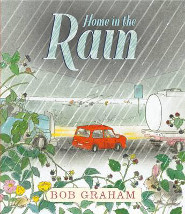
Home in the rain by Bob Graham
Walker Books, 2016. ISBN 9781406368239
(Age: 4+) Highly recommended. Families, Relationships, Rain, Home.
This story of family and home replicates themes Graham has always
used, ones which are persistently asked for by readers of all ages,
ones picked up eagerly when seen in the library, classroom or shop.
My now 35 year old son was not a reader, but when a book seller came
to town and set up his display, my son ran to the Bob Graham books,
recognising their familiarity, grabbing them with a please buy these
for me look to his parents, and sitting down to read in the shop.
This will be just as eagerly sought by younger readers, as Francie
and her mum and only just showing new baby sister drive home from
Grandma's house in the teeming rain. They are caught between huge
lorries plying the motorway, one of which pushes their little red
car onto the verge. In the parking bay they take a rest from the
incessant rain and traffic, and eat the lunch that grandma made for
them. After drawing her family's names on the windows Francie asks
her mum about her new baby sister. She is interested in what this
new baby will be called. Mum tells her that no name has been chosen,
but when an idea comes she will know. They go on their way, with the
rain and then hail still making their journey difficult. At a
service station, mum has an idea about a name, and so Francie is
able to write that name on the car's window, just as she did with
her own and her parents.
Bob Graham has the ability to make a small moment one of
significance and portent. A child and her mother deciding on a new
name for a baby sister is full of significance for this small
family, with their father working away from home and grandma also
living far away. It will not have been noticed by any other person
but for this family, it is remarkable. And this is reflected in the
beautiful drawings, as the sun comes out guiding their way back
home.
Graham uses his masterful technique to bring the feeling of their
journey to life, as they are squeezed between the many trucks on the
highway, slowed by the rain, shown in large white lines across most
of the pages. Their small car is diminished by the stream of trucks,
but it stands out in the sea of grey, while the edges of the pages
and the highway are tinged with blackberry bushes and small animals,
bringing the countryside into view. Each page offers a perspective
to think about: the highway signs pointing to home, the sweets found
in the car pockets, mum kicking off her shoes to rest, the other
people at the service station, the view of the oil rig out to sea,
perhaps showing us where dad works. I love every page and all who
pick up this book will too.
Fran Knight
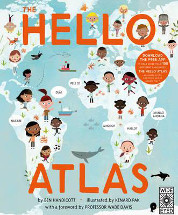
The Hello Atlas by Ben Handicott
Ill. by Kenard Pak. Wide Eyed Editions, 2016. ISBN 9781847808493
(Age: Primary) Recommended. Theme: Language; Social Atlas.This is a
language atlas that can be read - but it is also linked to a
child-friendly free downloadable App that 'speaks' basic phrases in
each of the languages that is highlighted in the pictorial Atlas.
The book is organised by Continents, highlighting the array of
languages that are spoken and gives basic information about the
'age' and features of these languages. Following this main page are
picture pages with basic phrases used by each language. (Used in
conjunction with the App, a child could also learn how to pronounce
each phrase as well as see it written - a valuable feature for a
book about language.) Even Antarctica has languages highlighted -
for the researchers and scientists who are stationed there. Note:
Only a small number of Aboriginal languages are highlighted in
Australia, but it does mention that there are more that exist.
The text also indicates where languages are at risk of extinction
and why, and also why it is good to retain an original language. For
children just learning that their own language is not the only one
in use in the world, this book makes a delightful resource,
particularly when used in conjunction with the App (easily
downloaded from the App Store or Google Play.)
Recommended (Particularly as a School Library resource for Primary
Schools)
Carolyn Hull
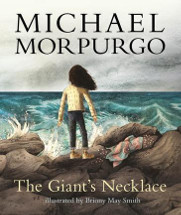
The giant's necklace by Michael Morpurgo
Walker Books, 2016. ISBN 9781406357127
(Age: 9+) Highly recommended. Coming hot on the heels of my review
of Michael's Such stuff is this absolutely beautiful short
story/novella which is both poignant and thrilling. And of course,
now I also want to know the 'prompt' for this particular story.
A family is on their annual summer holiday on the Cornish coast in
the same cottage in which they always stay. As usual the secluded
little beach is all theirs and for the entire stay, Cherry, the
youngest in the family, has been vigilantly collecting perfect pink
cowrie shells and stringing them into a 'giant's' necklace much to
the amusement of her four older brothers.
On the last day of the holiday Cherry is short of her target by only
about a hundred shells and knows that she can achieve her goal.
Knowing the child is safe on the beach the family go back to pack up
ready for the next morning's departure leaving Cherry with her
fixation.
But when the weather turns bad and the sea turns worse Cherry is cut
off from her usual path home. At first she is frightened but
realises she should be able to climb the cliff to safety. A strange
light from a cave attracts her attention midway and she finds
herself in an old copper mine where two old-fashioned Cornishmen are
working away. They sense her distress, warm her and comfort her and
eventually the younger man leads her to the surface and she is able
to find her way home.
No spoilers here - to find out the twist in the tail/tale you will
have to read it for yourself.
Beautifully presented in a small hardback with stunning
illustrations and delicious glossy pages, this is a treat for the
senses.
Highly recommended for readers from around nine years up.
Sue Warren
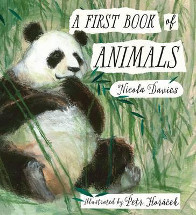
A first book of animals by Nicola Davies
Ill. by Petr Horacek. Walker Books, 2016. ISBN 9781406359633
(Age: 7+) Recommended. Animals. Poetry. A large format, hard-covered
book filled with glorious illustrations of a vast variety of animals
on our planet, accompanied by poems of varying styles and length,
each of which talk about their habitat will be pored over by younger
readers. They will read the poems out loud or share them with
friends, laughing at the antics of the animals presented, but also
taking in a great deal of information.
Entitled A first book of animals, it is not what most would
expect, a tome with lots of pictures and a catalogue of information
in a non fiction style, with perhaps maps and a fact file. Instead
we find poems of varying length and style, some blank verse, others
with rhyming lines or stanzas, some almost like limericks, but all
readable and accessible for younger readers. The illustrations give
the pages pizzazz with most colourful and engaging pictures,
covering the whole double page. Younger readers will love searching
out the various things in the background of each page against which
the animal is set.
I loved the pages on the zebra and the camel, and can now work out
the difference between the one humped and two humped camel.
The contents pages show the book is divided into five sections: Big
and small, Colours and shape, Animal homes, Animal babies and
Animals in action, and each section contains about a dozen animals to
consider. Younger readers will learn about using a contents page and
be able to select which animal they wish to look at in detail.
Fran Knight
Triple crown by Felix Francis
Jefferson Hinkley Bk 3. Simon and Schuster, 2016. ISBN
9781471155482
(Age: 15+) Crime. Mystery. Horse racing. Jeff Hinkley is back, this
time taking the reader on a ride to the US, behind the scenes in the
American racing industry. Jeff Hinkley has been seconded by the US
Federal Anti-Corruption in Sports Agency (FACSA) as an outsider to
see if he can find the mole in the organisation, who is letting
corrupt trainers know when they will be raided. He is able to set up
some structures for this to happen, but on a raid at the Kentucky
Derby, things go wrong and a trainer is shot dead. Going undercover
as a groom, Jeff faces danger as trainers go for broke, in the hope of
winning the coveted Triple Crown.
The theme of drugs in sport came to the fore in this novel, and it
was fascinating to read how Jeff had to contend with the problem of
new ways of drugging horses. There were a few surprises and some
thrilling action in the last part of the book that kept me reading
to the end.
I have been a big fan of the novels by Dick Francis and enjoyed Refusaland Damage
by Felix Francis, but this one fell a little flat for me. Even
though the information about the American racing scene and life as a
groom was interesting, at times it felt as if it was more important
than the mystery and suspense, for which both Felix and his father
Dick Francis have been known. Nevertheless, as I did really enjoy Damage,
I will pick up any Jeff Hinkley novels in the future, hoping that
there is more character development and a faster paced plot for him
then.
Pat Pledger
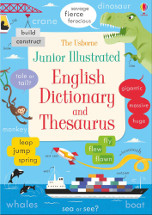
Junior illustrated English dictionary and thesaurus by Felicity Brooks
Ill. by Nikki Dyson. Usborne, 2016. ISBN 9781474924481
This new release from Usborne, who are masters at putting together
quality education resources, comes in perfect time for sharing with
parents who are looking for something special for the Christmas
stocking for that between group who are a little old for toys but
not quite ready for all the trappings of being a young adult.
Grandparents will LOVE it as a suggestion!
With so many thesauri and dictionaries on the market for this age
group, there has to be a point of difference to make a new one stand
out and having seen and used so many over my 40+ years of teaching,
it's hard to think what that might be. However, Usborne have
discovered it - scattered throughout the 480 pages amongst the 6000+
words are text boxes with all sorts of information about the words
including spelling tips, word families, word origins and so on - each
of which helps the child build their vocabulary and their knowledge
of how words and English work so they can build on what they know to
be even more proficient. There are explanations about the s/z
conflict in British and American English as well as things like the
t/ed endings and who uses which. (Australian standards use 't' but
either is acceptable where there is a choice and the context and
meaning is not changed).
There is a comprehensive 'how to' introductory section which
explains the features and layout of the book including how to use a
dictionary generally, the different word classes such as nouns,
adjectives and verbs and links to further explanations, activities
and games for both the dictionary and the thesaurus which will
extend the user's knowledge and skills even further. In between the
dictionary and thesaurus sections are pages about how to make
plurals, and prefixes and suffixes, all serving to make this more
than just a word finder. The plentiful, colourful illustrations are
really useful and would serve someone learning English for the first
time very well, particularly older students who prefer something a
little more grown-up than basic alphabet books.
If you are looking for a new class set of this sort of reference
text for the library, this one really deserves serious consideration
- in the meantime, this copy will find its way to Miss
Almost-Year-5. It will be the perfect present for her.
Barbara Braxton
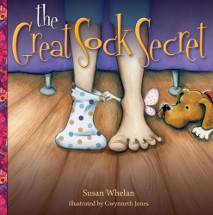
The great sock secret by Susan Whelan
Ill. by Gwyneth Jones. EK Books, 2016. ISBN 9781925335248
It is one of the great mysteries of our times. Ever since washing
machines were automated and readily available, pairs of socks have
been forever separated, never to meet their match again. And Sarah's
house is no different - there is a basket full of odd socks and her
mum is on a mission to find their partners.
But Sarah knows where they are - the fairy families that live in her
house are masters at repurposing them for all sorts of fun and games
- and she is desperate that her mother not discover the truth. She
even suggests that they take Max the puppy for a walk instead but
her mother is not to be deterred or distracted and so the great sock
hunt begins. However, even though she searches high and low, in
cupboards, behind doors, in the bathroom, under the furniture, and
in brother Thomas's bedroom, her mother's eyes are not as sharp as
Sarah's and she does not see what is really happening with the
socks. But when she is satisfied with the two she does find Sarah
breathes a sigh of relief - until her mother suggests that they now
start searching for lost pens...
This is an utterly charming story from the team that created the
outstanding Don't
think about purple elephants that reminded me of The
borrowers by Mary Norton (and which would be a great
read-together serial as a follow-on.) Like Sarah, the reader has to
have sharp eyes to find what has happened to the socks because so
much of the story is in the wonderful illustrations - a trait of
perfect picture books in my opinion.
Young children will take great delight in seeing what adults can't
as they try to spot all the fairies as well as suggesting what else
they might use the socks for. Maybe that is where all the missing
socks in their homes have disappeared to - watch them go searching
but don't let them tell! Miss 5 loved this - we read it over and
over during a recent visit and there was something new to discover
each time! And yes, The borrowers will be the next family
serial.
Barbara Braxton
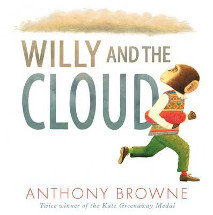
Willy and the cloud by Anthony Browne
Walker, 2016. ISBN 9781406366969
(Age 4+) Highly recommended. One of my favourite authors, Anthony
Browne, has done it again with another wonderful book starring
Willy. This time Willy has a dark cloud that seems to be following
him, no matter what he does to try and get rid of it. When he goes
to the park, everyone else is sitting in the sun and enjoying
themselves but he shivers under the cloud feeling miserable. The
cloud follows him home and he is very unhappy. He tries to work out
how to make it leave, but nothing works until he comes up with a
solution to banish it and he can then be happy.
Browne's signature illustrations are as captivating as ever. The
misery on Willy's face will ensure that readers will empathise with
Willy as he does his best to overcome his unhappiness. The drama of
the moment when Willy shouts at the cloud and makes it go away with
resonate with readers, who will be thrilled to find that Willy can
be happy in the rain and the sun.
This is sure to be a perfect book to discuss feelings with children
at home and in the classroom. It could lead to an understanding that
everyone can feel depressed, anxious and lonely and Willy has one
solution to make his cloud go away. Children may be able to come up
with other ways of combating depression and loneliness. Willy and the cloud is a keeper.
Pat Pledger
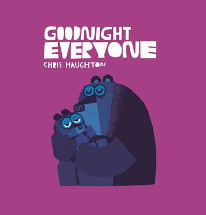
Goodnight everyone by Chris Haughton
Walker, 2016. ISBN 9781406352320
(Age: 6 months - 6) Highly recommended.
'No dreamer is ever too small, no dream is ever too big'.
Chris Haughton's Goodnight Everyone is a simply told bedtime
story, starting with a small yawn, that grows bigger and bigger
until all the forest creatures fall asleep. Each turn of the page
reveals the mice, hares, deer even Great Big Bear, and they are
covered up and almost tucked into bed by the movement of the page.
Of course Little Bear will not give, however all the animals are too
tired and he too falls fast asleep.
Haughton's mastery of colour saturation, shape manipulation,
composition and layout are key elements. Multi-layered digital
images in vibrant, rainbow tones encapsulate and enliven this
bedtime story. Engagement with the actions from small yawns, to
gentle snores and a goodnight kiss opens up the simple, soothing
narrative to a young baby.
The front and endpapers show the Southern and Northern night skies
with the planets in order from the sun. The Little Bear and Big Bear
constellations are highlighted and their shapes transform into the
main characters. As the story is shared, look for the dandelion seed
blown by one of the mice; it floats through the pages like the
circle of life.
The easy to recite responsive text and bold illustrations make Goodnight
Everyone by Chris Haughton a fantastic picture book for
families to share. He writes about the inspiration for the book here.
Rhyllis Bignell
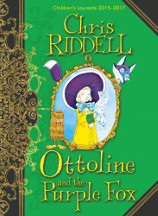
Ottoline and the Purple Fox by Chris Riddell
Ottoline, book 4. Macmillan Children's Books, 2016. ISBN
9781447277927
(Age: 7+) Highly recommended. Ottoline and the Purple Fox is a
dazzling new story from UK's Children's Laureate, Chris Riddell. It
was the first that I had read about Ottoline, but I had no problems
with the characters or the plot as it read beautifully as a
stand-alone story. Fans of Ottoline will no doubt be thrilled to
read another story about this independent little girl and the
strange hairy Mr Munroe. In this story the pair meet a purple fox
who takes them on an urban safari where they discover all the
animals who live in the city. While Ottoline takes notes about the
animals, Mr Munroe is intrigued by the poems left on the lamp post
and they both want to help the lonely poet find true love. The pair
organise a dinner party for all their friends and hope to help out
the anonymous poet.
This is a whimsical, humorous story that delights the senses with
its wacky ideas and fabulous illustrations. Ottoline is a wonderful
girl and the introduction of a new friend, Myrrh, who looks just
like Ottoline adds a twist that has the reader thinking about where
she fits into Ottoline's life. The purple fox grabs the reader's
attention and the journey through the city that he takes Ottoline
and Mr Munroe on is fascinating as various animals are shown in
amazing habitats.
Each page has something for the reader to linger over and smile
about and young readers will be pleased to be sent to other pages
for more information. There is a nod to the stories about Goth Girl
by Riddell - a subtle hint to the reader that there are other books
by this author! At the back is a fancy dress fortune teller that
children will love to make and use.
This is a series that is a feast for the imagination for all ages
and will richly reward those who are prepared to spend time perusing
the illustrations.
Pat Pledger
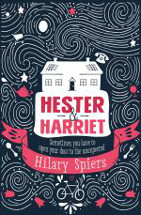
Hester and Harriet by Hilary Spiers
Allen and Unwin, 2015. ISBN 9781925266412
(Age: Secondary-adult) Highly recommended. Crime fiction. Humour.
Asylum seekers. England. Two widowed sisters, Harriet and Hester,
live together in a small cottage in an equally small village in the
south of England. When one night they see their local homeless man,
Finbar in some distress they find that there is a young woman and a
baby in his living quarters, the local bus shelter. They take the
girl in, keeping her warm, and feeding her, finding that she has a
limited grasp of English and is very scared. At the same time, their
nephew Ben, lands on their door step, having run away from home.
They must give shelter to all three guests and find that the wayward
and taciturn Ben, who in the past has caused some upset within the
family, has skills never before known. He is able to talk to Daria,
and look after her son, Milo, and even more surprising, finds a
talent for cooking.
Problems compound when the women realise that someone has been in
their house and Finbar attacked, while a strange man has knocked at
their door, asking awkward questions.
The characters are a treat: each pedantic about the use of their
language, correcting Ben without a second thought, while homeless
Finbar is a classically educated man using Latin phrases. All three
have a wonderful grasp of language adding to the pleasure gained in
reading. When the women find that their houseguest has no passport
and has run away from where she was working in London, only to be
taken in by another couple with suspect motives, their impetus to
get in touch with the police is stalled by Ben's revelations.
They begin to be aware of Daria's untenable status in this country
and resolve to protect her, while at the same time keeping
themselves safe.
This is a beguiling read but beneath the word play, humour and
mocking tone lies a plea for refugees, asylum seekers, displaced
people and those for whom home is no longer a safe place. Through
finding out more of Daria's situation in England her legal rights
are brought to the fore, giving the readers a firm basis of fact,
enlisting their sympathy for people in this position.
Fran Knight
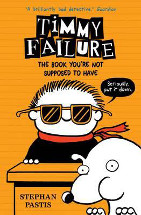
Timmy Failure: The book you're not supposed to have by Stephan Pastis
Walker Books, 2016. ISBN 9781406369762
(Age: 8+) Humour. Detectives. This is the kind of book
written for kids who like silly humour, impossible logic and
exceptionally odd and quirky characters who like to solve problems
(even if the problems don't really exist). Timmy Failure is a legend
in his own mind, and he considers himself to be the world's best
young private detective, however his definition of genius and his
tendency to see the world from a very warped perspective seem to get
him into trouble. With the looming wedding of his mother to Doorman
Dave (a man Timmy loathes), and with the punishment of NO detective
work until school is over, Timmy takes unusual routes to hide his
devious detective agency from her attention, and to avoid
participation in the wedding. Failure is intensely awful at
detective work, but he does not realise this. He also ropes in
classmates with equally dreadful deductive reasoning and manages to
just create mayhem wherever he goes.
Pastis has created a series that kids will like, but this is
certainly not great literature. With a crazy plot, scattered comedic
caricatures throughout the book and silly chapter headings, there
are plenty of places to tickle the funny bone of readers aged 8+.
But don't expect that they will grow in their maturity and empathy
by reading this book... it is more likely that they will giggle
at inappropriate moments!
Carolyn Hull