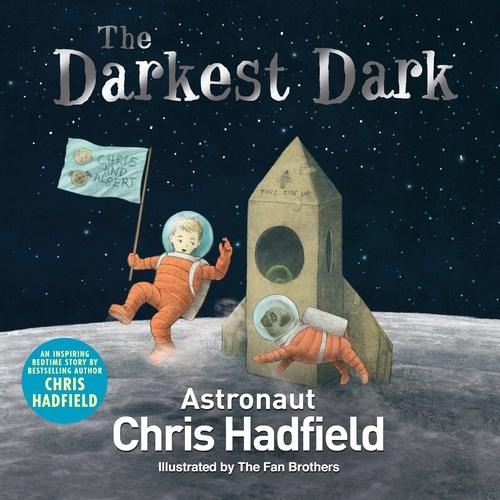
Ill. by Terry and Eric Fran. Macmillan, 2017. ISBN 9781509824090
(Age: 5+) Highly recommended. Space, Astronauts, Fear of the dark,
Overcoming fear, Canada, Aspirations. Canadian astronaut Chris
Hadfield has put his considerable background experience in space to
pen am exciting picture book based partly on his childhood. The boy
Chris is an astronaut, building space ships from what ever he finds
around the house, chasing aliens away, flying to Mars in his bath.
His imagination is wild, but when it comes to going to bed his
imagination grows even wilder, imagining all sorts of aliens and
monsters in his bedroom. His parents try all sorts of techniques to
overcome his fears, but to no avail; he still ends up in their bed
at all times of the night. Astute readers will notice the calendar,
July 1969, and be aware that on several days during this momentous
month, two men landed on the moon. Chris and his family are invited
next door to watch the moon landing on their neighbour's television.
And watching this Chris sees the darkness of space, and resolves not
to be afraid again, but to do everything in his power to become what
he wants to be.
The superb illustrations done in pencil, then coloured digitally,
are stunning, reflecting the Canadian hinterland with its pine
cabins and forests, lakes and star filled skies. The images showing
the space capsule, Apollo 11, are absorbing and will be pored over
by younger readers.
For classes looking at space and the moon landing, rockets and
science this book will be a wonderful introduction to that work, as
well as being a platform for talking about fears and overcoming
those fears.
Hadfield wrote this book with journalist and author, Kate Fillion,
and the Fan brothers worked on the illustrations together. Readers
will be encouraged reading the extra information Hadfield adds at
the end, displaying photos of his youth and time as an astronaut and
telling the readers how he made his dream come true.
Fran Knight
Release by Patrick Ness
Walker Books 2017. ISBN 9781406331172
(Age: 16+) Recommended. Adam Thorn has always liked boys. At
seventeen he has had two boyfriends and four sexual partners. But
despite being comfortable enough with himself, he is not comfortable
being open about himself with his family, who are deeply religious
and anti-gay. This is the crux of a number of problems - many of
which drive Adam to keep his sexuality away from his family as much
as possible.
It was meant to be the best day. Adam has a tight schedule but he's
looking forward to the evening and Enzo's going away party. But
first - chores. He must stay on his parent's good side otherwise
they will change their minds about the 'gathering'. Things start to
go downhill from the beginning. When Adam's brother, Marty, goes to
him for advice, Marty accuses him of not knowing what real love is.
This in mind, on the day Adam is planning to have sex with Linus and
farewell Enzo, his ex-in-denial, Adam starts to wonder if something
is wrong with him and whether he might just not deserve love.
Meanwhile, not so far away, the spirit of a dead girl merges with
the spirit of the lake to get revenge on her murderous boyfriend.
While it can be said that this is a coming out narrative, Ness
produces a book that shows the uncertainty and fear in which many
people hold coming out to their families. It is an easy and
engrossing read and I would recommend for teenagers sixteen and up.
Kayla Gaskell, 21
The Medusa chronicles by Stephen Baxter and Alistair Reynolds
Gollancz, 2016. ISBN 9781473210196
(Age 14+) Highly recommended. Science Fiction. With permission from the Clarke Estate, this novel continues the account of Commander Howard Falcon, who is the main character in Arthur C. Clarke's award winning short story A meeting with Medusa. Howard's life changes after a horrific crash in the Grand Canyon and he is saved by experimental surgery. This surgery changes Howard into a cyborg - part human and part machine - and has the effect of extending his life by centuries. The Medusa Chronicles is a compelling account of Howard's journey over the centuries involving the evolution of AI into thinking machines, the manipulation of the intelligence of animals of earth, human exploration and colonization of planets and moons and their interaction with the inhabitants of these planets and moons. The reader is not required to have read Clarke's A Meeting with Medusa before reading this novel as the authors encompass Clarke's short story in their novel.
The Medusa Chronicles delves into how the human race reacts to intelligent machines, intelligent animals and native inhabitants of other worlds, the possible consequences of this interaction and the moral and ethical issues that are raised. The ending reminds you of parts of 2001: A Space Odyssey revealing mystical and enormous possibilities of the future.
If you are a fan of science fiction genre and, in particular, Arthur C. Clarke's novels you will thoroughly enjoy this book. This is a classical science fiction novel.
Glen Avery
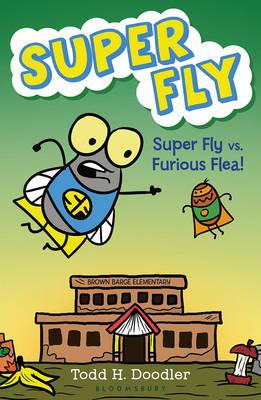
Super Fly vs Furious Flea by Todd H Doodler
Super Fly series. Bloomsbury, 2017. ISBN 9781619633841
(Age: 6+) Recommended. Humour, Rubbish. This is one in a series
about Super Fly, a geeky school student who loves to invent things,
and one day becomes a super fly, able to fly 9,000 times faster than
normal, cleverer by 9,000 times than usual and altogether a really
handy person to have around. But he cannot reveal himself to his
fellow students, let alone the bully in the school, Cornelius C
Roach.
The first chapter in this rollicking book reprises some of the fun
that has gone on before, acquainting readers with the reason Eugene
Flystein became Super Fly, and hinting at problems he has solved,
along with his sister, Fly Girl and his friend and sidekick,
Fantastic Flea.
But in this story, rifts appear between Fantastic Flea and Eugene,
as he becomes rather conceited after being named Student of the
Season. The Roach senses the rift and turns Fantastic Flea against
his friend. The Flea take his training to heart, getting himself fit
for the big meet.
The humour comes thick and fast with puns on the protagonists names
and where they live. Each part of the rubbish tip at Stinkopolis is
used, including the toilet bowl where Eugene and his family live.
Tongue in cheek humour, a liberal sprinkling of puns and toilet
humour will make this an instant hit with those newly skilled at
reading chapter books. The chapters are short and include
illustrations, and I love the way the author has used language which
will stretch some children's vocabulary.
All in all, fun from start to finish.
Fran Knight
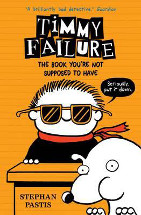
Timmy Failure: the book you're not supposed to have by Stephan Pastis
Walker Books, 2017. ISBN 9781406373653
(Age: 9+) Recommended. Timmy has been banned from his detective work
and has to wait until school is over. The teachers have gone on
strike so school has been extended. Timmy has to find a way to carry
out his work and solve the mystery of the missing Rollo and do all
this without getting caught by his mother or his loony cousins.
This book was a funny and interesting book, the character's roles
were strange and all played funny/clever roles. I loved how the
story had feeling and the plot was imaginative. The story had many
problems, some big some small, all of them got solved in the end.
The theme engages the reader and it has a new perspective from what
I normally read. The settings are creative; the settings are set
around Timmy's home town. The book is written from Timmy's point of
view. The book has an imagery style.
I would recommend this book to 9+ boys who are interested in
detective stories and to read the books in order.
Grace Colliver (Student)
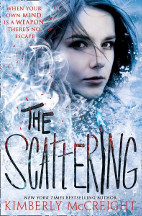
The Scattering by Kimberly McCreight
The Outliers book 2. Harper Collins 2017. ISBN 9780008115081
(Age: 14+) Recommended. Only weeks have passed since the incident at
the camp in The Outliers. Wylie and Jasper are both far from
fine, united in their shared insomnia and horror. Cassie is dead.
Nothing can help that. But things fall into seeming normalcy as
everyone tries to move on. Wylie, now aware of her Outlier powers,
has been practising reading people. She has discovered how to
diverge her anxiety from that of others, but even still, reading
someone can be difficult. While it seems like the horrors born of
her Dad's research are over, they have only just begun.
A new researcher as appeared and is interested in taking over Dr.
Lang's work, this time with a theory about the girls being outliers
due to an illness. While at first, he seems harmless, things change
when Wylie is captured, drugged, and awakes confined in a quarantine
area with a number of other outliers. As if that weren't enough to
send Wylie's anxiety over the edge, Kendall (one of the cops from
the camp) appears, this time as a doctor. The other girls have
decided that Wylie is mad. It doesn't take Jasper long to break into
the ward and find Wylie but she refuses to leave. She can't just
abandon the others. Faced with the problem of how to save people who
don't know they need saving, Wylie must use all her wits to keep
them all safe.
Following on from The Outliers, this novel can only be read
as a sequel. Although not as great as the first, it still retains
the mystery subplot and focuses more on family and loyalty than on
romantic subplots - keeping the focus on Wylie's anxiety and outlier
abilities. Recommended for readers fourteen and up.
Kayla Gaskell
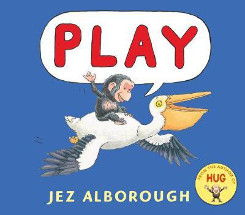
Play by Jez Alborough
Walker Books, 2017. ISBN 9781406373073
(Ages: 2-5) Play features Bobo the Chimp from the immensely popular
Hug. The simple story is told mainly through illustrations,
with limited text (some speech bubbles with one to two word
utterances). Bobo's mother is attempting to get Bobo to settle down
to bed but the sun is still up and Bobo is determined to play with
his friends. He repeatedly sneaks off when his mother's back is
turned. When the sun does set, Bobo is alone and scared. 'Mummy' he
calls in a loud, shaky voice. Sighted and flown home by his pelican
friend, Bobo is delivered safely into the arms of his worried
mother. The double page where Bobo and his mother are intertwined in
sleep is gorgeous and portrays a real sense of safety and comfort,
which young children who enjoy snuggling with a loved one will
identify with. The next day Bobo wakes early with the sun and is
filled with excitement for the day ahead. 'Play', he says. Following
the illustrations across the page is lots of fun and the vivid
illustrations bring the actions and emotions of the characters to
life. The use of simple words makes this great for emerging
independent readers and for younger ones who will be able to tell
the story using only the illustrations. There is a touch of moral
teaching here about listening to your parents and keeping safe but
it is more a celebration of every day adventure and the uncrushable
spirit of young children. It may also open up conversations about
the cycle of day and night. The artwork really is something special,
especially as Alborough has perfected these characters in previous
books Hug, Tall and Yes. A must for all Bobo
the chimp lovers but it will also be enjoyed by those who haven't
met him before.
Nicole Nelson
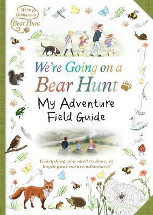
We're going on a bear hunt by Hannah Pang
Walker Books, 2017 We're going on a bear hunt: My adventure field guide. ISBN
9781406375954 We're going on a bear hunt: My explorer's journal. ISBN
9781406375961
(Age: 8-12) Highly recommended. These two companion titles based on
the We're Going on a Bear Hunt animated film offer children
a wonderful opportunity to find out about their environment while
giving parents and carers a great tool to make excursions more
interesting. My Adventure Field Guide is divided into the following
sections: High in the sky, Down in the ground, Further afield, Tiny
plants and tall trees, Incredible Creepy Crawlies, Extraordinary
creatures, Keeping on Track and The Big Wide World. There are many
facts contained here with easy to understand explanations of many
things that children wonder about: Why is the sky blue? Why is the
sea salty? What is an insect? There are also projects that children
can do like building a worm farm and making a bird cake to feed
birds in winter. Some recipes that children can make with adult help
are also featured. The Big Wide World section looks at ways that
children can look after their environment by recycling and
conserving water My explorer's journal is a companion to the field guide and
gives information on how to keep a journal. Children are given ample
opportunity to record what they have seen on their outings. The book
is sturdy with thick paper with plenty of room for children to write
down their observations and draw what they have seen. Some
activities include pasting in flowers and leaves and making a back
garden den. Blank pages at the end mean that children can come up
with their own ideas, drawings and collections of natural objects.
The activities are not for very young children but the familiarity
of the We're going on a bear hunt book and film will still appeal to
older children. The illustrations are based on the soft water colour
palette by Helen Oxenbury and are very appealing.
These two books would be ideal to take on holiday as they have so
many things that children would find interesting. They provide not
only activities about the natural world but a wealth of information
that will stimulate learning and could also be used in the classroom
as a tool to encourage curiosity about the natural world.
Pat Pledger
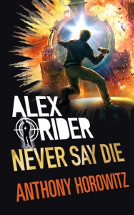
Alex Rider: never say die by Anthony Horowitz
Walker Books, 2017. ISBN 9781406377040
(Age: 12+) Highly recommended. Spies, Thriller, Action adventure,
Suspense. What a read! all the trademarks of a highly sophisticated
adult thriller are here to delight, entrance and entertain. Hard to
put down, I was engrossed with Horowitz's ability to get Alex Rider
into the most dire of circumstances then extricate him with flair
and just a little suspension of belief. I found myself saying, 'oh
come on' with disbelief at some of his escapades, but it is all
written with such tongue in cheek awareness, that I had to remind
myself that it was just a story. And a brilliant one at that, the
eleventh in the series.
Alex has been sent to San Francisco with the Pleasure family,
ostensibly to start a new life after the deaths of his uncle and
mentor, Ian Rider, and friend, Jack Starbright.
But he receives a cryptic phone message. Knowing Jack as well as he
does, he sets out on a journey to find her, convinced that she is
still alive. He flies to Cairo returning to the place where he was
hideously tortured and forced to watch Jack being killed. Here he
meets again some of the thugs he met before, but MI6 is also on his
trail, wanting him to keep out of their business, and return to San
Francisco. But again he evades them all, going to the South of
France to find a ship. Sneaking on board he fights for his life with
the impressive Dragana Novak who had recently stolen a Lightning
Strike helicopter from a demonstration in the south of England,
ready for the Grimaldi brothers to use in their outrageous plan.
And this is only half way through.
Fifteen year old Alex has been used by MI6 before, but they feel
morally bound to keep him safe and in school, so the continuous
tension between them makes a neat contrast with the journey he is
actually taking.
The plan to use the massive helicopter to steal a school bus full of
children with obscenely wealthy parents is mind boggling, as Alex
works out just a little too late what the brothers plan to do. He
leaps from the car's ejector seat grabbing the undercarriage of the
bus and is then carried into Wales where the children are kept
captive in a disused coal works. Alex of course, saves the day with
panache and not a little skill, and at the end where he is about to
be sent back to school, Mrs Jones at MI6 realises that he is the
only person who can solve her current problem. The next installment
of this highly entertaining series awaits.
Fran Knight
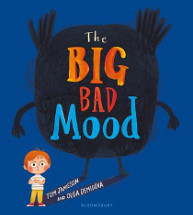
The big bad mood by Tom Jamieson
Ill. by Olga Demidova. Bloomsbury, 2017. ISBN 9781408839201
(Ages: 3-6) Recommended. Feelings. Having spent most of his time
writing for television and radio, this is one of the author's first
forays into children's literature and is the illustrator's second
picture book (her first was Usborne's Peep inside the Farm).
Their relative newness to the field is not apparent as this
collaborative effort pairs witty and age-appropriate writing with
attention-grabbing illustrations that successfully capture the
emotions of the main characters. An appealing and well-designed
front cover with bold colours draws the eye immediately and children
will want to find out more about this big, dark creature (the
personified Big Bad Mood who looks a bit like a blue Mr Chicken).
The story features George, who is having a particularly bad day.
When his mum tells him that there is a big bad mood hanging around
him he goes looking and finds 'a curious fellow, rough like
sandpaper and smelling of socks which REALLY needed changing'.
Children will identify with George; everyone has had one of those
days and done their fair share of stomping, shouting and huffing and
puffing. They will also love hearing about the mischief George is
dragged into by his Big Bad Mood: making a Big Bad Mood Sandwich
with caterpillar legs and spider mayonnaise, and filling the
swimming pool with jelly and custard. The Big Bad Mood is having a
great time but George is getting a bit tired of being grumpy (it is
hard work and his friends aren't very happy) so off he goes to tidy
up, to say sorry to those he might have hurt, and play happily with
his friends. Making the Big Bad Mood an incredibly happy,
enthusiastic character (rather like Drop Dead Fred), whose job is to
make everyone grumpy, is great as it adds a life and humour that may
have been missed if it had been a grump itself. This is a great
reminder to children that it is ok to have grumpy days when they
don't want to share or play nicely with their friends but that their
friends won't want to play with them if they are in a bad mood all
the time. It also shows young children how to deal with the
aftermath of a grumpy episode (saying sorry, tidying up) and gives
them the language to talk about their emotions and frustration with
their parents, teachers, and friends.
Nicole Nelson
Running on the roof of the world by Jess Butterworth
Orion, 2017. ISBN 9781510102088
(Age: 10+) Set on the top of the world in Tibet and India we follow
the adventure of Tash, a 12 year old girl who is intent on meeting
the Dalai Lama, who she believes can help rescue her parents who
have been arrested by Chinese soldiers. Her father publishes an
underground newspaper. The brave girl escapes her hometown with her
best friend, Sam, and together they set out on an epic journey
through the Himalayas armed with two yaks and her Dad's backpack
that contains mysterious but important papers. The pair are hoping
to escaped a persecuted Tibet and cross the border into India where
they will be safe.
Friendship, perseverance, overcoming adversity and never losing hope
are strong themes that run throughout the book.
This book is suitable for children aged 10 and upwards and would
make a perfect read aloud.
Kathryn Schumacher
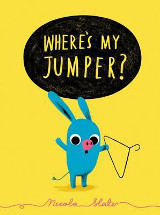
Where's my jumper? by Nicola Slater
Simon and Schuster, 2017. ISBN 9781471146213
(Ages: 2-5) Counting. This fun and humorous book with cut-outs and
flaps counts backwards from 10. It features bold text with number
words in capital letters and retro illustrations of orange, yellow,
blue, pink, red and green. We see Rudy on the front cover, a bright
blue rabbit holding an empty coat hanger and asking 'Where's my
jumper?'. So, off we go, hunting around Rudy's house for his
favourite jumper that was 'a little bit short and showed his tummy'.
In each room he encounters a group of animals, from ten tumbling
cats to two passing foxes. This isn't your average counting book
with 'five kangaroos bouncing, four leaping lizards' though and it
doesn't carry a repetitive or predictable pattern like most other
counting books either. There are fancy-pants llamas jiving under a
disco ball, prima pigerinas pirouetting in the kitchen and dogs
riding ski lifts up the stairs. There are humorous and crazy
illustrations that children will appreciate (a cat wearing jocks, an
octopus taking a selfie in the pool, a shark in the swimming pool
and a crocodile on the toilet). Children will enjoy following the
trail of wool, opening the flaps and exploring the cut-through
pages. The ending is actually a little bit confusing, especially for
the younger end of the target age group: his youngest sister has
taken his jumper but the trail of wool he was following was being
knitted into a new jumper for him. It is great that there is nothing
predictable about this book and that children need to discover for
themselves where there are flaps and to follow the wool trail. It
will be enjoyed by children as young as two for its rollicking
rhythm and bright illustrations but those of preschool and
school-age will get a lot more out of it and be more engaged.
Nicole Nelson
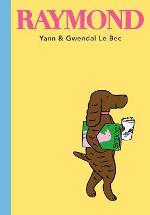
Raymond by Yann and Gwendal Le Bec
Walker Books, 2017. ISBN 9781406362428
(Age: 5+) Recommended, Dogs, Behaviour. Raymond is a loved dog in
the family. Each year the family treat him to a surprise birthday
party, but one day Raymond has a big idea. Why shouldn't he sit with
the family at tea. And so he does. After that it is a not a big
stretch for him to do other human things, and soon all of the
community's dogs are behaving like humans. They go to the theatre
together, have their cappuccino mornings, and Raymond reads a
magazine called Dogue.
When the family is out one morning, he goes to the offices of the
Dogue magazine and asks for a job. He interviews a range of dogs and
becomes so successful that he is soon a presenter on TV.
But then he is so admired that he needs security dogs to keep back
his followers, a groomer to attend to his coat and nails each day, a
secretary, and soon the only time his family sees him is on TV.
He becomes so stressed with all of the work he needs to do, his
family persuade him to take a holiday.
Lying on the beach a ball is thrown near him and the old urge to
chase the ball sets in.
He is cured and goes back to his family, quite content to be
scratched behind the ears just like he was in the past.
This charming story of being satisfied with what you have, of having
time to smell the roses, will resonate with younger children whose
lives are filled with things that seem important at the time. An
astute teacher could discuss with the class what is important to
them, after reading how Raymond becomes a slave to his job,
forgetting about the things that really made him happy.
The humorous illustrations will tickle the fancy of many readers as
they see Raymond behaving as a human but make them question just
what is most important to them.
With nods to the hipster generation, with its emphasis on screens,
cappuccino and takeaway meals, this up to date picture book will
leave readers with a smile of recognition.
Fran Knight
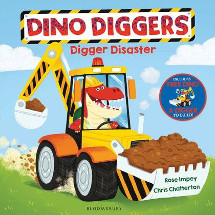
Dino diggers: Digger disaster by Rose Impey
Ill. by Chris Chatterton. Bloomsbury, 2017. ISBN 9781408872444
(Ages: 2-5) Dinosaurs, construction, teamwork. This cleverly
combines two things that young children love: dinosaurs and diggers,
and the bright, cartoon-like and action-filled illustrations will
keep them engaged. This is just one in a series of dinosaur
construction stories, each one containing a cardboard pop-out
build-your-own project. This one has a build-your-own dino and
digger. In each story the team of Dino Diggers 'put things right
when they go wrong and never let you down'. This is a great motto
for young children to hear and model their behaviour on. The
dinosaurs have great names and personalities, like the grumpy Mr Ali
O'Saurus and the clumsy apprentice Ricky Raptor. Today the team are
building a car yard but it isn't long before they run into a
problem: they've hit a water pipe. Everyone pitches in to fix the
problem and their great teamwork means that they finish the job on
time. Even the apprentice, who turned the plans upside down and
created the problem is supported and valued, not ridiculed. There is
great modelling here for young children: happy workers who are proud
of their work and a team of boy and girl dinosaurs building, driving
machines and working side by side. The construction language is also
great: backhoe, cracked a water main, digging out the foundations,
tower crane. Little ones who spot a construction site from a mile
away will love this and the fact that the characters are dinosaurs
makes it even more fun.
Nicole Nelson
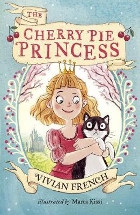
The Cherry Pie Princess by Vivian French
Ill. by Marta Kissi. Walker Books, 2017. ISBN 9781406368970
(Age: 7-9) Themes: Magic, Princes and Princesses, Castle Life.
Princess Peony lives in a castle with parents the King and Queen and
her six older sisters. Their lives are ordered and organised - even
a visit to the Royal Library is strictly controlled. Whilst the
governess quickly herds the older girls through, young Princess
Peony expresses her interests in the recipe books. After she's
hurried away by the strict Miss Beef, the chief librarian Denzil
Longbeard notices a cooking book about pies and pastries is missing.
For a short while, the youngest princess enjoys cooking in the
castle kitchen, until the King finds out and bans her.
When a baby prince is born, his parents plan for an elaborate
christening party and invitations are sent out to the most important
people including magical creatures. The King refuses to invite the
wicked hag; this of means there will be magical mayhem at the
upcoming event.
The story switches focus to the Hag's preparation of a magical brew
in her cauldron and the three fairy godmothers' plans to attend the
party. Basil the talking cat observes the activities at the palace
and reports to the fairies.
Just after her thirteenth birthday, feisty Princess Peony discovers
that Mr. Longbeard, the librarian, was thrown in the dungeon for
talking to her when she visited the library. She finds herself
locked in the dungeon for speaking out of turn to her father. Of
course, she escapes and with the help of Basil and the other
prisoners, she's in the right place at the right time to foil the
hag's plans to steal young Prince Vincenzo. The Cherry Pie Princess is an easy to read junior novel
written by Vivian French. She is a popular children's author who
understands the interests of her young audience, girls who enjoy
princesses, life in a castle and magical creatures. Marta Kissi's
beautiful and humorous black and white illustrations display the
adventures of the determined and creative Princess Peony.
Rhyllis Bignell