Allen and Unwin, 2018. ISBN 9781760523596
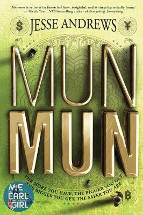
(Age: 12+) Highly recommended. From the opening chapter, in its
enigmatically entitled 'LifeandDeathWorld, Prayer', Jesse Andrews
plunges the reader into a strangely dystopian world. Andrews plunges
into a reality that is actually full of terrible iniquities and
compromising levels of power, where a large amount of money and
power brings riches and enables people to undergo a change to
increasingly larger size, and with a loss of power reduced to its
opposite, utter powerlessness, brings the tiniest creatures of all,
the 'littlepoor'. Shape and size reflect wealth and poverty,
categorized for us clearly on the inside cover of the novel. Plato,
Geoffrey Chaucer, George Orwell, Dr Seuss, Joseph Keller, and Ray
Bradbury wrote with a similar purpose, warning us of what they found
amiss in their own times.
When Jonathan Swift wrote, "Nothing is great or little otherwise
than by comparison" in Gulliver's Travels, we were
introduced to his notion of a world at risk in his strangely peopled
world. Andrews has chosen Swift's words to preface his work, MunMun,
and his depiction of a notion of size and scale, that relate
directly to power, is clearly at the heart of his construction of
story, place and time. We discover immediately that characters in
this novel can be almost as small as an acorn and can grow in
importance, that is, having the money and power to 'upscale', to
being as large as doublescale, or as 'Bigrich", even enabling a
transformation to almost absolute power - where a character might be
'transformed' - to be as tall as a skyscraper. Of course, they can
be scaled down or even be forced to return to minute size under
certain conditions. In fact they can be any shape or size or colour,
such as Prayer, who has "ruby wine skin" with a head "narrow and
shaped like a bean".
Characters might live in different places, yet both place and
character appear to float in time and space, and characters might
take themselves to places where they feel comfortable or visit
unsettling places. We understand that in 'dreamworld', characters
might create dreams that can be shared or tap into the dreamworlds
of others, but in this particular world everyone is 'exactly
middlescale' and everyone is safe. Here people are free to create
anything that they desire, such as making a 'pool out of cloud'. In
"lifeanddeathworld" characters are fearful of the dangers. Irony is
at play here, as surely these worlds reflect our own world just as
it is, even undiscovered: a series of planets, moons and suns all
floating in space.
At the heart of all his worlds "Mun mun" dominates people's lives
and his warning, through analogy, is clear. His chilling stories,
the harsh worlds of his characters, and their fate, are a clarion
call to us to be aware of some of the worst aspects of our world.
Words and phrases are frequently suggestive of our world, reflected
in its enigmatic nature. The seductive lyricism of this novel, and
its powerful suggestions deeply underlie its political intent: as we
read of people who are 'middlepoor", we are surely expected to
consider what Andrews is suggesting.
There is a hint of a thread of kindness and goodness that is
depicted strongly in the central character and his family,
particularly in the religious beliefs and loving kindness of the
mother, who believes in the "Lord King God" and old-fashioned
religion, and whose gentle soul does not tap into the terrifying
world that is at the heart of this novel. Whom can you trust? There
are good people, there is loving and there is kindness, but mostly
there is fear and rivalry and powerlessness that threaten all who
try to survive their 'little lives'.
Satirical, fast-paced, and at times terribly violent, with many
people showing almost no concern for the wellbeing of anyone outside
of their own body type, the characters of Andrews' novel are
distorted to reflect his purpose. The biting humour, deep sarcasm
and pervasive fear would seem also to reflect our modern world.
Exposing his characters' dread of the power of 'the other', he
creates those 'huge' people who must be respected and obeyed, and
the reference is clear. We are led gently but firmly to consider
power that controls and often that destroys others, and to be aware
of the ever-present threat of a world of dark and terrible violence.
Elizabeth Bondar
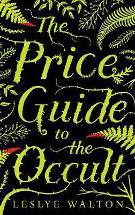
The Price Guide To The Occult by Leslye Walton
Candlewick Press, 2018. ISBN 9780763791103
(Age: 15+) Themes: Supernatural, Fantasy, Rivalry, Black Magic, Dark
arts, Self harm. Seventeen year old Nor is the eighth generation of
Blackburn women on Anathema Island off north west Canada. The first
Blackburn woman, Rona, an extraordinary witch, had an affair with
one of the original eight settlers, and he and his friends try to
burn her out. But she escapes, bringing into the world her daughter,
the second in the line of witches. Each generation has weakened
powers and Nor, not wanting any part of it, is aware that her Burden
when it comes in her pre teens is more powerful than she expected.
But she is torn, and this is manifested in her self harm. Scars
ravage her arms and chest and all knives are secured in the house
where she lives with her grandmother. One day she discovers a book
"The Price Guide to the Occult", written by her mother, Fern,
delineating how much people can pay for her spells, some spurious
but others part of the heritage of the family. Fern abandoned her
daughter after using her blood for her own ends resulting in Nor's
first scars.
But the self serving woman has returned, and the animals and plants
that Nor can understand warn her, the island feels different and Nor
knows that the spells her mother sells can only mean one thing, that
the price is not money but blood and death. Fern is now a Black
Witch accessing the darker side, negligent of the results. Nor must
stop her.
Back home after a run, she feels apprehensive and finds her mother
in the kitchen. A power struggle ensues, Fern testing just how much
power her daughter now has, Nor trying vainly to curb the damage the
woman is doing to others in the house.
A cat and mouse game to the death ensues, with enough supernatural
touches to keep an intrepid reader hooked to the end. It is dark and
bloody, and some readers may find it hard to read, especially those
parts where Nor talks about her self harm.
The author includes an afterword about self harm, offering help from
organisations which readers can contact.
This is a book for the older reader.
Fran Knight
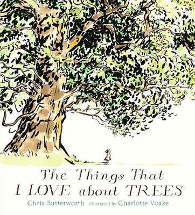
The things that I love about trees by Chris Butterworth
Ill. by Charlotte Voake. Walker Books, 2018. ISBN 9781406349405
(Age: 5+) Recommended. This book looks at the seasons of the year
and how trees change with the different seasons.
This book is a combination of story and some facts, which are
written in the book in a way that makes them seem part of the story.
At the end of the book there is a page of ideas of activities you
could do with trees like building a den, collecting things that come
from trees to compare, make a picture using leaves, or sticks, see
what animals you can find living in the tree and the most fun of all
climbing.
This book could be used for science looking at either living things
or seasons.
It includes an index at the end of the book.
I recommend this book for 5+
Karen Colliver
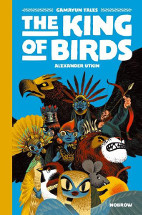
The King of Birds by Alexander Utkin
Translated by Lada Morozova. Gamayun Tales 1. Nobrow, 2018.
ISBN 9781910620380
(Age: 12+) Recommended. Themes: War, Loyalty, Magic, Folk tales, Russia. Based on
Russian folk tales and vividly illustrated in a graphic novel form
this beautifully designed book is engaging on many levels. We are
introduced to Gamayun, the all-knowing narrator, a human faced bird
who warns us the stories might be scary. The first story involves a
tree, in the garden of a warrior princess, which produced magic
golden apples. Apples are stolen and a pursuit ensues but that is
another story. An apple is dropped and found by a mouse who keeps it
for himself. His friend, a sparrow finds out and complains to the
King of Animals about the greedy mouse. The Lion King (and there is
a remarkable resemblance!) dismisses the sparrow who goes and
complains to the King of the Birds (a very scary Imperial Eagle)
about his treatment. Soon the two kingdoms are at war and after
three brutal days of fighting the birds win. The next episodes
involve the eagle being restored to strength by a merchant, who,
when bitten by a snake can understand birds and animals. Later the
recovered eagle turns into the blue skinned brother of a strange,
Queen of the Cooper Realm who they visit on her island. Then they go
to island of the Silver Realm, whose Queen is another sister and
finally the youngest sister's island, the Golden Realm. The merchant
is rewarded with a golden chest which he is forbidden to open until
he reaches his home. But that is another story. There is a lot of
unjustified violence and testing of loyalty, not a sanitised
fairytale, more like some of the original Brothers Grimm and Aesop's
Fables. The powerful leaders don"t seem to have many redeeming
qualities and the merchant is happy to follow instructions in
exchange for a reward. Some of the characters look a bit "Disney"
but that is where the similarity ends. Recommended for lovers of
graphic storytelling of any age, plus it will be a good primary
school library book which will stand many readings.
Sue Speck
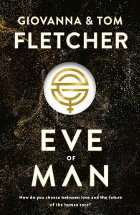
Eve of Man by Giovanna and Tom Fletcher
Penguin, 2018. ISBN 9780718184131
(Age: 12+) Recommended. Themes: Dystopian fiction. Eve is the last girl on earth, she is humanity's only
hope, and she has a mind of her own.
Imagine Rapunzel crossed with The Handmaid's Tale
and something more farfetched than pigs flying. You've pretty much
got Eve of Man. There's very little chance that in our
future women will stop being born without a scientific explanation,
which is good for us, and I guess makes Eve of Man a lot
less scary than it otherwise could be.
Eve is the first female born for fifty years, which means there is
finally hope for a new generation. For her safety Eve is confined in
a hi-tech tower, educated and kept company by a group of women who
chose to leave their lives to raise her. They are her mothers. But
life isn't so simple. Eve has a best friend, Holly, a holographic
girl who is controlled by men somewhere on the levels below, and
being extraordinarily perceptive Eve is aware that Holly only has
three pilots and she has her favourite. Now she is old enough to
start considering her reproductive future, Eve is meeting her
potentials. Three young men each tested and chosen for the optimal
offspring. However, things aren't actually as simple as girl meets
boy. Particularly not when boy tries to kill girl. In the chaos Eve
is swept away by one of her guards, who, like "all men" succumbs to
his desires, trapping them in an elevator. Alone. But not for long.
Bram, Eve's favourite Holly, rushes to her rescue, his devotion
knowing no bounds and endangering them both. It isn't long before
Bram is put on suspension, his life threatened, and his escape from
the tower made. His real task is set to begin. Can he rescue Eve in
time?
The novel deals with the discovery that the world isn't just black
and white but a spectrum of shades of grey. Bram must decide between
his family and humanity in order to do what is right. I would
recommend to lovers of dystopian fiction twelve and up.
Kayla Gaskell
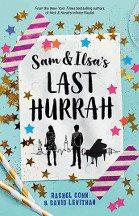
Sam and Ilsa's last hurrah by Rachel Cohn and David Levithan
Allen and Unwin, 2018. ISBN 9781760293857
(Age: Senior secondary) Themes: Anxiety, friendships, Relationships,
twins, change, sexuality. It is a time of change for twins, Sam and
Ilsa, not only are they about to leave school but their grandmother,
who they call Czarina, and whose New York luxury apartment has been
their playground, is selling up and moving to France. As a "Last
Hurrah" they plan a dinner party in the apartment, each secretly
choosing three people to invite. Sam and Ilsa are very different,
Sam, a high achiever, conservative and anxious, is musically
ambitious. Ilsa is the extrovert, wild and challenging, her poor
academic record making it hard for her to imagine a satisfying
future, she is more concerned about Sam's future after his anxiety
caused him to perform badly in an audition and the subsequent
emotional crisis left him very fragile. The tension mounts as the
guests arrive, a mix of old friends, ex boyfriends, and new
acquaintances, including one who communicates through a sock puppet.
Old wounds are opened and new possibilities canvassed then a storm
brings things to a head and a power cut breaks the tension allowing
everyone to move on. Along the way anxiety in its many forms is
discussed and the various ways they all experience it and deal with
it, whether by therapy, medication, bottling it up or acting it out.
Relationships are explored and plans for the future. At one point
Sam asks "how do you leave?" and there is a serious discussion about
change and destinations that make this a meaningful coming of age
story leavened with humour and absurdity. The first person
interleaved account allows us to see each twin's perspective and the
rich dialogue keeps the story moving fast. At times it was hard to
keep track of all of the eight characters and the precocious, rich
kids are rather unappealing. The ending is a bit unnecessary and
awkward but year 11 and 12 students will recognise and relate to,
this group's insecurities and the issues they face.
Sue Speck
Square by Mac Barnett and Jon Klassen
Walker Books, 2018. ISBN 9781406378658
(Age: 6+) Highly recommended. Themes: Perception, Shapes, Building,
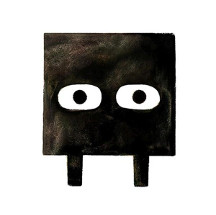
Perfection, Genius. The two large eyes which stare out of the cover,
a brown square within the square shape of the book, replete with two
small brown legs to stand on, will encourage the reader to open the
pages.
Within they will find that Square lives secretly, within a cave, and
each day he takes a block from his cave and pushes it to the top of
a group of blocks that he has assembled on the hill. Circle wanders
by and sees his blocks, exclaiming how wonderful a sculptor he is: a
genius. Square is nonplussed, unsure of what Circle means. And when
Circle leaves, she asks him to make a statue of her, meaning to
return tomorrow. Square is distraught, he has no idea of how to make
a circle, and is equally unsure of what Circle means, but he takes
out a hammer and chisel and begins to sculpt.
This subtle story of perception, of seeing things differently will
enthrall younger readers as they watch Square at work, concerned
with him that he will not get it right. But then what is right?
Square chisels away through the night and its driving rain, to wake
next morning surrounded by a group of stones, filled with water, and
Circle is enraptured by something quite different than the readers
may expect.
Again, perceptions are turned upside down and the question the book
finishes with will evoke much discussion.
The stunning images in the book use basic browns, blacks and white
shading to more grey as Square becomes troubled by the work he is
doing for Circle, but paring back to more white space as his gloom
disappears with the new day.
This is a wonderful story about life's challenges, sure to evoke
much discussion amongst readers.
Fran Knight
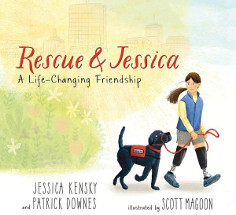
Rescue and Jessica: A life-changing friendship by Jessica Kensky and Patrick Downes
Ill. by Scott Magoon. Candlewick Press, 2018. ISBN
9780763696047
(Age: 7+) Highly recommended. Themes: Service dogs, Disability. This
book is the story of Rescue a pup who was learning to help people
and Jessica who was an amputee. They were both worried about what
life would be like and neither of them wanted to let anyone down.
While Rescue learned the skills to be able to help someone, Jessica
was learning new ways to do things. They both have fears to overcome.
When Rescue and Jessica finally met Rescue showed Jessica all the
things he was able to do, and they were together all of the time.
Rescue had a profoundly positive influence on Jessica's life and she
was able to live a relatively normal life.
The illustrations in this book are clear and help to tell the very
moving story.
This book is based on a true story.
I highly recommend this book.
Karen Colliver
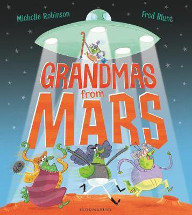
Grandmas from Mars by Michelle Robinson
Ill. by Fred Blunt. Bloomsbury Children's Books, 2018. ISBN
9781408888766
(Age: 3-6) Themes: Martians. Grandparents. Fred and Nell's mother
and father leave for an evening meeting with Grandma in charge.
'Homework, a bath and in bed before eight,' are the simple
instructions. All across town parents also leave, with responsible
grandmas caring for their children. Unbeknown to the townsfolk,
their homes are under scrutiny from bright green Martians who hatch
a tricky plot. In a lightning fast beam, all the grannies are shot
into the air and replaced by multi-limbed green aliens.
At first Fred and Nell enjoy the silly instructions, staying up all
night, sliding down the bannisters and hovering over the chairs.
After the children realise their grandma has some unusual body
parts, they decide to run away. Mayhem occurs with all the Martians
chasing the little ones, crushing the cars and going bonkers. With a
special trick, Fred, Nell and the other children stop the Martian
Grans and save the day.
Michelle Robinson's madcap rhyming story is fun to read out loud,
complimented by Fred Blunt's lively, colourful illustrations. The
bold green aliens with their extra eyes and limbs, antennas and
silly expressions are humorous; youngsters will enjoy their actions
and viewing the trouble they wreak. Grandmas from Mars is just right
for junior primary students to model writing rhyming stories and
make predictions about a visit from the Grandpas from Mars.
Rhyllis Bignell
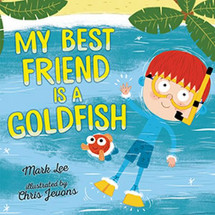
My best friend is a goldfish by Mark Lee
Ill. by Chris Jevons. Carolrhoda Books, 2018. ISBN
9781512426014
(Age: 4+) Theme: Friendship. The boy and his friend argue, and in
trying to find another best friend, he rejects them all, realising
that his former best friend is the one for him, but he must be more
patient and celebrate the fact that they are different.
He trials many other things as his best friend. First there is his
dog, Murphy. They howl at the police car, sniff everything together,
eat from the bowl on the floor, but when they go to the park, Murphy
wants to play with his real friends.
Then he trials Gus the cat, the hampster, Hercules, and the
goldfish, Fishy Robert. Finally he comes to work out that just as
cookies and milk are the same but different, they are still perfect
together, just as he and his friend are the same but different, but
still work as best friends.
Mark Lee has a few books to his credit and lives in New York, while
Chris Jevons began life as a cartoonist and lives in England. The
two forms work well together, Jevons' cartoon like characters please
the eye and compliment the spare words with ease.
Fran Knight
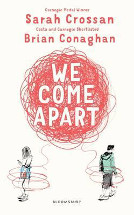
We come apart by Sarah Crossan and Brian Conaghan
David Fickling Books, 2018. ISBN 9781408878866
(Age: 14+) Themes: Families. Adolescents. Love. Survival. Prejudice.
Racism. Domestic violence. Jess and Nico meet during community
service. Jess has to deal with her dysfunctional and fractured
family and Nico feels trapped in a life he hasn't chosen and doesn't
want. Nico spots Jess and is instantly attracted but Jess has her
own problems and doesn't need any more complications in her life
right now.
I chose this book as a challenge to read a novel written in verse,
thinking it would be difficult. I am happily surprised how easy to
read and enjoyable it was. The story written in this way seems to
add more power to the words and gives you space to feel the full
impact.
Jess speaks honestly and with a bluntness common to her estate
English slang.
Nico speaks in broken English as a Romanian struggling with not only
the complexities of the language but also the added burden of the
local jargon.
This is not a happy story of love in an ideal world but of two
adolescents struggling with their lot in life, thinking they are
alone only to find strength in each other.
Joyce Crawford
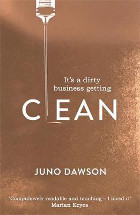
Clean by Juno Dawson
Hodder Children's Books, 2018. ISBN 9781786540362
(Age: 14+) Recommended. Lexie Volkov is many things, but she is not
a drug addict. Everyone does a little coke now and then, right?
That's normal for rich kids in London.
The first step to getting clean is admitting you have a problem. But
what if you don't have a problem? That's Lexie's question anyway,
after her brother kidnaps her and forces her into rehab on some
remote island. Stuck with a handful of misfits recovering from their
own illnesses and addictions, Lexie must play the game to get back
to her boyfriend, Kurt, and the sweet retreat of heroin. But with
each sober day, Lexie finds her outlook is changing and her
Kurt-centred life is no longer the same when there are girls dealing
with anorexia and eating disorders right beside her, and Brady, a
boy with a mysterious addiction no one talks about. Lexie is no
stranger to therapy and determined to give nothing away - nothing
that matters anyway. They talk about her family and status, but
Lexie carefully avoids school, something Goldstein eventually picks
up on. Something that might explain Lexie's drug habit. With the
death of a patient after drugs were smuggled into the facility Lexie
and Brady are drawn closer together. It seems a relationship is
blooming, or are they simply using one another as a crutch on the
road to recovery? Soon secrets spill out and everything changes.
Kids are always taught (rightly) to "say no to drugs"; however,
there is often an experimentation period and it is important that
they know the consequences of their actions. This is one of the
things which Clean does well. It shows how easy it is to not
know you're suffering from an addiction (be it drugs or otherwise)
and how simple it can be to get caught up in the crowd. I would
recommend this novel for people fourteen and up.
Kayla Gaskell
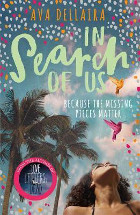
In search of us by Ava Dellaira
Hot Key Books, 2018. ISBN 9781471406515
(Age: 14+) Recommended. This book tells the story of Marilyn and
Angie, mother and daughter who have only had each other as Angie's
father died before she was born. Marilyn can't talk about Angie's
father without getting sad and teary about it so Angie is reluctant
to ask her mum to talk about him. Angie has always longed to know
more about her father who is African American as she takes after him
in looks rather than her fair skinned mother.
Life in their single parent household is happy, but not without its
struggles and Marilyn spends her days working and spending her free
time with Angie. Angie has a boyfriend Sam and they are well suited
however there is something stopping Angie from telling Sam that she
loves him and it causes tension in their relationship. One day Angie
accidentally finds a photo from years ago of her mum and a boy who
she knows instantly is her father. The image consumes her but she
knows she can't talk to her mother about it and so starts her quest
to find out more.
The story swaps between Marilyn and Angie and it all ties in nicely
to show the reader how a series of events and life paths end up
tying together the pieces of Angie's quest to find out more about
her father, the missing puzzle piece in her life. It is interesting
to see the very different ways Marilyn's mum Sylvie and Marilyn
parent given they were bought up in similar circumstances.
This story explores the relationships and bonds between mothers and
daughters and the way our actions impact others. Other strong
relationship themes in this story are those between families and
those between girlfriend and boyfriend.
I would recommend this story to ages 14+.
Gerri Mills
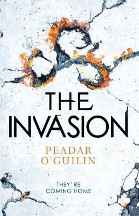
The Invasion by Peadar O'Guilin
The Grey Land Book 2. David Fickling Books, 2018. ISBN
9781910989647
(Age: Young Adult) Recommended. In this world, teenagers are trained
for the most horrible three seconds of their lives, the Call. When
Called you must survive three minutes in the Sidhe's territory, the
enemy of Ireland. Beautiful and distorted beings capable of molding
you into whatever they so desire, so don't get caught. They all come
back from the Call of course, but not always alive or in the same
physical state they left in. And there is one rule you must always
remember, don't make a deal with the enemy. Or you are a traitor to
the Nation. After they thought the danger was over, Nessa and Anto
thought they would finally be able to live a happy and quiet life.
But with the Side invasion becoming more and more prominent, the
government starts tracking down suspected traitors to the Nation.
Nessa is one of them. Nessa and Anto are denied their happy reunion,
and the only thing keeping them going is the thought of seeing each
other again. Nessa must fight against being branded as a traitor and
survive while trying to stop the invasion of Ireland. While Anto is
shipped off to join a militia made to stop the magic of the Sidhe
from spreading.
Will Nessa be able to survive long enough to see Anto again, and
will Anto be able to find her?
This story is a compelling sequel to the first book in this series The
Call. In the first few chapters it does well to recap the
story so far and set up the events that will follow. Each chapter is
also split into three character's perspectives, which made the flow
of the story suspenseful and engaging. The world that Peadar has
created is a modern-day Ireland being attacked by the Sidhe enemy.
And the interactions between the real world and the Sidhe are action
packed and fast paced. There was never a dull moment, and it kept me
on my feet the whole time trying to guess what's going to happen
next.
I would recommend this to young adults readers and above.
Kayla Raphael
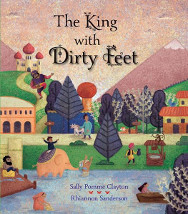
The King with dirty feet by Sally Pomme Clayton
Ill. by Rhiannon Sanderson. Otto-Barry, 2018. ISBN 9781910959237
(Age: 5+) Highly recommended. Themes: Fable, India, Problem solving.
When the king decides to take a bath, everyone is impressed, because
this is a task he rarely undertakes. He cleans his teeth, scrubs his
body and washes his hair but when he gets out of the river his feet
remain dusty and dirty. He is appalled, and tells his servant, Gabu,
that he must find a way of allowing his feet to retain their
cleanliness on pain of death. he has three days to solve the king's
problem, before he loses his head.
Gabu tries several different ways of keeping the dust in the country
down, but to no avail, it takes an old cobbler to come up with an
idea, one that the population takes to with relish.
This is a charring take on an old Indian folktale called The King
and the cobbler, and has been rewritten many times.
The bold illustrations using mixed media and photoshop will entrance
younger readers as their eyes dance across the scenes of Indian
life, with its array of animals, people and houses. Readers will
love working out what other things the king can do to keep his feet
clean, remarking on how clean their own feet are and what they do to
wash them.
Apart from the beautifully resolved folktale and the problem solving
idea it contains, the book could well be used in a class where
personal hygiene is under discussion, the story lending itself to an
awareness of the children's feet.
Fran Knight