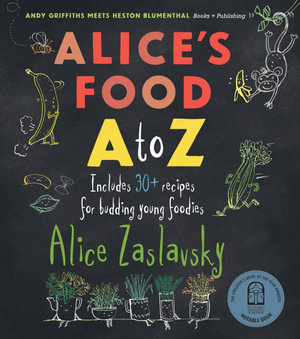
Alice’s Food A to Z was first published in 2015. This latest glossy edition published in 2021, is full of humour and fascinating facts as well as 30 recipes for budding cooks. Author, Alice Zaslavsky, introduces herself in a warm and heartfelt letter giving early background information and a brief glimpse into her food journey. The Contents pages have alphabetically ordered food and are appealing with both drawings and photographs. With foods presented beginning with the apple to dukkah to Jerusalem artichoke and zucchini as the final offering, readers of all ages are in for an enjoyable culinary treat. The letter ‘U’ stands for utensils and showcases the author’s 'Nifty Nine' that she uses daily. Each food discussed is beautifully photographed with one or more pages of segmented information including, ‘What to look for’, ‘Fun Facts’, ‘What’s to Love’, ‘This goes with that’, as well as recipes incorporated throughout the book. Nut free, gluten free, expert mode and snack attack are highlighted in coloured bubbles. At end of the book is a recipe index, a word wizards list in place of a glossary and a note for grownups.
This excellent foodie book would make a wonderful birthday or Christmas gift for children (and adults) of all ages.
Themes Food Facts, Recipes.
Kathryn Beilby
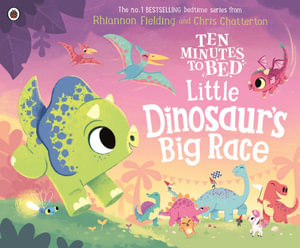
Ten Minutes to Bed : Little Unicorn's Christmas by Rhiannon Fielding and Chris Chatterton
A Christmas-themed, follow-up bedtime story to the popular Ten Minutes to Bed, Little Unicorn, this Christmas sequel is the perfect combination of Fielding’s playful poetry and Chatterton’s glittering, detailed artwork. It’s Christmas Eve in the Land of Nod, and our magical protagonist, with huge eyes the size of her starry rump, Twinkle, is procrastinating over bedtime, much to her weary father’s chagrin. Then, with nine minutes until bedtime, who should appear in need of help but Father Christmas and eight reindeer. Their red-nosed leader (“... can you guess who?”) has reindeer flu (a playful little “red-nose” joke for attentive readers). With only five minutes to visit twenty-two countries, Twinkle, with her unicorn glitter, knows just “what to do”!
Even the youngest of audiences will be captivated (based on a single case study of one nine-month-old and one six-month-old!). Not guaranteed to send a child off to sleep as the book may be TOO attractive, but dreams that follow will certainly be sweet and full of Christmas cheer! The perfect addition to any child’s Christmas tradition, to be enjoyed by the whole family as it is EXTRA-wonderful when read aloud, as with all poetry, and the countdown to bedtime helps parents to count down to real bedtime, as well as being educational (counting backwards, reminiscent of the old classic nursery rhyme, “Ten Little Ducks”!). As a bonus, the inside covers contain detailed maps of “The Land of Nod” during the day and night and, there are so many details in Chatterton’s illustrations, the book can be read again and again from any page and still new things are waiting to be discovered by attentive, little eagle-eyes! The two centre pages also cleverly open to show Father Christmas and his sleigh, led by none other than Twinkle herself! Can anyone say, “most-worn-out pages of all” with such joy?!?
Genre: Young readers’ fantasy adventure, poetry. Age 3+ but illustrations and phrase rhythm are highly attractive to younger “readers”.
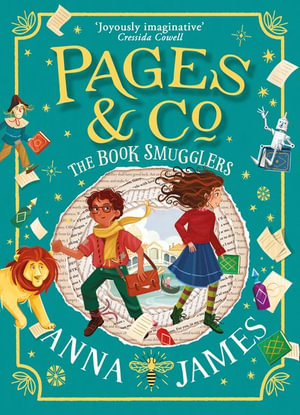
The Book Smugglers, book 4. HarperCollins, 2021. ISBN: 9780008410810. (Age:9-12) Recommended.
"From outside on the busy north London high street, Pages & Co looked like an entirely normal bookshop. but once inside it didn't quite make sense how everything fitted inside its ordinary walls. The shop was made up of five floors of corners and cubbyholes, sofas and squashy armchairs, and a labyrinth of bookshelves heading off in different direction. A spiral staircase danced up one wall, and painted wooden ladders stretched into difficult-to-reach corners. Tall arched windows above made it feel a little like a church when the light spilled in and danced on the air. When it was good weather the sun pooled on the floor and the bookshop cat - named Alice for her curious nature - could often be found dozing in the warmest spots. During the summer the big fireplace behind the till was filled to bursting with fresh flowers, but at is was October, a fire was roaring there."
This is the home of Matilda Page, always known as Tilly, who prefers the company of book characters to the people in real life and, although not having been outside London, is a seasoned traveller within the pages of the books that abound on the shelves for in the first in the series she discovered her father was a fictional character and she, herself, was half fictional. As she and her best friend Oskar search for her missing mother, they meet the powerful but sinister Underwood family, search for the mysterious Archivists and encounter the Sesquipedalian, a magical train that uses the power of imagination to travel through both Story and the real world. It is owned by Horatio Bolt who specialises in dodgy dealings as a book smuggler trading in rare books, and his nephew Milo.
When Horatio takes on a dangerous new job, he needs Tilly's help and because she owes Horatio a favour she feels she has little choice. But when poisoned copies of The Wizard of Oz are sent to Horatio and Tilly's grandfather, sending them both into deep sleeps, Milo and Tilly find themselves racing against time to save them - and to figure out what is going on. Their journey takes them to the Emerald City with Dorothy, rocketing on the unruly Quip, and eventually to Venice in Italy, in pursuit of the mysterious Alchemist. The very essence of imagination, story itself, may be in danger . .
This is a series that, IMO, has the potential to rival Harry Potter among younger readers and certainly when I told Miss 10 I had the latest addition she begged me to post it to her rather than waiting for the restrictions of interstate lockdowns to end. Even though this one includes a brief summary of what has gone before, it is a series that is best read in order and I found myself wanting to go back to read the previous three again. (I shall have to persuade Miss 10 to lend it back to me!)
If I were still in a school, I'd be recommending this to the parents of those who are already hooked as a must-have for the Santa Sack because there is just not enough time left in the school year for every student who will want to read it to have access to it. Imagine the joy of getting the WHOLE series all at once - what a binge-read that would be! Don't think we will see much of Miss 10 once she gets her copy!
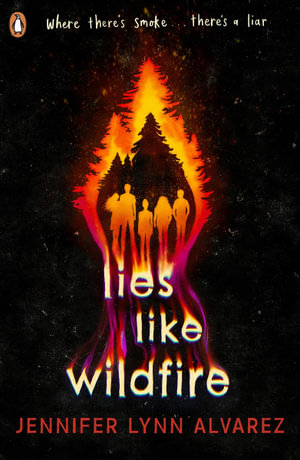
Trigger Warning: California wildfire, violence, and mentions of sexual and domestic violence. Also contains sex scenes and drug use. A tight-knit group of teenagers celebrate the beginning of their summer holidays at their favourite swimming hole, The Gap, above Sierra Nevada town, Gap Mountain, California. They are carelessly chatting about their future plans when, during an argument, they accidentally start a deadly wildfire that quickly changes their lives, and their close friendship, forever.
Alvarez perfectly dedicates her novel: “For good people who do bad things”; this, in a nutshell, is the discussion throughout this novel, which explores complex philosophical ideas in a context that is attractive and relatable to teenagers (there is even a mention of contemporary musical artist, Billie Eilish!). Hannah, our protagonist, is the sheriff’s daughter, and considers herself to be the moral compass of their friendship group. She soon discovers that life is complex and her self-identity is tested, artfully, without Alvarez providing clear answers. The structure of her novel is divided into chapters that reflect the timeline, state of disaster, and fatalities, making it easy to follow, and excitingly fast-paced as it starts in media res and then jumps back to the beginning of events. Alvarez has created a group of relatable teenagers whose lives could not be more different, who are suddenly hit with complex issues even without wildfire: wealth disparity, unrequited love and sexual desire, body image and puberty, domestic violence, and family responsibility, just to name a few. Set in the context of a disaster (wildfire) makes the novel exciting and provides potential for educational use in teaching about similes, metaphor, and motifs, as well as complex discussions about morality and ethics. This is reminiscent of John Marsden’s 1993 classic, Tomorrow When the War Began, in its style and appeal. It is hard to put down and will surely make even the most skeptical of teenagers into fans. Genre: Psychological crime thriller.
Themes Disasters, Crime, Social justice, Morality, Ethics, Friendship, Puberty, Sex/desire, abuse, Body image.
Amelie Bottrill
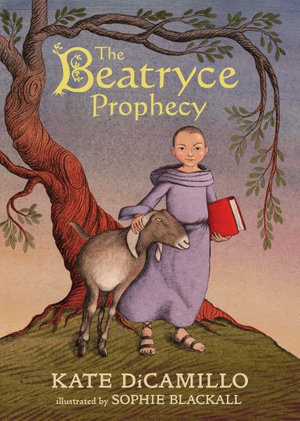
The Beatryce Prophecy by Kate DiCamillo. Illus. by Sophie Blackall
Answelica the goat’s antics immediately draw you into this quirky and charming tale set in medieval times. Together with Brother Edik, the earnest monk with the wild wandering eye, the two help nurse a young girl called Beatryce back to health. We understand that Beatryce has had terrible things happen to her and she is repressing these memories. She also dreams and tells amazing stories, which are quite significant elements in the plot. Most importantly Beatryce has the unusual ability to read and write, a thing no girl should do. The other monks from the Order of the Chronicles of Sorrowing believe she is a demon girl and send her away to scribe the confessions of a soldier. She must be disguised as a boy and is guided by a boy called Jack Dory. The story becomes a quest to find the truth and it is evident Beatryce’s life is in danger due to a prophecy about a girl who will unseat the current king.
Kate DiCamillo is a Newberry Medalist writer who creates unique stories with just the right amount of description, diverse settings, and strong endearing characters. There are many scary incidents, and the characters must be brave and face their fears. All except the fearless Answelica! This goat is a great comic animal character who brings light relief but also devotion and love. The spoken language between the characters keeps the story moving quickly. Along with bravery there is a clear theme of the importance of reading and writing for girls and everyone. Those in power manipulate access to reading and writing in order to maintain their power. Sophie Blackall’s beautiful black and white illustrations manage to create the medieval milieu really well, as do the illuminated letters at the beginning of each chapter. Teacher's notes are available.
Themes Bravery, Love, Equality.
Jo Marshall
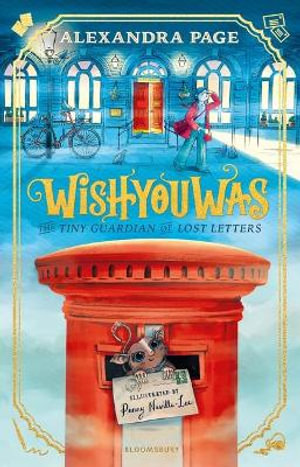
Wishyouwas by Alexandra Page. Illus. by Penny Neville-Lee
The appropriately named Penny Black is under the care of her austere Uncle Frank, the local Postmaster, waiting for her mother’s return from her duties as a pilot to deliver airmail. While in the post office she discovers a mysterious but cute rat-sized creature, with a naive mastery of grammar, that appears to be raiding letters. An unlikely friendship develops and before long Penny is involved in rescuing the tiny creature from an awful ratcatcher who has been hired to exterminate the vermin. The small creature, named Wishyouwas, is a charming participant in solving the mysteries of ‘lost letters’ alongside the normal mysteries of mail deliveries. Penny eventually becomes involved with the community of ‘lost letter’ creatures and soon must protect the entire population from the ratcatcher and his evil plots to make money from their presence.
This is an absolutely charming story, and you cannot help falling in love with Wishyouwas, the innocent and loyal friend to Penny. The setting of the 1950s post-war postal system is also appealing, with mailbags and post boxes, last-minute Christmas deliveries, and the underground postal rail system playing a part in setting a magical backdrop to this charming fantasy. The lost letter creatures employ intriguing and inventive strategies (akin to The Borrowers) for carrying out their work and their secrets deserve to be protected. With rats employed to create havoc and attack the mini-lost letter workers, there are moments of tension and fantasy violence. With the ratcatcher trying to throw Penny off his trail, there is fear that the gentle creatures will not survive.
Young readers should be able to deal with the tension, but this would make a wonderful read-aloud or a shared book with an adult. The scary moments with the rats and the ratcatcher’s snarling dog might not make this conducive for a calming bedtime story though.
Themes Post World War II, Postal system, Fantasy, Friendship, Bravery.
Carolyn Hull
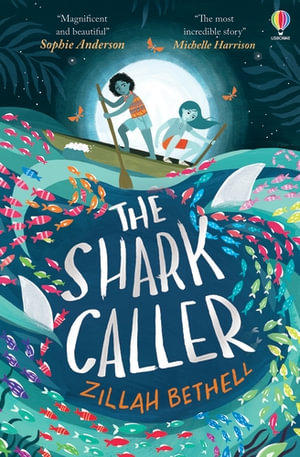
The Shark Caller by Zillah Bethel
Usborne, 2021. ISBN: 9781474966849. (Age:7+)
Blue Wing is desperate to become a shark caller like her waspapi Siringen.
"I want to be able to call the sharks. Teach me the magic and show me the ways," she begs him for the hundredth thousandth time but he refuses, telling her she knows why he will not.
Instead she must befriend infuriating newcomer Maple, who arrives unexpectedly on Blue Wing's island. At first, the girls are too angry to share their secrets and become friends. But when the tide breathes the promise of treasure, they must journey together to the bottom of the ocean to brave the deadliest shark of them all... and it's not a great white.
Papua New Guinea is just as a mysterious land now as it was when I lived there 50 years ago, steeped in history, legends and traditions going back to the earliest civilisations and when the author moved from there to the UK (and had to wear three jumpers even in summer) she was peppered with so many questions about her life there that she wrote this book to help answer them. And in doing so, she has woven an intriguing tale of adventure, friendship, forgiveness and bravery with such a real-life background that I was taken back to the days when I was there with all sorts of memories that I thought were forgotten, including the pidgin phrases.
Competent independent readers of all ages will immerse themselves in the story which, even though it has such a diverse backdrop, still has a universal theme threaded through it. For those interested in finding out more there are the usual Usborne Quicklinks, as well as a most informative note from the author and some questions for book clubs that delve deeper. One for those who are ready to venture into something a little different.
Who would have thought that such a small insect could have such a big impact!
So much can happen in such a short time. In less than a month Brian’s whole life changed.
With the coronavirus pandemic in full swing Brian and his wife Emma are struggling to get their new business off the ground. A family holiday seems like a good idea to refresh them, but little did the family know that the holiday would change their lives completely.
After enjoying a BBQ on the beach Emma became unwell and the family decided to cut their holiday short and head home. As they traveled home Emma’s condition became dramatically worse leading to a visit to the ED, where she was diagnosed with Eastern Equine Encephalitis (EEE). To add to the trauma of his sick wife Brian received a huge hospital bill that his insurance refused to pay.
On top of this Brian’s daughter was not herself and slowly becoming more unwell, even with repeated trips to the ED Brian was not able to get them to take the illness seriously. Brian didn’t realize how serious his daughter's illness was as she seemed to get better then sick again then recover and the cycle continued. Everyone kept telling him it was due to his wife being unwell and she was just upset.
Through the troubling times Brian managed to find someone in similar situation to him who was able to support him. Jeanne became a great support to Brian while he was trying to support his daughter through what had happened to her mother.
Through all of this Brian discovers that the hospital and insurance company bosses are out to make money no matter who they hurt in the process, it is all about the bottom line. Brian is determined to expose these people for who they really are.
Remember you should always read the fine print….
This is a gripping story of family struggles and how big business treat the little person.
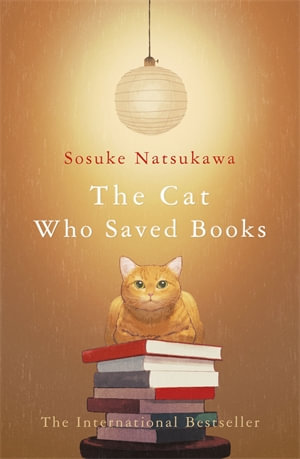
After losing his grandfather, teenager Rintaro Natsuki is left lost and alone - as well as Natsuki Books, a tiny second-hand bookshop his grandfather had loving cared for throughout his later years. As his own parents are gone, a distant family member (an aunty) is contacted to become his guardian. With her living far away, this means that Natsuki Books will close as Rintaro will need to relocate. This is difficult to face, as the shop holds precious copies of rare editons, literary masterpieces, well loved books, as well as memories of his life with his grandfather. As Rintaro prepares for the closure, a talking tabby cat appears and informs him that help is needed from the New Proprietor of Natsuki Books. Rintaro is confused, as he is not aware of a new proprietor, however the cat soon clears this up, stating that Rintaro is 'Mr Proprietor', and that he must help save books. The pair set off into labyrinth after labyrinth, on a mission to save books.
Translated from Japanese, The Cat Who Saved Books is such a delightful, heartwarming story that shows the value of books, friendships and courage in life. With numerous likeable characters, this book is written in third person and the cat's gender is never disclosed, leaving it up to readers to either assign or not assign a gender. A simple urban fantasy, the descriptive writing enables readers to picture the book store along with scenes created throughout the book. As it is set in Japan, the book contains aspects of Japan that all readers will take pleasure in reading. Ideal for those who have experienced loss and its aftermath, those who love books and reading, and those who enjoy a tale where the hero uses book knowledge to help save the day!
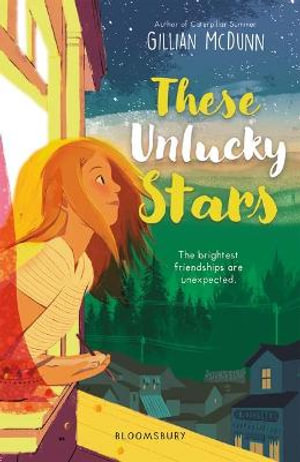
These Unlucky Stars, written by Gillian McDunn is a thought-provoking story around the concepts of developing friendships and finding out who you are as a person. Delving into the challenges of growing up in a small town and discovering more about yourself, this story will engage many readers. They are sure to grow fond of Annie, as she discovers some of the complexities of life and explores her connections with others.
Annie lives with her family that she feels slightly detached from. Her mum left when she was young, and her Dad and brother, Ray, are like two peas in a pod. They both enjoy routines, practicality and predictability. Whereas Annie is creative, loves art and her hometown mountains and is prepared to try new and different things. Annie feels a sense of disconnection from others, and she is not sure where she fits in. On top of all that, she has been given the idea that she is tainted with bad luck and bad things will always happen to her.
While Annie questions her place in the world and struggles to connect with others to form friendships, everything just doesn’t feel right. But when Annie makes a spur of the moment decision, her life is turned upside down. Once again, she sees this as just her continual bad luck…. But sometimes what you first think is bad luck, can actually be the best thing for you. And maybe in our lives, it is in fact ‘not luck, just life’ that we experience.
Gillian McDunn has written an engaging and enchanting story. The reader connects quickly with Annie and her journey. The clear and carefully written story, with clever descriptive texts enables the audience to acquire a clear picture of Annie’s feeling and how she perceives each situation. A beautiful story and journey through life, love and learnings.
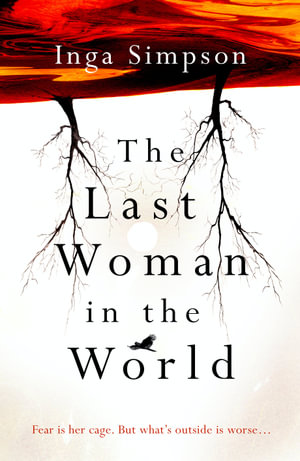
Rachel’s home and studio is her creative space. Fortified against the outside world, protected by cliffs and the river, surrounded by bushland, it has survived bushfires and dodged the pandemic. Here she forges her glass masterpieces drawing inspiration from the natural world around her. Here her self-sufficiency and routines control anxiety and keep her from a very dark place. With the help of her sister she has been able to build a secure life for herself. All that is shattered when a woman with a baby hammers on her door, frantically asking for help as people are dying everywhere. Not a pandemic this time but panic and fear followed by an 'emptying out' and death. Hannah and baby Isiah are from the nearby town where everyone has died and they find that all communications have ceased. When Isiah becomes ill with a fever they set out upriver to find Monique, Rachel’s sister who is a doctor who will have the antibiotics he needs. As they journey through the Australian landscape the scars of bushfires and climate change are balanced against the beauty and details of nature like the marks on the scribbly gum trunks, or the crimson rosella leading them on. Rachel’s habits of a capable person from a capable family enable her to find the resilience at her core and the women’s survival instincts carry them forward. As they journey on they face a maelstrom of horrors and challenges that dwarf anything that has gone before but the brutal events are balanced by the wonder of our world and art along with the notion that, in the words of the Joni Mitchell song ‘You don’t know what you’ve got. ‘Till it’s gone'. Rachel is the last woman in the world you would think could show such strength and resilience but with responsibility comes selflessness and courage.
There is much to think about in this sensitive and thoughtful novel. The poetry of Mary Oliver is mentioned and it is worth following up.
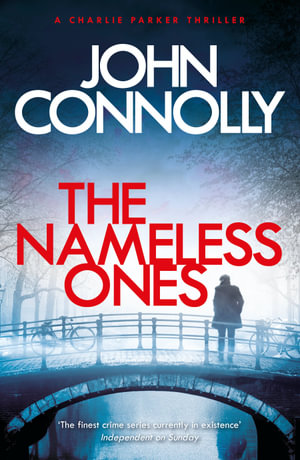
Mrs Bondarchuk is a loyal neighbour to Mr Louis and Mr Angel in their New York apartment. She is their eyes and ears and not quite the harmless old lady she appears, but then neither are Angel and Louis who, we learn, are associates of private detective Charlie Parker and not averse to killing bad people. “Sometimes this is how it must be done. It’s wrong and it stains the soul, but it has to be, because the other option is much worse.”p76. When De Jaager, an old ‘fixer’ in Amsterdam Louis knew and respected, is tortured and killed brutally, his family raped and their bodies placed in a macabre crucifixion arrangement, Louis realises the killing had to do with reprisal from Serbian war criminals Spiridon and Radovan Vuksan of the Zemun crime syndicate who are settling a few old scores before retreating back to Serbia. Sparked by this, killings come thick and fast; connections are made with people smugglers, money launderers, Serbian mafia and Netherlands narcotics rings and unofficially assisted by FBI agents, Lois and Angel set out across Paris, London, Vienna, London and Amsterdam to avenge De Jaager’s death. Private detective Charlie Parker who must feature in previous books is mentioned and there is some connection to the murder of his daughter but the character plays no role in this book. We learn a lot about Eastern European events since 1980 and I sometimes struggled with the numerous characters all apparently intent on killing each other in the most gruesome way; no sooner do we get to know their names than they are killed and replaced with a new set.
Readers who enjoy the anticipation of horror descriptions and who enjoyed Connolly’s 18 other books in this series will embrace this well constructed thriller but for me the cruelty and self-justification left me feeling diminished.
Themes Crime, Murder, Eastern Europe history, Thriller.
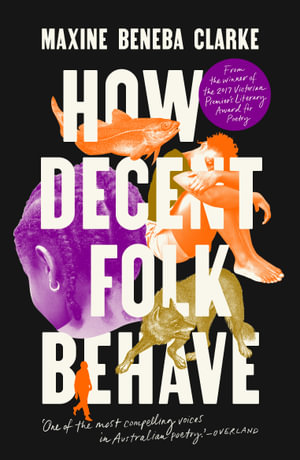
In the prologue Maxine Beneba Clarke quotes Nina Simone that “an artist’s duty . . . is to reflect the times” and that is what this body of poetry does, reflecting themes of climate change, bushfires, Black Lives Matter, Me Too, Covid 19, domestic violence, and other current political and social issues. The opening poem “when the decade broke” refers to many of these issues but provides hope with the concluding lines “suddenly, we were wide awake . . . faces tilted to the sky, watching revolution break”. Similarly the closing poem “fires move faster” recalls the many traumas of the last decade but at the same time finds the hope in the simple things, “zucchini plants flower, sharing a meal with friends”, concluding “we all will fight, to live”. So while there are many fierce and confronting issues that thread through this collection of poems, there is still the hope that we will rise up and take action.
These are powerful compelling poems that address issues that should be front of mind. They wake us up, put into words the issues at stake, and drive us to feel, think and act. The title “How decent folk behave” is a fitting admonition, the line coming from the poem “Something sure” about a mother exhorting her son to not be a bystander, to call things out, be a good man and “lead a bad man home”.
The words are strong and emotive, “the monsters are out”, they recall women's suffering and black people’s suffering; it is “blood-truth” that we need to confront. We feel the grief. The poems are vibrant, and thought provoking; there are many historical references that we need reminding about. It is a volume that has an immediate impact, and will be re-read and discussed and provide inspiration for social action.
Let's go swimming on Doomsday by Natalie C. Anderson
Rock the Boat, 2021. ISBN: 9781786079121. (Age:14+) Highly recommended.
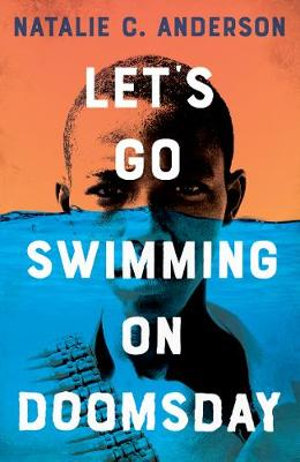
Absolutely riveting! This is another gripping thriller by Natalie C. Anderson. If you enjoyed her previous novel City of saints and thieves, let me tell you, this one is even better. It is set in Somalia and is a story of the manipulation and exploitation of child soldiers by a ruthless extremist group. Abdi is a young boy caught in the notorious 'Hole' prison and coerced by American agents into infiltrating the Al Shebaab rebel militia group, in order to save the lives of his family. Despite the remembered warning by his father 'Don’t trust guys with guns', Abdi has no choice but to follow the path of his kidnapped elder brother Dahir, to infiltrate the ranks of Al Shebaab and betray their plans in exchange for his family’s freedom.
The story is told in two interleaving time frames until the past catches up and overtakes the present. It vividly conveys the inner conflict of boy soldiers who know that killing is wrong but who, for a variety of reasons, are drawn to the teachings of the 'Doctor' and the 'General'. Abdi himself is drawn into the daily rigours of military training, developing his physical skills and strategic thinking, working as a team with his troupe of fellow boy soldiers. And while the General is harsh, the Doctor lulls him with talk of holy mission. It seems a very realistic portrayal of the kind of mind manipulation that extremist groups use, and has a parallel in this story with deviant religious cults in America.
Anderson is the first to admit that her novel could be criticised for not being an authentic 'Own Voice', in the vein of books like Prize fighter the story of a Congolese boy soldier, but it is based on her long experience working with NGOs and the UN on refugee relief and development in Africa and draws on the many refugee stories she has heard. It is a believable portrayal of the brutality of fanatical militant groups and the crimes they perpetuate against men, women and children, told from the viewpoint of a teenage boy who has to find his own inner strength and work out what is right.
One of the interesting aspects of Anderson's novel is that there is good and evil on both sides; there are friendship bonds within the child soldier group and some of the values Abdi learns from the Doctor are good, whilst on the other side, many of the actions of the American organisation seem just as callous and ruthless as Al Shebaab. Abdi has to work out for himself what is the right thing to do. That makes for lots to think about and discuss after reading this novel!
Themes Child soldiers, Morals and ethics, Survivor guilt, Cults, Brainwashing.
Have you ever wanted a different future for yourself other than the one laid out for you? Twelve-year-old Tor Luna does. So, on Eve, when his village get a single wish, he wishes that his leadership mark gets replaced with that of a water-breather. He loved swimming, which he still found time to do though he was banned from it, to concentrate on his studies.
The following morning bought Tor unimaginable grief. His wish, or the coin he had touched, he wasn’t sure, had caused his three purple rings of leadership to disappear, but he did not have the water-breather symbol either. He had the curse of the eye which also shortened his lifeline. How could he tell his parents? He hadn’t told them what he had been thinking, and now they will be disappointed in him.
He didn’t have to show his friend, Engle, the sightseer, he saw the mark, and tried to get it off, but couldn’t. Melda thought she could help. Legend says if you touch the mark of the curse, you will also be cursed.
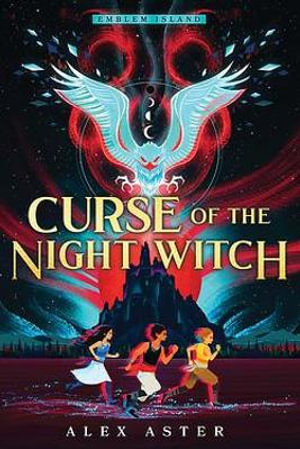
This is the start of their long, arduous journey together. They decided they needed to find the Night Witch, who legend has it is the only one to be able to break the curse. The trio must travel across the whole of Emblem Island and face the creatures they know from the book of Cuentos. They cannot afford to not pay attention to the details if they are to survive. But someone is helping them, who is it? They think it is the storyteller, the author of Cuentos, but is it? He must be long dead.
Their strength and stamina are tested, and their lives are often put at risk. Can they reach the Night Witch before their lifelines end, and get back to their village, where their families must be worrying about each of them?
This is the first book in the adventure series. It is full of action; I found it hard to put down. I can’t wait to read to read the next one.