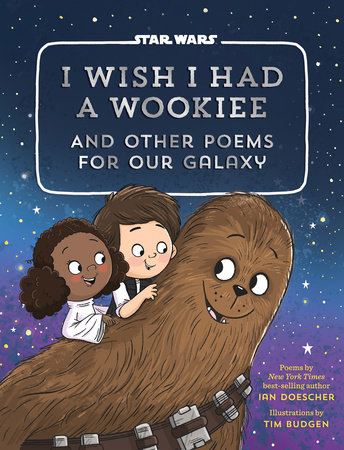
Young fans of Star Wars will love this newly published book of poems. It is cleverly written and explores all aspects of this much-loved movie phenomena related to everyday life. The poems are all about children who interact with numerous characters, objects and settings. For example, the following poem is titled ‘Star Barber’:
In the Star Wars galaxy, When a barber cuts your hair, Does she use a razor with A little lightsaber in there?
Some of the poems encourage children to be or do their best like the one called ‘Role Model’ where young Sophie wants to be like Mon Mothma and knows she will have to work hard at it. The poem named ‘The Fetts’ has a message about good and evil and mentions that Jango and Boba may not be all that bad and ‘sometimes they must have just been a kid and his dad.’ Another poem with a thoughtful message is the lovely, ‘A Galaxy of Families’ where the final verse says:
All families don’t look the same. What types can you think of? The galaxy has many kinds- Their common theme is love.
The illustrations by Tim Budgeon are beautifully drawn in tones of black and grey with a single pop of colour. This book would make a perfect Christmas gift for Star Wars obsessed children and is a brilliantly creative way of encouraging younger readers to read poetry.
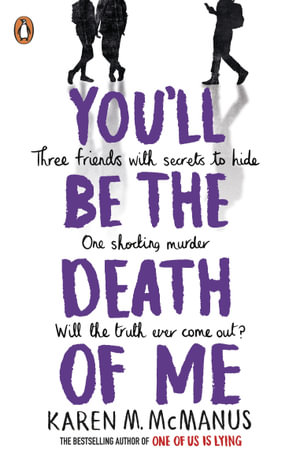
Wow! This is a book that is hard to put down! When Ivy, Mateo and Cal meet in the high school car park one morning they decide that it is a perfect day to skip school. Although they were no longer friends, they had had 'The Best Day Ever' when they had left a boring excursion when they were in middle school, and all had reasons to want another best day ever. On their way downtown they spot Boney Mahoney who is also truanting and almost witness his murder in an empty apartment building. The day turns out to be a disaster. They must evade the police, a witness claims to have seen a blond woman leaving the apartment, wild speculations that it is Ivy come from classmates and all three have secrets to hide. Why was Boney killed and who is the murderer?
McManus is an excellent writer of mysteries and thrillers. The pacing is fast and keeps the reader on the edge of the seat as one twist follows another. Fans of her previous books, One of us is lying,Two can keep a secret,One of us is next and Cousins will be queuing up to read this compulsive thriller. I could not put it down and read it in a couple of sittings.
But it is not just the plot that makes this a compulsive read. The characters are well drawn and easy to relate to. The story is told in the alternate voices of Ivy, Mateo and Cal and their background difficulties become evident through the narrative. All three have problems. Ivy is a high achiever who is very jealous of her talented brother. Mateo is working three jobs to help pay for his mother’s medical expenses while Cal is facing the results of a disastrous relationship. They are all keeping secrets from each other, all of which could lead them into danger.
Readers who enjoy this may want to watch the 1986 classic movie Ferris Bueller’s Day Off. Other books that will appeal are The Inheritance games by Jennifer Lynn Barnes and A good girl’s guide to murder by Holly Jackson.
Themes Murder, Jealousy, Poverty, Relationships.
Pat Pledger
The last kids on Earth and the Doomsday race by Max Brallier. Illus. by Douglas Holgate
Full disclosure: I was delaying reading this book as it is book seven of a series I had not seen or heard of before. Then my 12-year-old son spotted it in my review pile and excitedly told me about the fantastic cartoon Netflix series, before promptly stealing the book.
I stole it back from his bedside table and was immediately hooked. Yes, there are some things that, without any background story, don’t completely make sense to start with, but the characters are engaging and funny, and the story and relationships unfold neatly so that more information and context are revealed along the way.
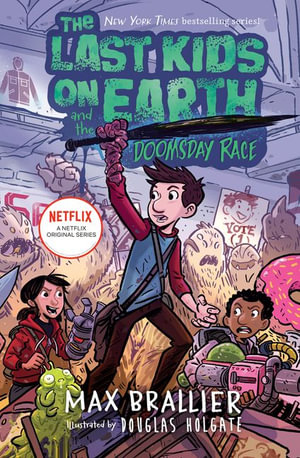
13-year-old Jack Sullivan is living in a world populated with monsters and zombies. He and three friends (Quint, June and Dirk) are a monster-fighting gang, each with special skills and powers to aid in the cause. Jack can control zombies, so his zombie squad of Alfred, Lefty and Glurm are also along for the ride. The gang are having a short break after a victory at the end of the previous book, where they survived a skeleton army and escaped with an unusual slime-producing creature they’ve named Drooler. They are planning to find Thrull (the main monster antagonist) and save the world.
This book starts with a massive centipede-type monster hoovering up the gang during their break and depositing them into a mega shopping mall which is already inside of it. The mall is packed full of peaceful monsters who are ruled by The Grand Protector. It turns out Jack’s gang have met The Grand Protector before, and they are suspicious of his motives to protect and watch over all these monsters.
Jack’s gang work well, supporting each other and solving problems together. They are almost like siblings, teasing and joking one minute then ferociously defending one another the next. And the defence is absolutely necessary, with several long fight scenes described in detail - I can easily imagine the TV cartoon!
This is a highly illustrated novel where the detailed grayscale pictures are an integral part of the story. A very entertaining and humorous read.
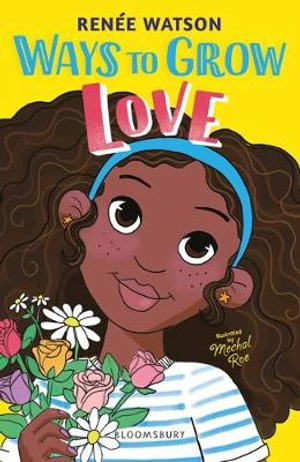
Ryan Watson is a young girl approaching summer holidays before beginning Year 5. Her family are loving and warm and they are waiting on the arrival of a new sister. Ryan is both delighted and impatient for the changes that will follow the arrival of the new baby. While she waits and her mother rests, she must cope with changed holiday routines and overcoming fears related to the church camp that she is now old enough attend. Ryan is a delight - thoughtful and responsible and keen to make her parents proud. Her family are hardworking, salt-of-the-earth folk and this is just an insight into a moment of time that impacts them all – but seen through the eyes of the young Ryan.
The delight of this book is the gentle understanding of a family that are church-attenders, of a different cultural heritage and whose work circumstances are different (Ryan’s father is a shift-worker). These differences help readers to recognise diversity and realise that not everyone in the world is the same. The fears and friendship concerns for Ryan will connect with young readers. No issue in the book is big, but for a young child these are the things that they encounter – struggles with an older brother, missing time with a parent, wanting to be a ‘best friend’, overcoming fears, and with a touch of humour, Ryan’s desire to be helpful means that she also over-consumes pickles! Young readers (aged 8-11) who desire an uncomplicated story will enjoy this book.
Themes Family, New child, Love, Friendships, Church life.
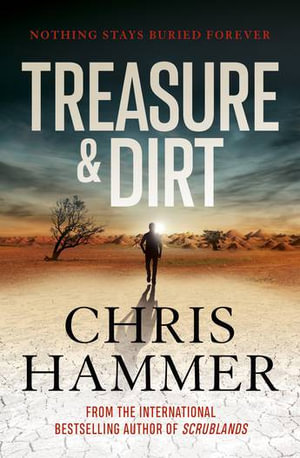
Ivan Lucic is called out to Finnigans Gap, a small opal mining town deep in the outback, where a crucified man has been found in a mine. Joined by Nell Buchanan a young detective, the pair investigate this bizarre murder, coming up against an array of eccentric characters, including two billionaire mining magnates and a cult of religious fanatics. While trying to find the killer, the pair are faced with an internal investigation which has finished the career of Montefore, Lucic’s mentor in the Police Force and which threatens to end their careers as well.
Treasure & Dirt is a compulsive read. The setting of the opal town, Finnigans Gap, really makes the story. It is fascinating to read about the mines and miners, the ratters who stole from the mines in the dead of night and the dry, harsh country. The power that rich people wield and the game playing about the share market also provides a rich background to the murder.
Clever descriptive writing makes the characters come alive. It is easy to imagine the two billionaires striding to their private planes, and the cult leader is suitably villainous. Lucic has his problems, and Nell emerges as a character that I would like to see featured in another book by Hammer.
As secrets about the past merge with the mystery of the crucified miner, Lucic and Buchanan need all their intelligence and ingenuity to solve the case and avoid the danger that surrounds them.
This is a nail-biting mystery, with in-depth characterisation and a wonderful setting and will please fans of Australian noir.
Themes Mystery and suspense, Opal mining, Detectives, Power, Corruption.
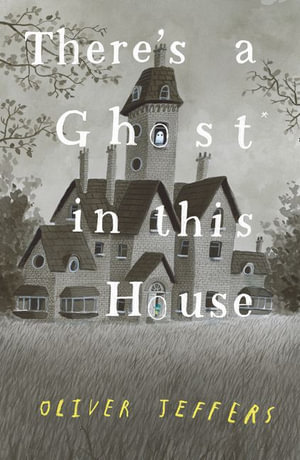
The intriguingly tactile dust cover showing a couple of ghosts peering out from the two letter o’s in the title, invites all readers to look further. Through the opaque cover they will just be able to see an old fashioned three storied house, complete with bell tower and ghost, set amidst a grassy field. Tantalised and excited, they are keen to open the pages, albeit cautiously.
Inside a young girl takes us on a tour of her house, where she is sure a ghost exists.
Readers will scream with laughter as they spot the ghosts lurking in the rooms the girl invites us to see. She cannot find any apparitions, but once the opaque paper is drawn across the page, the readers will see what she cannot. Ghosts in the chandelier, a ghost on the stairs, ghosts under the table, sitting at the library desk, their ghostly forms apparent when the inserted page covers the illustration. I can imagine lots of voices calling out, ’there he is’, wanting the girl to look in the right place for her ghosts. Readers will be highly entertained as the story takes them through the house searching every room for the ghosts.
The illustrations, reminiscent of many ghostly cartoons, shows small creatures with eyes burning thorough a sheet, or is that a dust cover? hovering above the ground all through the book and again in the wonderful endpapers.
The girl asks questions, and readers will offer many explanations and pieces of information from their experiences. She knows there is a ghost in the house, but questions whether they can be easily seen, or if they have chains and haunt the halls. She has checked the chimney and the wardrobes, peered into the attic and under the beds. She understands that they are hard to see. Perhaps they can only be seen at night, she asks, but in the end while walking past a vaguely familiar portrait, readers may jump to their own conclusions about where the ghost is hiding.
A wonderful read which screams out for sharing and reading aloud, the book encourages readers to discuss all they know about ghosts, giving them a platform to talk about things they believe but cannot see, whether they believe in ghosts, and whether to keep on looking for something that does not wish to be found. New York based author/illustrator, Jeffers brings up these intriguing questions in his entertaining YouTube clip and you can also hear Jeffers reading his book here.
Themes Ghosts, Humour.
Fran Knight
Egg marks the spot by Amy Timberlake. Illus. by Jon Klassen
Allen & Unwin, 2021. ISBN: 9781407199405. (Age:8-11)
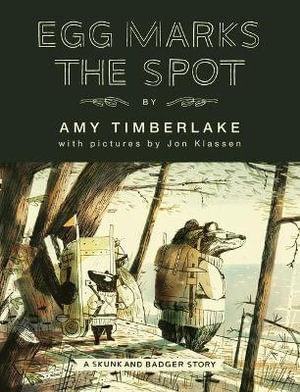
What a bizarre story! Badger is a rock-collecting whiz-badger, who is determined to collect a rock for each letter of the alphabet. Skunk is a quirky garrulous chef with an unusual friendship with rats and now chickens. The friendship between Badger and Skunk is close but not always warm. Sometimes friendship is like that, but maybe it is because Skunk has the potential to be malodorous. Badger’s cousin has stolen his ‘A’ agate, and this is Badger’s achilles heel and a source of great consternation. When there is the opportunity to find another rock source – amber, which is fossilised resin, it comes with an unusual egg inserted in the prehistoric stone. The two friends, with the addition of a fluffy chicken, are able to rescue the prehistoric hatchling from within the amber.
I cannot say this is a story with the clarity needed for younger readers. Timberlake peppers the narrative with onomatopoeic ‘blurts’ for animal and setting sounds and conversation, and sometimes there is dialogue that just seems confusing. The unusual personalities of Skunk and Badger add some comedic moments, but sometimes their idiosyncrasies are more likely to be understood by an adult rather than a child. I struggled to the end of this tale, and even the ‘scruffy’ naive illustrations by Klassen did not lift the story for me. For those readers aged 8-11 who love eccentric characters, animals personified with human traits far removed from their animal selves, and the oddities of excessive onomatopoeia and a weird plot-line… this may appeal, but don’t expect a child to be delighted by this story.
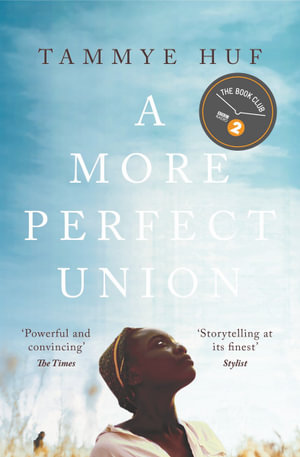
The illicit love between impoverished Irish immigrant, Henry, and black slave woman, Sarah, in pre-Civil War Virginia, is at the heart of this novel, which, whilst being over 350 pages long, rushes along with short chapters interleaving their stories. It is hard to put down, the writing is so good and the characters so real; in fact they are based on the author’s own great-great grandparents’ experiences plus a great deal of research into the slave era in America.
It is an enthralling and tender story, and in itself would be satisfying enough for most readers, but Huf takes it to another level by also including the voice of Maple, the illegitimate black daughter of a slave owner forced into servitude to her half-sister and torn from the only family she knows. It is her bitterness and her powerlessness that really drives home the reality of the life of the slave, with no say, no power over her own destiny, subject to the whims and desires of her masters, knowing that any wrong step could end in a whipping.
Sarah and Maple’s master prides himself on being a Christian, a kind and just man to his slaves. But it is kindness on his own terms. His brand of Christianity does not tolerate any kind of intimate relationship between the righteous whites and the blacks deemed their inferiors. He makes all the decisions on who the slaves may mix with, who they may marry, where they shall live and the work they are allotted. Sarah declares that ‘slave suffering is a different thing. When somebody owns you, there ain’t nothing they can’t do to you.’
The tension builds as Sarah and Henry take greater and greater risks to be together. It is a thoroughly immersive reading experience. Lovers of historical fiction and romance will certainly enjoy this novel.
Themes Slavery, Romance, Black women, Freedom, Racism.
Helen Eddy
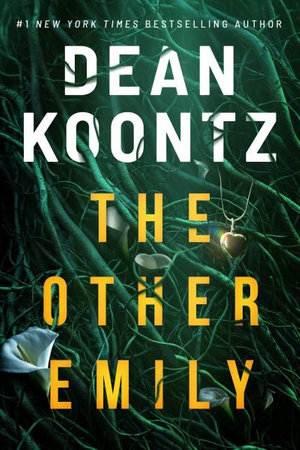
The other Emily by Dean Koontz
Thomas & Mercer, 2021. ISBN: 9781542019958. (Age:15+)
Ten years after the disappearance of Emily Carlino, her partner, David Thorne, still can't move on from the tragedy. Not knowing if she was in fact a victim of the notorious serial killer, Ronny Lee Jessup, haunts him to this day, and he can't find the inspiration or motivation to keep writing best sellers. Driven to obsession, he even regularly visits Ronny in jail, in the hopes of discovering if Emily was one of the victims they've never located. Then he meets Maddison Sutton, who appears to be Emily from ten years ago, down to the way she kisses him. Is she Emily? Is she an impersonator? A decade later and he just wants Emily, and wants to have this precious second chance.
This intense mystery suspense novel just keeps adding more mysteries. Told from David's point of view, the story becomes more intricate and complicated as he continues to question what happened all those years ago, and who exactly Maddison is. Readers will be reminded of the depravity that human beings are capable of while reading this thriller, as while Ronny Lee Jessup may not be a real life serial killer, the descriptions of his basement of horror and treatment of victims seem real enough, and unfortunately, there are vile and corrupt humans who have risen to power as well as those who are hidden from public view. As such, it is recommended that this book be read by mature teenagers and adults, not younger readers. The book moves at a steady pace, broken into numerous parts. An interesting read!
Themes Mystery, Thriller, Suspense, Lost Persons, Guilt.
Melanie Pages
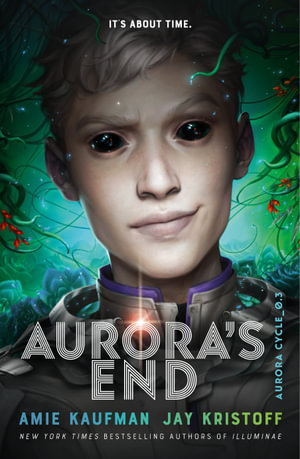
Aurora's end by Amie Kaufman and Jay Kristoff
Allen & Unwin, 2021. ISBN: 9781760295752. (Age:Teens) Highly recommended.
Kaufman and Kristoff bring the Aurora Cycle to a stunning conclusion in Aurora’s End. Fans of the series will not be disappointed, and I can recommend this series to new readers who are sure to enjoy the adventure, excitement and clever dialogue that permeates all the books.
Fortunately for readers there is a quick resume of the cast at the beginning of the book to refresh memories since the last book! Then the action starts immediately after the cliff-hanger ending in Aurora Burning. The book is divided into four sections and told from the point of view of each of the members of Squad 312, all who have grown in skills and abilities during the series. Zila, Fin and Scarlett find themselves in a time warp and their actions bring together many threads of the series. In an unlikely grouping, Tyler, Kal and Auri together with Caersan and Saedii are pitched in a high-octane battle with the Ra’Haan, the hive-like enemy.
The action is relentless and breath taking and the scenarios that Kaufman and Kristoff have created are unique. In particular, the time loop that Zila, Fin and Scarlett face is amazing and the choices they must make while trying to save the galaxy are highly dangerous. The smart and often funny dialogue provides a welcome breathing space for the reader. The authors too, have managed to pull together all the threads and relationships in the story in a most satisfying way in the conclusion.
This is an easy to read but very original series that will keep readers glued to their seats with its clever plots, fast paced action and exciting adventures.
Themes Science fiction, Relationships, Adventure.
Pat Pledger
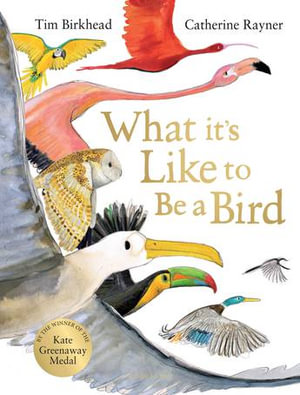
What it's like to be a bird by Tim Birkhead and Catherine Rayner
What it’s Like to Be a Bird is written by well-known University Professor and ornithologist Tim Birkhead. As the author of numerous books about birds, he has an incredible knowledge and understanding of birds, their habitats and behaviours. This newly published children’s non-fiction book, featuring 20 different bird species from all around the world, will be a wonderful resource for bird lovers both young and old. The book contains a contents page with the first chapter being an introduction to birds and their unique attributes. The individual birds discussed in the following chapters are presented on a double page spread with striking full page water colour illustrations and easy to understand information. Some of the birds included are the albatross of the Southern Subantarctic Oceans, the sungrebe of Central and South America, the bar-tailed godwit that spends summers in Alaska and winters in New Zealand and from Australia, the magpie. It is mentioned that the Australian magpie is different to the Eurasian magpie in appearance and its behaviour is much more aggressive.
The book is filled with fun facts that will engage young readers. For example, the male emperor penguin is left alone for two months incubating the egg losing half his body weight, and that the female penguin returns from feeding when the biological clock in her brain tells her its hatching time. Another interesting fact is that the great grey owl of Northern Europe, North America and Asia can pinpoint its prey with its incredible hearing even though the prey is hidden under a blanket of snow. The beautiful cover design and clever endpapers showcase the talent of illustrator Catherine Rayner.
A worthwhile addition to home, school or public library.
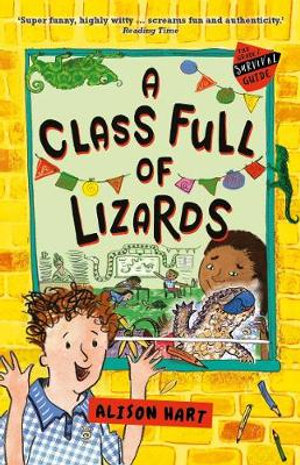
In the sequel to School Rules are Optional Jesse and his friends are back for the end of Year six and the move to high school.
It's my first day back at school after the holidays and I've already got three burning questions: 1) When is my family's disgusting diet going to end? 2) How will I finish my group project on time? 3) Why is my best friend Alex suddenly not talking to me?
If that's not bad enough, the classroom is overrun with lizards. At least things can't get worse, right? (Publisher)
I haven’t read the first book but I quickly found Jesse and his life outlook to be engaging and funny. He is suffering through the worst health kick a mum could impose on her family and to try to get a decent feed at least once a day he joins the early morning cross country squad. Jesse and his best friend Alex are drifting apart and there is a first year student at the school who has decided to shadow the boys rather than playing with classmates. And then there are the lizards!!
Jesse is a likeable character that children will either relate to or see their friends in, he is empathic, a bit of a worrier and generally kind and considerate. He has similar struggles to most children and the author deals with these in believable ways that would help other children to work through these issues and find realistic solutions.
This book focusses on the last two terms of year six with all the usual ups and downs children experience at the end of their primary school years and the unknown of high school, especially when there are no guarantees your friends will be going to the same school or in your classes.
Alison Hart manages to make Jesse’s trials entertaining and relatable without being patronizing and for this reason I think this book will become a favourite in the upper primary years. As I stated I haven’t read the first book, but it is now on my to-read list as I enjoyed this book so much. I want to know where Jesse’s story started and get to know the other characters better. I would recommend this book to children and to teachers as a read aloud or class novel.
An aunt of mine had a large collection of books that tumbled around in huge cedar bookcases along the hallway of her bohemian cottage in the Blue Mountains. As a child, I coveted these repositories of life, stories, people and places, not the least her stash of first edition Penguins and on the bottom shelf, her twelve volume Oxford English Dictionary. I imagined them in my bedroom, my own personal reference to anything at my fingertips. It was a heady dream until my aunt had children of her own, and my entitlement to the books was snuffed out. I felt a deeply dramatic sense of loss.
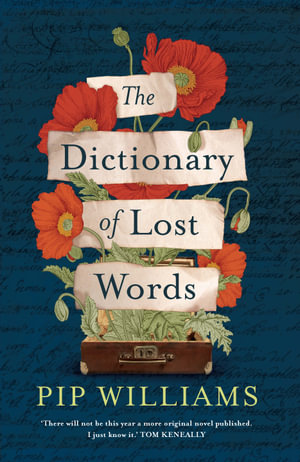
The Dictionary of Lost Words is an intriguing story of the curation and publication of the first edition, twelve volume Oxford English Dictionary, as reported by protagonist Esme Owen. While a small child she spent many hours under the sorting table in the Scriptorium, where one day she came across a wayward word – ‘bondmaid’. She purloined the slip, unaware of just how important it was to both the dictionary and society. Fuelled with emotion, the word represented the condition of many women in a variety of ways, and it led to Esme’s collation over the following decades of ‘women’s words’. With Lizzie the kitchen maid, Esme regularly visited local markets to seek out language of the female traders.
Beyond Oxford, the lives of all Britons were impacted by huge social changes represented in part by the growing women’s suffrage movement. Then the Great War erupted, and her cosy protected lifestyle was threatened by frightening changes.
This is in part, an authentic account of James Murray and the team that compiled the first edition OED, appealing on many levels to lexicographers, philologists, etymologists, other language experts as well as readers who just enjoy a good tale. Esme’s life viscissitudes inject intersecting narratives through the female characters, whose stories provide human interest and a fascinating slice of women’s history, largely ignored by historians until the latter part of the 20th century.
Themes Historical fiction, English language, Womens’ history.
Jenny Watts
Dragon skin by Karen Foxlee
Allen & Unwin, 2021. ISBN: 9781760526108. (Age:10+) Highly recommended.
How to save a dragon: 1) Assemble equipment. Water, Weet-Bix, sugar, syringe, sticky tape, scissors. 2) Believe in everything.
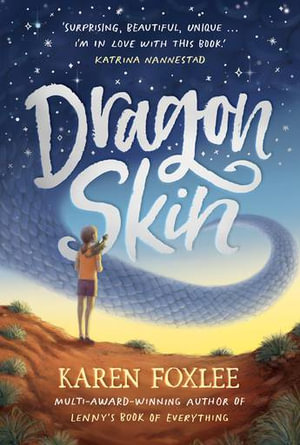
Pip never wants to go home. She likes to sit at the waterhole at dusk and remember Mika, her best friend. At home her mother's not the same since her boyfriend moved in. They don't laugh anymore and Pip has to go to bed early, turn off her light and pretend she doesn't exist. When she finds a half-dead creature at the waterhole, everything changes. She knows she has to save this small dragon and return it to where it comes from. But how? (Publisher)
This book is beautifully written with language and imagery that fits with the intended reader age range (10+ years).
Pip is struggling with life in every aspect, her home life has changed since her mum’s boyfriend moved in, her school life is hard without her best friend who left without saying goodbye and everything in between is lonely and fills with sadness and loss until she finds a small creature who is more dead than alive near the waterhole where her happiest memories lie and where she feels closest to Mika.
Pip keeps the dragon secret and alive using techniques she has learnt while saving other animals, including a small kitten that lives with Mika's grandma and ideas that come to her through conversations with Mika in her head. She is struggling to know what to do next until she decides to trust two of her classmates, who she has never been friends with and ask them to help. Together, they save the dragon and forge a new friendship that allows Pip to ask for what she needs from her mum and develop a new understanding of the struggles others might have around her.
This is a book of friendship and hope, but it is filled with sadness and struggles too that the reader will empathise with, such is the brilliance of Karen Foxlee’s words. While they may never have experienced loss or domestic violence the reader will understand Pip’s struggles through the story and will be relieved at the ending, that actually feels more like a beginning rather than a finale.
This book was a wonderful read and it is one that I would recommend to anyone, although I do feel that it needs to be read by a mature reader to fully appreciate the stories that are woven throughout the narrative, having said this, a 10 year old will engage with and love this book but depending on the reader's maturity may not fully understand the unsaid stories that are the framework for this amazing book. Teacher's notes are available from the publisher.
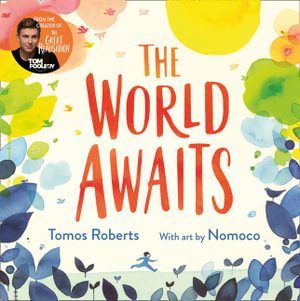
The World Awaits is a thoughtfully written picture book with an important message of hope and connectedness. The child in the story awakens to the new day but refuses to get out of bed. His older brother listens to his reason for staying in bed and then gently proceeds to give all the reasons why he should get up. He begins by telling his brother he has so much potential that will be wasted if he does not share it with the world. Then he talks about the plusses and the minuses we have in our core that impacts on how we can add goodness to the world or take it away. The older brother gives examples of simple plus things the younger brother could do such as ‘make your bed’, ‘give your grandparents a call’ or offer a ‘word of warmth to someone struggling’. He encourages his brother to realise that ‘global goodness grows with each good word and each good deed’ no matter how big or small these plusses are. At the end of the story the small child is encouraged to get out of bed with exuberance and begin his day with any necessary support from his brother.
This beautifully illustrated book would best be shared between an adult and child or within a classroom setting where guided discussions can occur.