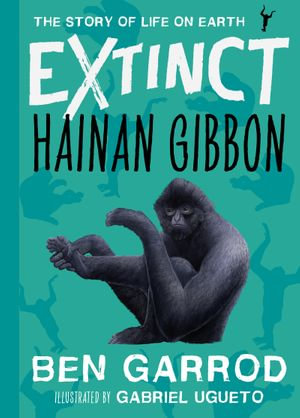
Extinct: Hainan Gibbon by Ben Garrod. Illus. by Gabriel Ugueto
Head of Zeus, 2022. ISBN: 9781838935474. (Age:9+) Highly recommended.
Extinct Hainan Gibbon is the final book in the Extinction series written by TV scientist Ben Garrod. For those who are unfamiliar with the Hainan Gibbon, it is one of the rarest mammals on Earth, one of our closest relatives and is one of the most endangered species with less than 35 remaining in the wild. The habitat for these gibbons is the island of Hainan, which is off the southern coast of China.
The book begins with a detailed introduction surrounded by plenty of white space to make it accessible for younger readers. This is followed by a chapter on ‘What is extinction?’, information from an expert, the first one being Professor Richard Pancost commenting on climate change. A comprehensive chapter on the causes of extinction is next, followed by another Ask the Expert, Professor Gillian Forrester, who answers the question, Is nature good?
Information on the Hainan Gibbon is broken up into the sections labelled: discovery, anatomy, classification, ecology and environment, and behaviour. Expert, Dr Carolyn Thompson shares information on her life as a primatologist who now works with the Hainan Gibbon. Throughout the book the wonderful illustrations by palaeoartist, Gabriel Ugueto, complement the text perfectly and the endpapers and double page spread illustrations are simple stunning.
The strong message in this book that is delivered time and time again, is that humans are responsible for the damage to the environment and have the power to turn things around but must act quickly.
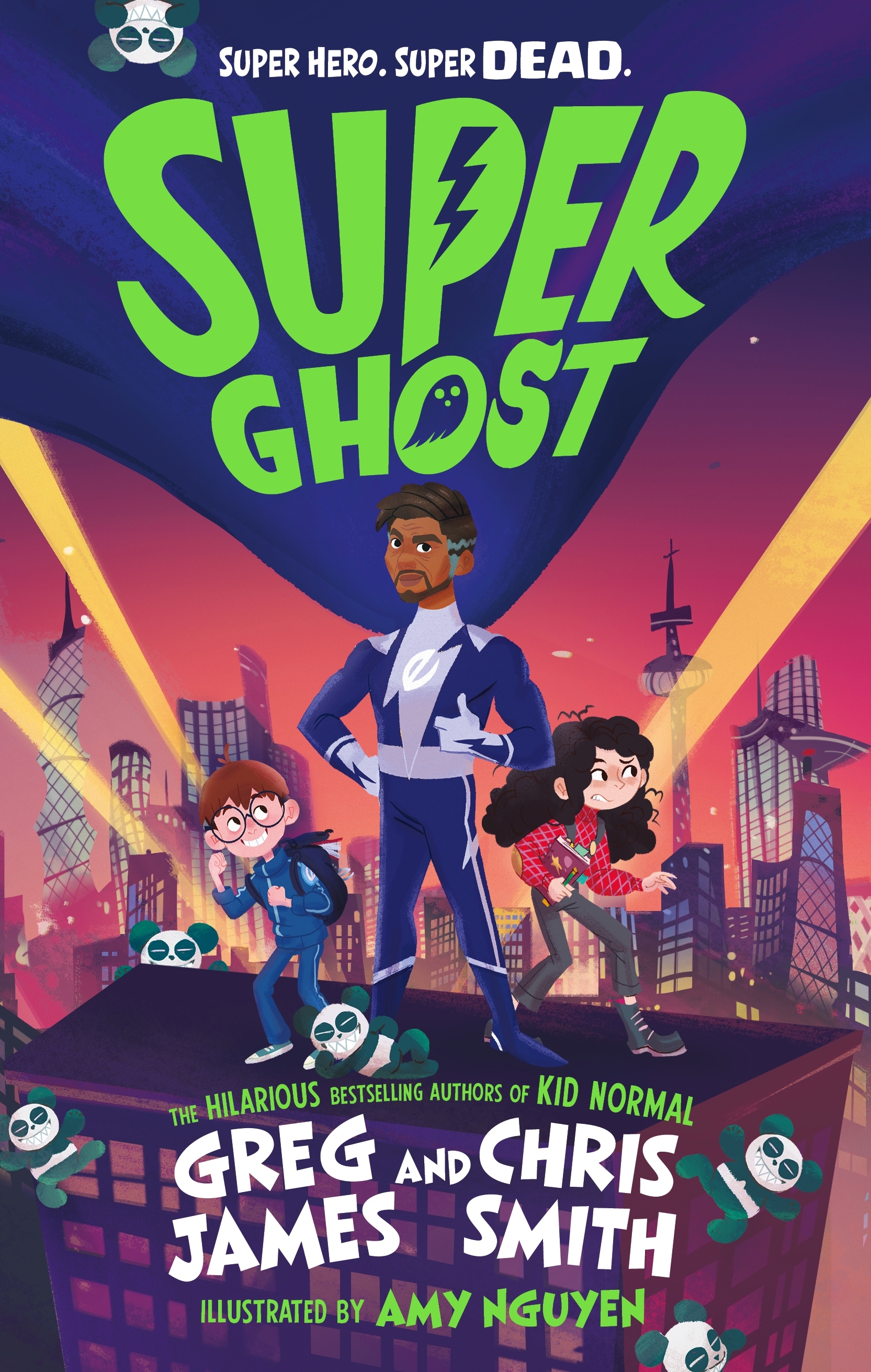
From the first page we know that the worst thing possible has happened - Paragon City’s superhero has died! What will happen now and what will 12-year-old Sonny Nelson do now that his personal hero, Doctor Extraordinary, is no longer able to sweep in and rescue the city from everything evil? Fortunately, Sonny becomes the only one who can see the ghostly apparition of the heroic Doctor when he reappears. The dilemma of being the only one in communication with a ghost is that everyone thinks you are mad! The story is a laugh every moment, and when robotic pandas are released in a dastardly plan to create chaos, Sonny must release his own inner hero (with ghostly Doctor Extraordinary’s help) to rescue the city.
This is a light-hearted romp with some very quirky features. Frequently the authors break into the narrative with amusing asides and this will appeal to young readers. The ‘dead’ Doctor and his arch nemesis Captain Chaos are eccentric and Sonny is the slightly shy and friendless boy whose besotted behaviour towards the heroic Doctor is also left-of-field. Children will enjoy this comic adventure with twists and turns … and pandas. It is just entertaining without being overly challenging, but it also contains the occasional commentary on the adults in the story that kids will appreciate. Recommended for lovers of comedic stories, aged 9+.
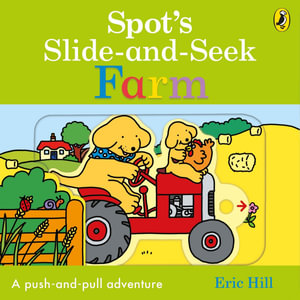
Spot appears in a new adventure as he and his dad work on the farm. Each double page has a new chore for Spot to help around the farm. Each shows what the chore is and what Spot must do to be useful and each page has a push and pull insert which adds movement and interest for younger readers.
‘A push and pull adventure’, full of humour will be eagerly sought after by younger readers. The first double age shows Dad collecting eggs from the henhouse while Spot feeds the chickens and hens. The pull out slide shows the grain being thrown from the bucket for the animals to eat. Over the page, lucky Dad is cleaning out the pigsty while Spot collects apples for the animals. The slide shows the piglets eating the apples. Over the page Dad is using the tractor to move the hay bales, with Spot is nowhere to be seen. Eventually Dad finds Spot in the stable with the horses, feeding them apples.
A warm hearted look at the work needed to be done on a farm, this sturdy board book shows a great many details about the work, the animals, clothing and landscape of a farm. Some will be familiar while others will be new to many children, so introducing them to something outside their experience.
Younger readers will love pointing out the animals and what Spot is doing, while helping to pull out the tab which slides across the page.
Pan Macmillan, 2022. ISBN: 9781529094961. (Age:Adult - Senior secondary) Recommended.
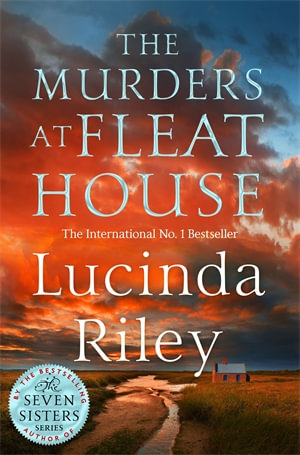
Lucinda Riley, best-selling author of the Seven Sisters series and the Angelseries wrote The Murders at Fleat House in 2006. It is her only crime novel and her son Harry Whittaker decided to leave it as he found it after her death in 2021. The story has stood the test of time as a compelling and interesting crime novel and introduces Detective Inspector Jazmine ‘Jazz’ Hunter and her sidekick DS Alistair Miles.
Fleat House is part of the small private school of St Stephen’s in Norfolk. When Charlie Cavendish is found dead, Jazz is convinced that his death was not accidental, and when investigating, turns up some disturbing incidents in the past as well as the present. Charlie was known to be a bully and there were people around him who could have switched the drugs he took for his epilepsy. When a young pupil, Rory Millar, disappears and the Classics teacher dies, it is up to Jazz to link up the clues and find the killer.
The claustrophobic atmosphere of St Stephen’s provides a background for the murder and the bullying that has not been stopped by the teaching staff. There are themes of divorce, alcoholism and infidelity in the wider school community and some red herrings will lead the reader astray until the final denouement.
The Murders at Fleat House is an easy to read, engaging story with a detective who is likeable and a mystery that is compelling. Readers are likely to be left wishing that there were more novels featuring Jazz and her team.
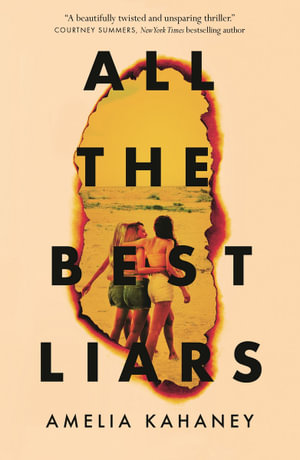
Three final-year high school students Sydney, Rain and Brianna have grown up together on the outskirts of a California desert town as best friends. However as their parents’ circumstances change and two of them are able to move to the more expensive suburbs, their allegiances are tested, fatally.
Brie moves first when her father’s business starts to improve, and she is quick to shake off her childhood friends, leaving Syd and Rain feeling abandoned. She has her sights set on attending a prestigious college and is studying hard, to prove to her father that he should fund this.
When Rain’s mother wins the lottery, they also move ‘down the hill’, and now that she has money, Rain is readmitted into Brie’s group, leaving Syd bereft.
This not uncommon story of friends growing apart, is given depth as Kahaney reveals the motivations for their behaviour; the desire to escape poverty, to avoid an abusive parent, to grieve a lost one, the pressures to appear perfect, have money and possessions, and make friends and influence others.
The novel is told in 13 parts, each from one of the girl’s perspective, over a period of a year. The pivotal event is the house fire in which Brie dies and Syd becomes a suspect, and each chapter adds to our knowledge and understanding of how and why the fire occurred, as layers of deceit and desire are slowly revealed by each girl’s memories and actions. From several viewpoints we see that privilege is not always what it seems, and friendships can be expendable.
In places this is not a pleasant read, as each girl struggles with their sense of self-worth and the very worst of ‘mean girl’ behaviour, regularly using drugs and alcohol to cope. However, it is a skilfully written story that addresses many of the issues facing teen-aged girls, including making and keeping friendships as circumstances and priorities change, and self-preservation kicks in. A gripping read that delivers right up to the final plot twist and raises many contemporary discussion points.
Themes Friendship, Families, Relationships.
Margaret Crohn
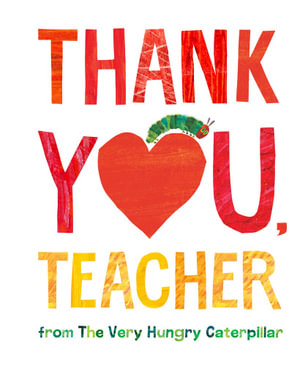
Thank you, teacher from the Very Hungry Caterpillar by Eric Carle
Eric Carle, a prolific author and illustrator of children’s books, died in 2021, but his website is still active and luckily more books written by him are being published as he sold his rights to PenguinRandomHouse in 2021. For more about him and his work see https://eric-carle.com/
This charming board book extolls the virtues of saying thank you to someone who has helped a child scale heights. They are thanked for reading stories, for helping someone hang in there, for offering friendship and helping them see the value of friendship in others, for being wise and inspirational. Each double page has Carle’s recognisable illustrations: a pile of books and a caterpillar, an owl spreading its wings, a spider and caterpillar in the long grass, bees buzzing around honeycomb, each accompanied by a few words which show how much is owed to a teacher who has inspired. Children will love looking for Eric Carle’s signature illustrations: a caterpillar, bees, owl, spider, butterflies and apples, reflecting the other books children will know and love from his astonishing output. And spotting the caterpillar on each page will add to the humour of the storyline.
All of the virtues presented will engender further discussion amongst older readers, as they ponder who taught them to care about their world, or encouraged their uniqueness, or supported their attempts to fly.
This is a lovely easily held, strong board book dedicated to thanking teachers who have inspired and supported, reminding people to say thank you. The apple motif runs through the book, an apt opportunity to talk about the idiom, an apple for the teacher.
Themes Caterpillars, Eric Carle, Teachers, Acknowledgement, Humour.
Fran Knight
How to make a pet monster: Smidgen by Lili Wilkinson
Albert Street Books, 2022. ISBN: 9781761067433. (Age:7+) Highly recommended.
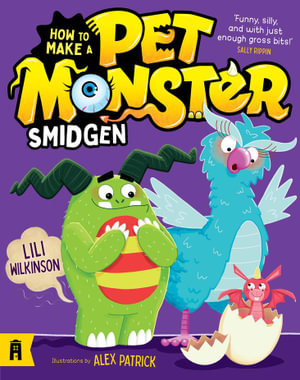
Have you ever wished for your very own pet monster? One that is cute and would keep you entertained forever? Well, Artie, Willow and Arabella Rose are back to create one again. Previously, after finding an ancient spell book called the BIGGE BOKE OF FETCHING MONSTERS, Artie and Willow created Hodgepodge, Artie’s best friend. But when they tried to create one for Willow, Flummox turned out to be Arabella Rose’s. Now Willow is desperate for her own!
Working together to gather the ingredients, the trio use their ingenuity to find items that are just right. But, trying to keep their monster secret can be a little tricky, especially when your club house gets invaded! Enter Zayn, a cool kid who loves soccer. He explodes into the headquarters, and they aren’t sure how much to tell him. However, Willow is so desperate for her own pet monster, they must make some compromises. So now everything looks like it is going to plan, until Willow becomes scrambled in her Dad’s souffle cooking competition! Will her monster dreams be smashed forever, or will they work out an egg-cellent solution!
Smidgen (#3 How to make a pet monster) is the third book in the series, but you can easily catch up with the characters and plot to enjoy even if you haven’t read the previous books. Lili Wilkinson writes an entertaining story. Filled with adventure, humour and fast paced action, the reader will be left enjoying every minute. The book also contains great cartoon pictures by Alex Patrick. These enrich the text and allow the audience further levels of engagement. The text has a larger font, which is easy to navigate and not overwhelming for those entering the excitement of a slightly longer novel.
With entertaining characters, a humorous storyline and jampacked with cool illustrations, this novel provides high engagement for the reader. The clever typography adds further interest, and this novel is sure to appeal to anyone who enjoys fun, adventure and some cute monsters to keep them amused too!
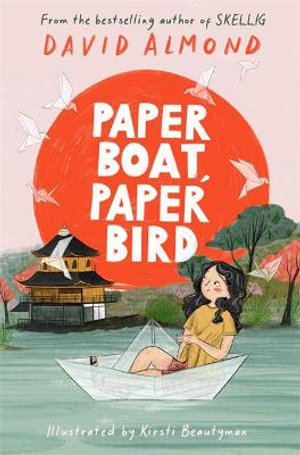
Award winning author David Almond has written another lyrical and memorable story set in Japan. Mina and her mother are visiting Kyoto and when she is travelling on a bus, she watches a woman make a beautiful origami boat. The woman generously gives it to her and makes a bird as well. Mina’s imagination soars as she sails the boat and flies the bird, leaving Kyoto behind.
Beautiful illustrations enhance the story, showing the vivid red boat and bird in the city and tourist attractions. The drawings are in black pencil against a white background with red as the predominant colour of the origami as well as in stripes on a shirt and skirt, fish, and cars.
The story is simple, yet lingers in the mind, leaving the reader with a desire to visit Japan and learn how to make origami. Words in Japanese are pronounced throughout the story and tourist spots are explored. Almond gives background to his visits to Japan over the years and to the origins of the story. There is an excerpt from Skellig, which will encourage the reader to revisit this Carnegie Medal, Whitbread Children's Book Award winning book, as well as My name is Mina where Mina was first introduced.
Paper Boat, Paper Bird is a lovely introduction to Japan for children. Its warmth and emphasis on the imagination and creativity, make it a very positive feel-good experience, both as a read aloud and for the independent reader. Activity sheets and teacher's notes are available.
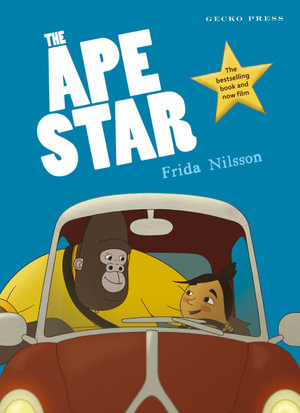
Having read Hattie and Olaf (2021) as my first introduction to the work of Swedish author, Frida Nilsson, I was very keen to read her latest book The Ape Star. Nilsson, once again, creates in 9 year old Jonna, a wonderful, feisty and funny female main character. Jonna has been likened to Pippi Longstocking. Perhaps it is the orphaned girl; perhaps there is something about the Swedish style of presenting character. In any case year 4 classes at my school were introduced to The Ape Star today in the library. Though we have only just read to the part where the ape steps out of the beat up old car to the shock of all the hopeful orphans at Renfanan Home for Orphans and though we haven't even finished the first chapter, the children are begging for the The Ape Star to be read every time that they have library lesson-in serial form.
The story is told in first person through Jonna's voice. The plot moves at a jaunty pace. We are introduced to Gerda, the manager of the orphanage. Although she is nasty, the nastiness is somehow not too bad when viewed through the inimitable perspective of Jonna. Basically the orphanage children all... 'longed for a real home, a real mother, a lovely one with her hair in a bun and a waft of perfume.'
We meet the sinister Tord Fjordmark and a sense of foreboding is created. A crisis develops and must be overcome. There is a sense of a terrible power imbalance and it is little people against the Council. Out of the deepening crisis comes initiative, teamwork and a realisation of what is important.
The Ape Star teaches that love doesn't come in neat packages and it teaches something about the petty nastiness that is dealt out to people who look different. With delicate sensitivity, Nilsson depicts the embarrassment felt by children when they or their family do not fit the norm and the difficulty of feeling always judged and looked down upon when you or a loved one is different. Young readers would empathise with Jonna as she struggles through a range of these emotions until she reaches the place where the power of love overcomes and negates everything else.
The reader needs to focus on some details at the start of the book because the story is circular and connections will be made through a trail of little breadcrumbs which bring aha moments and great satisfaction. The delightful accompanying illustrations come from the feature film The Ape Star.
I concur with The Times Children's Book of the Week - 'Nilsson has the power to make you remember what it was like to be small, fierce, disempowered...- However feeling disempowered is not a barrier to Jonna - ever!
Dr Bravery clearly states in the introduction to his book that it is about his diagnosis and treatment experiences as a young 28 year old bowel cancer patient, that led him to become a doctor so he could change how the medical system (in New South Wales) treats patients.
The book is a detailed memoir of the author’s early life, family, career, friendships, diagnosis and treatment experiences as well as the training he received to become a doctor.
Dr Bravery writes in an engaging manner (I felt compelled to read the book in two days) and covers a range of personal and social issues as well as medical system concerns.
This book may be of interest to older students wishing to become doctors as it gives a comprehensive picture of what is involved.
Themes Doctors, Cancer, Autobiography.
Ann Griffin
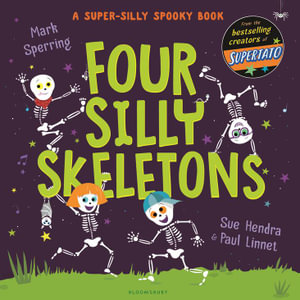
Four silly skeletons by Mark Sperring, Sue Hendra and Paul Linnet
Four silly skeletons named Fred, Sid, Belle and Bill live at the top of a very steep hill. Lucky for them their dear old Aunt June lives near the bottom of the hill and she is very sensible. The four do some very silly things, slipping on a banana skin, overfilling the bath, hitting a ball with the tennis racket and smashing a vase. But sweet Auntie June is there to put things right. One night they become entranced with the music that they hear. They dance and jive, leap and swish, all over the top of their hill. Auntie June calls out very sensibly to take a torch but they do not listen, and fall over the cliff. They become a jumble of bones at the bottom of the cliff, and Auntie June must try to put them together again. She gets out her sticky glue and attaches the bones together. But she does not do it at all correctly and the four silly skeletons are arranged a little differently.
This is a very cute rhyming cautionary tale. It reminds readers through a fun story, of taking note of your elders, of taking precautions when out at night, of watching where you are going. It will raise gales of laughter from the intended audience and readers will want to write their own 'Four silly skeletons' verse. The luminous illustrations add to the fun of the story and an astute teacher will have skeletons ready to be cut out and danced across the pin up board, and use the tale to introduce work on the body.
Editor's note: This is the review of the 2016 publication.
Themes Humour, Skeletons, Bodies, Verse.
Fran Knight
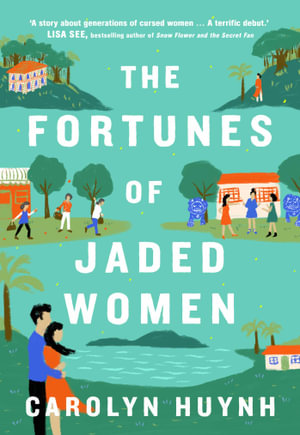
The fortunes of jaded women by Carolyn Huynh
Simon & Schuster, 2022. ISBN: 9781761106934. (Age:16+) Highly recommended.
Jade is highly valued in Asian societies for good luck and protection against bad spirits. The necklace handed down in this story is a purple green colour, one of the rarest forms of jade. The Duong women are a multi-generational Vietnamese family cursed by a witch to never know love, to marry poorly, only ever have daughters, and never be able to invite the spirits of their ancestors into their home. The women are also ‘jaded’, the resentment and spite continually spiralling into heated arguments that become fiery and dangerous. Mothers are pitted against daughters, sisters against sisters, and cousins against cousins. The curse has been passed down by Oanh Duong through the years to Ly Minh Duang and her four daughters and then to her eight granddaughters.
The story is told from the perspective of each of these 13 or so women. It’s an incredible achievement – Huynh draws out each of these voices in interleaving chapters. They are each thoroughly rounded and realistic characters that we get to know and empathise with, though I must admit I did appreciate being able to refer to the family tree provided in the opening pages.
The saga takes us from predictions, to a funeral, a pregnancy, a wedding and a birth. The women are ‘dramatic, emotional, loud’. The men they encounter are variations on the white male Asianphiles, Vietnamese ‘Kevin Nguyen’ types, Korean heart throbs, and the American loser guy. There are a lot of laughs, and many farcical moments, as the romantic involvements become one huge tangle, that erupts just when it seems like there might be an opportunity for reconciliation.
Huynh has created a wonderful cast of characters, vividly depicting a community where everybody has their nose in everybody else’s business. It is very funny, but also a heart-warming revelation of the insecurities and loneliness that many women strive to overcome, to achieve the peace or the love that they need, - and such a powerful depiction of the mother-daughter dynamic, and the strong ties that underlay the relationship. It all comes together in an ending that is surprisingly unpredictable yet a satisfying conclusion. Just brilliant!
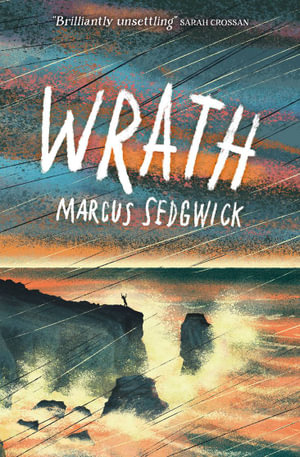
Wow! What a powerful and memorable story Sedgwick has packed into 131 pages with an engrossing mystery, a missing girl and themes of climate change and friendship. Right from the opening chapter I became involved in the fate of Cassie, a teenage girl who has gone missing. Her friend Fitz is determined to find her, feeling guilty because he had not been there for her before her disappearance.
Cassie has been hearing a hum, a sound that no one else around her could hear and which she claims came from the Earth itself. She tells Fitz about it but neither he nor other members of the band they belong to can hear it. She becomes increasingly isolated and the COVID lockdown has made life very difficult. After being ridiculed at school for her belief in the hum, she disappears. The police are called in, but it is Fitz who tries to follow clues leading to her disappearance.
Told from the point of view of Fitz, the story takes place in Scotland and Sedgwick has created an atmosphere of fear and tension with storms and freezing rain hampering the search for Cassie. Fitz does not believe that she has just taken off to a demonstration about climate change, and must work out why she has left
The feelings surrounding emerging from lockdown and worry about climate change will be familiar to readers who can identify with both Fitz and Cassie. Fitz lives with his supportive father and is trying to navigate his way around his feelings for Cassie. Teens will identify with issues of peer pressure, bullying and wanting to belong to a group, and they will learn with Fitz when to keep quiet about things that are told in confidence.
People interested in Science will want to research The Schumann Resonance to learn about the hum that Cassie hears, while others who like a mystery and want to follow clues will enjoy Wrath, and may like to read other books by Sedgwick like Revolver and She is not invisible.
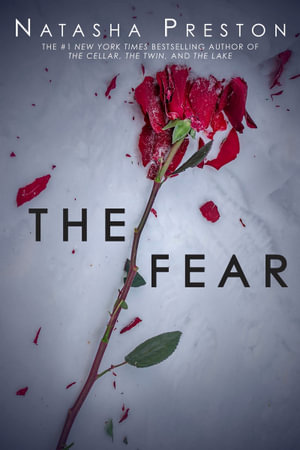
Delacorte Press, 2022. ISBN: 9780593125014. (Age:15+) Recommended for those who like thrillers.
This is chilling and tense! A teen thriller that scares deeply, with even the awful blizzardy winter weather working to add drama to the plot.
Izzy is one of the few teens in her school and wider community that has not shared on a social media platform her personal fear of the worst way to die. When two teens in her school are found dead in the manner of their published fear it begins a chain of frightening events that seem to have Izzy set into the role of curious enigma solver, with potential deadly consequences. Is one of her classmates the murderer, or has she cast him in a bad light just because of his grumpy demeanour? Who can be trusted? Why aren’t the police able to stop the serial killer from pursuing more victims? This is a very teen focussed murder mystery, set within the world of school-based activities and teen interests. There are mean girls and jocks, but also there are good parents who have rules and expectations and bad parents that cause distress. And into this ordinary USA school context intrudes a mystery killer with evil intent. The police are involved, but Izzy is portrayed as the ‘one’ with the inside wisdom to solve the mystery. This adds an element of unbelievability – surely the police would have been more active in solving the crime and better able to search their small community! The responses and risks taken by individual teens are also a bit unlikely, but because they do, the tension ramps up higher.
With most of the story written from Izzy’s perspective, we see inside her teen logic and the tension she feels. But there are a number of chapters interspersed through the story that are written from the perspective of ‘Fear’, the character assumed to be the murderer. This technique arcs up the tension for the reader. Although this story does have some significant plausibility holes, teens will still engage with the thriller, overlooking many weaknesses because of the fast pace and the strength of the central character. And right to the very end there is uncertainty, fear and concern for all the characters! Although this isn’t great literature (it is not even great mystery writing), it is readable.
Themes Thriller, Murder, Social media, Fear, Mystery.
Carolyn Hull
A little spark by Barry Jonsberg
Allen & Unwin, 2022. ISBN: 9781760526924. (Age:12+) Highly recommended.
For those familiar with Darwin based, award winning author Barry Jonsberg's books including My life as an alphabet and A song only I can hear, there will be no disappointment on reading A little spark Don't let it go out. The title captures the main idea. There is a spark in all of us and certainly in people like 13 year-old Caitlyn Carson (CC) the central character of this story. A little spark is told in the first person giving the reader direct access to Caitlyn's funny, thoughtful and sometimes quirky outlook on life.
Caitlyn is busy trying to hold life together as she lives between the homes of her divorced parents. All the adults in this book are very likeable people; their marriages have just not worked out. Caitlyn has been living happily with her mother and nice boyfriend Sam during the week and going to her father on the weekends. She compartmentalises these parts of her life and keeps both parts privately not sharing either life with her parents. When she stays with her Dad amazing adventures, orchestrated by him, unfold. At school, Caitlyn has a close friend Elise whose parents are going through an acrimonious divorce. Caitlyn is a gifted writer, recognised by the school. She wins $2000 as part of a prestigious writer's award.
This calm flow of life is interrupted when Caitlyn is forced to make an unbearable choice. Very sad and confronting things happen as A little spark moves into the territory that Barry Jonsberg handles with such warmth and skill: love, pain, the mysteries of people and 'a bit of madness and why we need it.'
Difficult subjects are handled well in Jonsberg's hands. I suspect A little spark will be a helpful read for young people who have to witness or experience the detailed stages of divorce as the third party or death or shifting friendships or attempted suicide. Told through Caitlyn's matter of fact and sometimes hilarious voice we see new parental partners presented well, mixed feelings described, difficult dilemmas, pain and sorrow dealt with and the relationships that students have with their teachers and friends powerfully depicted. It will come as no surprise that Jonsberg was a lecturer and head of an English faculty in the UK and is a High School English teacher when the reader sees what insight he has into the lives and thinking of young adults.
A little spark is a captivating read. Be warned- there are heartbreaks, there are joys and there are surprising twists. It is about nurturing that precious spark that is you no matter what life has in store. That is the important message. Teacher's resources are available.
Themes Divorce, Family dynamics, Friendship, Belonging, Identity.