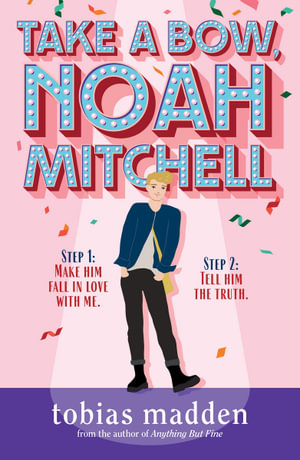
This second book by Tobias Madden has similar gay romance themes to his highly praised first novel Anything but fine but instead of the ballet world, Noah Mitchell is thrust into the world of musical theatre in Ballarat, in an endeavour to get to know his secret gaming partner MagePants69. Noah, aka RcticFOx, only knows his fellow combatant online, but a subtle slip gives him the clue that maybe MagePants69 is performing in the same musical that his mother, Rose, is starring in. Noah, going against all his normal inclinations, decides to join the theatre too, in order to secretly find out more about the person he has become so enamoured of online. Reading those first few chapters, every reader knows that something is going to go terribly wrong. How can he be sure that MagePants69 is Eli, and how will it all pan out?
Although issues of catfishing and online ensnarement are duly raised, these are not the central focus of Madden’s novel. It is more about the deception that Noah becomes involved in, and the betrayal of trust that Eli experiences. There are also issues of school-time bullying, friendship betrayal and loss, and difficult parent-child relationships. But this is ultimately a rom-com, and it is the relationships within the theatre group, the budding friendships, and the slowly developing romance that Noah gradually finds, that are at the heart of the novel.
While there are some shared issues with the more confronting The brink by Holden Sheppard, Madden’s novel has more in common with more gentle love stories such as Golden boys by Phil Stamper, Here’s to us by Becky Albertalli and Adam Silvera, and Date me, Bryson Keller by Kevin van Whye . Take a bow, Noah Mitchell is a thoroughly enjoyable and engaging romantic comedy of errors that deals with real issues of youthful self doubt and tentative attraction, in a way that every young reader can relate to.
Themes LGBQTI+, Romance, Deception, Trust, Self confidence, Video games.
Helen Eddy
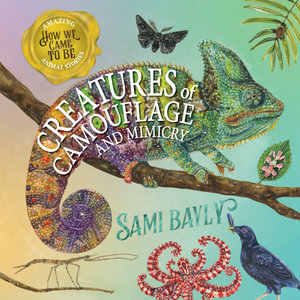
How we came to be: Surprising sea creatures by Sami Bayley
Join author/illustrator Sami Bayly on a fantastic diving journey deep down into the ocean and be introduced to some of the amazing creatures that reside in each zone. This cleverly presented and strikingly illustrated book begins with a personal welcome from Sami who shares her love of unusual animals and an explanation of evolution.
This is followed by an introduction to each of the five ocean zones: Sunlight, Twilight, Midnight, the Abyss and finally the Trenches. The reader is then able to join Sami, easily identifiable by her yellow diving suit, as she swims through each zone offering information and humorous conversation. In the twilight zone she accidentally steps on a spotted deepsea flounder who chats to Sami giving details about itself. As well as conversation bubbles there are brightly coloured circles giving varied and interesting facts. For example, ‘a creature that doesn’t have to swim to catch its food is the vampire squid, as it feeds on marine snow-microscopic dead organism that drift down from above.’ In the final pages are more surprising sea creatures including the Blobfish, Cockatoo Squid, Wolf Eel and the Faceless Fish.
This fabulous book has a place in all libraries and would also be a wonderful gift for children of all ages. Teacher's resources are available.
Hachette, 2022. ISBN: 9781409179313. (Age:Adult) Recommended for adult readers and Romance lovers.
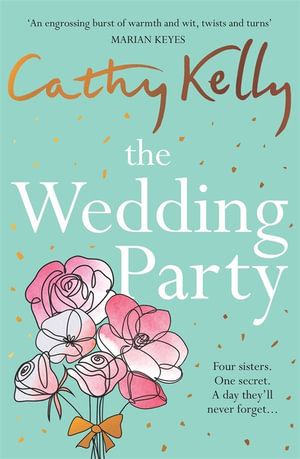
The Robicheaux family grew up in an Irish boutique-style hotel, with love flowing and a plethora of interesting experiences, until their charismatic father, Stu, brought it toppling down with his drinking and gambling. His marriage to steadfast Meg also crumbled, and their connection to the iconic Sorrento Hotel also failed to last. As adults, the four daughters, Indy, twins, Eden and Savannah, and Rory (and their partners) now face an astounding piece of news as they are told that their parents are considering remarriage and that the wedding might take place at the decaying Sorrento Hotel, a victim of neglect since the family inhabited it and ran it as a business. Indy is now a loving and caring midwife, Eden an aspiring politician, Savannah runs her own beauty and perfumes business and Rory is an aspiring author, but they are all somewhat surprised at their parents’ change of heart toward one another, and their planning for reconciliation. As the planning for the wedding progresses, we are witness to some secrets from the past, but also some cracks in the lives of the rather amazing and beautiful women who once called the Sorrento Hotel, ‘Home’.
This is a romantic tale, and yet it shows that there are problems hidden beneath the surface. With a slow and varied reveal we discover that the beautiful facades also hide human flaws, problems, histories – everything from abortions, addiction, to spousal emotional abuse, struggles for a lesbian sister, affairs and varied responses to children in families. Although the family members love each other, they also have the capacity to wound each other. Although the Irish setting does not overtly influence the story, I can imagine the Irish lilt as the story unfolds. This is definitely a book for the lover of syrupy romance stories, but the addition of the abuse plot line and other difficulties adds a pathos and drama that removes the cloying sweetness from the story. This still would be a ‘holiday book’ for those that like the romance genre, and even though the characters do not always have it ‘easy’, they are beautiful and sometimes too sweet or unbelievably forgiving.
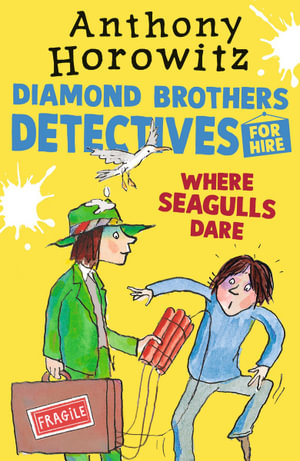
This is a new story heralding the return of a popular series from the late 1980's and early 1990's recounting the adventures of the world's worst private detective, Tim Diamond (28), and his much more intelligent younger brother, Nick Diamond (14). Because of their popularity they have been re-issued over the years, each time gaining a new generation of fans, often moving on to read Horowitz's more mature novels such as the Alex Rider series.
In this episode, Tim and Nick haven't had a case for three months and are down to their last cornflake so when a glamorous woman comes into their office offering them a pile of cash to find her missing father, they think Christmas has come. Before they know it, they are caught up in a case involving bike-riding hitmen, super-hackers and a sinister far right organisation, the White Crusaders. The Diamond Brothers are in trouble over their heads.
Even though it has a teenage protagonist and international criminals, it is written for the 7-9 age group, lightened with humour, puns. pop culture references and absurd situations characterised by titles that are spoofs of popular movies. Something to entice young males to keep reading and perhaps lead them on to other works by the same author.
Themes Detectives, Missing persons, Gangs.
Barbara Braxton
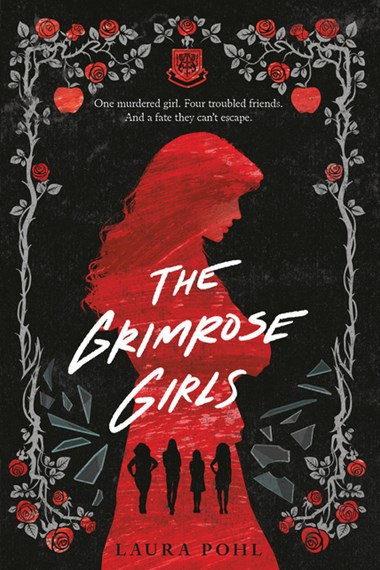
The Grimrose girls by Laura Pohl
Fire Reads, 2022. ISBN: 9781728228877. (Age:14+)
Boarding school-based Sapphic fantasy murder mystery… seems like a lot of genres to fit into one book and a tall ask for an author to pull it off, but Pohl does this, rewriting a selection of fairy-tales with a magical twist, for her third novel. This gives us a story of four friends in their final year of school at an exclusive Swiss boarding school/castle, who, in searching for the truth behind their friend’s apparent suicide, uncover a book of curses that has been predicting the gruesome death of students for years.
Each of the girls is modelled, loosely, on a fairy-tale character from the original Grimm brothers’ tales. The chapters alternate between the different points of view of main characters Ella, Yuki, Rory and Nani, giving a layered description of events as they try to stop the killer before they become the next victims.
The isolated castle and spooky surrounding forest set the fantasy scene well with secret passages, hundreds of staircases and cavernous library. The girls and their class-mates embrace a wide range of diversity of disability, race and sexuality, and Pohl cleverly reveals these aspects throughout the book as we get to know the characters better and observe their reactions and interactions. Mental health issues are also raised, friendships are tested and behaviours are questioned as the girls break through self-doubt and others’ expectations, helping each other to become stronger, more resilient and better friends.
A fun element was piecing together the mystery of who the girls’ fairy-tale characters were, but to thoroughly engage with the book, readers would need to understand how fantasy ‘works’, or at least be willing to completely suspend disbelief.
The book itself contains a content warning of suicide mention, depiction of anxiety and OCD, parental physical/emotional abuse, parental death and light gore.
The sequel The Wicked Remain is due in November 2022, and as a result, many of the plot threads are left unresolved, which would be annoying for those readers not invested enough in the characters to want to add it to their reading list.
Themes Friendship, LGBTQI+, Fantasy, Fairy-tales.
Margaret Crohn
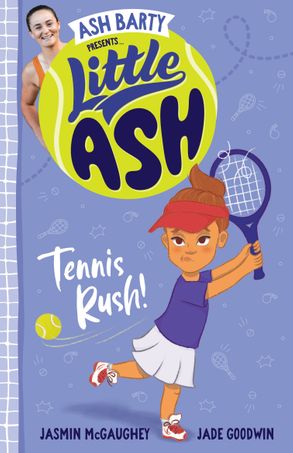
Little Ash Tennis Rush! by Ash Barty and Jasmin McGaughey. Illus. by Jade Goodwin
There would be few in Australia who do not recognise the name Ash Barty, who have not admired her grace, sportsmanship and honesty, and who were not disappointed when she retired from professional tennis without defending her 2021 Wimbledon title.
She has become the role model for so many of our younger readers and so this new series about school, sport, friendship and family will be welcomed. While not necessarily autobiographical, it shows Ash to be just like other kids, reinforcing the idea that even ordinary people can become extraordinary, and dreaming with eyes open is something that everyone can do.
Written and formatted to support the newly independent reader, each story addresses a common issue that kids face from having to choose between things they love to putting others before that love. With four stories out now to whet the appetite, and two more to come in November the series will be a perfect addition to your Stepping Stone collection bridging the gap between formal reading instruction materials and the world of independent reading.
Themes Tennis.
Barbara Braxton
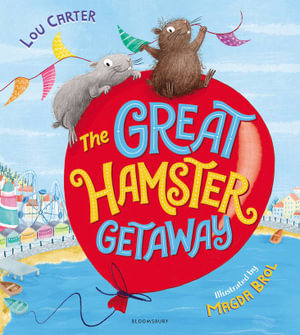
The great hamster getaway by Lou Carter. Illus. by Magda Brol
Raffleton Grey is bored with his lot. The mindless running around his wheel no longer holds interest for him, his cage is dark and gloomy, the wood shavings stick between his toes. He is not happy.
He coordinates an escape, climbing out of the window using an ingenious selection of tricks to get him from one place to another, and then freedom. In falling the last few feet he lands on something soft and furry and finds himself in the company of another hamster searching for the same thing as he. This escapee is Puckerford Brown. The two make their way to the fair, something Raffleton has seen from his cage. He wants to feel the pebbles beneath his toes, and splash in the sea, eat crumbs left by the holidaymakers and snooze at the beach.
But in escaping his humdrum life in a cage he finds out there is more to being free than meets the eye, especially when the sun goes down.
At first the two hamsters are deliriously happy, riding all the rides at the fair, eating their fill of leftovers, going to the sea and being well, free.
But as the sun sets and shadows lengthen, eyes peer out through the gloom, watching them. There are cats and foxes and rats, all intent on a hamster dinner. They run all night to escape the predators, and in the morning decide to find a safe haven Raffleton knows just such a place and it is nearby, so they set off. Using a range of acrobatic tricks with rope and balloons they manage to climb into Raffleton’s cage where they make themselves at home once again, but this time with company, they have each found a friend. And are both much happier with their lot.
This is a lovely story of friendship, of being together, of company. The gloom and despondency felt by Raffleton was all down to loneliness and could only be alleviated by finding a friend Younger readers will see the connections immediately, knowing how they feel when with a friend and conversely what it is like to be by oneself. Astute teachers and parents will be able to direct the discussion to positive images of friendship, what doing things with someone else feels like, how another person complements your day. And of course the whole of this funny tale is given in wonderful rhyming verse, encouraging readers to predict the rhyming word, and read it out for themselves. A stupendous read-aloud, the book lends itself to being shared by a range of children who will be able to see layers of ideas as they too might grapple with the thought of freedom.
The wonderful illustrations by Polish born Magda Brol, enable readers to easily identify the ingredients of the story. The hamsters are winning, with their smooth hair and whiskers, all getting scruffier as the story unfolds. The fair background invites the reader to look more closely at all the things an English fair involves, while the images of the night’s activities will send shudders down the backs of the readers as they call out to save the hamsters from their possible fate. And be warned, I can imagine requests at the pet shop and beleaguered parents once children have seen them in this very funny story.
Themes Friendship, Fair, Beach, Company, Loneliness, Hamsters, Humour.
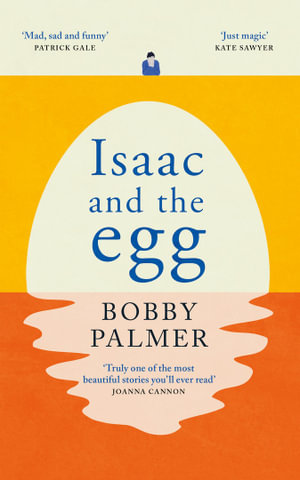
It’s weird, it’s crazy, it’s hilarious, and it’s incredibly sad. This rollercoaster of a story begins with a man in a drunken stupor, on a bridge, contemplating jumping off. He screams. Then something non-human screams back. He follows the scream and finds a brilliant white egg, about two feet in size, sitting resplendent in a forest clearing. Isaac takes the Egg home.
Thus begins the strangest story you will ever read. The Egg ‘hatches’ and becomes a friendly but annoying and perplexing creature that Isaac somehow has to learn how to live with amidst the chaos that his life has become. Gradually we learn that Isaac’s wife has died tragically only recently, and he is in the depths of despair having lost the one person that gave his life meaning.
This is one of those stories where you are immersed in the world of the narrator, and while you can’t quite trust what you are reading, you just have to go along for the ride. It is a bit like the unreliable narrator of Adrianne Howell’s Hydra. Isaac is similarly unreliable. We know there are things he is not telling us, and we aren’t sure just what the Egg is all about. Many of the situations are laugh-out-loud funny, they play out like a nonsense movie, but gradually the reader comes to realise that actually Isaac is suffering from overwhelmingly depression and grief. The love story at the heart of the novel is sweetly romantic and also very sad.
In this highly original story Palmer manages to explore issues of death, loss and grief, in a way that often has you laughing or reading with a smile on your face. You just have to read it to the end to find out what happens to Isaac and the egg.
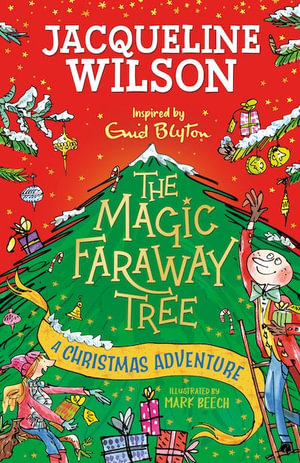
The reinvention of a 50+ year old series seems a grand thing when you consider how much things have changed in that time, and readers who have fond memories of Enid Blyton's original tales should rest easy knowing that the magic and enchantment of the world of the faraway tree has been lovingly pulled into the modern world. It is still fantastical, comforting and thrilling, but it also presents a world where boys and girls are on equal footing and one that will be more palatable for parents and more relatable for young children today. Unlike the rewriting of the series that happened some years ago (that saw things such as names changed to be more politically correct), Jacqueline Wilson has hit refresh on the entire thing, and she's done a charming job. Her distinctive and humorous voice is perfect for this fantasy adventure that also shines a focus on sibling relationships and doesn't shy away from showing children and their full range of emotions and internal conflicts (jealousy, greed, reckless behaviour, etc). Wilson's characterisation is perfection. All the favourite things are still included and described with rich visual detail: Moon Face's slippery dip, the Faraway Tree folk, the magical food and the fantastical lands.
In Wilson's new tale, three new children stumble upon the Faraway Tree and are immediately intrigued by the magical people who live there and the wonderful lands at the top. They visit the Land of Unicorns, the Land of Bouncy Castles and the Land of Dragons, but it is there that trouble waits for Milo, who is far too curious not to take a peek. Can they rescue him before it's too late? Parents who love reading the original series to their children but engage in occasional editing or historical side notes while doing so will rejoice at this new title, as will the children who adore listening to them.
Themes Fantasy, Adventure, Magic.
Nicole Nelson
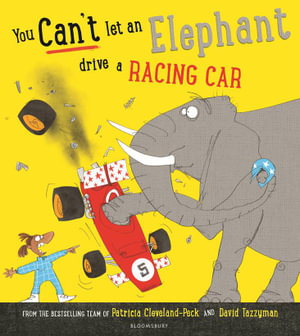
You can't let an elephant drive a racing car by Patricia Cleveland-Peck and David Tazzyman
Another in this highly infectious series of tales about size and appropriateness of vehicle use will have kids ask to read the book again and again as the preposterous scenarios are revealed. Kids will adore the idea of an elephant driving a racing car and all that it implies: speed, compactness, competition, clothing etc. And to turn up to the start of the race he dreams of winning with parts already falling off the vehicle will cause much mirth. Over the page, an alligator dreams of being a figure skater, and a kangaroo wants to play cricket, an octopus attempts to play ping pong much to the chagrin of her opponent, while a hippo wants to try out the pole vault. Each scene is accompanied by a verse of rhyming lines, telling the readers what is going on and encouraging them to predict the rhyming words, while laughing at the punch lines of each stanza. And the illustrations adroitly capture the moments when the expected and sometimes unexpected happens. The stork cannot keep his feet on the ground in the three legged race, the wombat finds weight lifting does not suit her abilities, the warthog reverts to his natural prowess of digging while playing in the football match and the puma baulks after he climbs the diving tower to plunge into the pool which is a very long way down.
Each double page presents a scene that is quite out of the ordinary, and will make readers think about just what is appropriate for that animal, while pondering on their involvement in a sport. The animals might not win any medals for their efforts, but they have participated in a sport not usually in their orbit. Making an effort, joining in and participating form the background of this highly amusing tale of animals being where they are certainly not expected to be and doing things out of the ordinary.
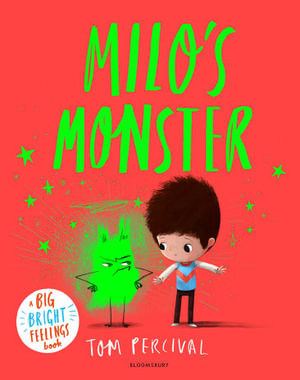
When a new girl moves into the big house across the road, the strong friendship between Milo and Jay fractures. Milo calls to see Jay only to find he is with the new girl, Suzi. He hears them laughing together. When he goes to the playground they are there together playing. Sometime he hears them laughing in the big old garden around her house. He becomes jealous of the new friendship and resents being left out. He is envious that she has a new friendship with Jay.
A green-eyed monster turns up and gives him negative thoughts. These thoughts are irrepressible and take over his life. He spies on his friends, walks away when they appear and feels terrible.
But one day Suzi tells him that Jay is unhappy and asks him why he does not join them. He realises that the green-eyed monster has taken over his life and he works to suppress it. The more he works at repressing the jealousy monster the smaller it becomes. And finally the three are friends with Milo acknowledging his poor behaviour.
Another in the fine series, Big Bright Feelings, Percival taps into the feelings of younger readers, exposing their fears and concerns with a deft hand. His stories get to the nitty gritty of the problem, and supported with wonderfully apt illustrations, offer solutions which are simple, straightforward, and achievable.
His books offer a template for discussion and debate within the classroom or home. Others in the series are listed inside the back cover and include several which touch on mental health.
With a gripping opening sentence, ‘When they made the bargain, they knew they risked death,' readers know that they will be in for another exciting ride with Robb’s latest Eve Dallas thriller. This time she explores the sinister underground of child sex trafficking. Mina Cabot and Dorian Gregg are two teenagers who have been abducted and kept imprisoned in the Pleasure Academy, where they have been trained for a life of exploitation. Together they plan to escape but terribly their plan fails and Eve Dallas is called to the scene of the murder of Mina Cabot. Mina had disappeared on the way home from school and as Eve investigates it becomes apparent that she is just one of many children who have gone missing under strange circumstances.
As always, the well written narrative flows along smoothly, keeping the reader’s attention. The theme of child sex trafficking is disturbing and brings some of Eve’s nightmare memories back, but she is determined to uncover who is organising the trafficking and find where the children are being kept. Other familiar members of the Task Force are featured, with Delia Peabody and Roarke playing important roles, and they follow a trail of blood giving them some clues to what is happening.
This is a compelling read and fans of the series will not be disappointed. Robb always manages to find a new theme to highlight in each of her books and child trafficking makes for a sometimes dark and difficult background for this police procedural. The unexpected twist at the end is memorable as well.
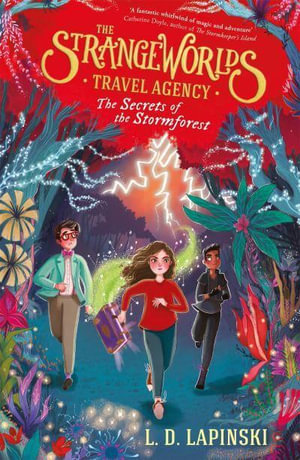
The Strangeworld Travel Agency. Orion, 2022. ISBN: 9781510105966. (Age:9+)
The Secrets of the stormforest is the final book in The Strangeworlds travel agency series by UK writer L.D. Lapinski. The central character Flick learns to control and channel her magic as she and Jonathon and friends battle to understand their role as part of the Strangeworlds Society and thereby save the multiverses as they are all threatened with collapse. Secrets are uncovered and many dangers are faced in a cinematic struggle against evil magic. Portals to other worlds open and close, schisms appear and the inbetween world becomes a reality. Problems have to be solved through a mixture of teamwork, attention to clues and making choices that are terrifying.
In the magical vein of stories about portals to other worlds, reminiscent of Blyton's The magic faraway tree but for older children, our heroes struggle to gain entry to visit and survive in other worlds, all of which challenge the team. Questions of identity and of origins and futures make this a coming of age book.
Characters from previous worlds visited in previous books in the series unite to overcome an overarching threat to all of the worlds. This third book completes the series and incorporates adventures and references from the first two books. Of the series, the second book The edge of the oceanmay be the preferred recommendation. The Strangeworlds travel agency series is done.
Themes Fantasy, Multiverses.
Wendy Jeffrey
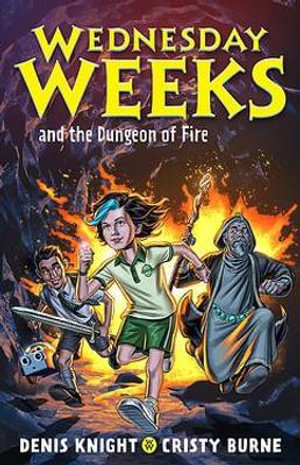
Wednesday Weeks and the dungeon of fire by Denis Knight and Cristy Burne
Denis Knight (science fiction and fantasy author and computer programmer) and Cristy Burne (children's author and science communicator) have done it again. Wednesday Weeks and the dungeon of fire is the third Wednesday Weeks book and these stories, rather than running out of steam (as sometimes happens with series) seem to be getting, if it were even possible, better and better.
The stories are told with the immediacy of the first person; the narrator being Wednesday Weeks. The interaction between the characters is delightful. The wit is snap-crackle sharp; the characters' relationships are skilfully drawn. Who would think that readers could relate to a talking skull called Bruce but he's a wise-cracking old thing whose survival we care about as much as Wednesday, Alfie and Grandpa. Our four heroes save the nine realms from the evil Gorgomoth's Third Age of Never-Ending Darkness and bring their regular, normal Science teacher, Mrs Glock, the year sixes and the school inspector Rixon from the Board of Education through world's of heart stopping adventure and danger safely back to class. They travel through realms of unfriendly cats, live volcanoes and more trying to beat Gorgomoth the goblin king to the long lost Stone of Power.
Along the way many obstacles are ingeniously overcome. It is the lessons learnt in school Science/STEM lessons that are applied to saving their lives from hair raising, terrifying situations. At the end of the book are some pages of activities related to the solutions that our heroes had to come up with to save themselves. Concepts of magnetism, energy transformation and gravity and balance and solving of logic puzzles and hidden messages that the children have learnt at school combined with a few magic spells (which Wednesday is controlling a little better) are employed to rescue all from dire danger.
Dialogue between the characters is on pitch, hilarious, informal and smart as a whip. The book could be opened at any page and read to the delight of the year 5, 6 or 7 age group in particular. It's clever, energetic, sassy and very well written. Not only is it about magic and adventure, it is also about true friendship.
Wednesday Weeks and the dungeon of fire is a funny, beautiful book, part of a funny, clever series.
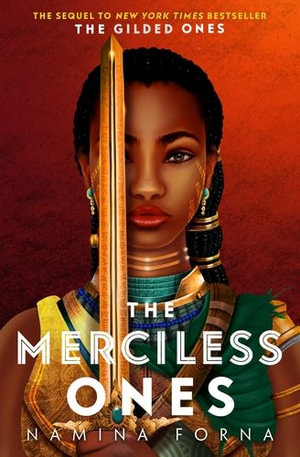
Namina Forna is back with the second instalment of the African-inspired Deathless trilogy, The Merciless Ones. When we left Deka at the end of The Gilded Ones, she had just discovered that she was the long-awaited daughter of the goddesses that once benevolently ruled the nation of Otera. She is immortal and gifted with the potential to free womankind from an oppressive and patriarchal society. In The Merciless Ones we meet Deka again six months later. She and her warrior friends are exiled from the capital of Hemaira, locked in a protracted conflict with the powerful male priesthood, the Jatu, which controls the land and seeks to subjugate all women. As Deka learns more about the forces and powers in play, she realises that it may not be as easy as expected to defeat her enemies, even with the power of the goddesses on her side. Something is very wrong in Otera and Deka may be the only one with the abilities to stop it.
The Merciless Ones is a typical middle book of a trilogy. It is a solid read without being particularly outstanding. Deka’s story continues in a generally logical manner, although some concepts and character alterations have been inserted into the plot in a rather heavy-handed and at times dissonant manner. Nevertheless, The Merciless Ones functions as a good connection between the first book and the events still to come in the conclusion of the series.
It must be mentioned that Forna is realistic in her portrayals of the abuse and trauma suffered by women living in patriarchal societies. Readers should be aware and keep this in mind when determining whether to read this book.