With so much in common, how separate are their stories?
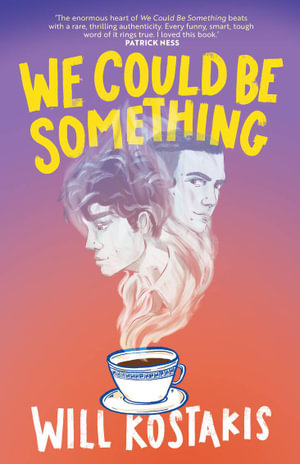
The slow reveal of how the alternating chapters of We Could be Something relate is clever and propels the reader through several generations, from Perth to Sydney and back.
Like his character Sotiris, Kostakis has written a ‘semiautobiographical’ novel that is a heartfelt look at growing up Greek and gay in contemporary Australia.
Harvey, keen to leave school at 17, takes the opportunity of his fathers’ breakup, to leave Perth and return to Sydney and work in his grandmother’s café. Here he becomes enmeshed in the emotional demands of the four generations of Ba’s family, with his great-grandmother’s advancing dementia an increasing concern in their lives. An attraction to his co-worker Isabella contrasts with a series of fumbling Grindr hook-ups as he navigates his sexuality.
Meanwhile Sotiris, also 17, has just signed a book deal but is struggling to establish himself as an author and overcome his writer’s block and cynicism with the publishing industry. However his involvement with Jay from the bookshop is becoming ever more problematic, and a high-school nemesis returns with unexpected consequences.
We Could be Something deals sympathetically with the emotional turmoil felt by many young people; self-acceptance and family reactions to coming out, cross-cultural and intergenerational demands and expectations, responsibilities and responses to family members’ aging and dementia. It is funny and poignant by turns, as it chronicles the cost of following your dreams, or not, while seeking to be ‘something’ in relationships, as well as working lives. Reading notes and a teaching resource can be found at the publisher's website.
Why haven’t I read this author’s works before? I absolutely loved and admired the way Smith created a murder mystery within the mire of Russian political activity. This is a book that lovers of Martin Cruz Smith will be delighted to read, but newcomers like me will be equally won over to the Arkady Renko series. Crossing over from Moscow into the Crimean Peninsula and Ukraine, Arkady Renko is embroiled into an investigation of the disappearance of a young woman. As he investigates, the body count rises, and the missing woman’s friend becomes a romantic interest. He is constantly confronted by corruption and the struggle to find truth in the Russian political world is almost impossible. Money, coercion and intimidation speak far louder than truth and Russia seems to express its power in so many unsavoury ways. Can you solve a crime within the mess of Putin’s creation while also battling the personal challenge of a Parkinson’s disease diagnosis?
Seated in the uncomfortable world of Moscow’s power and policing anomalies, this is almost an expose of the horrors of Russia and helps to understand how the invasion of Ukraine could ever occur. With bikers acting as political enforcers, police investigations tarred with corruption, and murder as a solution to uncomfortable realities, it is not surprising that Putin has remained in power and can accumulate obscene personal wealth at the expense of his country. This is the kind of murder mystery that adult readers will relish as it has a mature insight into the struggles in Russia, and some understanding of past historical events and present political posturing is also beneficial. The central character is flawed physically but seems surprisingly untainted in his struggles to uncover truth. There is also a tense ‘escape’ from the clutches of Russian authority. This is a well-written journey into the messiness of corrupted power. It is highly recommended for adult readers but mature and politically-aware readers aged 16+ will also enjoy this quick-paced drama.
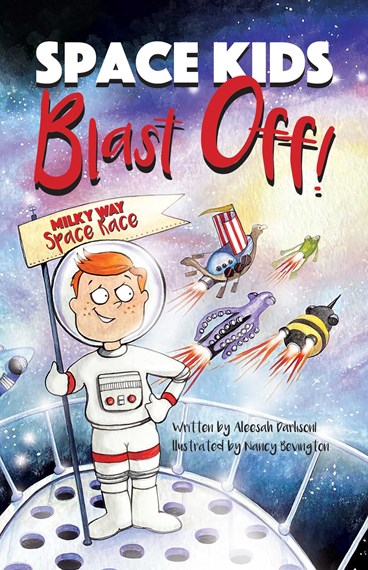
Space kids: Blast off by Aleesah Darlison. Illus. by Nancy Bevington
Big Sky, 2022. ISBN: 9781922615862. (Age:8-12) Recommended.
This is the second book in the new series by this author about a group of children aged around 11, living in a space station called Misty in the year 2088. The first book in the series is called Sabotage.
The main character Nash is living with his father who manages the space station and is a very busy man. Nash has made friends with Raj, a sort of walking encyclopedia and KC, a confident girl who loves to dress up in animal costumes.
In this story the billionaire inventor and owner of Misty brings his son Finn to the station to participate in the inaugural Milky Way Space Race. Finn, lacking many friends in space, is excited when his father invites the Space Kids to race with them in their blaster ship, Ventura. Some of the other teams seem bent on winning the highly prestigious race and employ some very dodgy tactics to that end. But Nash and his space friends stay on task, completing the race themselves when some of those tactics result in the adults being injured and unable to continue.
Children who are curious about the possibility of living in space will find enough detail to satisfy their curiosity without it dwelling too much on day-to-day activities to interrupt this well-paced story. The positives of this book lie in the great example of teamwork between the children who not only work to win the race but also show that helping others in need has positive outcomes for them as well.
Themes Space stations, Competitions, Space ships, Future settings.
Gabrielle Anderson
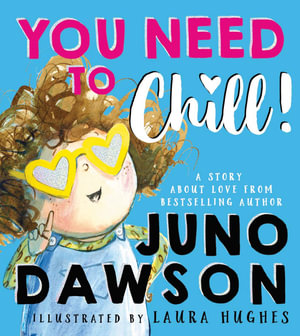
You need to chill! by Juno Dawson and Laura Hughes
Intrigued by the questioning of the classmates, readers will go along with the teasing text as the children keep asking where Bill is. The brother of their classmate has not been seen for a while. Has he gone on holiday, is he hiding, is he ill? The questions keep coming, until Bill’s sister tells her peers that they need to chill. Was he taken by a whale or shark and munched up like krill, the questions keep coming, until again she says, ‘hun, you need to chill.’
This questioning and answer technique is used for most of the book, the sister keeping on telling people that they must chill. Reading the story out loud will see kids joining in with the refrain, ‘hun you need to chill’, while asking themselves what they think has happened to Bill and thinking about why the class is so interested.
The funny questions keep on coming: is he playing in the pool or on the pitch, is he at the fair, has he been kidnapped by aliens, is he on Mars. Their concern is represented through their questions, they are worried that he needs to take a pill, until his sister cannot say anything but what has happened. Her brother Bill is now her sister, Lilly.
This unexpected climax will present a different family to the reader. The transgender member of the family is accepted and part of the family just as he always was. The pages are replete with love and inclusivity and caring, as the sisters hug each other, the class looking on with huge smiles, their questions answered and satisfaction abounds. The next day they walk to school hand in hand, the classmates just as accepting as the day before, but in case some have a problem, then the refrain, ‘hun, you need to chill’ is given another outing.
A wonderful presentation of diversity within the community, children will see a family that is similar to their own, but are a little different. The same things apply: love, support, caring in a gender diverse family as with others, and children are very accepting of this difference.
Subtitled a story about love, the theme is simply that, and a paragraph about the Mermaids at the end of the book will send many to their website to explore further, and give support to those families where diversity is a part of their lives. Check out mermaidsuk.org.uk
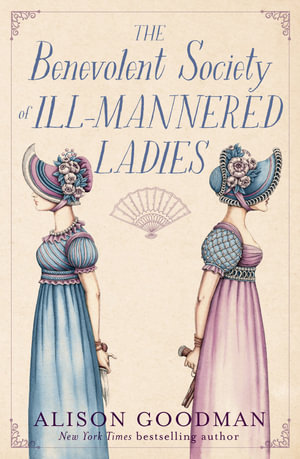
Goodman, author of the Lady Helen and the Dark Days Club series brings another historical book set in Regency times, this time a mystery featuring Lady Augusta Colebrook and her twin sister Lady Julia, who set out to solve three cases which feature much darker themes than the Lady Helen books. In 'Till Death Do Us Part' they are asked to rescue Caroline who is imprisoned in her home because she has not produced an heir. While attempting to free her Gus encounters Lord Evan Belford, who has returned illegally from the colonies in Australia after killing a man in a duel. Sparks fly between the two and they meet again in the second case, 'An 'Unseemly Cure,' where a young girl has been kidnapped to use as a Virgin Cure for the pox. In 'The Madness of Women,' Gus helps Lord Evan to rescue his sister, Lady Hester Belford, from Bothwell House asylum.
Narrated by Lady Augusta, an unmarried woman of independent means and aged 42 years, the pace is fast as Gus plunges into each exciting adventure, pulling her twin along with her. They face a hold-up, a murdering husband and evil brothel owners as well as the horror of an asylum as they go about rescuing women from dreadful fates.
The fast-paced action and plight of women are dominant themes and the growth of feelings between Gus and Lord Evan will please readers who enjoy romance. The everyday life of Gus and Julia with all its restrictions, entertainments and fashions, is vividly described. Some historical figures like Beau Brummel and Lady Caroline Lamb also make an appearance.
Goodman has researched the Regency period in depth and the reader will learn much about the way women were treated during these times. In her Author’s Note, she describes her sources which highlight the atrocities performed against women and which she so vividly describes in The Benevolent Society of Ill-Mannered Ladies. A list of discussion questions for book clubs reading the novel is also included.
Fans will be delighted that there is plenty of scope for another book in the series, as Gus is determined to prove that Lord Evan is innocent of the crime for which he was transported. While waiting for the sequel readers might like to move onto the classic Regency novels by Georgette Heyer.
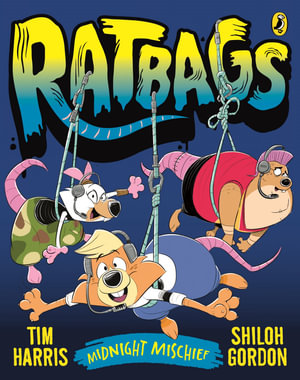
Just when Jigsaw thought everything was going well, he finds himself in trouble again! But what could he possibly have done wrong this time?
Midnight Mischief is the second book in the Ratbag series. Expertly created by Australia’s popular author, Tim Harris and talented illustrator, Shiloh Gordon this book is sure to entertain. Once again, with such a fast-paced storyline, you feel as if you are running just to keep up with those rascals!
The rats are in an uproar because they are infamously in the paper for all the wrong reasons. Ever since Jigsaw made that amazing pizza, rats are seen as the good guys. But this can not be! The rats don’t want humans to actually like them because then they may be kept as pets. Humans are the enemy, and rats must fight back to get back in the humans’ bad books.
So, when a prize is offered to the rat who can get themselves onto the front page of the local newspaper, can Jigsaw rectify his wrongs with the help of Pickles and Onion, or will they be banished forever?
A radically cool short fiction novel that is filled with an abundance of humorous, black and white cartoon pictures, speech text and action. In a style, mixed between a graphic novel and standard novel, this book targets a wide audience and will appeal to many. Containing short chapters, large print and a really cool layout, this is a great story for all ages.
If you love a little bit of fun and adventure, at a fast-past speed, then this novel will undoubtedly meet your entertainment level. Tim Harris and Shiloh Gordon are masters at their craft, and always knows how to keep their readers engaged to the very end.
Themes Friendship, Problem solving, Teamwork, Humour.
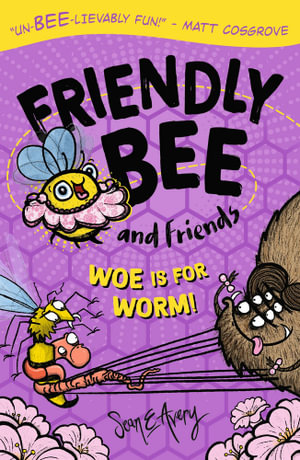
Take one friendly bee, an angry wasp, an enormous hairy spider, a boring worm turned into a beautiful butterfly, throw in some witty humour plus detailed graphic images, and you have a recipe for an enjoyable and engaging new read for younger readers. With a colourful and appealing cover and pages printed in colours of yellow, black and white, this fun read tells the tale of a perpetually friendly bee who is desperate to befriend every insect he meets. Angry Wasp is a real challenge for Friendly Bee, but bee perseveres with the friendship even when they are trapped together on an enormous hairy spider’s web. Eventually, with Friendly Bee’s relentless optimism and super-helpful ideas, the spider, wasp and bee all become friends.
This entertaining book is full of amusing conversations between Friendly Bee and Angry Wasp as well as cleverly inserted facts pages giving interesting information about bees, wasps, caterpillars and spiders. A second book about Friendly Bee and a Pessimistic Earthworm is on its way.
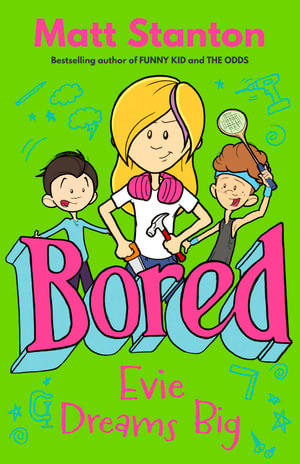
This is the third in Matt Stanton's Bored series, where each installment is told by one of the children living on the same street, Turtle Place. This one is told by Evie; she's creative, determined, fiercely independent and an effective communicator. She lives with her mum, dad and two younger sisters, one of whom drives her crazy and the other whom has cystic fibrosis. While this plays a major part in Evie's life it is woven in very naturally and doesn't gloss over the hard details, such as mum and dad having to massage her sister to clear mucous or having to stay home when nasty viruses are going around etc.
The storyline is that Evie is so fed up with her sister Grace and her parent's refusal to help diffuse their fighting that she decides to build her own tiny house to live in. What follows is a true reflection of the complexities of people and life. Sometimes her neighbours and family are supportive, sometimes their own personalities get in the way of what she needs from them. No character is one-dimensional. This is a big theme actually - as Evie talks about the four versions of herself: the outgoing, the introvert, the mature her who wants to be treated like an adult and the her who just wants to be protected. The story is honest about hard emotions such as anger and jealousy, which are such fabulous things to normalise, and about how understanding others can help us to live alongside them.
Just as with the previous two installments, this title hits all the major targets: realistic dialogue and easy-flowing text that is a joy to read. It showcases perfectly the true chaos of home life and the tension and frustrations faced everyday by both parents and children. Conversations are interrupted by phone calls, parents are trying to do ten things at once, are short on time and are often distracted and siblings are screaming at each other. A plethora of relevant, everyday issues that would drive interesting discussions make it a great read-aloud for classes or as a shared class text.
Stanton is masterful at drip-feeding new details about each of the kids so we get to know them more and more throughout the book and across the series. Each character is incredibly relatable, especially when we are able to look at the world through their perspective. Each one of them have something going on in their lives under the surface and contexts that have made and are making them who they are. Fans of Stanton's Funny Kid series will be obvious readers, but this really is a series that should be put into the hands of all tweens.
This is fine to read as a standalone, without having read the others in the series.
Themes Friendship, Emotions, Family, Teamwork.
Nicole Nelson
We are Matildas by Shelley Ware. Illus. by Serena Geddes
Young soccer fan Jazzy has a dream to one day represent Australia as a CommBank Matilda. With a local football tournament coming up soon, Jazzy is determined to put together a team to enter. She chooses girls from her neighbourhood whom she thinks have the special qualities needed to play in the team. They call themselves the Little Matildas and begin training. Soon though, regular training does not go according to Jazzy’s plan. Some of the teammates are distracted, lose interest and eventually no one turns up to training except Jazzy and coach Toby. During a lunchtime meeting, the players tell Jazzy they are tired of training and have too much else on after school. Jazzy listens to them and decides to have a fun afternoon instead so they can all relax and enjoy each other’s company. Once the competition day arrives all goes well, and the team does their very best.
We Are Matildas emphasises how training and practising are important, but it also reinforces the need for teamwork, cooperation, friendship and fun. Throughout the book are references to some of Australia’s well known Matilda players: Sam Kerr, Lydia Williams, Kyah Simon, Mary Fowler, Caitlin Foord and Ellie Carpenter. With the FIFA Women’s World Cup 2023 starting in July, this will be a popular read for many soccer-loving students.
Allen & Unwin, 2023. ISBN: 9781761067105. (Age:13+) Recommended.
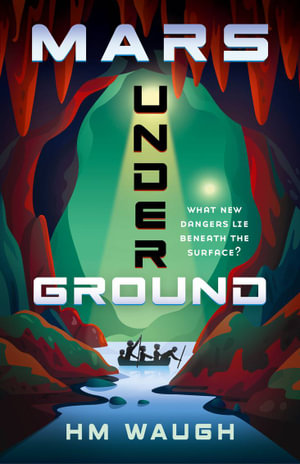
The setting of this new book is the hero in this series! This book completes the duology that began with Mars Awakens. It is an adventure story set in an environment that is almost beyond our comprehension – Mars as a populated planet trying to survive and utilising a variety of skills and strategies. It is ‘ the others’ who are hard to understand. Will they destroy or assist the colonies that are trying to eke out their existence and competing or struggling to exist into the future? Holt and Dee are the central characters who should not really be friends, but whose connection began in Mars Awakens and continues to grow in this adventure that spends much of its time underground. The pressure to find solutions to their survival issues has led to some strange choices in their own colonies and now the young characters must act against their own histories to rescue those whose lives are at stake.
Although I loved Mars Awakens, I struggled to reconnect with this story and the characters again because there was too much time between reading that book and this second book. There was insufficient context given at the beginning of Mars Underground to reacquaint me to their background and characteristics. However, persistence paid off, and I loved the epic quest. I imagine though that this book would be best read immediately after Mars Awakens, it would be very difficult to read this book as a stand-alone story. Despite this initial struggle, the action and adventure grew in their ability to compel me to keep reading. There were chases and moments of intense stress as the young protagonists and several of their friends set out on a quest to bring the communities together and to save lives. I would recommend this book to lovers of Sci-fi aged 13+, but there are some subtle romantic threads that might enable this to be enjoyed by those who would not normally read Sci-fi.
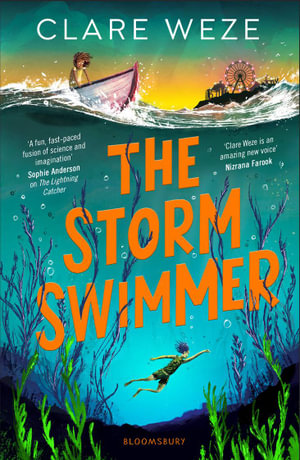
Eleven-year-old Ginika has been sent to live with her grandparents in their seaside boarding house for the summer. Her parents have come into financial difficulty that is initially not fully explained and are forced to live in a campervan and work long hours. Ginika is fraught with anxiety over the separation from both her parents and her best friend, and struggles to settle in.
Early into her visit while Ginika is lying on the beach feeling emotional, lonely and abandoned, she notices a boy swimming in the shallows as if he is part of the waves. The two make eye contact and from then on their budding connection is sealed. Meanwhile Ginika’s grandfather tells stories of mythical sea people who have been known to inhabit the coast and have been sighted on rare occasions.
Ginika spends as much time as possible looking for and successfully trying to communicate with the boy she now knows as Peri. They form a strong bond, but local girl Scarlett is desperately trying to find out what Ginika is up to. Unfortunately, Scarlett is careless with her words and has from the beginning interrogated Ginika about her family problems, how long she is staying for and where she will attend high school. Ginika tries to avoid Scarlett as her probing has brought up other deep issues that continue to worry her, such as what has really happened to her parents, will she be the only child of a darker colour at the new high school and will she have to stay at the seaside indefinitely.
Staying at the local caravan park are families and children with special needs due to illness. Ginika and Peri are befriended by wheelchair bound Ted and embark on an exciting but somewhat risky adventure where they introduce Peri to the many highlights of a coastal town. The next day though, Peri ‘borrows’ one of the caravan park go-karts and a search is on. This leads to more life-threatening danger for Peri and big decisions to be made by Ginika. How will Ginika help Peri and keep his secret safe? Can she confide in Ted and Scarlett? Will she be reunited with her parents and learn the truth?
The Storm Swimmer is a story of family love, separation, trust, friendship, and the lengths people will go to keep loved ones safe. Beautifully and descriptively told within a backdrop of the mysteries of the ocean and modern-day coastal living, this is an engaging and enthralling upper middle grade read.
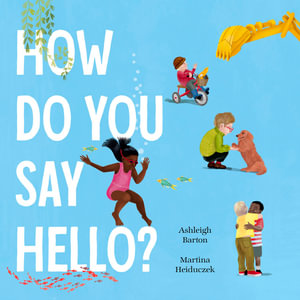
This gorgeous fun new picture book from Ashleigh Barton is a joyous celebration of saying hello around the world. With its delightful rhyming text, it is a fantastic way of introducing young children to countries around the world.
Eva’s baked a delicious treat for her grandpa down the street. Come on in, no need to knock. You’re always welcome, ‘Bok, bok!’
For those who may not know where ‘bok, bok’ is from, it is an informal way to say hello in Croatia, particularly in Zagreb and surrounding areas. Each greeting shared has a helpful explanation with further information in the back of the book. The striking double page illustrations are bright and colourful, perfectly complement the text, and provide extra visual details about where the ‘hello’ is from. A wonderful book for home, school or public library.
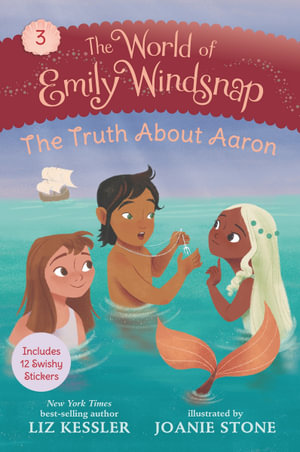
Simple language, short snappy sentences and full-colour illustrations make this series ideal for newly independent readers or as shared reading practice books for those who are already quite confident. Based on The Tail of Emily Windsnap books for readers aged 8+, this series takes on similar themes in a much more simplistic format. This is the third in the series, with Emily's Big Discovery and Shona Finds Her Voice also available.
This title focusses on Emily Windsnap's semi-mer friend Aaron who lives on a castle in the middle of the ocean. He's quite lonely most of the time, so he's very excited that today his mermaid friends Emily and Shona are coming to visit and that he and his mum have visitors coming for dinner. When he overhears the visitors talking about finding something precious and then realises that they have left with his necklace he is certain they are pirates. Thankfully his friends Emily and Shona are there to help him get it back. But are they really pirates or are they just making sure that Aaron is who they think he is, an ancestor of their friend Neptune, King of the Sea?
The full-colour illustrations and no more than half page chunks of text make this visually appealing and will delight young mermaid fans. The story is simple, with clear sequencing and an easy to follow complication and resolution.
Themes Mermaids, Friendship.
Nicole Nelson
How brave I can be by Bryll & Beth Stephen. Illus. by Simon Howe
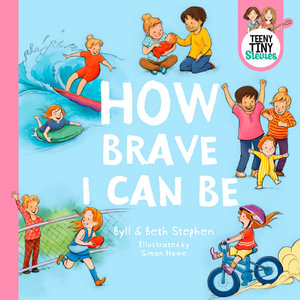
Byll and Beth Stephen, the writers behind the ABC TV musical sensations Teeny Tiny Stevies, have written a thoughtful and gentle book about growing, changing, learning, and more importantly being brave. They cleverly work through the stages of development, and it is not only bravery for children they look at but brave adults letting go. For children the brave milestones shared are taking first steps as a toddler, learning to ride a two-wheeler bike, falling over, learning to swim, not winning, climbing a tall tree, and finally leaving home. For the adults, being brave is about realising that they might have to let their child find their own path and watch from the sidelines. But also trust that they have prepared their child for what lies ahead.
The illustrations in this book are beautifully presented with the child or adult showing bravery depicted in full colour with the other characters and the setting in muted tones. An interesting book that will benefit from being shared between an adult and child.
Themes Growing Up, Being Brave, Changing.
Kathryn Beilby
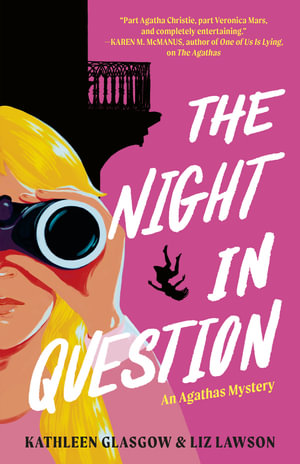
The night in question by Kathleen Glasgow & Liz Lawson
In a sequel to The Agathas, Iris and Alice once again plunge into trying to solve mysteries like Agatha Christie’s sleuths, Miss Marple and Hercule Poirot. During a school dance at Levy Castle, where film star Mona Moody had fallen to her death in the 1940s, Rebecca Kennedy, a classmate disliked by many, is brutally assaulted and left in a medically induced coma. Alice discovers another classmate standing over her with a paper knife in her hand, but she and Iris are not convinced that she is the culprit and begin to investigate, much to the disgust of the local police.
The alternate chapters, each with a quote from Agatha Christie or from one of Mona Moody’s movies, are narrated by Alice and Iris. Their friendship is tested as they uncover clues to Kennedy’s assault that link to the mystery surrounding the death of Mona Moody and her boyfriend in 1949. It is fun reading about a mansion with a secret passage and a hidden room, a fabulous necklace and a glamorous movie star from the 1940s. However more serious topics are explored like domestic violence and the class divide between the rich and poor. Alice is forced to gradually see how unfair the power that wealthy people yield can sometimes be, while Iris must face her fear about a potential boyfriend becoming violent.
Readers new to the series would benefit from reading the first in the series to fully understand the background of the characters and Castle Cove. Fans of The Agathas will relish the return of these two detectives and are certain to enjoy the suspense, red herrings and twists and turns in the plot, and will eagerly look forward to the next in the series.