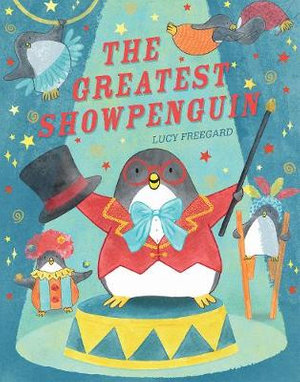
Poppy the Penguin comes from a long line of circus performers. Many skills have been passed down from penguin to penguin. However, Poppy soon decides that performing in the family circus is not for her as she prefers to feel calm and in control. But the hardest thing is not juggling, or riding a unicycle - it's telling her mum that she doesn't want to perform any more.The bravery is worth it when Poppy discovers a better role - organising and coordinating the whole show. And what a show it turns out to be!
So often, we, as parents, lead our children down the path of learning the things we like to do and expecting them to love them with a similar passion. But it can be a road fraught with danger because our children always see us as the experts and that somehow they are never going to be quite good enough, which can lead to mental health and self-esteem issues. Even though Poppy is very good as a performer and her parents are really proud of her, deep down inside she knows that the limelight is not for her and luckily she not only has the courage but also the relationship with her parents to express her unhappiness. Perhaps sharing this story might be the catalyst for our students to have similar conversations if they feel they have the need.
Freegard also brings up another element that often rears its head, particularly during class performances - that of "job snob". How often is the lead in the school play sought by the class's leading light and both child and parents celebrate their celebrity? Yet, as Poppy shows, the whole show cannot go on without those backstage workers, the support cast and everyone else who helps to make it happen. Here is a great opportunity to demonstrate that no job is better or more important than another - they are just different and without one, others will flounder. The school cannot function without all the admin staff making it easier for the teachers to do their thing.
Stories about life as a member of a gang have been around for a long time – The Outsiders, even Romeo and Juliet. In some ways, this is just another one but in other ways it has its own place in the literature. Angie Thomas has set her story in the 90's, in a fictional poverty-stricken black neighbourhood in the United States, a sort of pre-quel to The Hate U Give. Drugs are rife, jobs poorly paid. Gangs and the associated violence are the narrative of the world in which the characters live. Rising above that world is almost impossible as the gangs' claims are generational and opportunities to avoid those claims are few. Maverick Carter is a young black man, still in high school, who is torn between the security of the gang life and taking the straight road. Shouldered with the sudden responsibility of a baby, he is forced to consider his future and how he is going to face things as father when the world seems to be against him.
While some of the events in this book are predictable, others take a different turn than expected. This book is about relationships, positive and negative; perceptions from differing points of view; poverty and deeply ingrained hopelessness; racism; and what it means to be an adult. Concrete Rose could be read as a complement to other books about the race divide or gang violence. It is a compelling read although at times, the vernacular does get in the way of the story.
Themes Gang violence; Poverty; Relationships; Racism.
Gaye Howe
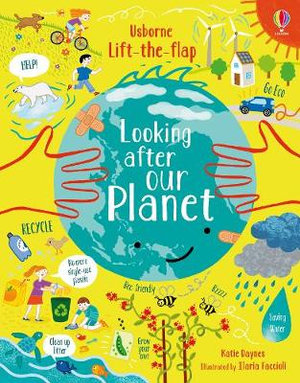
Lift-the-Flap Looking After Our Planet by Katie Daynes. Illus. by Ilaria Faccioli
The salvation of the planet and particularly, those things that individuals can do to work towards that, has certainly been the hot topic in publishing over the last year or so. And now Usborne have added to the mix with another one of their amazing lift-the-flap books.
This one gives a good overview of why we need to protect the planet, what has been causing it to deteriorate, specific issues that changes in human behaviour can address and an action plan that suggest small changes that make big differences. But don't be misled by the lift-the-flap format because this is more a book for independent readers who have some concepts about the environment and its sustainability. Although the facts are straightforward as they introduce the various concepts, plentiful and illustrated in an engaging ways, the reader still has to be mature enough to understand them.
In addition, the format offers a model for students to build their own resource. Encourage them to pose a question about a topic that interests them, seek and verify the answer and then present it in a lift-the-flap type format for others to discover. To assist with this and give greater insight into the various concepts, Usborne has provided its usual Quicklinks making this an essential resource on this topic.
Barbara Braxton
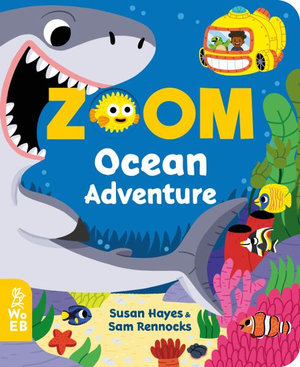
Zoom ocean adventure by Susan Hayes. Illus. by Sam Rennocks
What on Earth Books, 2020. ISBN: 9781999967994. (Age:1-5) Recommended.
Like Zoom Space adventure, the reader is taken off into an exciting world, this time the ocean, where brightly coloured marine life will be enthralling for a young reader. Noah is a young boy who dons his wetsuit, fins and snorkel and dives down deep to see some amazing creatures, like an octopus, butterfly fish and of course a Great White shark. Each page has a myriad of sea creatures to look at and some are labelled which will be a boon for beginning readers as well as an adult who may be reading this aloud. The cut-out on the page will give a glimpse of what will be on the next double page spread and children will enjoy guessing what it might be.
The illustrations are very cute and there will be 'oohs' and 'ahhs' as a page is turned and the razor sharp teeth of the hungry shark emerges. Noah escapes to his submarine and the reader is taken down into the dark water to find out what lives down there. Lots of creatures like the vampire squid and comb jelly are highlighted against a black background and then the reader spots a pirate ship and finally is taken into Antarctic waters. A pop -up of a humpback whale’s water spout shows Noah getting a ride home.
Readers will learn lots about the ocean while having fun with the idea of using your imagination to go on adventures. The strength of the board book ensures that it will last the use of little fingers and is likely to become favourite.
The Wizard of Oz by Russell Hunter and L. Frank Baum. Illus. by Simona Bursi
Usborne, 2020. ISBN: 9781474968850. (Age:7+)
The classic story of Dorothy, the Tinman, the Scarecrow the Cowardly Lion, the Munchkins and the Wicked Witch of the West has been beautifully reinterpreted in this colourful graphic novel, perfect for younger readers who have not yet made the journey from Kansas to the Emerald City and just in time to be a focus for the 2021 Book Week theme of Old Worlds, New Worlds, Other Worlds.
Declared by the US Library of Congress as "America's greatest and best-loved homegrown fairytale", this is a story that all children should be familiar with given the references from it that appear in life today, and so to have it in graphic novel format which makes it accessible to newly independent readers and a whole new generation of children is a bonus. The full plot of the story is summarised here, and it could be wise to have the unabridged classic version available for those who are enticed to read that as well.
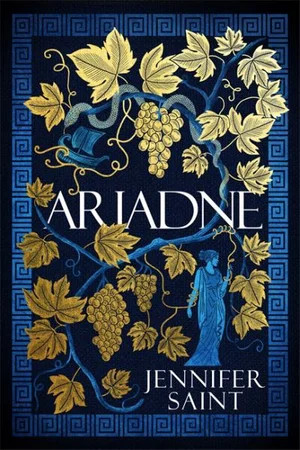
For lovers of Greek mythology and romance, this story has it all. It takes you into the woman's perspective of the time of Gods and heroes and is a feminist retelling of the ancient story of Ariadne, Theseus and the Minotaur. Ariadne is the Princess of Crete, and the Minotaur is her brother, half man half bull, the cruel result of a curse on their mother Pasiphae, punished by the gods for the greed and deceit of her husband King Minos. And that, as Ariadne is well aware, is the way of things - women continually pay the price for the faults and crimes of men.
Minos makes use of the Minotaur to instil terror throughout the lands, demanding sacrifice of seven Athenian youths and seven maidens each year to feed the monster. When Theseus arrives among the sacrificial group, Ariadne is so attracted to him, she resolves to help him slay the monster, her brother, and escape the puzzle of the labyrinth.
But the happy ending eludes Ariadne, for Theseus is as flawed as other men, and even the charming god Dionysus who comes to her aid seems to be not entirely trustworthy. Whilst humans are treated as playthings by the gods, and subject to their whims, women have it worse, powerless against both men and gods. But Ariadne is determined to assert her own power.
Whilst this story can be read and thoroughly enjoyed as an immersive fantasy, it also has relevance to current issues of the imbalance of power between men and women, and would make a good discussion starter about male female relationships and modern day politics.
Themes Greek mythology, Women, Power, Deception.
Helen Eddy
Dandy & Dazza by Mike Dumbleton. Illus. by Brett Curzon
New Frontier, 2021. ISBN: 9781913639150. (Age:3+) Highly recommended.
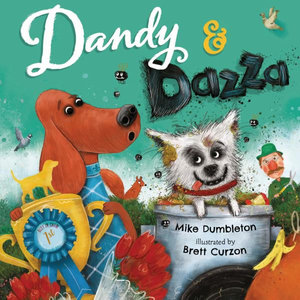
The names of the two dogs say it all: Dandy is a dandy, has only the best food, wears clothes to the park, wins trophies and is often found sleeping on the lounge, while Dazza is a mess of a dog: loud and boisterous, naughty, dirty and inquisitive. The two dogs could not be more different. The opening pages reflect these differences. On one side of the page is Dandy: refined, only eating the best food, obedient and well trained and coming to the park for a wait and see, meeting Dazza: a rough and tumble sort of dog, dashing about, going onto the places that say ‘keep off’, with a host of flies buzzing around his head.
Dumbleton inspires with his choice of words describing the two animals, and I can imagine children not only rolling the words around their mouths, repeating them as they hear them, trying them out, working out what they mean, but also acting them out, being the dogs - Dazza straining at the leash, bouncing and pouncing, while more sedate Dandy sits and watches, until the two come together, having the best rough and tumble time in the park.
They squirt and sprinkle on every post and tree they find, ignoring the sign which asks that only well behaved dogs are welcome in this park, they simply go crazy.
This wonderful tale, full of vim and vigour, will be a treat to read aloud, with children joining in, imagining that they are the dogs, learning that even though they are very different, they are the best of friends.
The vibrant illustrations match the mood of the book, with an excited Dazza shaking muddy dirt all over the place, while quieter Dandy simply watches, until he becomes part of the mayhem Dazza causes. Both animals are shown in such a way that their personalities are immediately apparent. Dandy sitting up so straight, a smell under his nose, whereas Dazza is rummaging through an overload bin, having the time of his life. The detail on every page adds another level of humour, and I love the buzzing endpapers and so will the kids.
This is a wonderfully inviting treatise on difference and coming together, friendship and best of all - fun.
Themes Friendship, Difference, Dogs, Behaviour.
Fran Knight
The little pirate Queen by Sally Anne Garland
New Frontier, 2021. ISBN: 9781913639143. (Age:5+) Recommended.
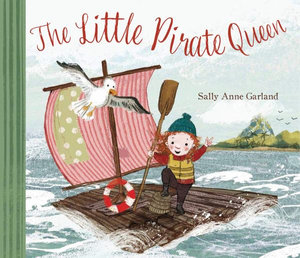
Lucy is on an adventure searching for Far Away Island. She has a small, rickety raft which she patches up over and over again. The other children sailing have much better sea crafts than her and she wishes she had something better. One day a huge wave crashes over the children and Lucy is the only one who stays afloat. She rescues the others and teaches them how to mend the sails and row the raft. On their journey she fills their heads with stories of pirates and treasure. Just as they are feeling like they will never find Far Away Island, they discover wreckage from other boats so together they create a new and stronger great big pirate ship. Land is finally in site and the rescued children head ashore for their own adventures leaving Lucy sailing the seas.
This is an enjoyable read that taps vividly into a child’s imagination. The illustrations are beautifully drawn and perfectly complement the text.
The daring princess by Susanna Davidson. Illus. by Alessandra Santelli
Usborne Publishing, 2021. ISBN: 9781474969796.
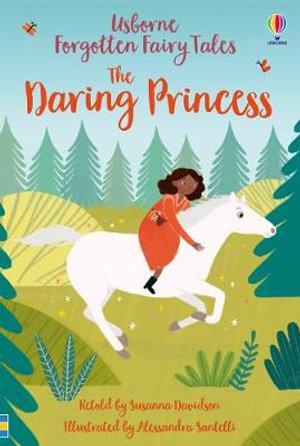
his is a re-telling of the Grimm fairytale, 'The Iron Stove', in which a princess frees a prince from an iron stove, after he was trapped there by a wicked witch. But no sooner has she freed him, than the witch appears and snatches the prince away. Now the princess must climb a glass mountain, cross a lake and a field of swirling spikes to save him.
When the collectors of traditional tales started writing them to preserve them, they focused on those which reflected the ideas and ideals of the time, so we have stories like Snow White and Sleeping Beauty in which the princesses were patient and polite, and there was a strong message that encouraged children to do the right thing or else. Those stories featuring feisty, girls able to fight their own battles were ignored, but as times change new collectors are searching for and recovering other stories. Many of these have been included in Forgotten Fairy Tales of Brave and Brilliant Girls and now Usborne is releasing a new series of single stories especially written for the newly independent reader. Featuring short chapters, larger font and plenty of illustrations, they are ideal for supporting a fairytale focus enabling young readers to be able to access something different that supports their needs.
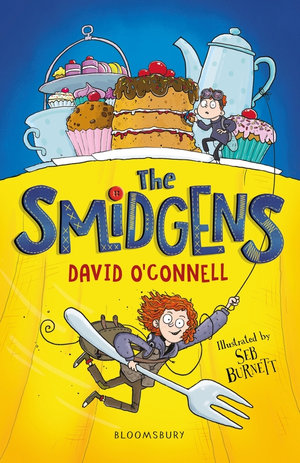
The Smidgens is written by London author and illustrator David O'Connell. The madcap action is perfectly accompanied by the quirky illustrations of Seb Burnett.
The Smidgens is bound to become the first of a much loved series of magical adventures to be enjoyed by children. This book allows children to enter into the world of little people, of fantastical adventures, of characters who are full of wit and quick thinking. It is a world where there are baddies and ghosts; there are magical powers for good and bad. Human beings live above and the Smidgens venture into the human world.
The Smidgen family in this story live with a sense of loss, of a dark past. They are the only survivors - just one little family of which Gafferty Sprout is the oldest daughter and chief protagonist of the story. No bigger than 10cm high, Gafferty lives by the Smidgen's rules: stay hidden and observe, don't do anything flipping stupid, be ready to run and run fast and if in doubt make it up. Gafferty is lonely and would love to meet other Smidgens her own age if they still exist. She discovers an old book and this not only sets her on the trail of finding others like her but also leads her into dangerous action packed adventure where she needs all the skills, magic and help from others that she can get.
In its whimsicalness and depiction of loving family life and funny little creatures The Smidgens is a little like The Moomintrolls by Swedish author Tove Jansson. It is also reminiscent of the Mrs Pepperpot series by Norwegian author Alf Proyson which was about the adventures of a little woman no bigger than a pepperpot. The Borrowers by Mary Norton is a classic series featuring little people; The Smidgens is funnier.
There is somehow an importance for children to experience reading about the adventures of little imaginary fantastic folk. Wondering about what it would be like for a whole family to dine on a potato chip and still have left overs and all the other things experienced by the Smidgens opens up the world of imagination and enhances the ability to see the world from a different perspective.
The Smidgens will bring a lot of gentle pleasure and laughs into the lives of young readers.
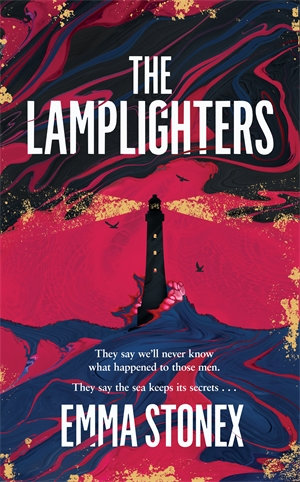
This book is impossible to put down. Real events inspired this story. The island of Eilean Mor in the Outer Hebrides has a lighthouse. In December 1900 three keepers disappeared from the island. The mystery remains unsolved and has inspired film and poetry.
Emma Stonex sets The Lamplighters in Cornwall in 1972. Three lighthouse keepers have vanished. The entrance door is locked from the inside, beds are made and the clocks have stopped at 8:45.
In 1992 an author seeks to investigate and resolve the mystery and this provides an opportunity for the women left behind to confront their fears, and reveal what has been kept hidden for twenty years.
The writing is riveting and suspenseful as the author moves seamlessly between 1972 and 1992. In 1972 we in turn hear the voices of principal keeper Arthur Black, Bill Walker and Vincent Bourne. Their characters are exposed through sensitive, deft writing that is compelling and engrosses the reader. The moods of the sea, the rhythms of life in a lighthouse and the realities of isolation entwine to heighten the the mystery of the disappearance of the three. The reader is invited to speculate the cause of their disappearance: something supernatural; madness; murder; criminal activity; misadventure.
In 1992 we find Helen, Jenny and Michelle. Each, guarding their secrets, has severed ties with the others at a time when you might think they would be bound together. The author skilfully builds tension as the very different personalities reveal the betrayals, grievances, guilt and suspicion that have haunted their past twenty years.
The author has crafted a stunning debut novel that captivates and haunts the reader.
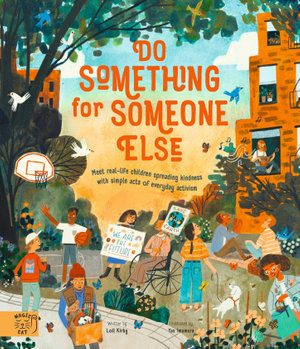
Do Something for Someone Else is another beautifully presented and topical book by Loll Kirby. Her first book Old Enough to Save the Planet presented twelve activists providing solutions to the effects of climate change. In her latest book the author introduces us to another twelve children from around the world who focus on another type of activism: spreading kindness in everyday activities. Kesz who had been living on the streets in the Philippines from a young age was given the opportunity to improve his circumstances. He then set up an organisation called Championing Community Children to support other children living on the streets. Havana from the USA began fundraising from a young age to provide books for black children that contained black characters. She is also passionate about girls and education. Winter from Australia discovered at the age of nine that children in some countries did not have clean drinking water. He began to raise funds to support these children and set up a fundraising programme Surf to School where students can wear surf clothes to school and donate to this campaign. Each activist and their cause is presented on a double page spread and the highly detailed illustrations are interspersed with interesting facts. At the end of the book are ideas about helping do something for someone else as well as ten things you can do to make a difference to someone else. The website addresses of all of the mentioned activists are included and would be a great starting point for further research.
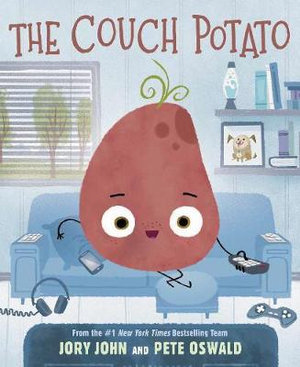
There is nothing that Couch Potato likes more that slouching on the couch. In fact it spends all its free time in the exact spot on its comfy cosy couch, and really, there is no reason to move. With a range of gadgets - even one that fetches its snacks - and a wall of shimmering screens in front of it, it can control its entire life all the time with a few taps and a couple of clicks.
Life is perfect until there is a power outage! Suddenly everything goes dark and Couch Potato is forced to open the curtains to let some light in where it sees the outdoors for the first time in a long time and it is tempted outside.
This is a new addition to Jory John's collection of modern cautionary tales for young readers joining The Good Egg, The Bad Seed and The Cool Bean. Encouraging those who prefer to live their lives vicariously through the screen to get outside and enjoy the sunshine, fresh air and being actively involved with friends, it opens up investigations into a healthy lifestyle and the need for balance.
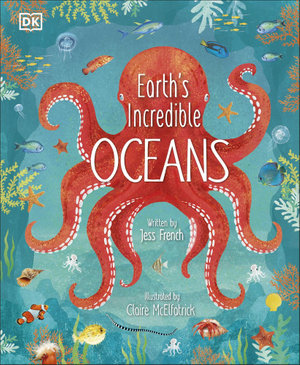
Passionate vet and nature lover Jess French has written another colourful non-fiction book Earth's Incredible Oceans to add to her collection, Her previous titles include Book of Brilliant Bugs and What a waste. Readers of this newest release will not be disappointed in the beautifully illustrated and colourful pages. The reader is taken on a journey from: What is an Ocean? to Oceans & me. The pages are full of interesting and at times fun facts about layers beneath the sea, different sea creatures such as seabirds, narwhales, invertebrates, ocean reptiles and mammals as well as plant life, food webs, and the seashore. The final chapter gives information about how the ocean helps us, how it is changing and how we can help look after it. Each double page spread is creatively designed and draws the reader's eye to the striking visual images and the cleverly placed text. The Contents page is clearly set out and both the Glossary and Index are very detailed.
This book is one to be shared between children or read alone. There is so much detail to be found on each page and the use of both illustrations and photographs further enhances the appeal of the book. A perfect book for home, school or public library.
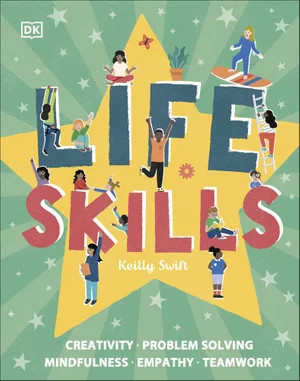
Young people today are fortunate to be growing up in a time where they have the ability to read, share and discuss issues around life skills and consequently their own mental health. One new non-fiction read, Life Skills by Keilly Swift, is a thoughtful and engaging guide book that will enable middle grade to teenage readers to source life skills' information and advice when they may require it. This book covers many topics under the headings of Finding Solutions, Ways of Thinking, Communicating, Understanding Feelings and Coping Skills and begins with a well written introduction to the actual meaning of life skills. Throughout the book the reader has the opportunity to try activities such as mind-mapping, looking at different facial expressions in a mirror, standing in someone else's shoes and learning about body language. On each page the information is broken up into very readable segments and contains attractive and detailed coloured illustrations. Every page is designed differently and this will add extra appeal for the intended audience. There is a glossary and a detailed index as well as help, advice and information pages although these provide UK-based details. Learning life skills from a young age, both at home and school, is so important and needs to be discussed openly. This would be an excellent resource book to have in every home, class, school and public library.
Themes Mental Health, Life Skills, Problem Solving, Choices, Decisions, Emotions, Well-being.