Black Inc., 2021. ISBN: 9781760641696. (Age:16+) Recommended.
It’s a short history but the message is hard to take. War has been part of the human psyche since prehistoric times and has continued to erupt throughout history. Once thought a noble and glorious activity, most people are now aware that in the current time of algorithms and atom bombs, a world war would likely lead to destruction of the planet.
Dyer succinctly describes the development of war from hand to hand combat to trench warfare to missiles and drones, each invention leading to an increasing detachment and depersonalisation in the destruction of the other. There is always the lingering appetite for war, and whilst we know we mustn’t use nuclear weapons, nations still desire to have them. As Dyer says, ‘no great power has renounced war as an instrument of policy’. He proposes that the only hope is to create ‘some sort of genuine international community’, in other words a United Nations. ‘The danger is extreme, but it’s no reason to stop trying’.
The chapters are short, the headings of each page highlight key points and there are many diagrams, images and quotations. It is a well referenced book, a neat and easy to read summary of war history, but whilst the final pages present an optimistic view, it’s hard not to come away with the sense we are fatally flawed as a species.
This would be a useful book for senior secondary students of Modern History for its succinct and insightful summary of the issues in the development of nuclear warfare, the Cold War, the Cuban Missile Crisis and the role of the United Nations. It brings together ideas that would stimulate historical analysis and class discussion.
Themes War, Weapons, Military strategy, Nuclear warfare, United Nations.
Helen Eddy
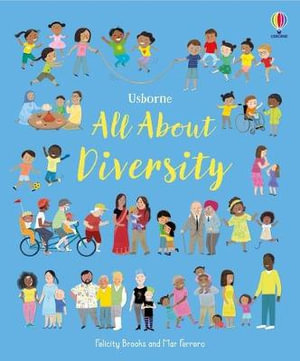
All About Diversity by Felicity Brooks and Mar Ferrero
Usborne, 2021. ISBN: 9781474986649. (Age:3+)
"Being different from each other is called DIVERSITY" and this entertaining book explores a range of ways people can be different such as what they look like, where they live, the sorts of families they live in, the foods they eat and the way they spend their time. Using a two-page spread, lots of illustrations accessible text and speech bubbles, its design encourages the young reader to explore each vignette and learn something new each time. There is also a glossary to explain some of the trickier words as well as notes for the grown-ups that explain why promoting diversity and inclusion is critical for the healthy well-being of our children.
Although this is a topic that early childhood teachers focus on each year this books gives a real focus and explanation to those aspects that their students are most aware of, making it an excellent foundation for an ongoing unit of work. Inspired by the stimuli provided, children could create their own class pages featuring themselves and their lives making it a powerful resource for both social and language development.
Themes Diversity, Individuality.
Barbara Braxton
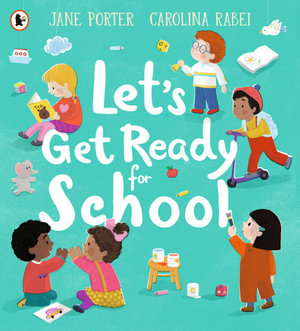
Let's get ready for school by Jane Porter and Carolina Rabei
Starting school is a very exciting time in the lives of young children. It can also be overwhelming and full of worries for some or one big adventure for others. There is so much to learn, to understand and to remember. This book discusses a range of scenarios that a young child may experience in those early days. The author begins with an introduction to the diverse range of child characters and follows this with warm-ups for school. Activities such as putting coats and shoes on, writing the first letter of their name as well as wiping “my own bum” and hand washing. There is a double page spread about how the child will get to school as well as saying goodbye to the adult responsible for bringing them. The author then includes information for the child about what may happen during the school day right up until home time. There is a page of worries with children asking questions that may resonate with the young reader. Each double page is brightly coloured with speech bubbles and appealing illustrations.
This new publication, Let’s Get ready for School, is a perfect read for parents or carers to share with those about to take their first plunge into school life.
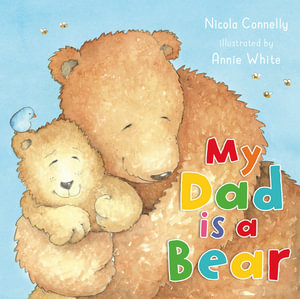
My dad is a bear by Nicola Connelly. Illus. by Annie White
Catch a Star, 2021. ISBN: 9781922326249. (Age:1+) Recommended.
In this gorgeous board book a little bear describes all the things about his dad. He is tall and round, and soft and furry. He can climb and swim and growls, all like a bear, but there is one thing that he does best and that is give bear hugs.
The narrative is short and would read aloud well to very young children, who will be able to join in with the words 'like a bear'. There is one well constructed sentence and a complementary illustration on each of the thick, strong double spreads, which would help children who might like to try and read for themselves.
The illustrations by Annie White are an absolute delight. The father bear is brown and fuzzy and the baby bear on the front cover, with his adorable grin, is very appealing. A little blue bird appears on each double spread and will be a detail that children will want to find, while the hare with its long ears and pink paws is unforgettable.
This would make an excellent gift from a young child to give to Dad on Father's Day and reading it together would bring many feel good moments and memories to share. It is sure to become a family favourite.
Themes Bears, Love.
Pat Pledger
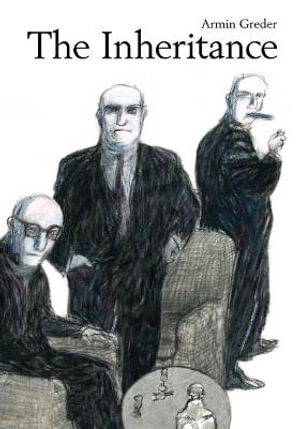
The inheritance by Armin Greder
Allen & Unwin, 2021. ISBN: 9781760526788. (Age:All) Highly recommended.
With the ravages of climate change again at the forefront of the world’s thoughts with floods sweeping through Europe and fires ringing Athens and Los Angeles, Greder’s book is most providential putting under the microscope the thinking that is keeping the world from taking positive action. He presents a dying industrialist, exhorting his sons to carry on his legacy. After his funeral, attended by all the grandees imaginable, the inheritors talk about development and expansion, modernisation and offshore projects, profit margins and Virgin Islands. But their sister presents an alternative view. She has traveled and seen what the world has become. She is dismissed as strange, her idea about questioning their father’s wishes unimaginable. They turn their backs on her, rejecting her questions, scathing of her notion of problems.
‘What is the problem?’ One asks her.
So Greder shows us!. Over the next eleven double pages he encapsulates the damage we have done to our planet and the dire consequences for all of us. In his dark layers of crayon and pencil, he transforms the blank pages into a mechanised monster, a parkland of palm trees where once stood rainforest, deep holes cut into the earth chimneys belching smoke and pollution, a sandy beach littered with plastic, a long line trawler ravaging the sea floor, sheep looking for shelter as fire razes the horizon, choked rivers and oil slicked seas. Each double page will stop people in their tracks; they will gasp at the horror before them, relating it to scenes they have seen on the nightly news, linking it to images that have shocked them in the past, wondering with many others why nothing has been done.
The image of the child at the end, wearing a gas mask against the pollution around him, trying to play with a small mechanical toy, is devastating, implying that it will all continue to happen, that no one has learnt anything, that our inheritance is that no one has learnt anything. Greder presents no green shoot, no smile, no way out in this most depressing of books.
The industrialist told his sons, ‘All this will be yours’ proud of his achievements, but the reader will see another side to that message. This is a dying planet waiting for action, and we all hope it is not too late. Teacher's notes are available.
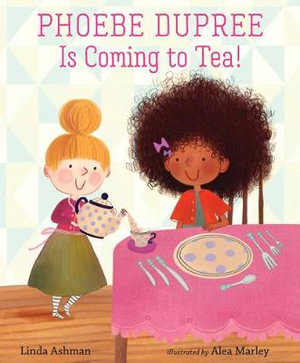
A wonderfully funny verse tale of afternoon tea, as Abby invites her best friend Phoebe to her house, but with some trepidation. She prepares for her friend: tells the dog how he must behave, cooks cakes and sets them out on a tray, prepares the table, and then dresses herself. All the time she is concentrating on how best to present herself to her friend, wanting every thing to be perfect so that she will come again.
Trepidation reigns, and when Phoebe rings the doorbell, she is just herself.
All is in readiness, the dog behaves beautifully, the table is lovely and the cakes are ready to be brought in. But Abby slips - the cake tray is very heavy and the cakes are scattered across the floor, causing Phoebe to fall from her chair, the dog then runs in to join the commotion and as he has been in the pool, a place he was told not to go, sprays water over them all.
Abby is mortified. All her fears have been realised, the afternoon tea is a disaster.
But all is well when Phoebe kicks off her shoes and announces ‘this is going to be fun’. She picks up a cake from the floor and eats it, offering one to Abby. Smiles greet the readers on the very last page as the two sit together in the mess created.
A delightful look at how things can go awry, the disasters that can happen quite by accident, the mopping up that brings friends together, this book will be a wonderful read aloud, inviting readers to join in, predict the rhyming words and laugh lots.
Using pencil, watercolour, crayon and digital pencils, Alea creates vibrant, colour filled scenes. Readers will love finding patterns on each page, checking out the textures and different sweeps of colour. Each scene is full of fun and humour as the characters display the attributes given in the text. Their clothing and hair tell us so much about their personalities! Just wonderful.
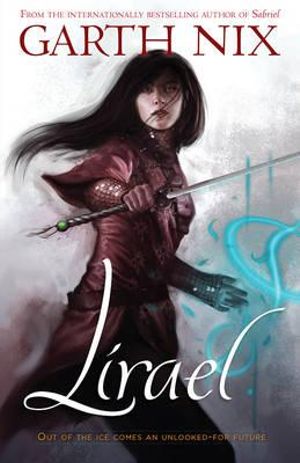
Abhorsen bk 5. Allen & Unwin, 2016. ISBN 9781741758634 (Age: 13+) Highly recommended. Fantasy. Magic. Quests. The eagerly anticipated book 5 in the series does not disappoint. Lirael is the Abhorsen-in-Waiting and has to battle dangerous creatures and find memories in the Dark Mirror. After losing one of her hands in the binding of Orannis she has a new hand, looking like gold and crafted with Charter magic, and she must learn to use it fearlessly. When she finds Nicholas Sayre deeply tainted with Free Magic after being attacked, together they must face the Witch With No Face, news of whom has been brought by a young woman Feren who faced great dangers to reach Lirael. (Readers may wish to read the short story Nicholas Sayre and the Creature in the Case as a prelude to this story, but it is not necessary although it is an intriguing read itself).
Lovers of fantasy will welcome this outstanding book with its likeable characters, dangerous quests and battles and strange settings. Nix has created a unique world where Free and Charter Magic battle both in the world and inside Nicholas and Lirael must find the answers to cure him and save the world. To do this she takes Nicholas back to the Clayr where she once was a quiet retiring librarian. Now she is the Abhorsen-in-Waiting she realises that she has grown in stature and also in self-confidence. The growing attraction between Lirael and Nicholas is also a warm thread that readers will enjoy following as they both grow in knowledge and skill.
At the same time as Lirael and Nicholas journey to the Clayr, the feisty Feren, strong willed and determined, is chased by the Witch With No Face and her followers as she travels through dangerous country to bring her warning about the Witch to Lirael. She is a most engaging character and her adventures and her sassy attitude keep the reader totally engrossed.
Abhorsen is a fabulous series, one that all libraries should have, and Goldenhand brings together many of the threads and characters that have preceded it. A book trailer is available from the publisher.
Pat Pledger
Special Forces Cadets : Missing by Chris Ryan
Hot Key Press, 2019. ISBN: 9781471407826. (Age:10+) Highly recommended.
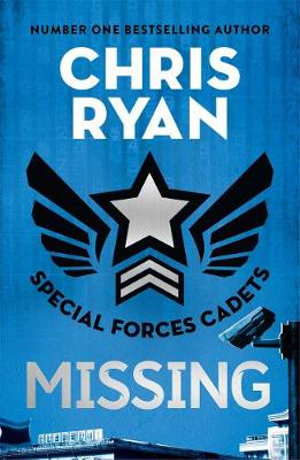
The second in the series, Special Forces Cadets, see the quintet sent to North Korea to try and find a British agent who has gone missing. Not a place for the faint hearted, the five go into the secretive state disguised as a tour group, to avoid any suspicion they may attract. Once there they must break the spy out of the prison where he is being held and make their way to a boat which they can use to escape. All sounds straightforward on paper. But North Korea is not your usual destination and they are watched, almost falling at the first hurdle.
The series now has six books beginning with Siege (2018) where the quintet, Abby, Sami, Lukas, Lili and Max are sent into a situation in an inner city school where a suicide bomber has threatened to blow himself up.
The five cadets are interesting and involving, their back stories giving them an authenticity while bringing their skills to the fore. Training in the first outing for this series is hard, reflecting the intimate knowledge of SAS procedures by the author, Chris Ryan, once a SAS soldier. One of the group, Max is an orphan, looking for somewhere to belong and this colours his early life.
Following on from Missing comes Justice (2019) Ruthless (2020) Hijack (2020) and Assassin (2021). All are exciting and involving, all the more so because of the authenticity of the background which never flags.
Themes Spies, Espionage, Adventure, Mystery, SAS, Army training.
Fran Knight
Sabriel by Garth Nix
Allen & Unwin, 2021. ISBN: 9781760878214. (Age:13+) Highly recommended.
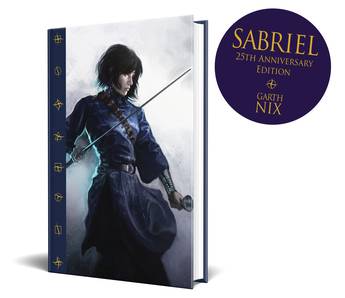
The handsome cover of the hard back 25th anniversary edition of the award-winning Sabriel (Aurealis Award) enticed me to re-read this classic fantasy, and from then I had to re-read the whole Old Kingdom series, despite having a tottering tower of books to be read. Sabriel is a young woman spending her last year at boarding school in Ancelstierre, when she feels that her father is in danger and knows she must go back to the Old Kingdom in search of him. Her father is the Abhorsen and has the power to lay to rest the Dead. She is the Abhorsen-in-Waiting, beginning her training with bells and magical sword to one day take over the onerous duties of her father. Arriving in the magical kingdom Sabriel’s quest leads her and her companions into danger as she follows the trail of broken Charter Stones and a very evil enemy.
Nix’s world building is wonderful. The contrast between Ancelstierre and the Old Kingdom is vividly described. When Sabriel ventures into Death, I held my breath at the danger she faces in this strange place, while the Dead creatures are very frightening. Not only is the world unique, the use of magic is also original. Seven bells can control the Dead, and each has a distinct personality and the idea of Charter magic, with all its shining marks, is fascinating.
There is adventure galore, but Sabriel is a heroine who doesn’t rush into danger thoughtlessly. She has self-doubts, but it is her determination and courage that keeps her on her quest to find her father and defend the Old Kingdom. The companions that she gathers along the way include Touchstone, the young prince that she awakens and Mogget, an ancient spirit forced to live as a cat. These are fully realised characters while Kerrigor is a frightening villain. Mogget’s wry asides and clever says bring some light relief when events are dark and threatening.
This is fantasy at its best and The Old Kingdom is a series that should be in every library.
Themes Fantasy, Good and evil, Quests, Magic.
Pat Pledger
Lirael by Garth Nix
Allen & Unwin, 2014. ISBN: 9781743316597. (Age:13+) Highly recommended.
Winner of the Ditmar Award for Achievement in Australian Science Fiction and the Aurealis Award for Best Fantasy Novel, Lirael takes the reader back to The Old Kingdom, this time to the glacier, the home of the Clayr. Lirael is a misfit, her father is unknown, and her mother left her when she was very young. Unlike the rest of the Clayr, she doesn’t have the Sight, and she is lonely and downcast. When she is given a job in the Great Library and meets the Disreputable Dog, her life begins to improve as she learns some of the secrets of the Clayr. Meanwhile Prince Sameth, Sabriel and Touchstone’s son, is reluctant to take on the job of Abhorsen-in-Waiting, although evil is stirring in the land. The fate of both Lirael and Sameth is linked as an ancient and powerful evil arises on the borders of the Old Kingdom and Ancelstierre forcing them to work together and overcome their self-doubts.
Lirael is a wonderful character. It is very easy to empathize with her as she struggles to belong to the Clayr, desperately wishing to gain the gift of Sight, and often so despondent that she contemplates suicide. With help of the Disreputable Dog, a fabulous magical creature, she finally gains the confidence to use the skills that she has been given. Meanwhile Sameth is very troubled and although he knows he should be learning how to be the Abhorsen, cannot bring himself to open the Book of the Dead and it is not until he meets Lirael that he finds the courage to use his own skills of Charter Magic. And of course, Mogget, that wonderful cat creature, features with his dry wit and uncanny knowledge
There is action aplenty and some mind-blowing moments as the evil tries to take over the land. A cliff hanger conclusion ensures that the next in the series, Abhorsen, will be picked up immediately.
I am always skeptical when a book likens an author to Diana Wynne Jones, however in this case I think it is justified and I loved this book. I have already recommended it to several people as it is well written with the magical element sitting so well within the real world and characters who are believable and mostly likeable.
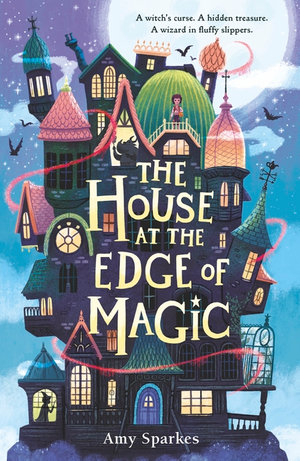
The story follows Nine who is an orphan pickpocket who dreams of escaping from the Nest of a Thousand Treasures. When she steals a strange tiny house from a lady's purse it sets off an adventure like no other. Nine is a feisty self-reliant girl who only helps if there is something in it for her, she refuses to say sorry or thank you and has learnt to never show weakness of any kind. The House she steals is magical and inside are trapped an oddment of characters that only Nine can help. Flabberghast is a young wizard who lives in the house and is unable to leave, along with the other house inhabitants they have been trapped in the cursed house with a toilet that moves, a tea cupboard that won’t open and a garden they can’t access. As the story develops, Nine and the other characters must work together to solve the riddle to break the curse on the house.
I loved this book as it really appealed to the sense of fun; Amy Sparkes has created a story that is wildly imaginative and will appeal to a wide audience. This is a book that could be used as a read aloud or read along class novel but either way it will be a book that is enjoyed by the reader, with the sequel being much anticipated.
Themes Magic, Sibling rivalry, Orphans, Curses.
Mhairi Alcorn
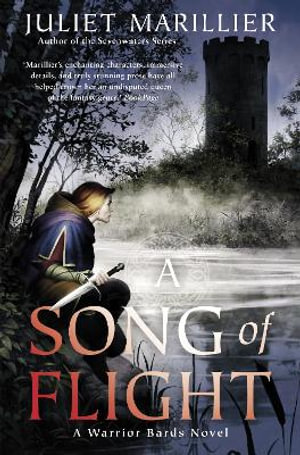
A song of flight by Juliet Marillier
Pan Macmillan, 2021. ISBN: 9781760784232. (Age:15+) Highly recommended.
Marillier brings her fantasy trilogy to a very satisfying and compelling conclusion in A song of flight. Prince Aolu of Dalriada has been abducted, his friend and guard Galen left seriously injured. The Swan Island warriors are asked to investigate, but because Galen is Liobhan’s brother, it is felt that she is too personally involved, and she is initially left behind when the search begins. Meanwhile times are very difficult for Brocc because of his involvement in the secrets of the Crow Folk and he and his young daughter set off on a difficult and dangerous journey. It gradually becomes apparent that the disappearance of Prince Aolu’s and the use of the Crow Folk to attack people are connected and Liobhan, Brocc and Dau must each play a role in solving the mysteries.
The most memorable part of A song of flight for me was the path that Brocc takes in his efforts to understand the Crow Folk. There are some unexpected twists in his story that had me holding my breath in fear for him. He is determined to communicate with them and believes that they are not all evil, but his efforts lead to disaster, and he puts his young daughter and himself in great danger. Liobhan and Dau both prove their bravery and intelligence in their separate quests and Marillier’s fans will be very happy to meet Blackthorn and Grim again.
All the threads from the previous two books, The harp of kings and Dance with fate have been brought together in a stunning conclusion. The descriptive prose is beautiful and the world building wonderful. This is a series that I will be returning to reread and one that fans of fantasy will not want to miss. And readers new to the fantasy genre and who like a touch of romance, a Celtic setting and memorable characters may find a series to love.
Themes Fantasy, Good and evil.
Pat Pledger
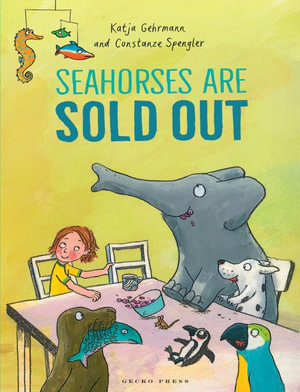
Seahorses are sold out by Katja Gehrmann and Constanze Spengler
Seahorses are sold out is a very humorous story that will appeal to younger readers. Mika’s very busy father works from home and does not have time to go on a trip to the lake as he has a deadline to meet. After trying to stay quiet and not interrupt him too often, Mika finally suggests that if her dad lets her get a pet, she would have company and not annoy him. Her father gives her his credit card and she happily purchases a mouse. Unfortunately the mouse goes missing so she next buys a puppy to sniff out the mouse. Then the puppy makes a mess in the bathroom so Mika buys a seal to help out. After spending time in the bathtub, Mika realises the mouse cannot swim so buys a penguin to teach it how to. Mika continually adds to her menagerie and when her dad finally finishes his work, he is most surprised to see the collection of animals. The ending is quite special and will be a surprise for the reader. Children will enjoy the humour, the fun that Mika has and the joy that owning a pet can bring.
Themes Families, Pets, Communication, Working from home.
Kathryn Beilby
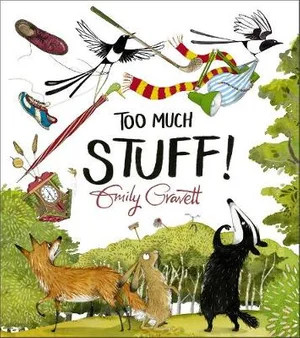
Too much stuff by Emily Gravatt
Pan Macmillan, 2020. ISBN: 9781509857333. (Age:3+) Highly recommended.
Following on from the brilliant picture book Tidy,Too Much Stuff is set in the same forest but this time the main characters are Meg and Ash the Magpies who are trying to create the best nest for their family. The nest starts off as a normal birds nest but when they discover a magazine ad lining their nest they become obsessed with adding “things” to their nest. This results in the nest crashing to the ground and the eggs being misplaced.
This is a beautiful story about materialism and the inevitable overwhelming consequence of hoarding and collecting things. As a read aloud it is wonderful as the rhyming text flows and the illustrations allow the young reader to engage with the story. As a classroom book it will work well as it fun while still sharing the message and children will love looking through all the items the magpies collect.
I would highly recommend this book to any reader. I really enjoyed the subtly of the environmental message as it allows the book to be enjoyed without feeling like a lesson must be taught. Emily Gravett’s humour and illustrations definitely make this a book to add to the library and it is wonderful that it continues the story and characters of Tidy.
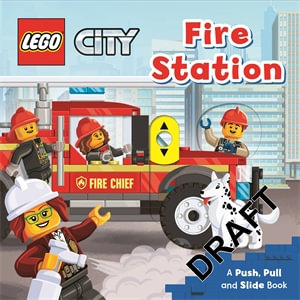
No young child who likes Lego could resist the push, pull, and slide features in this strong board book. Even before the book is opened, busy fingers will discover a bright yellow ring to pull and move the Fire Chief and fireman up and down on the front cover. Opening the book, the reader is instructed to sound the alarm to alert the crew, and by pulling out the yellow tab, the siren is sounded, and a helicopter is seen racing through the sky. On the next page, instructions are given to “load the kit, check the ladder, don’t forget the hose” and everyone hops on board the fire engine. A slide shows equipment and hose, while a pull-out tab asks how many firefighters can be found. The station door is then pushed up, the engine is ready to go, and the helicopter is hovering above. The final double page spread shows all the firefighters going to save the day with a pull tab that kids will really enjoy, showing the engine speeding along, followed by a fire car, motorcycle, and truck, all with sirens going and lights flashing.
The text is minimal; it is the brightly coloured brick figures and objects that will keep the reader’s attention, while the illustrations revealed by the push, pull and slides provide lots of details to discuss. The reader will learn about a modern fire station in the city and no doubt will be interested in making a fire station of their own. Lego enthusiasts are sure to welcome this book and it would make a perfect gift.