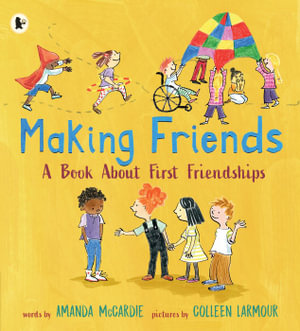
Making Friends: A Book About First Friendships by Amanda McCardie. Illus. by Colleen Larmour
Walker Books, 2021. ISBN: 9781406394542. (Age:3+)
Sukie is starting a new school and shares the concerns of every child in the same situation - will she make friends. But she soon learns that making friends can happen in all sorts of ways, big and small, even unexpected. However, it is not enough to make friends - you have to work on maintaining the friendships by respecting others' differences as well as the things you have in common.
So many children who have been restricted by stay-at-home orders in parts of Australia are separated from their friends right now - even though they have visual contact through online sources or audio through the phones, it is the physical, spontaneous face-to-face contact they are missing and which is impacting on their mental well-being. Even Miss 10, the family social butterfly, is worried that she will be forgotten and won't have any friends when school eventually returns.
If nothing else, this time at home has demonstrated the critical role schools play well beyond the formal academic teaching and this book would be a worthwhile addition to any teacher's toolkit as they help their students navigate making friends and being friends again after such a long social isolation. It has a wider reach than just supporting those who will be starting a new school as a new year approaches. Readers are invited to agree, disagree and add to the situations in which Sukie finds herself - should she be embarrassed and uncomfortable that Mikkel refuses her help with his jigsaw puzzle or is it OK to say no sometimes? And cleverly, illustrator Colleen Larmour has included a picture of someone sharing kindness on almost every page, opening up not only an opportunity to look closely but also the concept of doing a random act of kindness every day.
Our children are negotiating a tricky time at the moment, different but just as confronting as children in past generations, and the strategies and coping mechanisms we help them to develop now will play a large role in how they will survive and thrive. This book has a role to play in that.
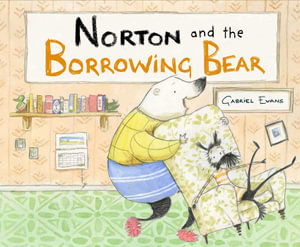
The author of Norton and the Bear, shortlisted in the Children’s Book Council of Australia’s Picture Book of the Year Award 2021, has written a companion book, Norton and the Borrowing Bear. In this beautifully written story, Norton learns a valuable life lesson after he invites Bear, who has moved in next door, over for dinner. Norton is so keen to have a friend in his busy bustling neighbourhood living next door. The evening is very pleasant but ends with Bear wanting to borrow Norton’s slippers. While Norton allows him to, it does not sit well with him and he worries all night. The next day Bear borrows even more of Norton’s precious things, his teapot and cup, his yoga mat, calming flute music and peace lily picture, his new jumper and finally his special chair. That is the last straw for Norton and he loses it with Bear. Bear is embarrassed and returns the borrowed items. Will Norton and Bear be able to salvage their friendship and learn to accept each other as they are?
Younger readers will love hearing this story read aloud and looking at the detailed illustrations. A perfect addition to any home, school or public library.
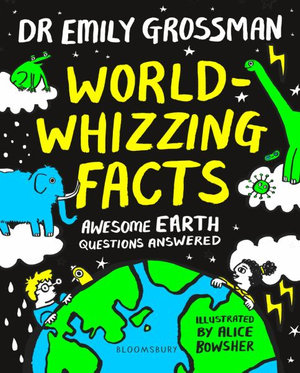
World-whizzing Facts: Awesome Earth Questions Answered has been written by Dr Emily Grossman, a TV science expert, who answers incredible and important questions about our natural world. Children love finding out the answers to all sorts of questions that adults may not even think about. For example, where would you find the most germs? There are four choices: A. The end of your nose B. A lift button C. Your kitchen table D. A public toilet seat? You will need to read the book to find out! Each question is explained fully before the answer is given. The author cleverly uses humour to encourage the reader and throws in the odd gross fact to keep them engaged, such as the jellyfish excrete their food out of the same hole they take their food in. Each page contains a large amount of small handwritten text that has been placed in chunks with bold, black-lined and grey drawings. There are highlighted key words which are presented in larger lettering. Many environmental issues are discussed and tips for young readers on how to help and make a difference to the pressing issue of the impact of climate change. The contents page is spread over three pages and there is an acknowledgment page at the very back. The author has also included write your own questions pages.
Those children who love facts and learning new knowledge will enjoy this interesting read.
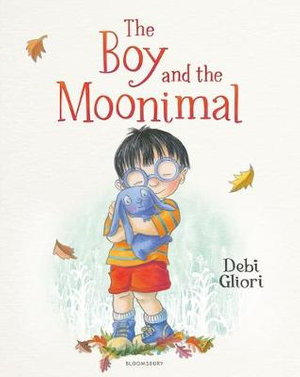
When the boy discovers the moonimal in the toyshop, straight away the boy hugs him tight and because moonimals are made to be hugged tight, they become inseparable. They played together and went everywhere together. But one day the boy trips over in the woods and because he broke his glasses he couldn't see Moonimal lying amongst the leaves.
Convinced the boy will come back for him he lies there for many days and nights until he is discovered by some rabbits, who see him as special because although he looks like them, he has three ears. And so, instead of snuggling in with them he sleeps alone, rather than being hugged tight. The adventures for Moonimal are just beginning ... snatched by a large bird, dropped in the river, discovered by deer... will he ever be found by the boy again?
Debi Gliori has created a charming story for our youngest readers that will resonate with them as the tale of a lost toy is all too familiar. But telling it from the toy's point of view is unique and while there is sadness and even intrigue, it is always tinged with hope through Moonimal's belief that he will be reunited. The illustrations are full of details that not only enrich the text but offer something new to discover each time the story is read - as it will be, over and over.
Barbara Braxton
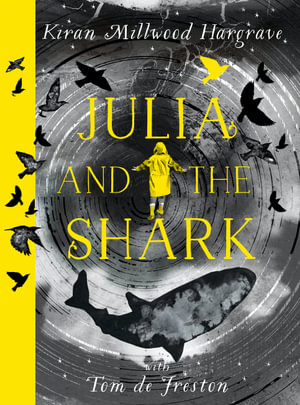
Julia and the shark by Kiran Millwood Hargrave with Tom de Freston
Sometimes a novel is published that resonates with and impacts on the reader. Julia and the Shark is one such novel. Written and illustrated by wife and husband team, Kiran Millwood Hargrave and Tom de Freston, this very deep and meaningful book will leave a lasting impression long after it is finished. Julia is a ten-year-old only child who has left Cornwall with her parents and their cat Noodle to spend two months on the remote island of Unst in the Shetland Isles region. Her mother Maura is a brilliant and talented marine biologist with an obsessive personality who dreams of finding the slow-moving Greenland shark for both scientific and personal reasons. Julia’s father Dan has been employed to fix the beacon in the narrow lighthouse which the family temporarily moves into.
From the very onset of the journey the story is fraught with tension between the adults as Dan tries to temper Maura’s compulsive enthusiasm. Julia watches and listens and in the beginning sides mostly with her mother. The longer the family remain on the island the more it becomes obvious that all is not as it seems, and that Dan is the glue holding the family together. Added to this family living with mental illness is the rocky friendship between Julia and her new friend Kin and their relationship with Adrian the island bully. The search for the Greenland shark eventually takes both Maura and Julia on their own dangerous journeys.
This beautiful hardback edition is strikingly illustrated throughout in tones of yellow, grey and black. The ominous presence of the shark hovers throughout the pages and is presented in a myriad of ways. This is truly a stunning read which sensitively and carefully tells a powerful story while gently answering unasked questions about mental illness. Perfect for mature middle grade readers and adults alike.
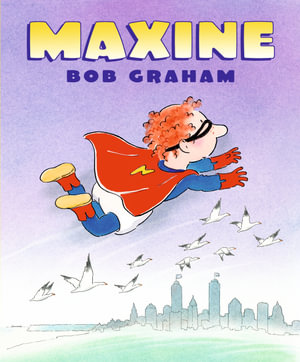
Bob Graham’s distinctive illustrative style soars across the front cover, ensuring every child who sees the book will recognise it, pick it up, read it themselves or ask someone to read it to them. Older readers and adults will remember the wonderful story of Max (2002), and delight in picking up this new incarnation. My kids (now in their 40’s) could spot a Bob Graham from the bookshop doorway and pestered the bookshop owners for any new Graham books.
Max is told that his superhero mum is pregnant and goes along to see the scan. Questions are asked, answers given about the new addition to the family, one they know already has a mask. But what will she be like? Grandma knits her a cape, Grandpa makes her some soft leather boots, and Max gives her his most believed book. They are proud of her and her achievements, wondering when she will be able to fly. But Maxine questions her costume and the mask, wanting to be more like her peers at school, thinking about what she wants to be. She asks others about their ambitions and what they want to be and gets a variety of responses, she ask her family what they aimed for and hears that they all were happiest being a superhero. But Maxine is not so sure. She convinces her mother to buy her jeans and a t-shirt, her old clothes going to the fete, she finds the boy in the school dress up parade needing one more thing to make his costume complete. She gives him her mask.
And without the mask, she is Maxine, a person who can do exactly what she wants to do.
A loving look at a family, happily welcoming a new child into their midst, expecting her to follow in their footsteps, but being equally at one when she decides to take her own path.
And as with all of his books there are small nods to other themes lurking in the background: peer pressure, grandparents, expectations, career paths, while the illustrations beg for closer inspection, especially the Bruegel like playground at school with its myriad of individual children all doing something quite unique.
And that to me says it all: each child is their own person and should be encouraged to find their own voice in the world, like a person in a Bruegel painting: each is quite different, one from the other. Classroom ideas are available.
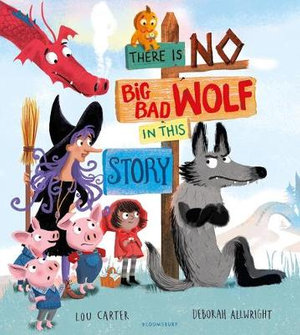
The Big Bad Wolf is always late. His many clocks just do not wake him in time to huff and puff the Three Little Pigs’ houses down, or trek after Little Red Riding Hood in the forest on the way to Grandma’s house. So can these fairy tales do without the Big Bad Wolf? The characters are so sick of him being late they try to do without him just to see if they can. But nothing they try seems to work. The dragon should have been able to huff and puff but breathed fire, burning down the houses instead. The characters come to a conclusion that they cannot live without him and try to track him down finding him at ease under a bridge, fishing. But will he come back to do his work in the fairy tales?
This very funny take on the place held in fairy tales by the Big Bad Wolf will have kids reading every word as they see the predicament that would unfold if it wasn’t for the Big Bad Wolf. He has a necessary part to play in the two tales and kids will love the difference this story brings to their knowledge of the fairy stories. The funny illustrations will enthral eager readers as they spot the various characters from fairy tales, and follow their journeys through the book. I loved the clocks on the first two pages and the efforts the characters go to to get the Big Bad Wolf at his post on time.
A great read aloud, this book will have kids engaged as they try to encourage the wolf to make better use of his time.
Themes Wolves, Fairy Tales, Time, Fairy Tale characters, Mixed up Fairy Tales, Read aloud.
Fran Knight
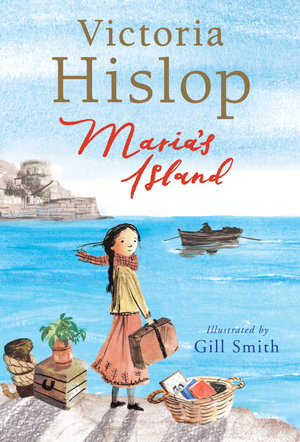
Maria's island by Victoria Hislop. Illus. by Gill Smith
Victoria Hislop brings us a dramatic and moving story set in the same world as her international seller The Island.
Maria’s Island is a story told to us by Maria Petrakis who is one of the children in the original version of The Island. This is the story of her life written for children, which I very much enjoyed reading as an adult. It was a great historical fiction book.
Maria (yiayia, which is grandmother in Greek) shares her family story with her granddaughter Rita, who comes to stays with her every summer on the island of Crete. Rita lives in England and visits her yiayia every year. One summer, Rita’s parents decide to leave her on her own with yiayia for two nights while they explore the other side of Crete. Rita is excited. Rita helps yiayia with some dusting and discovers a stone paperweight with pictures of houses and some photos. One of the photos Rita has never seen before and asks yiayia about it. It is a photo of yiayia’s sister and her parents in a Cretan village called Plaka. Rita did not know her grandmother had a sister and asked her about her and the village she came from.
The next day Yiayia Maria takes Rita on a bus trip to the village Plaka. From here we read an amazing story of Maria’s life and her family in Plaka and the island of Spinalonga, which could be seen across the harbour. Spinalonga was a former leper colony of Greece. We also learn about the ancient and misunderstood disease of leprosy.
Maria’s Island was a great book that explores the themes of stigma and the treatment of people who are different. This was a common practice in years gone by and still is a little today.
Maria’s story is remarkable and very realistic. I do know of a few islands in Greece that were used for people that society in the past wanted to hide them from the rest of the world. As much as this story was sad it was happy too.
Maria’s Island is definitely a book I would be recommending to readers and one I would use as a class novel.
Gill Smith's amazing full–colour illustrations added magic to this story. I felt like I was there as the story was being told. Crete is a beautiful island and Smith’s illustrations captured its beauty and its people. Can’t wait till I can go back there again.
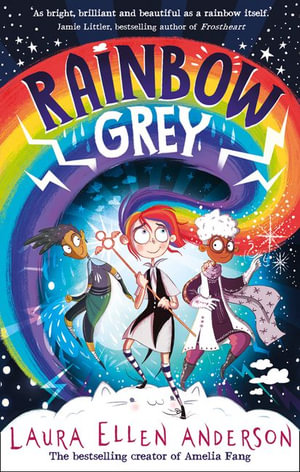
Ten-year-old Ray Grey lives in the magical Weatherlands, high in the sky in the City of Celestia and where the Earth's weather is created. She is surrounded by Weatherlings with astounding weather power at their fingertips The Sun Weatherlings look after the great Sunflower in the sky that provides light and warmth for humans, and there are Snow, Rain and Wind Weatherlings who use their magic to give Earth its weather.. . . but she doesn't have any such magic! However she longs to be just like her friends, Snowden Everfreeze who is the cleverest Show Weatherling in the Sky Academy, Droplett Dewbells who sploshes any one mean to her friends and have adventures like her hero Earth explorer La Blaze Delight.
Then, after a forbidden trip to Earth through when a map in an old book, Ray's life changes forever. She and her friends discover a crystal which unleashes a power that hasn't been seen in the Weatherlands for centuries and she is transformed from Ray Grey into Rainbow Grey! With the help of her best friends and her exploding cloud cat Nim, now all Ray has to do is master those powers, dig deep to find her inner strength so her true colours can shine so she can save the world from a mysterious, powerful enemy who also wants the powers...
Even though this book feels thick with its 304 pages and thus a little daunting, young readers need not be concerned because it is packed with illustrations and other design techniques that break up the text and make it accessible and manageable. Like Monster Hunting for Beginners, the story centres on an ordinary everyday character who could be any one of the readers and her friends who are the sorts of friends everyone wants, giving it an appeal to those who enjoy adventure stories, fantasy and the traditional good versus evil theme. Humour softens the anxious, nail-biting cliff-hangers so it becomes a great read-aloud and with the sequel, Eye of the Storm, due in March 2022, this is a series that will be perfect for a birthday or Christmas gift.
Themes Rainbows, Magic, Storms, Weather.
Barbara Braxton
Luna loves dance by Joseph Coelho and Fiona Lumbers
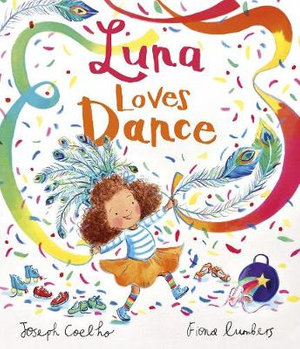
Luna loves to dance, she practises with her Dad, twirling around, while at Mum’s she loves to leap. When she dances, colours brighten and sound intensifies.
She practises with her class, repeating the words:
Double tap - spin Duck - dive Twirl - leap.
But when Lana comes to the last lines instead of twirling and leaping she trips and falls. She tries again, encouraged by all around her but the same thing happens and she does not pass the exam that morning.
She is distraught, she feels she cannot be a real dancer. But her parents tell her that to be a dancer she must practise. And without realising it, she does: she dances with her grandparents, at the theatre where her family goes to watch a musical, at the carnivals while at her cousin’s birthday party she is asked to dance and puts on a spectacular show, getting to the last line without falling. She is now a real dancer, and the world is full of colour and sounds once again.
Fiona Lumbers’ illustrations reflect the love and support of Luna’s whole family as each is drawn with humour and warm heartedness. They are bright and sunny, full of colour and interest, and children will delight picking out the vast array of detail. I loved the sunny endpapers showing the range of children at the dance school, and kids will particularly love the fold out page, reflecting the brightness of the carnival.
Coelho’s books hum with warmth and closeness, love and compassion. His previous books about Luna include, Luna loves art and Luna loves library day. Joseph Coelho lives in London and is a playwright, poet and performer.
The Usborne Book of the brain and how it works by Dr Betina Ip Illus. by Mia Nilsson
Usborne, 2021. ISBN: 9781474950589. (Age:6+)
The most important part of the human body is the brain but it is only in the last little while that technology has enabled scientists to examine it more closely and start to understand its complexities and connections and figure out how it works. Indeed, about 20 years ago there were huge shifts in the way we teach as new pedagogies emerged from this new understanding and "brain-based learning" was the buzzword of the times.
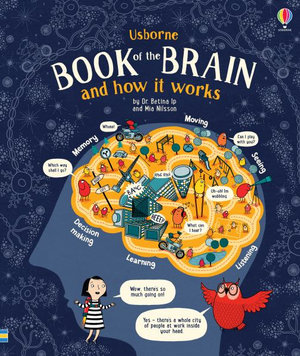
But for all that we, as teachers, were learning about the principles of learning, and the magic trees of the mind, books which clearly explained how the brain functions which were accessible by young learners have been few and far between. So this new publication which is essentially a conversation between a wise owl and a curious little girl fills a void.
Using speech bubbles, the owl takes the girl on a journey through her brain clearly explaining its parts, its functions, how we learn and how to keep it active and healthy offering a clear and concise explanation that is perfectly pitched for its target audience. From the senses to sleep, memories to making decisions, it provides an introduction to this fascinating topic and then this is supported by the selected online sites in the Quicklinks that accompany these sorts of Usborne publications.
An essential part of any investigation into how we learn by teachers and how our bodies work by students. At the very least, it will help both groups understand why each of us is unique and views the world that little bit differently.
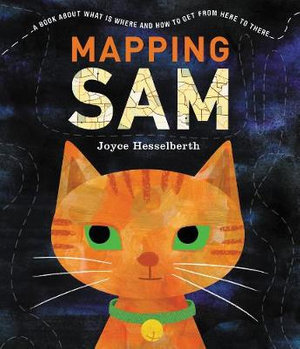
Each night after Sam the cat has made sure that the family are safely tucked in bed, she goes on a nighttime wander.
But rather than this being a tale of what she does and who she meets while she is out, this story is the impetus for exploring how maps are used to "tell us how to get from here to there" and "tell us what is where". It is a unique introduction to the purpose of information illustrations like maps, charts and diagrams and how they can be used so that a picture does indeed, tell 1000 words.
By using an inquisitive cat whose favourite place is atop what will be the highest building in the neighbourhood (shown through a birds-eye-view map) this is a clever story that engages the reader because they become invested in Sam's explorations rather than being confronted by dry explanations. As Sam follows her customary path, wandering farther and farther away from home, readers encounter different kinds of maps illuminating different points of view and the various spots Sam visits. Finally, when Sam reaches her favourite place and confirms that all is well, she heads back home, climbs onto a cosy bed, and falls asleep.
Thus the reader comes away with having enjoyed a story as well as new knowledge, knowledge that is consolidated by two pages of background information just to draw all the concepts together.
For those who think that maps are confined to using the sat nav or Google maps, this is an excellent introduction to the variation and purpose of maps and the importance of being able to read, interpret and perhaps even create our own. They are so much more than the stereotype Boy Scout activity!
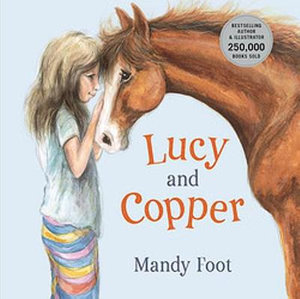
Farm-dwelling Lucy has been best friends with her pony Smudge since she was little. But both Smudge and Lucy are getting older and Lucy is too big to ride her anymore: her toes almost touch the ground and Smudge's feet clomp heavily under the weight. Pa has brought home a new horse for Lucy but she isn't interested. How could any horse take the place of her beloved Smudge? Copper is not the right colour, he is too skinny and bony... Her determined stance not to have anything to do with Copper turns to sadness when she is in bed that night. 'I miss riding Smudge', she says to her dad. Tears flow as she deals with her grief. 'But Lucy, maybe Copper needs you', says Dad. The next morning as day dawns, Lucy has a new, fresh outlook as she saddles up Copper and rides out with Smudge trotting happily next to them.
At no point does the text overtly tell the reader how Lucy feels; Mandy Foot beautifully portrays these emotions through her soft illustrations, Lucy's caring love for Smudge and short smatterings of dialogue. This touching story will resonate with many children who have to say goodbye to things or people that they have grown with over their childhood, particularly pets. It also subtly addresses themes of change, personal growth and emotional resilience. Having the father as main caregiver, who is gentle and nurturing and helps Lucy deal with her emotions is also a lovely touch. Mandy Foot is a stalwart illustrator whose depictions of animals are always stunning. Lucy and Copper is no exception.
Themes Horses, Change, Growing up.
Nicole Nelson
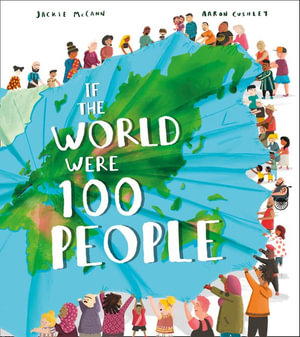
If the World Were 100 People by Jackie McCann. Illus. by Aaron Cushley
Red Shed, 2021. ISBN: 9780755503537. (Age:5+) Recommended.
Over time there have been a number of books that reduce the world's population to 100 people so that little ones can understand how things compare.
Imagining a number like 8 billion is tricky but reducing it to a village where 100 people live - each person representing around 80 million people in the real world and then exploring the similarities and differences through specific questions makes it easier to understand. Are they all grown-ups? Are there more males or females? How many have black hair or blue eyes? What languages do they speak? Who can read and write? How many have access to the internet or have enough food to eat? Does everyone have access to electricity or clean water?
Using double-page spreads, clever illustrations and graphic design elements, the global village is reduced to manageable proportions making it easier to see the things we have in common, and the things that make us different. There is also a challenge to consider the world in 2050 when they will be the decision-makers and how they can contribute to making the world more equitable.
But as well as the social and humanitarian aspects of the book, it is also an excellent way to talk about data collection, interpretation and presentation, offering the perfect pathway into learning about the various types of graphs, their purposes and formats. Students could also survey their class to see how it compares to the village by calculating the class number as a percentage of the 100 villagers, asking the questions and comparing the numbers. A purposeful and meaningful way to bring real life into their maths lessons.
A valuable addition to any teacher's toolbox and a fascinating examination for any child interested in their world and its statistics.
Themes Population, Social problems, Statistics, Mathematics.
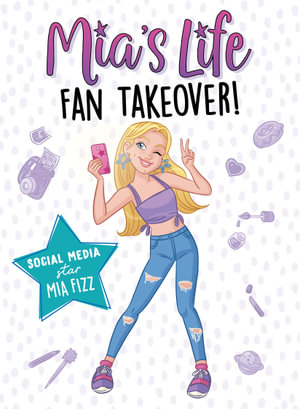
Fan Takeover is the first book in the new series Mia’s life, written by Mia Fizz. Based on the life of the author Mia Fizz, this novel takes you behind the scenes of a real-life YouTuber and social media sensation who has millions of followers. Early on in the story, you discover that even though she obviously has this really high profile, she is actually just an ordinary girl with ordinary problems. Her cheerful and bubbly personality emanates throughout the story; creating easy connections and relatability for the readers.
The novel begins with Mia vlogging her fans about makeup tips. She gets a text reminder that it is her younger sister, Sienna’s 9th birthday in a few days, and she hasn’t bought a present. Knowing that it will be a virtual experience with the whole family videoing for followers to see, she needs to think of a great gift that her sister will love, and her fans will rate too! While contemplating this, Sienna interrupts her thinking and throws a curve ball that she should change her channel up a bit to keep her fans enthused. Now she has two problems to deal with! Will Mia be able to work out a way to keep her viewers entertained and at the same time get her little sister a great birthday present? Or will things get a little crazy along the way?
This book is written in a way that is an easy read and relatable to preadolescents who are interested in using social media. The story deals with many important issues that can arise while growing up, with great opportunities for learning points and reflections. An enjoyable and entertaining read with relevant and relatable information about staying internet safe, being true to yourself and keeping strong family and friendship connections. Mia is sure to win over even more fans and increase her follower numbers with this novel!
Themes Internet safety, You-Tubing, Family, Friendship, Taking risks.