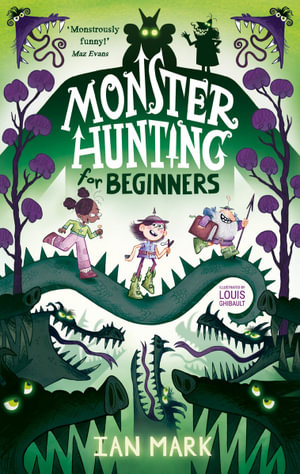
This magical book is about a boy (Jack) who is tricked into becoming a monster hunter. He has always wanted an adventure, and he has now been thrown into the deep end. To look at Jack you wouldn’t think he could make it as a monster hunter, what with being short, skinny and a kid who wears glasses and clumsy. He has believed in monsters all his life because his mum used to tell him stories about all the monsters that she encountered around the world.
With his father missing and his house destroyed, and an ogre lying dead in his yard, Jack doesn’t think he has anything to lose, or a choice – he was tricked after all! He finds himself heading off to Cornwall with Stoop, a 200-year-old monster hunter, where more ogres are causing chaos.
All he is equipped with is his catapult, and a magical book called Monster Hunting for Beginners, and Stoop of course. This is his chance to prove that he can do anything. But he wonders about this along the way. The problem gets bigger by the minute. He meets another monster hunter, Nancy, and together they face the adventures. The thought of finding his dad helps. He learns many things about ogres and monsters along the way, not always very pleasant! Jack always dreamed of seeing a dragon, but not believing it when he does.
Jack, Nancy and Stoop meet the ogre king, who has been woken up from his snooze of more than one hundred years’, and not very happy about it either! And the other ogres learn a few lessons themselves!
Does Jack find what he is looking for? Well, you will have to read the book for yourself! A great book I found hard to put down.
Themes Magic, Adventure.
Natalie Fisher
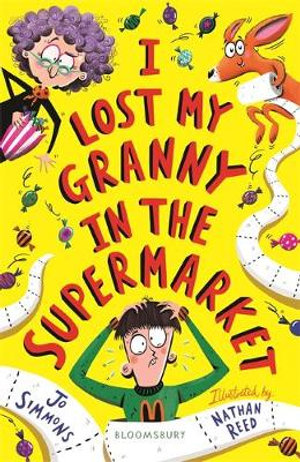
I lost my Granny in the supermarket by Jo Simmons. Illus. by Nathan Reed
I Lost My Granny in the Supermarket, written by Jo Simmons is a story that will keep you entertained until the very last page. This novel will appeal to readers who love humour and wild adventurous fun. Simmons creates a vivid text that enables the reader to easily visualise and sense every minute of crazy fun-filled drama and antics.
Harry is an easy going eleven-year-old boy who loves animals and dressing up in costumes. He desperately wants to own a puppy, but since his little indiscretions with past animals, his mum has made him have to earn his way to getting a puppy with ‘puppy points’. He can receive these by doing chores and clearly showing he is responsible. So, when extra puppy point come up for grabs, Harry is very keen to try to get them. All he needs to do is look after his Granny and take her to a few appointments before heading to a special awards night function. That surely can’t be too hard! Unfortunately, his Granny isn’t your average slow, quiet and easy-going old lady. Mini (Harry’s Granny) is full of adventure and outrageous fun, and she has little desire to attend the awards night. Harry sets off on what he believes will be an easy 50 puppy points day, but within minutes he realises that this day is not going to go at planned. Will Harry be able to get his Granny safely to the awards night and collect his 50 puppy points or will Mini create more havoc and mayhem than anyone could ever imagine? Whatever the outcome, Harry is in for a day that he will never forget!
Jo Simmons has written many entertaining novels, and this one won’t disappoint. Combined with great illustrations by Nathan Reed, this book will engage readers with its witty humour and terrific clear imagery. I lost my Granny in the Supermarket would also make a great read aloud for a class to enjoy. This book is a definite winner with twists, turns and tales!
Themes Relationships, Problem solving, Rights and Responsibilities.
Michelle O'Connell
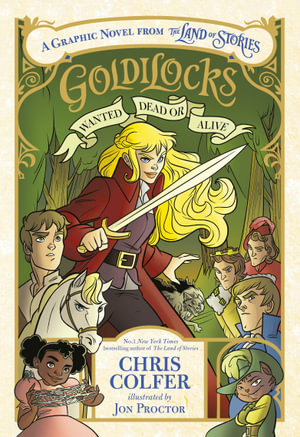
Goldilocks: Wanted dead or alive by Chris Colfer
Hachette, 2021. ISBN: 9781510202504. (Age:7+)
Goldilocks in this graphic novel is a tough, outlaw living in the western part of the fairy tale world, the Dwarf Forests, where criminals and outcasts can live freely. The reader learns this in a page of dense text with a simple map at the start of the book. This is followed by ‘Prologue - The Brothers Charming” with a convoluted discussion between the 3 brothers about fulfilling their father’s ambition to rule all the kingdoms of their world by driving out the people of the Dwarf Forests and claiming the territory. They trick their wives into giving them the power to invade the territory. Chapter 1 finds four well-armed men hunting the legendary Goldilocks in the Dwarf Forests, they are defeated easily by Goldilocks and her horse with lots of violent action and supernatural power. Chapter 4, distinguished by a black background, takes us back twelve years to Goldilocks’ back story which involves porridge and bears, betrayal and finding help where she least expects it. Back to the present day, Goldilocks is asked to help save the Dwarf Forests and she, with a rag tag band of outcasts including wolves, witches and other fairy tale characters set out to defeat the armies of the Charming brothers. The story is fast paced and a quick read which will be popular with readers already familiar with The Land of Stories series by this author but the characters here seemed one dimensional. The queens appear weak and easily influenced and their change of heart at the end was unconvincing. Their images, and that of others, owe a lot to Disney animations and the limited range of expressions on faces and mostly fixed point of view failed to add much to the story. A more exciting graphic reimagining of a classic story in a similar style would be Wonder Woman Tempest Tossed by Laurie Halse Anderson.
Themes fantasy, adventure.
Sue Speck
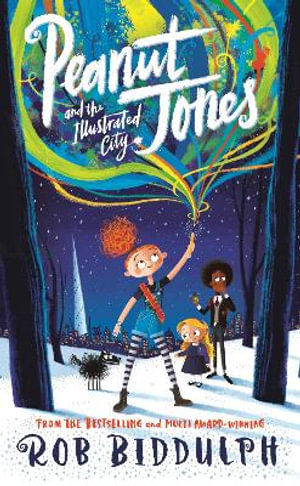
Peanut Jones and the illustrated city by Rob Biddulph
Peanut Jones and the Illustrated City by Rob Biddulph is the first novel in what will undoubtedly be a fabulous new series. This brand-new adventure is one like no other, with characters that are endearing and relatable. The storyline is full of adventure, suspense and creativity with an underlying thread of determination, teamwork and grit.
Peanut Jones is a twelve-year-old girl who loves art and creativity, just like her father. Life was good and she was happy at Melody High. But after her father mysteriously left the family a year ago with a postcard message, things began to change. Peanut strongly believes that something has happened to him, but no one will listen to her. Her whole family life has never been the same since he left, her brother doesn’t really talk much now, and her mother has sent her to a new school that she hates. She also has a new school study buddy named Rockwell who desperately wants to be her friend, but she is not interested. Life is miserable!
When Peanut discovers a magical pencil hidden in a special box made by her father, things in Peanut’s life dramatically change. This pencil is not your average pencil that draws and erases! After sharing her findings with Rockwell, soon they are on an adventure into another world, with her little sister Little-Bit. Peanut believes she can potentially find her father and bring him back to the family, so that everything will be right again. As Peanut, Rockwell and Little-Bit begin their adventure, they are entering into a world of the unknown, where life is different, rules have changed, and things are not as they seem. Can Peanut and her friends conquer the evil, and bring back creativity and imagination to a world that is hanging by a thread of colour?
Rob Biddulph has once again created a highly engaging and inspiring novel. This story will appeal to both boys and girls who enjoy adventure, suspense and fun. Biddulph’s illustrations fill pages with further engagement and coolness. A truly talented author and illustrator, he has created a novel that will be enjoyed by many!
Themes Adventure, Problem solving, Creativity, Art.
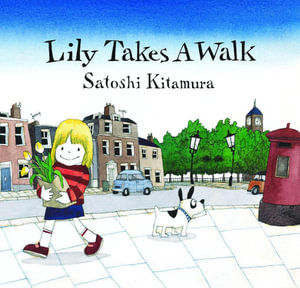
Originally published in 1987, this tale of a girl and her dog walking home will bring explosions of laughter from readers as they see the walk from each perspective. Lily has no qualms walking home though the streets, she feels perfectly safe, knowing many of the signposts along the street, recognising places and street furniture that she knows. But Nicky the dog, is not so sure: he sees monsters at every corner.
Lily and Nicky walk for hours, but when the sun begins to go down, she heads for home, confident because Nicky is with her. But from the start the reader is aware that the little dog is scared because he sees things that Lily does not see. On the hill as she strides confidently onward he sees a snake in the tree, on the footpahth, a bear seems to be lounging in the branches, at the market stall where Lily buys some goods for her mother, Nicky sees a monster come out of the post box. As it becomes darker, streets and everything Nicky sees turns into a monstrous shape. Even the light poles have eyes, a monster watches them from the canal, and more fall out of the rubbish bins. Nicky is so pleased to be home, and listens while Lily tells her parents all the things she has seen on her walk, while Nicky cannot tell of the awful things he saw. At night Lily goes to bed happy and content after her long walkout but Nicky is wide awake, still thinking of all the fearful things he saw.
A wonderful read aloud, this book will delight younger readers as they call out the monsters that Nicky sees on the walk, noting that Lily sees something else entirely. A wonderful discussion starter, the book encourages children to be more aware of their surroundings and not to be frightened by shadows.
Publishing distinctive, amusing and quirky books is the aim of Scallywag Press setup in London in 2018, and this fits their aim easily.
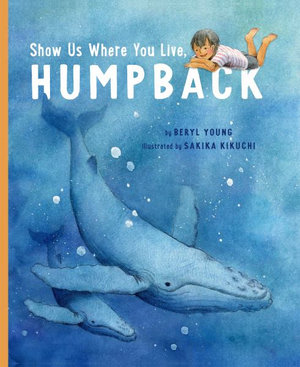
Vast expanses of different shades of blue urged me to open this book detailing the life of a humpback whale and her calf as they trawl the ocean. The calf hugs close to its mother, sheltering under her flipper, the mother alert to any possibility of danger. As the pair glides through the water looking for food, they swim and dive together, splash, breach the surface and sleep, their behaviour paralleling that of a mother and child on land.
The bond is warm and loving, reflecting that of the human child and her mother, holding hands as they run along the beach, play with the water, eat cake and hug each other close.
Each page shows a different example of the bond between mother and child. A human mother and child stand hand in hand on the hilltop overlooking a sheltered bay where the whale and her calf live while the calf is newborn. The calf hugs close to mum as she shelters the calf with her flippers, the animal as big as a school bus. The calf drinks milk from mum, growing bigger and stronger every day, just as the child is growing taller to reach the tree where her hat has become lodged. The whale and her calf play in the water splashing and beating, hitting the water with loud beats of their flippers. The child too plays in the water, splashing and the whale and her calf blow water from their blowholes, sending a plume of bubbling water into the sky, just as the child blows bubbles. The whale sings and the calf sleeps close under her flipper. And the mother and child snuggle together in bed.
Each new piece of information about the whale and her calf are duplicated by the mother and her child, showing the bond between mothers and their offspring that are replicated across the whole animal world.
The text gives snippets of information about the Humpback whale within the context of a story, adding new words to the vocabulary of the reader, reiterating the correct terms to use when talking about whales. Young children will assimilate these new words with ease.
Two pages of information support the story at the end of the book.
A beautiful offering, stunningly illustrated, presenting non fiction to children in an evocative way.
Themes Whales, Ocean, Mother and child, Parenthood.
What kid would not read this book with an opening line “I AM SO ANGRY I THINK MY BUM MIGHT FALL OFF”.
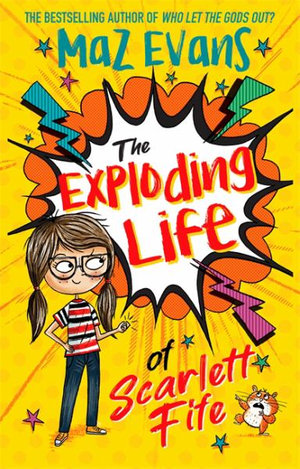
The Exploding Life of Scarlett Fife is an awesome, hilarious read, exploding with humour and very, very BIG FEELINGS. Scarlett Fife will quickly become a friend of all readers. If you’re a fan of Roald Dahl’s Matilda you will absolutely become a fan of Scarlett Fife.
Maz Evans the author of some of the funniest books I’ve read like Who Let The God’s Out? series has managed to bring us a modern day Matilda called Scarlett. Scarlett uses her own feelings of anger to affect things. She has no control over her feelings and mostly explodes things up instead of controlling them.
Scarlett gets into big trouble after her BIG FEELINGS episode at her auntie’s engagement when she makes a hamster run into the vicar’s trousers. You can just picture what happens. She is told by her mum that if she loses her temper one more time she will miss out her trip to Mega Awesome Sicky Fun World which is the best theme park on the planet.
From here, Scarlett tries very hard to control her temper and discovers that every time she bottles up her feelings inside of her things start to explode. Like, really explode. It’s hard for her to control her feelings especially when there is a bully around and family thing issues.
I found when reading we encounter real problems and frustrations that children experience. Both boys and girls will relate to Scarlett. The book is very diverse and readers will probably find situations they have experienced. Characters are great, my favourite was Scarlett and her friend Masie. Also, Chris Jevon's illustrations throughout the book were awesome to look at.
If you want a good laugh I highly recommend The Exploding Life of Scarlett Fife. Just remember that you won’t want to put it down.
Themes Emotions, Anger.
Maria Komninos
The upper world by Femi Fadugba
Penguin, 2021. ISBN: 9780241505618. (Age:13+)
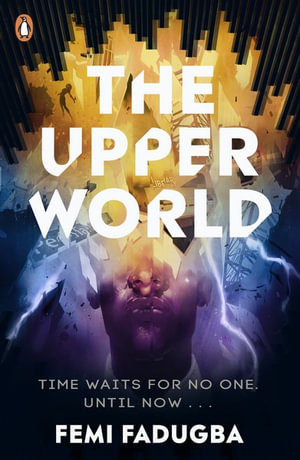
Esso lives in a world where he's running out of time - then one day he makes a choice and learns he can see the future. A future that haunts him... Fifteen years later, teenager Rhia is lost and alone, wanting answers. On the cusp of signing with the Dons football club, with her grades holding her back, her foster parents arrange for a tutor. But this tutor has an obsession with physics and there might be more to him than meets the eye. Things are changing - luckily Rhia has her best friend and foster sister Olivia by her side to help her decipher the changes. With gang wars raging throughout the years, Esso and Rhia's fates collide but it's a race against time...
This mind bending sci-fi jumps between Esso and Rhia's perspectives, 15 years apart - the now and the 15 years later. With plenty of science and maths, as well as intense drama, this YA sci-fi has mixed theoretical with real life seamlessly. The author, Femi Fadugba, has written such an interesting story with two realistic protagonists - living life in hard times, with hardships and pain impacting every aspect of their lives. With a variety of supporting characters: family, friends, enemies; this time twist of a story looks at the impact of choices - even how not making a choice can be a choice. Fadugba has given readers much to think about, not only in science fiction but also human relationships. Good for fans of time travel theory and science fiction.
Themes Science Fiction, Relationships, Time Travel, Choice, Consequences, Gangs.
Melanie Pages
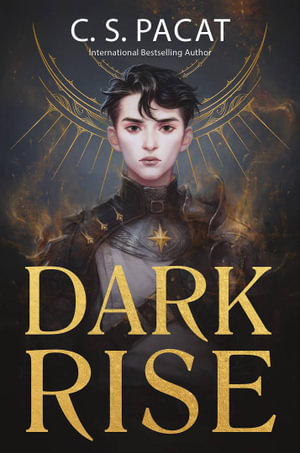
Dark rise by C.S. Pacat
Allen & Unwin, 2021. ISBN: 9781760875749. (Age:Young Adult) Recommended.
Bestselling Australian author C.S. Pacat is back with a new young adult fantasy series. Dark Rise is the first in a proposed trilogy set in an alternate early nineteenth century London. It follows Will, a sixteen-year-old dock boy who is on the run after the murder of his mother. Will does not know why she was killed or why the murderers are still pursuing him, he only knows that they are getting closer and time is running out. He is guided towards a mysterious organisation named the Stewards and discovers that he may be key to a brewing war of good versus evil.
Pacat made her name with the highly acclaimed yet controversial – and extremely sexually explicit – Captive Prince series. Dark Rise is a toned-down iteration of Pacat’s writing stye, more suitable for an older young adult audience. However, the characteristics that won Pacat so many fans with her previous work – clever dialogue, fraught and forbidden relationships and excellent world building – are also present in this novel.
While Dark Rise is most definitely not for the faint-hearted, or for younger audiences, Pacat has turned her hand very successfully to young adult fiction. Dark Rise is sure to win her a legion of new fans, eager for the release of the next in the series.
Themes Fantasy, Historical, Romance, London, Magic, Good vs Evil, War, Violence, LGBTQIA+.
Rose Tabeni
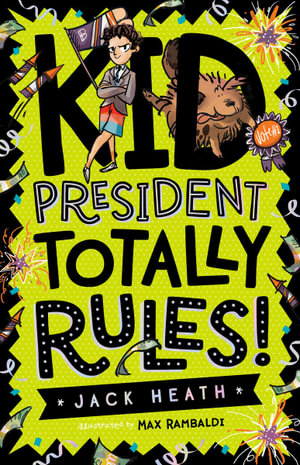
Kid President totally rules! by Jack Heath. Illus. by Max Rambaldi
Kid President Totally Rules!, written by Jack Heath is a story with humour and wit that will keep the reader wondering what could possibly happen next. If you enjoy reading Liz Pichon and Andy Griffith you are sure to love this story too.
Jaxxon Mauriz is not your average students by any stretch of the imagination and he certainly is the last person you would nominate as president of anything. He is forgetful, lacks focus and is all about finding the easy way to do something and having fun. However, when he is suddenly thrown into presidency of his country, he moves into action fast. From creating skate parks to free ice cream, redesigning the presidency residence as a go cart track to creating a laser skirmish fortress, everything he wants he can have and all his dreams have come true! Or have they?
When Jaxxon learns his new role has important responsibilities and there are some awful things happening that are damaging the world, he decides to take action. He is beginning to really enjoy his new role and embrace the new challenges as they arise. Even when world peace is in jeopardy, he manages to cleverly and creatively manoeuvre to diffuse the situation. Jaxxon begins to change the world for the better, much to the disgust of a young trillionaire who has been controlling the country and his own Vice President who wishes to gain power. He is in for the ride of his life and will need to use all his kid skills to outwit these two. Will Jaxxon be able to survive his time in power and right the wrongs that have already occurred or will others’ greed and evil triumph!
This is the second stand- alone comedy novel by Jack Heath. Again, he has created highly entertaining characters and intertwined many layers of humour. Combined with terrific illustrations by Max Rambaldi, readers will be thoroughly engaged with the storyline and adventures. This is a story that will keep readers eager to find out what will happen next and keep them amused and interested until the very end.
Themes Problem solving, Democracy, Rights and Responsibilities.
Michelle O'Connell
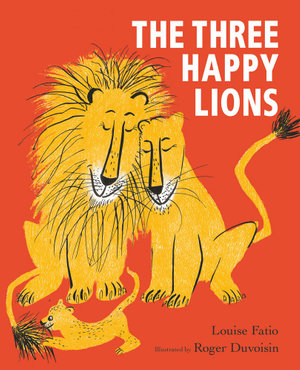
The three happy lions by Louise Fatio. Illus. by Roger Duvoisin
A new edition of a classic tale, the last in a series of three, is all about family dynamics, as the parents wonder what their child will be when he leaves home.
With its mid century illustrations, full of movement, colour and humour covering each page, the wit of the text will engage readers as they follow the tale of the baby lion and the careers he attempts. Called Francois after the zoo keeper’s son, at first he becomes a rich lady’s pet, but in growing to be a big strong animal, can no longer jump onto her bed as he has in the past. So he is given to a circus, where despite the efforts of the ringmaster, his nature is not one that can frighten the circus crowd.
As a result he comes back to the zoo, where his parents welcome him warmly. He spies Francois doing his work, that of gardening at the zoo, and decides that this is the job for him. So the two Francois plant, mulch, nurture and weed all the gardens at the zoo. And are watched by happy, proud parents.
A wonderfully warm theme of families and their concerns, the parents go through a list of jobs their offspring could do, but many of them are simply not for him, while the two careers he does take up proving incompatible with his nature and size, so it is back to the zoo to find a niche.
Children will love thinking about what they might like to do in the future and the pathways open to them, thinking about the skills they have and how they can be useful. They will also see a happy family unit with needs and concerns, contentments and happiness just like their own families, following the path of a young lion working out what is best for him.
Scallywag Press was founded in 2018 with the purpose of bringing entertaining and memorable books to a worldwide audience.
They publish distinctive, amusing and quirky art, publishing work by talented newcomers as well as some from the past.
Three happy lions is a joy to hold, read and savour. And I loved the French background and sprinkle of French phrases.
Themes Careers, Lions, Zoos, Circus, Gardening, France, French language.
Fran Knight
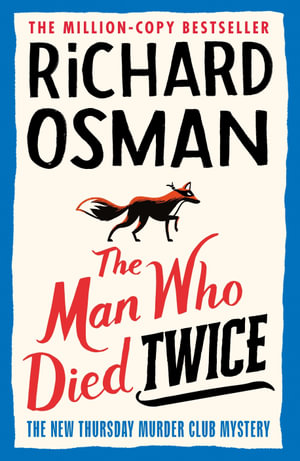
The man who died twice by Richard Osman
The Thursday Murder Club Book 2. Penguin, 2021. ISBN: 9780241425435. (Age:Adult - Senior Secondary)
Those who enjoyed The Thursday Murder Club, as I did, will welcome The man who died twice. Elizabeth’s old colleague and ex-husband turns up at the retirement home living in a safe house and enlists her aid to stay hidden from a mobster, whose diamonds have been stolen. Elizabeth of course enlists the help of the old gang, Joyce, Ibrahim, and Ron, and together they face a killer and must solve a murder.
Readers familiar with the first book will be happy to see more of these retired sleuths. Elizabeth, exceptionally canny and intelligent, leads the group, while Joyce narrates what is happening, and this time, comes into her own, making some remarkable insights. Ibrahim, who is mugged, struggles to leave his home; Ron is still a risk taker and even involves his grandson Kendrick, while Bogden shines. Chris, Donna and Patrice also have a role to play.
The writing is witty and amusing and Joyce’s entries will have readers laughing out loud, while the action moves along at a swift pace, with more violence than in the first book. I was kept guessing about what the Thursday Murder Club participants would come up with next and just who they could trust. Their constant friendship and regard for each other stood out while they all used their various skills to solve the mystery. Could they ensure that Ibrahim’s mugger went to gaol, and would Ibrahim ever leave his home again? How could they catch the murderer and get rid of the mobsters? And what happens to the diamonds?
An easy to read, humorous story that is sure to be as popular as the first in the series, and fans will be clamouring for more to be written.
Themes Murder, Theft, Secret Service.
Pat Pledger
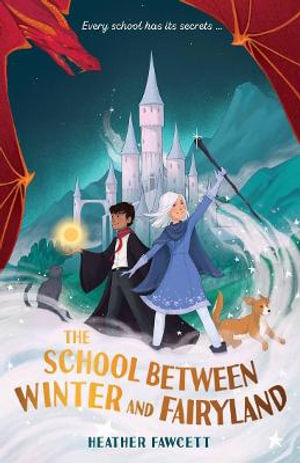
The school between winter and fairyland by Heather Fawcett
Allen & Unwin, 2021. ISBN: 9781760526542. (Age:11-16) Highly recommended.
Autumn is 12 years old and lives as a beastkeeper for the neighbouring school for trainee magicians. Sadly, her life has been ripped apart since her twin brother, Winter, went missing the year before. Autumn holds out hope that he will reappear, even though most around her assume he is dead, the victim of the Hollow Dragon. Into her world of sadness arrives Cai Morrigan, a young student magician who has been prophesied to save the neighbouring forest and the magician’s world… and defeat the Hollow Dragon, and maybe even restore Winter to his sister. Cai becomes a true friend and Autumn’s determination and fierce attitude links with his gentle nature to reveal truth and solve the magical mystery of his life. Autumn’s beast-husbandry skills are not in the same echelon as Cai’s star-wielding magical skills, but they grow to depend on each other in their quest to find and release Winter and to solve the prophecy that rules like a cloud over Cai’s life.
This is a fantasy saga that is full of incredible monsters and magical powers and it is written with a dusting of humour, intrigue and the power of family and friendship. For lovers of fantasy this will be another enigmatic escape. It is written well, with monsters and magic that do not dominate but have their own ‘charm’. It is the interpersonal drama between the young protagonists that is the strength of the story, with friendship across class lines explored. This is a powerful fantasy and could be recommended to readers aged 11-16 who have enjoyed the Harry Potter and Morrigan Crow series.
Themes Fantasy, Magic, Friendship, Dragons.
Carolyn Hull
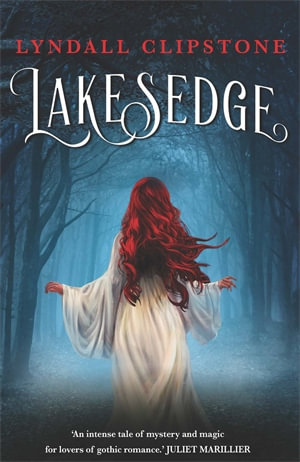
Lakesedge by Lyndall Clipstone
Pan Macmillan Australia, 2021. ISBN: 9781760983031. (Age:Young Adult) Recommended.
Lakesedge is the story of Violeta and Arien Graceling, a brother and sister who have clung to each other through a lifetime of uncertainty, loss and pain. Found abandoned in the woods as young children, they are raised by an adoptive mother who quickly turns abusive once she learns of Arien’s strange and dark abilities; abilities that he cannot control.
This darkness has been a secret shame binding the family together for years until it is discovered by Lord Rowan Sylvanan, a man with his own violent and shadowed history. Whisked away to Rowan’s manor, Violeta fights for Arien’s safety and her own growing feelings for the mysterious lord.
Lakesedge is a dark fantasy that ticks all of the Gothic boxes: isolated location, young and vulnerable heroine, recalcitrant hero with a tragic past and a mysterious evil force which threatens to keep them apart. It is authored by debut young adult writer Lyndall Clipstone, a former youth librarian who lives in the Barossa Ranges of South Australia. While at times Clipstone pushes the Gothic stereotypes just a tad too far – from atmospheric to histrionic – Lakesedge is an enjoyable monster mystery with a good dash of romance thrown in. It is recommended for young adult readers.
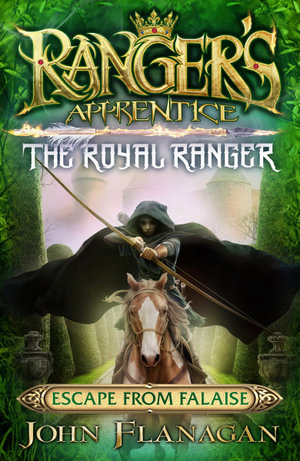
Ranger's Apprentice. The Royal Ranger 5. Random House, 2021. ISBN: 9781760890476. (Age:11-16) Highly recommended.
John Flanagan is an amazing author, and his Ranger’s Apprentice and Brotherband series are loved universally by young readers. Escape from Falaise is the next book in the off-shoot series, The Royal Ranger, and it again has action, drama and conflict as the Royal Rangers, or more particularly Will and his young apprentice Maddie must escape capture and rescue a young Prince from the Baron Lassigny. They use their amazing Ranger skills and expert thinking skills to outwit the Baron despite all opposition.
The start of this book launches into the drama with little or no pre-amble or recap, so it is assumed that readers will have come to Book 5 after reading the other books in the series. You could never say the story is dull. Conflict and commotion, action and arrows, wit and wisdom and overcoming the witless and woeful opponents of the young Araluen Rangers happens at great speed. This is a rollicking adventure and will be devoured by readers of the Ranger’s Apprentice series. As an adult reader, I was also impressed at the way that Flanagan maintains the plot progression and makes a story that even adults can enjoy, even though these books are aimed at younger readers. And although young male readers have always loved this series, Maddie the young Ranger’s apprentice connects this series to a female audience too.