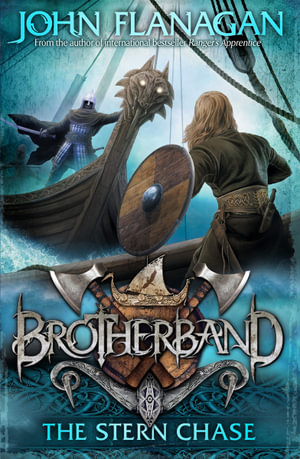
In times of difficulty the Skandian Brotherband work together like a well-oiled machine. They are accomplished and capable sailors, but also formidable adversaries in combat. When Erak’s Wolfship is stolen in a daring raid, and then gets used in piracy attacks against Skandian allies, the small band of sailors under the leadership of Hal, the master sailor and tactician, must use all of their skills to put a stop to the pirates. Will the small vessel, The Heron, be able to match the larger vessel in open waters? Can the sailors defeat their opponents despite being outnumbered? Can Hal come up with a plan to use his vessel to its full advantage? And can they restore the Skandian reputation to the wider world?
Set in a fictitious world, but reminiscent of the Vikings, this is book 9 in the Brotherband stories, and yet again it is a book to recommend to those who love action and adventure. With sailing terminology and tactics throughout, it is also a series for those who are inspired by the ocean and traditional nautical skills. But as for all of John Flanagan’s books, it is a delight as the band of ‘brothers’ work together and overcome difficulties in conflict settings. Both male and female readers will love this book, but because there is swashbuckling violence it will appeal to those who want more action in the stories they read, but there is also a gentle and sometimes amusing tenderness in the relationships between the odd collection of sailors. I have loved every story from this series, and Flanagan will yet again cause readers to be delighted.
Themes Adventure, Piracy, Sailing, Friendship.
Carolyn Hull
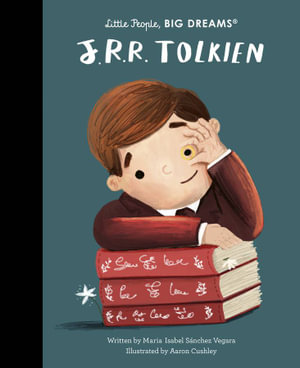
J. R. R. Tolkien by Maria Isabel and Sanchez Vegara
Little People, Big Dreams. Frances Lincoln Children's, 2022. ISBN: 9780711257856. (Age:4 - 7)
Ever since Sir Peter Jackson decided to turn the remarkable adventures of the fantastic people of Middle Earth into the most highly successful movie franchise, ordinary people have known the name of the original creator of The Hobbit and The Lord of the Rings trilogy. Even though John Ronald Reuel Tolkien wrote other stories in his lifetime, the creation of a whole new world united in either the quest for or the safety of the 'One Ring to rule them all, One Ring to find them, One Ring to bring them all, and in the darkness bind them' , remains his seminal work.
So for his story to be told in this popular series, recommended every time someone asks for biographies for young readers, will be a welcome addition.
John experienced lots of change in his life from a young age. Moving from South Africa to a big city in England, he longed for the nature he grew up around. After the death of both of his parents, John found comfort in telling stories and building imaginary worlds with his friends. And he continued to tell stories for the rest of his life, creating epic tales of hobbits, dwarves, elves and wizards as J. R. R. Tolkien. Featuring stylish and quirky illustrations and extra facts at the back, including a biographical timeline with historical photos and a detailed profile of the writer's life, it is one that will be sought after as young readers clamour to know more about the man who is the epitome of this year's CBCA Book week theme, Dreaming with eyes open....
Themes Biographies.
Barbara Braxton
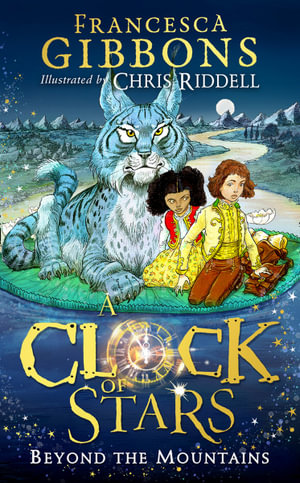
A clock of stars: Beyond the mountains by Francesca Gibbons
This is the second book in the Clock of Stars trilogy, and I haven’t read the first book which I feel put me at a disadvantage with some of the story, however I really enjoyed this book even though there were points where I knew that I was missing key information.
In Beyond the Mountains Imogen and Marie are in their world after returning from Yaroslav but they are struggling to get back to normal, Imogen is in therapy as she keeps insisting that she has had an unbelievable adventure while visiting a fantastical world, frustrated at not being believed and struggling with the addition of Mark, mum’s boyfriend she decides to take matters into her own hands and return to Yaroslav with Marie, except this time they also drag Mark along for the journey.
When they arrive, they find a whole new world, Anneshka is no longer queen and is very unhappy about it and Miro has taken the throne and is hating it. After hearing that Marie might be the key to Anneshka becoming the Queen of the Greatest Kingdom, she seizes her and heads over the mountains with Imogen and Miro in pursuit. What they find will change everything in ways they could never have imagined.
This is an enjoyable book that is enhanced by Chris Riddell’s illustrations that perfectly capture the mode and adventure of the story, although I would recommend that it is read after the first book so that some of the more subtle storylines make sense. I really appreciated how the author discusses Imogen’s mental health issues without ever laboring the point. The inclusion of therapy, ‘worry creatures’ and thoughts and feelings that Imogen struggles to give voice to really makes this book a great one to share with teenagers and those who might be stuck in feeling there is something wrong with them. The story is not a joyful one and even tends to lean a bit into the horror genre at times however as events unfold both good and bad the reader will want to keep turning pages to find out what happens. The story does end with the reader expecting to return to Yaroslav and Imogen and Marie’s story. This is a brilliant story and one that I highly recommend especially to readers who are fans of Narnia.
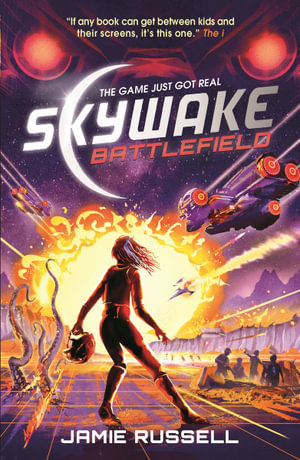
Jamie Russell's Skywake Battlefield follows hard on the heels of Skywake Invasion and readers will be sucked into the vortex of tense action packed futuristic, sci-fi adventure as surely as our gaming team protagonists (the Ghost Reapers) themselves. With no reduction of intensity, Casey Henderson and her team of Skywake gamers find themselves thrown into the middle of a frightening battle after their abduction and delivery to the planet Hosin. The battle that they and other top-level gamers from Earth have been thrown into is between the brutal alien Red Eyes (the Arcturians) and the Bactu (The squids). The Arcturians have developed mindcontrol devices that have caused the rest of the human gamers to attack Bactu defences. Casey and her team must use their skill and complementary abilities to rescue themselves and ultimately the planet Hosin and the inhabitants- the gentle, ancient and wise Bacturians.
A host of futuristic weapons and systems of destruction are deployed: fighting is brutal. Casey has to develop leadership skills based on the ability to make the right choice in ultra-difficult split-second commando-style situations. Skywake Battlefield, as second book in the series, further develops the depiction of Casey as a leader who is growing towards her full possibilities. Skilfully, Russell circles back to Casey's father who was a war hero, killed in action as he peformed the job that he was trained to do...disarming mines in Afghanistan. Casey's father taught her about Flow...the ability to be in the moment when needed. When faced with terrifying moments, Casey learns to develop flow. Gradually her powers increase. She is backed by her team using their skills including hacking enemy sci-fi military equipment and infrastructure. Trapped on Hosin, they discover an ex-soldier from Earth who was captured many years ago and left by his commander and battalion. Gradually the purpose behind the whole inter-galactic battle emerges. The evil Arcturians are searching for the ancient Bacturian artefact called the psionic array which will enable them to have total control over the universe. Elements of the source were buried long ago when they built the ancient structures on earth eg. the pyramids and the statues on Easter Island- but the key is somewhere else on Earth...
Casey and her team must fight not only to save Hosin; the battle grows to saving the whole universe. Harsh choices have to be made where potential losses have to be weighed against gains. Casey learns from Private Ross and Lieutenant Dreyfus, real human soldiers, about battle and the choices that have to be made - harsh decisions that only true leaders can and must take. Casey has to face betrayal, the oily grooming of her brother by her nemesis Xander and the power of steely decision making. She has to discover the flow that a leader must acquire in order to lead in a world of combat and the dire consequences of weakness and indecision.
How dire her decisions will be, how hard the choices she will be forced to make remain to be seen in the next story which the reader is promised with the TO BE CONTINUED at the end of Skywake Battlefield.
Jamie Russell is a screenwriter as well as an author. The vividness of the visuals of the action scenes in both Skywake Invasion and Skywake Battlefield lend themselves to the screen just as surely as Harry Potter and the Philosopher's Stone was very quickly adapted to screen. In acknowledgements in the endpapers, Russell thanks everyone who has picked up a copy of his books for their children and grandchildren. Anyone who does should be thanked. These books are not only electrifying - at a deeper level they deliver a very solid moral message re war and general decision making for young people to think about.
Recommended for those who love sci-fi and gaming and those who haven't discovered it yet!
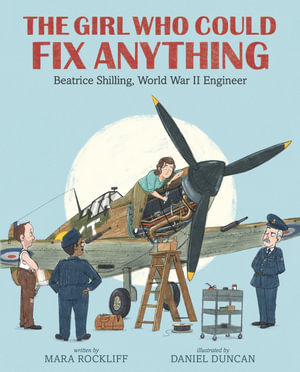
The girl who could fix anything: Beatrice Shilling, World War II engineer by Mara Rockliff. Illus. by Daniel Duncan
Walker Books, 2022. ISBN: 9781406399004.
A century ago, as Britain emerged from the horrors of World War I, Beatrice Shilling wasn't quite like other children. Instead of spending any pocket money on sweets, she bought tools. She could make anything. She could fix anything. And when she took a thing apart, she put it back together better than before. When Beatrice left home to study engineering, she knew that as a girl she wouldn't be quite like the other engineers - and she wasn't. She was better. Still, it took hard work and perseverance to persuade the Royal Aircraft Establishment to give her a chance. But when World War II broke out and British fighter pilots took to the skies in a desperate struggle for survival against Hitler's bombers, it was clearly time for new ideas. Could Beatrice solve an engine puzzle and help Britain win the war?
This is the intriguing story of a remarkable woman whose dismissal of other's opinions about what women should/could do, and whose ingenuity, persistence, and way with a wrench (or spanner) made her quite unlike anyone else, adding to the growing list of remarkable women whose ground-breaking stories are only just being told. For even though she changed the course of the war and was awarded an OBE, she retired 20 years later never having held a top post in the Royal Aircraft Establishment because even then in 1969, those jobs were only awarded to men. Shilling is another woman to introduce students to when they are looking for heroes to investigate and model, and because this has a clear explanation of the problem with the Hurricanes and Spitfires and how it was solved, it will appeal to those with an interest in engineering and mechanics as well.
An extended biography and selected resources for further exploration round out this amazing story.
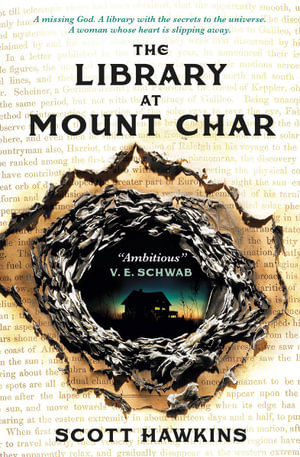
The Library at Mount Char is a difficult book to review. For one thing, it encompasses multiple genres. It is an urban fantasy horror novel with strong elements of science fiction. For another, it is violent and terrifying while also being darkly and confusingly humorous.
The Library at Mount Char is also a difficult book to read. From the beginning, the reader is plunged into a story that seems to have started before the novel began. We meet the protagonist, Carolyn, walking down a deserted country road covered in blood. It is casually mentioned that the blood belongs to a detective Carolyn has recently killed but the audience does not know how, when, or most importantly, why. And if you think Carolyn is going to fill you in anytime soon, you can think again.
What follows is a slow-building nightmare of a novel where the reader must work to put together the scraps of information and clues that the author Scott Hawkins has left scattered throughout. The book seems both fragmented and tightly plotted; a contradiction that only makes sense once you are well into the novel. Through a series of horrifying flashbacks, the reader slowly pieces together what has happened in the past to drive Carolyn towards her bloody and bizarre present.
In a world that is both drastically different and eerily similar to our own, Carolyn and her siblings are on mission to find their missing father. That she has eleven siblings who are not related to her, her father kidnapped them all when they were children and that this surrogate father might just be God are just three of the details that make up Carolyn’s existence. Repressed and brutalised since her childhood, those around her think her cowed, compliant and complicit. But Carolyn has carried something within her for years, a burning hot core of rage. And now, Carolyn is ready to take her revenge.
The Library at Mount Char is a reading experience like no other but readers must be well aware of the adult themes and high levels of violence in the novel before deciding to read it. For those who make it through however, the payoff is well worth it.
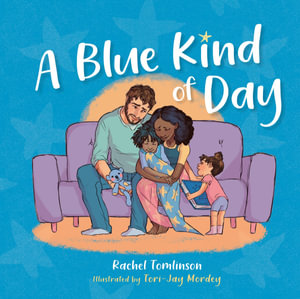
A Blue Kind of Day is a thoughtfully written and beautifully illustrated story about Coen, a young child who is having a day where he feels out of sorts. Author Rachel Tomlinson is a registered psychologist, and she has provided a simple yet powerful story that will resonate with parents, carers and teachers and provide support when dealing with unexplained feelings of despair in young children.
Coen is unable to articulate his feelings and chooses to stay wrapped up in his own world. 'Coen felt like a lost kite: loose in the breeze with feelings that tangled like string. He couldn’t find the words to describe why everything felt so wrong, so instead he tucked safely into himself like a turtle.'
His parents and sister Junie, who care deeply about him and his intense feelings, try very hard to engage with him and cheer him up. He does not respond and turns away from them. Finally, the family just quietly cuddles close to Coen until he reaches out to them of his own accord.
The stunning illustrations by Tori-Jay Mordey reflect a diverse family and truly enhance the text. In the final pages of the book, the author has provided further information about children and their feelings, examples of depressive symptoms to look for and how carers can help. A very valuable and important resource for home, schools and public libraries.
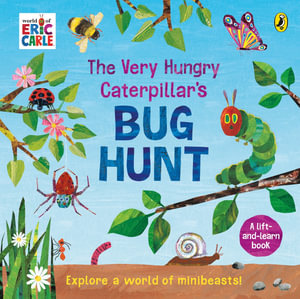
Eric Carle died in 2021, and The World of Eric Carle series is being published by Penguin. His The very hungry caterpillar was first published in 1969 and has been a favourite story, repeatedly published ever since. In this new book, the caterpillar takes the reader on a hunt for bugs in their garden. A lift the flap board book, the book will be a favourite as young children follow the caterpillar on its journey. Four double pages ask the reader to look up, look closely, look under and look inside in their search for bugs, while the last page reprises all the bugs seen in the pervious pages and shows young readers how all can care for the insect world. The cover shows a range of insects to be found inside the book and will support observation of what is on each page, encouraging the readers to observe and talk about what they see.
Brightly coloured illustrations recall the talent of this wonderful author illustrator and will lead younger readers to his other books, certainly The very hungry caterpillar amongst the seventy he wrote and illustrated.
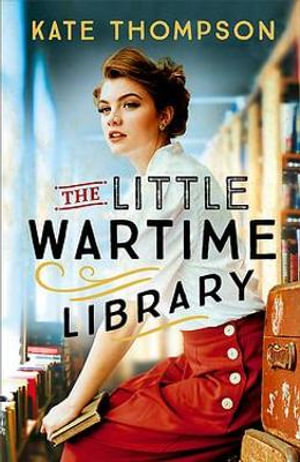
Most definitely an ode to libraries, librarians and book lovers, this historical novel tells of the amazing little underground library established on the disused Bethnal Green train line during the London Blitz. A whole community was established in the bomb shelter, with rows of bunk beds, a cafe, a theatre, and of course the library. Thompson’s heroine, Clara Button, is the librarian, having retrieved books from the bombed out local library and establishing a thriving library service underground, one that inspires a love of books, and a shared community spirit.
Clara and her staunch friend Ruby take advantage of the new freedoms offered women with the men away at war, and step into the roles of librarians come caretakers and social workers. They are the heart of the community; the library is a place of conviviality and education, particularly for lost and lonely children. Both women are grieving, Clara for her husband killed at war, and Ruby for her sister suffocated in a desperate crush of people during the bombing. But the library gives them a purpose that helps them to overcome the past.
There is the inevitable romance, for each, and an amusing cast of stereotypical minor characters that include Clara’s heartless mother and mother-in-law, the sturdy shelter manager Mrs Chumbley, gentle bereaved Mr Pepper, and the officious library manager Mr Pinkerton-Smythe, all of whom add to the drama, for life does not run smoothly in the underground library.
Each chapter begins with a quote about libraries or love of books, a rich source of quotations gathered by Thompson in her research for the book, all useful material for a ‘Save our libraries’ campaign. Thompson is enthusiastic in her support for libraries, particularly in difficult times, during the war, and now with the Covid pandemic.
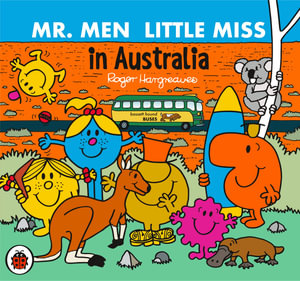
The Mr Men and Little Miss are heading down under – or 'up over' as Mr Topsy Turvy would say and I couldn't love this more. I have always liked the Mr. Men books and their simple stories that engage young readers so I really wanted this book to feel similar to my childhood memories and it exceeded my expectations and will be one that I keep on my shelf both at home and in the classroom.
This is the story of all the Mr. Men and Little Miss characters that children will be familiar with coming to Australia. They take a logical journey around our wonderful country - and by that, I mean that they start in Sydney, head to Tasmania before coming back to Melbourne and then heading west. They do not jump all over the country, which frustrates me as it minimises the size of the country.
The illustrations are amazing and the vibrancy of the colour palate make the Australian landscape come to life, as each character gets to do something they have wanted to do or that fits with their personality. The book includes something of interest for each place they visit, highlighting some of Australia’s most famous landmarks while also including others that might not be as well-known thereby introducing them to the young reader in a fun and interesting way. This is a book that is sure to delight Australian children and their international friends.
The familiarity of the characters and their personalities are perfectly reflected in the book from Mr. Greedy finding a food he won't eat, to Mr. Mean being upset there isn't gold to be found on the Gold Coast, the book felt like revisiting an old friend. This is a perfect book to introduce children to the Mr. Men characters as well as for adults to reconnect with childhood favourites. I highly recommend this book for both home and school use, as I can see many ways that it could be used in the classroom.
Themes Mr Men and Little Miss, Australia, travel, friendship.
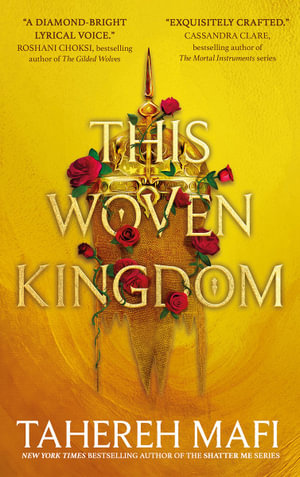
This is a gem of a fantasy tale, suffused with anguish, power imbalances, romance and the struggle to understand a history that is veiled. Alizeh is the central character, a girl mired in poverty and servitude, but who has a past that suggests much greater things and must stay hidden. Her speech, demeanour and care for others though gets her into trouble and Prince Kamran becomes witness to her unusual actions as a servant girl, actions that defy conventional wisdom. The mystery and intelligence of the girl compels him and unnerves him, and slowly their lives and paths become woven together. Her ‘side line occupation’ as a seamstress gives her a reason to escape her servants’ quarters, and the occasional magical moment propels her into a royal intrigue. And all the while there is the devil’s prophetic words to unravel. Can she trust his words? What is truth and who can be trusted? And will her past as the rightful heir of her kingdom cause the connection to the Prince to shatter before love can take root? A truly magical tale on many levels.
I cannot say how much I enjoyed the quality of the writing in this Fantasy tale, it was beautifully rendered. The fantasy world was unfolded gently and with minimal detail, not unlike a diaphanous piece of fabric fluttering in readiness for a finished creation. As details emerged, they were just enough to explain the magical and lyrical quality of the story. The language use was mature and threaded with metaphor. Tension was felt all through the dramatic story and the author created a resonant and subtle mystery about the central character. The romance elements of the story were restrained and yet compelling, and the overall effect was breathtaking. Magic was never overused as a solution to problems, and would sometimes surprise as its existence was revealed. With a startling conclusion, this book leaves me in wonder. On the whole, I will be highly recommending this book to lovers of fantasy and romance. Its audience will cross from YA readers to adult fantasy enthusiasts… and all will be entranced and impressed.
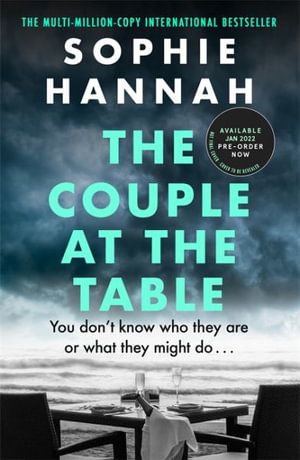
Six couples at a secluded, private resort. Should be a lovely holiday for all of them, especially the couple there on their honeymoon. But after the bride, Jane Brinkwood, receives threatening notes, things escalate and when she storms off from dinner, the rest of the guests are left shocked. Then when she is discovered dead shortly after, all the guests are suspects - but they all have solid alibis, including the police couple who were the last to check in at the resort. They immediately start the investigation, but the resort has limited access points, and the only suspects were together at the time. It looks like an unsolvable murder. It's now months later and the case has been lost its momentum. Lucy, guest at the resort, who happens to be the ex-wife of Jane's newly widowed husband, is desperate for answers. She sends a letter to the murderer - but she doesn't know who it is, so she sends the letter to all the guests, reopening the investigation.
Set in England, this cozy murder mystery revolving around multiple couples is written from multiple perspectives. Moving from past to present, the story jumps seamlessly for readers to enjoy the added elements to the mystery. It is well written with plenty of twists and interesting characters. Part of the 'Spilling CID' series written by Sophie Hannah, this novel sees Detective Constable Simon Waterhouse and his wife, Charlie Zailer, Detective Sergeant, on holiday when the murder is committed. The novel doesn't indicate that it's part of a series, nor does not having read any detract from the experience. Good read for those who like a light, yet twisty mystery.
Thank you for the Little Things is a delightful, brightly illustrated picture book that celebrates the happiness the little things in life bring. It is also the perfect introduction to the concept of time and what may occur during a day, from morning to night.
The young diverse child in the story goes through the day giving thanks and recognising the smallest of things that bring joy even when feeling down. A ladybird, daisies, a dog, playground swings, squelchy mud, puddles, and a strong stick, are little things to be appreciated. As the day draws to a close, quiet time drawing, eating noodles, drippy ice-cream, bubbles in a bath, story time and finally bed with a favourite toy are all special pleasures to be grateful for.
The bold and colourful crayon illustrations combined with the simple rhyming text will appeal to very young children:
Thank you lovely playground swings, you make me fly, like I have wings. I love the cool wind in my hair as I swoop upwards through the air.
A beautiful book to share and read aloud with Early Years children in a home, childcare setting, school or public library.
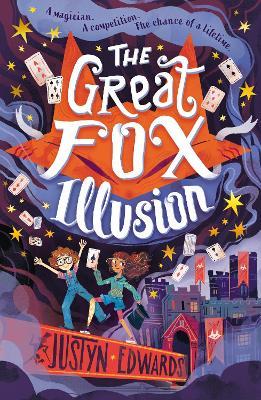
Flick (Felicity) Lions lives with a disability – she is an amputee. But for Flick this is not the worst thing. What distresses her the most is the disappearance of her father, a magician who has developed a reputedly amazing magic trick with The Great Fox. The Great Fox is the patron of a new reality television show to find a worthy young magician, so Flick enters the competition in the hope it will lead to the discovery of the truth about her father. She meets and works in a team alongside another kid with magical talents (Charlie), who has his own sadness motivating his entry in the competition. Will Flick and Charlie win the competition, or will they miss out on the big prize and solving their family concerns?
This book has magical qualities and intrigues from beginning to end as the conjurors ply their sleight-of-hand and entertaining talents. With some magic tricks explained as the competition proceeds, it also has mystery and subterfuge woven through the story. With short ‘snappy’ chapters, this book has a fast-paced style woven with the Reality TV challenges. The conclusion may disappoint some readers, but it is still worth recommending to readers aged 9-14. I enjoyed the conjuring world and the magical characters who were endeavouring to overcome some serious issues in their lives.
Themes Magic and Magicians, Reality TV, Disability.
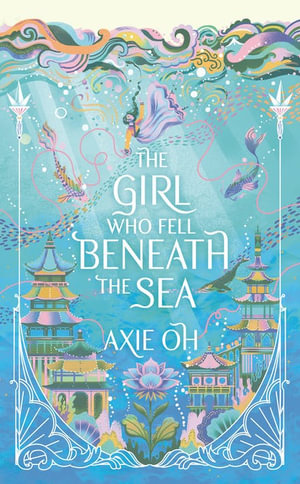
Years of devastating storms have ravaged Mina's homeland, with her people believing that the Sea God who was once their protector has instead cursed them, even abandoned them. In order to appease him, each year a young maiden is selected to be thrown into the sea as an offering. They hope the Sea God will select his true bride and end the suffering. The next maiden to be selected is Shim Cheong, but she is in love with Mina's brother, Joon. The night of the sacrifice, Mina follows her brother, who has followed Shim Cheong, which is forbidden by the rules of the sacrifice. To save her brother, and Shim Cheong, Mina throws herself into the water in her place. Swept away to the Spirit Realm, a city full of lesser gods and mythical beasts, Mina finds the Sea God trapped in an enchanted sleep.
This wonderfully written story is a feminist retelling of a classic Korean legend, and has been written descriptively and full of relatable characters. Told from Mina's perspective, following her journey to find a way to break the enchantment on the Sea God, as well as to recover her soul and determine her own fate, Mina proves to be a relatable and endearing character. The book moves seamlessly, moving between action, intrigue, twists and romance. The city beneath the sea has been envisioned clearly and readers will be able to picture themselves there, moving between the streets, Houses and the palace. Containing plenty of traditional practices for honouring ones elders, this novel demonstrates certain aspects of Korean philosophy in different ways. Perfect for fans of the Manga series 'The Water Dragon's Bride' by Rei Toma and for fans of the popular anime 'Spirited Away'.