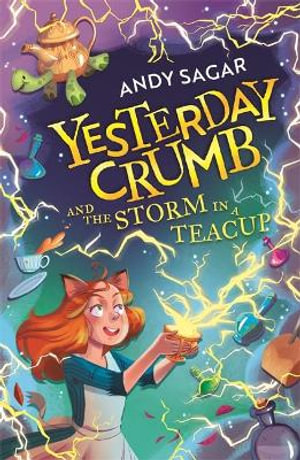
Yesterday Crumb and the storm in a teacup by London and Cambridge based author Andy Sagar, is a wild trip into a world of pure fantasy. The story begins within the setting of a travelling circus (probably of the mid to late 1800s) when human oddities (freaks) were displayed to the crowds as part of the show. Our hero, Yesterday Crumb, is such a freak, an orphan, dumped with the show - a girl with fox ears. Despite the jeers and horrified curiosity of the crowd and the cruelty of her minders, Yesterday is feisty. She escapes from the circus into a world of magical cake and tea, witches and magical folk of all kinds.
The next setting is a teapot called Dwimmerly end which is capable of travel. It is a fantastical, quirky multi-coloured and patterned teapot, full of quirky characters, rooms and gardens, which functions as a magical tearoom serving magical teas to magic folk. The teapot travels to imaginary and real settings in England on its flamingo legs. Yesterday encounters a cast of characters who help her on her quest to remove the shard of ice that has lodged in her heart through the evil machinations of Mr Weep, the King of the Dead. She discovers that she is a changeling and that she has lost her magic. Under the tutelage of the sweet witch, Miss Dumpling, Yesterday learns to regain her magic. She learns some truths about her past, some of which are very hard to accept. The cast of characters include the quite quirkily delightful Jack, Widdershins, Madrigal and Miss Dumpling, the villainous Mr Weep and the powerful Lady Saturnine. We learn of the roles and regulations in the witch kingdom as Yesterday learns to perfect her potions in order to become a licensed witch permitted to practice by the Royal College of Witches.
The magic is in the tea, with such potions as Jumbling Jasmine, Verdant Vanilla, Steeped Storm and Perfect Panacea being able to be used for a variety of powerful purposes. With time running out, Yesterday has to consolidate her powers, face the evil Mr Weep and complete her quest. The matter of her disappeared mother is still an unresolved mystery at the end of the book. The reader has to wait for the next book in the Yesterday Crumb series for more adventures of the teashop.
Note to teachers, librarians and parents: Chapter 18 and 19 deal with the kingdom of death/ the afterlife and the passageway to that place. The place is described as very grim. This may be unsuitable for children who are dealing with death or serious illness themselves or in their family. Sensitivity is needed around this subject. Although children know that this book is fantasy, they may not be able to distinguish that the depiction of the afterlife is also imaginary.
Yesterday Crumb and the storm in a teacup drops readers into a very strange world. It is a richly descriptive, imaginative romp that is full of the warmth of friendship, the acceptance of difference and the power of friendships. It may be a challenge for young readers to acquaint and adapt themselves in order to sink into this peculiar imaginary world. It will be very interesting to see the take up of readership of Yesterday Crumb and the storm in a teacup and whether children will be capable of the suspension of reality that this book requires.
Themes Magic, Fantasy, Belonging, Celebration of difference.
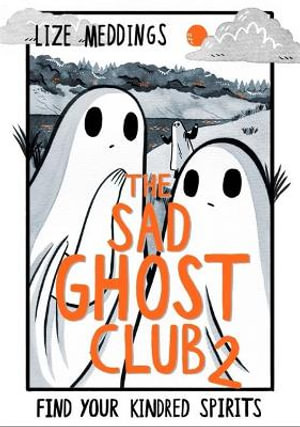
This graphic novel is about a couple of ghosts (which although they are illustrated as ghosts, seems like a metaphor for people who do not want to be in the limelight, who are quiet, shy and hide away due to worry and darker days), who meet and begin to form a friendship.
Very quickly we see that Socks is struggling. They talk of their trouble being around people and it is easy to see that they overthink everything that happens around them. SG (the other Ghost) is a bit more outgoing and tries very hard to make Socks feel comfortable, however unfortunately in their mission to find other like them, they overwhelm Socks and they go home to bed, not surfacing for a number of days.
Essentially I think this book is about depression, the realities of hard days and loneliness but also of friendship and how finding someone who gets you and will listen is so important. The Sad Ghost Club 2 explicitly deals with someone who doesn't want to get out of bed or answer the phone for days, how they go back over every single thing they say, do or experience and how a simple thing can become very overwhelming.
These topics are presented in a graphic novel form, and although there are lots of textless images, or minimal text this book says a lot. As I was reading it I imagined middle school to upper secondary students (even young adults) accessing this text and being able to identify with the characters and how they were feeling. It gives simple strategies such as going for a walk, getting out of bed, trying a yummy food as examples of ways to improve your day and then goes to finding your tribe of people who are similar to you, and being able to form connections and friendships whilst being your true self.
I think this book would be a great addition to any secondary library, and even though it is very simple it easily puts its message on the page for the reader to engage with. The illustrations are to be commended as they are the true hero of this book. There are lots of pages with no or minimal words, however the pictures really do tell a thousand words when you begin to look closely and put it all together. It would be a great to study as part of a literacy topic or through Health lessons.
Themes Depression, Loneliness, Friendship.
Lauren Fountain
Prometheus High: How to make a monster by Stuart Wilson
Penguin, 2022. ISBN: 9781761042256. (Age:11+)
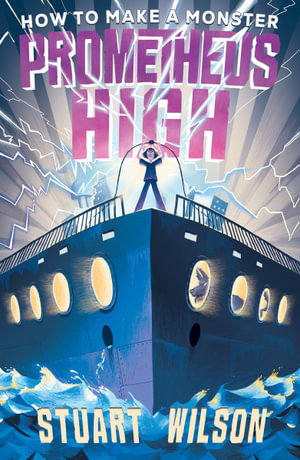
Athena Strange is... different. So different that she doesn't fit in at her school, and she gets in trouble at home for her experiments. Then one of her experiments catches the attention of a specialist school - Pometheus High. Held on an old ocean liner, the school is extremely exclusive, only taking a small number of students with a certain... thirst for creation. These students are enrolled to learn how to resurrect the dead, how to create beings. The perfect place for Athena. Right? When her lessons in reanimation and skulkers move too slowly, she decides to move ahead on her own. And since she started weeks after everyone else, it's not like she is finding making friends easy, so she may as well take matters into her own hands. But this ship has science and magic, maybe monsters and a few mysteries, will Athena manage to make it on her own?
The first in a new series called Prometheus High, How to make a Monster introduces readers to the strange world of an unusual high school, where the students are learning obscure science. Following Athena for the majority of the book, different perspectives are thrown in occasionally, giving a nice variety and roundness to the story. With a variety of characters - from fellow students to teachers, or 'creators', there are many characters to keep readers interested. Evenly paced, the novel reads quickly as it is well written. A new kind of Frankenstein mixed with magic akin to the Skulduggery Pleasant series, this series may appeal to fans of these or for those interested in a quirky story.
Although The murder rule does not follow the career of Detective Cormac Reilly from her previous three novels, The ruin, The scholar and The good turn, fans of McTiernan's books will not be disappointed in this psychological thriller. Hannah Rokeby cons her way into the Innocence Project wanting to be on the case of Michael Dandridge, who had been convicted of rape and murder. He has declared that he is innocent, and members of the Innocence Project are trying to help overturn his case. But why is Hannah obsessed with this case and just what is she trying to do to Michael, prove his innocence or his guilt?
Told in alternative chapters, the story is told from Hannah’s point of view with extracts from her mother’s diary written when she was a young woman. Laura’s diary fills in the background to Hannah’s obsession with this case. Her mother is an alcoholic, and it is easy to sympathise with her and Hannah’s actions as more of the diary’s contents are revealed.
Hannah is a fascinating character. Her intelligence and ability to read people shines through, even as the reader is shocked at the way she is prepared to manipulate people to be able to work on Michael Dandridge’s case. When cracks start to appear in the evidence Hannah is left trying to puzzle out what is going on.
This started out slowly as the reader learns about the Innocence Project, the people who work there and the processes that the investigators go through to find the truth. As the story progresses the tension really builds up with unexpected twists and turns, new characters introduced and doubts about what is happening. The last section is thrilling and breath-taking and I could not put it down.
I picked this up because I had really enjoyed McTiernan’s previous books and believe that it would be enjoyed by fans of psychological mysteries like Wych elm by Tana French, Turn of the key by Ruth Ware and The Attack by Catherine Jinks.
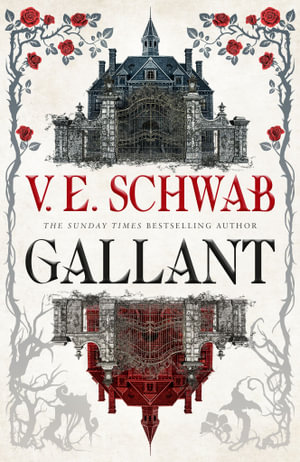
Interspersed with intriguing illustrations, V.E. Schwab has delivered an absorbing gothic tale about a sixteen-year-old orphan, Olivia Prior, who is without a voice. Olivia has lived in Merilance, an orphanage, ever since she had been abandoned. Unable to speak, she has become sharply observant, and is clever enough to fight off the bullies that try to prey on her and to see the ghouls that haunt the orphanage. When she receives a letter from an uncle of whom she has no knowledge, inviting her to come to Gallant, she jumps at the chance to have a home of her own. The only thing that she possesses is a journal that had belonged to her mother, and she desperately wants to know why she had been left alone as a baby.
When she arrives, she is not welcome, especially by her cousin Matthew who wants her to leave immediately. But Olivia is curious about the poorly kept house, the family portraits and the ghouls that haunt the rooms. Then there is a strange doorway into another world and unable to curb her inquisitive mind, she enters a strange world where there is another version of Gallant, beautifully illustrated on the front cover of the book. Here a mysterious evil master cruelly rules all. Is this what her mother wrote about in her journal? Is this where her father came from?
Schwab is an expert at building up tension and describing ghostly places. Olivia is intrepid, an unforgettable hero, and Gallant has a ghostly presence. There are dark moments, sad scenes, and complex decisions to make, but the reader is swept along with the vivid writing and fascinating illustrations.
Gallant is for an older audience than City of ghosts and Tunnel of bones, and will be welcomed by fans of Holly Black and Neil Gaiman. Readers wanting more gothic fiction may like to try Beautiful Creatures by Kami Garcia and Margaret Stohl or move to books like Thirteenth Tale by Diane Setterfeld or Rebecca by Daphne Du Maurier.
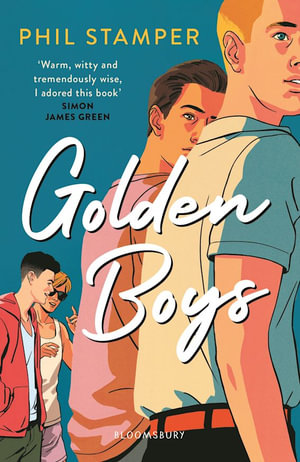
Sal, Gabriel, Reese and Heath are four gay boys, a close friendship group, in their final years at school and taking the opportunity of the summer break to explore potential career paths. They have been good friends throughout high school and keep in touch via text messaging and facetime when they are not spending time together. At first it is a little difficult keeping track of the different characters as the chapters alternate between the four points of view. But reading becomes easier as they move into their different fields of interest: Sal has an internship with a politician, Gabriel is volunteering with Save Our Trees, Reese is heading to design school in Paris, and Heath is working at a beach bar run by members of his family he hasn’t met before.
The summer break is not an easy time; the friends are separated for the first time, catching up isn’t easy, and they each encounter challenges in the paths they’ve chosen. And . . . there are new friendships, even romances, potential threats to their previous close-knit relationships.
A strong theme in the book is the pressure placed on young people in the voluntary roles they take on; job experience opportunities turn into workplace exploitation where they are driven to work longer hours for little or no money in the hope of a good reference or the entry to a paid position. Sal’s proposed 20 hours a week placement turns into 50 hours unpaid work, Gabriel finds his volunteer opportunity turns into street collecting, Heath’s casual work is high pressure, and even Reese’s short term course is much more demanding than he expected. This is all something that young people are only too familiar with.
However the main take-away from this book, is the value of true friendship. There are many stories of young friendship groups, but it must be a welcome discovery for young LGBTQI+ teenagers to read such a warm and positive story of 4 young gay people finding their way at an age when every teen struggles to work out their future path. With themes of identity, self-expression, parental expectations, youth exploitation, and career choices, Golden boys would make an engaging and enjoyable read, for all young adult readers regardless of their sexual identity.
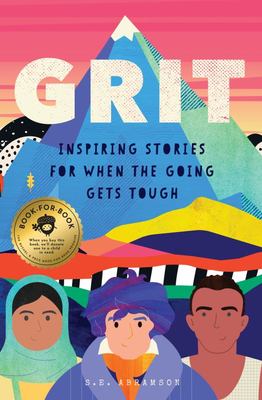
This small but powerful collection of eighteen stories about real-life people, many familiar and unfamiliar, will be an inspiring read for those upper primary/early secondary children who enjoy reading about others. The book begins with a definition of grit: firmness of mind or spirit; unyielding courage in the face of danger or hardship and a publisher’s note encouraging the reader to find out more. Each four-page story begins with an animated portrait and quote, as well as a question or two for further consideration. Some of the diverse people discussed include the well-known Jesse Owens, Walt Disney, Albert Einstein, Helen Keller and the lesser-known Satoshi Tajiri, Elizabeth Blackwell, and Bethany Hamilton. One very recent story is about Li Wenliang, the Wuhan COVID-19 doctor who first discovered this devastating virus. He alerted his colleagues and eventually the world but sadly passed away in 2020. Another story is about Corrie Ten Boom who helped over Jewish 800 refugees escape from Germany but was arrested by the Gestapo and sent to a concentration camp. Corrie survived to spend her life after the war as a public speaker, inspiring others with stories of hope.
These biographical vignettes present a simple snapshot of the real lives of some brave and courageous people. The stories are both readable and easy to understand and lend themselves to further research in greater detail.
Allen & Unwin, 2022. ISBN: 9781534492530. (Age:5+)
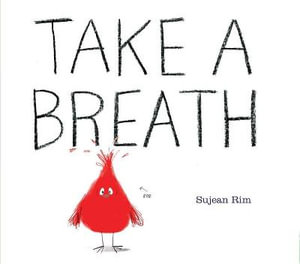
Bob is a very chatty, humorous and likeable bird but he has a big problem. He cannot fly. No matter what he does and how hard he tries, he just cannot get off the ground. His flock are off on their first flight of the day and Bob is left alone. He practises and practises repeatedly and starts to worry he will never fly. He becomes very despondent but a kind and helpful crow passing by notices Bob crying and offers to help. He also had trouble flying so he knows exactly how Bob is feeling. He tells Bob to take a breath, but Bob is not convinced, after all he is breathing! However, the crow insists that Bob does deep breathing and teaches him how to do it. After a few failed attempts at deep breathing Bob finally masters it and feels great. He continues to practise his flying and it does get better.
This picture book has detailed instructions on how to breathe deeply and would be best read and shared by a teacher or parent with younger children. Learning to breathe deeply can help in times of stress and worry. The appealing yet simple illustrations will delight young children and add to their engagement in the story.
Themes Self-esteem, Wellbeing, Birds, Deep Breathing, Persistence, Friendship, Humour.
Kathryn Beilby
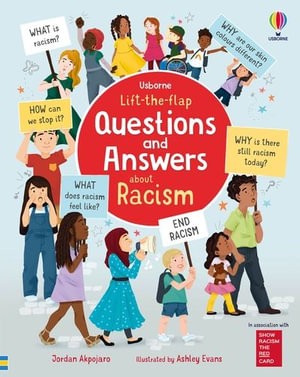
Lift-the-flap questions and answers about racism by Jordan Akpojaro and Ashley Evans
Usborne, 2022. ISBN: 9781474995825. (Age:7+)
While the issue of racism has bubbled along in the background of schools for decades, the recent rise and focus on the Black Lives Matter movement has brought it forward into the lounge rooms and lives of our students and many have many questions. This is to be expected if we accept the premise that 'race is not a natural, biologically grounded feature of physically distinct subgroups of human beings but a socially constructed (culturally invented) category that is used to oppress and exploit people of colour' particularly when 'race' itself is defined as 'the idea that the human species is divided into distinct groups on the basis of inherited physical and behavioral differences.' (Britannica, 2022)
Therefore this book is a timely release that uses a simple lift-the-flap technique to answer children's questions in a way that they will understand. For example, while the Britannica definition can be easily unpacked by an adult here it is explained as 'treating people differently and unfairly based on their skin colour, where they're from, their religion or their family traditions.'
From 'What's wrong with the idea of 'race'? and 'Why is life harder for people with darker skin?' to 'Don't ALL lives matter?' and 'What's racism got to do with me?' this book tackles powerful, pertinent questions in a direct, accessible and thought-provoking way. Even if the reader has not encountered racism, they learn why it is everyone's problem to solve, and how we can all be part of the solution.
There is also a blog post that offers guidance about how to talk to children about racism because "even by the age of two children begin to notice skin colour and other differences in appearance" and there are also the usual Quicklinks to help the reader understand more deeply.
Themes Racism.
Barbara Braxton
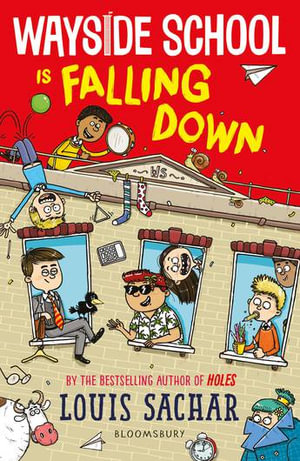
Wayside School is falling down by Louis Sachar
Bloomsbury, 2022. ISBN: 9781526622044. (Age:9+)
Originally published in 1989, the Wayside School series has certainly held up but also shows its age. While still incredibly funny and clever, there are many elements that may concern parents and teachers, making the series more appropriate for the upper levels of primary school. Not only does the book contain name-calling and bullying (fat, dumb jerk), one of the stories involves a student bringing a 'hobo' to school and in another the students discuss why one child is favoured by the teacher: 'Maybe Mrs Jewls got drunk!...And then she danced on top of her desk...And Myron took her picture. And so now Mrs Jewls has to let Myron do anything he wants, or else he'll show the picture to Mr Kitswatter!'. In other incidents a child kicks another in the 'rear end', another wants to knock her teeth our so that she will look 'cute', one of the children declares his love for the teacher and the teacher reciprocates the sentiment, a child is teased for being emotional and the teacher gets angry and holds a yardstick threateningly above a student's head.
On the flip side, none of this is supposed to be taken seriously; these are completely wacky stories full of puns, illogicality and irrational arguments. Like all the others in the series, this installment is comprised of 30 interconnected short stories that all take place within the realm of the absurd Wayside School: 30 floors, each with a single classroom, a cafeteria whose food nobody will eat and a nineteenth storey that does (or doesn't) exist. This is an undeniably fun read for a more mature reader, which will be throroughly appreciated by fans of other dark comedy writers such as Andy Griffiths.
The Locked Room is Number 14 in The Ruth Galloway series, and Elly Griffiths still manages to produce an intriguing mystery and some very interesting historical details about the medieval plague, all set within the COVID-19 pandemic. When Ruth is clearing out her mother’s effects, she comes across a photo of her cottage, with the words ‘Dawn 1963’ written on the back. Coming back to Norfolk she is determined to find out why her mother had a picture of the place, but Covid erupts, and she finds herself organising course work for her university students, via Zoom, and trying to home school her daughter Kate. Meanwhile Nelson has become suspicious about a suicide which does not feel right, and the team finds a series of suicides that family members find very difficult to believe. Add in a mysterious ghost called The Grey Lady, bricked into a house during the plague, a new neighbour, Zoe, whom Ruth is drawn to and the ramifications of Covid, and readers will be drawn into this mystery.
Griffiths exploration of life during Covid will be familiar to all her readers, who will identify with the loneliness and difficulties of working from home and teaching a young child. The awful anxiety of having a loved one come down with the virus is vividly told when Cathbad is its victim. Police procedures during lockdown are described as well and Nelson finds himself at home alone while Michelle is in Blackpool with their son, and this provides an opportunity for Nelson and Ruth to develop their relationship.
The links between The Grey Lady, the apparent suicides of women, her new neighbour Zoe, a woman locked underground and the body that Ruth has excavated are all tied together with some enthralling twists in a dramatic and dangerous climax. Readers like me who love this series will be longing for the next book. Griffiths does give enough background for the book to be a stand-alone for readers new to the series. This includes a page summary of each of the main characters at the back of the book. However, the series is well worth the effort to start from the beginning with The crossing places, winner of the Mary Higgins Clark Award 2011.
Themes Murder, COVID, Detectives.
Pat Pledger
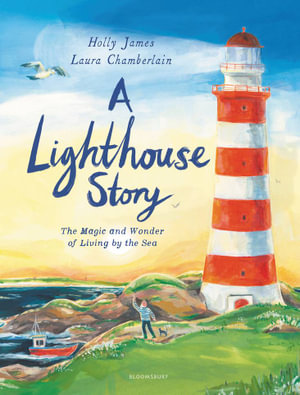
A lighthouse story by Holly James and Laura Chamberlain
When Eva goes to stay with her grandfather, she is excited. He lives and works on a lighthouse, so her days are spent helping him with his chores, watching the swirling sea around the little island and listening to his stories. Through their days together, the reader absorbs a great deal of information about the lighthouse, why it is there, what is its purpose and how it is run, while at the end of this stunning book are a number of pages giving more factual information: the lighthouse keeper’s handbook, famous lighthouses of the world, a look at modern lighthouses and a sideways plan of what is in a lighthouse.
Eva has to be taken to the island on a boat, an adventure in it itself as she watches the lighthouse come closer, its red stripes standing out against the blue sea. She helps Grandad clean the lens so that sailors can see it in the dark, she reads his daily journal of the weather, helps turn on the foghorn when it becomes foggy. When she has some spare time she loves walking over the rocks, checking the rock pools, watching the birds, spying the seals and watching the shiny scales of fish darting about near the shore.
But at night when it is dark, she loves looking at the stars and seeing the constellations that Grandad picks out. One night it becomes stormy and after Grandad checks the light they go downstairs to the safe and warm room at the bottom of the lighthouse and he reads her stories about bravery and courage. The tale of Grace Darling encapsulates these qualities as Grace and her father venture out one stormy night to rescue people after their ship founders.
What a tale to read snuggled up against grandfather on a cold wet and windy night. The story of Grace Darling contrasts with the story of Eva and her Grandad, one where she is on holiday helping her grandfather with the daily chores, enjoying herself, but hearing about the tougher lives led by lighthouse keepers in the past and the work they were expected to do.
A wonderful read, children will thrill at the idea of holidaying on a lighthouse but be made aware that places like these have an important role to play in keeping shipping safe.
The stunning illustrations show enticing detail of island life and the lighthouse and its work. Children will love poring over the detail, relishing the huge amount of information given both in the images and text. They will be able to fill in Granddad’s daily diary watching the different skies with an array of clouds and weather. The sea is absorbing with its changes of colour and temperament, enabling young children to see how the sea can be both inviting and playful then treacherous and dangerous.
Themes Islands, Sea, Lighthouses, Grandfathers.
Fran Knight
It starts with a bee by Jennie Weber
Murdoch Books, 2022. ISBN: 9780711270336.
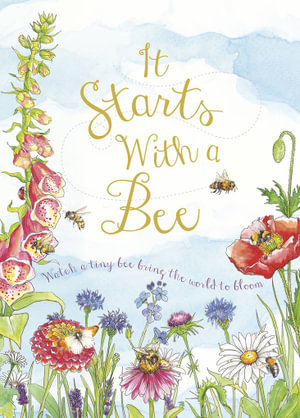
Slowly, slowly we are beginning to understand how critical bees are to our survival, and yet how endangered they are becoming, so any book for young readers that helps them understand the crucial role that bees play has to be an important addition to any collection.
Using rhyming text and delicate illustration the reader is taken on a journey through the seasons from winter to autumn showing how a garden is pollinated and thus blooms to be beautiful flowers, fruits and vegetables bringing both joy and food to our lives, culminating in a magnificent three-page spread summarising the essential elements of the process. As well, it shows how bees work together with each other and other insects creating an interdependent eco-system which we must protect.
Although created by an English illustrator who believes " if people are amazed by the natural world, then they will be less likely to destroy it." so that there is a "English country garden" feel to it, many of the plants featured are very familiar to young Australian readers, making its message as important here as it is anywhere. It is an ideal complement to books like Holly, the Honeybee Dancing Star and Bee Detectives (with its focus on Australian species), all with their strong message of not just conservation but how simple it is for even our youngest readers to ensure their safety and survival.
Themes Bees.
Barbara Braxton
Let's build a backyard by Mike Lucas and Daron Parton
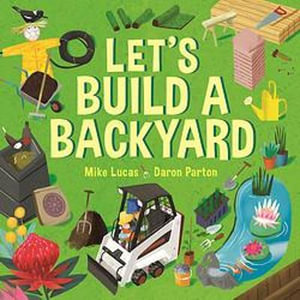
Let’s Build A Backyard is the newly published companion book to Let’s Build A House, both written by South Australian author Mike Lucas. This latest release is a lively and busy account of a time spent in the backyard of the father and his young daughter from the first book, working together to create a very special place.
From the very beginning of this delightful and energetic book the young reader will enjoy the action that the clever rhyming words impart. Each step of the building a backyard journey is labelled clearly, followed by the short rhyme, and with three action words highlighted across a double page spread.
Mix in some compost. Use your fork to turn, turn, turn. A little help from all the worms. Watch them wriggle, see them squirm. Squirm! Squirm! Squirm!
The bright and colourful illustrations by Daron Parton complement the text perfectly and showcase the steps needed to create the new garden. This book has a very welcome and gentle introduction to the sustainable theme for young children with mention of looking after a tree, making a possum box and a bee hotel, installing sprinklers, creating a vegetable patch, as well as adding compost.
This is a perfect book to read aloud to young children and engage them in the story by allowing them the opportunity to do the actions as it is read. A welcome addition to a home, school or public library.
Random House Children's Books, 2022. ISBN: 9780593178867. (Age:9+) Highly recommended.
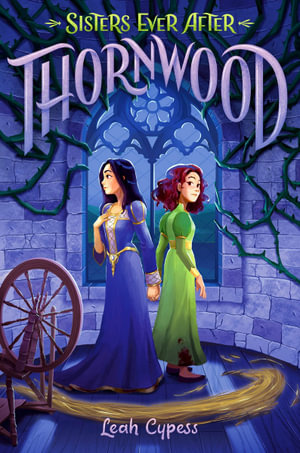
Thornwood is an intriguing retelling of The sleeping beauty and is one of my favourite genres. It is told from the viewpoint of Briony, the younger sister of Rosalin, who has been cursed from birth by a wicked fairy. She is destined to prick her finger on a spindle and fall into a 100-year sleep and will not be awakened until a prince kisses her. When Briony wakes up she is in the castle’s tower and everyone else is still fast asleep. Then she spots a handsome stranger kiss her sister, but questions arise about Varian. Why is the castle still surrounded by thorns, allowing no one in or out? Briony is determined to find a way to break the spell and rescue everyone in the castle - but no one has ever listened to the little sister.
Told in the first person by Briony, the narrative flows along smoothly, often with snarky asides by Briony which add wit and humour to the story. All the characters are fully fleshed out, and the sibling rivalry and love between the two sisters is a highlight of the tale. Briony is not a haughty princess and the friendship between her and Edwin, a boy who was so bullied in his village that he preferred to come to the castle and sleep for one hundred years, is another high point. Briony needs to use all her skills and cunning to work out how to be rid of the thorny forest that hems them all in and Cypess’s vivid writing ensures that the reader is fully invested in the story.
This is a fun read that will appeal to all fans of fairy tale retellings, although it is aimed at a middle-school audience. Readers will, like me, come away with a smile on their faces, at the surprise way Cypess ends her story and will want to read more books by this author. Other retellings like Book of a thousand days by Shannon Hale and Beauty by Robin McKinley are sure to appeal as well.
Themes Fairy tale retelling, Siblings, Problem solving.