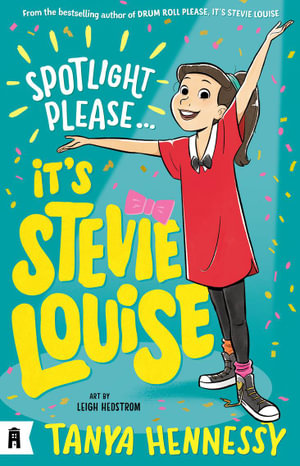
Spotlight please: It's Stevie Louise by Tanya Hennessy
Albert Street Books, 2022. ISBN: 9781760526429. (Age:Age 7+) Highly Recommended.
Well she’s back! Stevie Louise and her Lunchbox Production Crew have returned, and are still as loveable, relatable and entertaining as ever! Children are sure to enjoy this book, even if they haven’t read the first in the series, Drum Roll Please….It’s Stevie Louise.
Stevie Louise and her friends from the Lunchbox Production crew are ready for some more fun and laughter! She and her friends love performing and creating shows to entertain everyone. The Lunchbox Productions is the best thing ever, but keeping up with the cost of costumes, props and sets could be the downfall of their great enterprise. Where could they get the money to keep their loved and fun past time in operation? When they hear of a talent show with prize money, they set about to put together a winning act. This could be the difference between Lunchbox Productions continuing or closing. They are super excited, until they hear about the stiff competition they are up against. From dancing grannies, singing goats and fire twirling singing sensations, will Lunchbox Production Crew have what it takes to bring home the prize money or will disaster strike?
Spotlight Please….It’s Stevie Louise, written by multi-talented comedian and social media personality, Tanya Hennessy is the second book in the already popular series, Stevie Louise. Hennessy has written another fast paced and entertaining novel. This story is an easy read, with slightly larger print and a smattering of different fonts for enhancement. Along with great illustrations throughout, this makes for a highly engaging read, even perhaps for those reluctant readers. It could also make a terrific read aloud to children aged 6–8 years of age, due to its fast paced storyline and highly relatable characters that effortlessly capture the audience’s attention.
With an underlying message for the importance for honesty, team support and self-belief, this book is a feel-good winner!
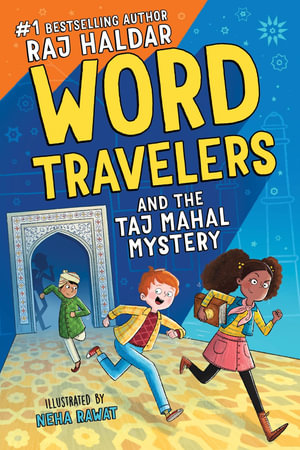
Eddie and Molly-Jean (MJ) are next-door neighbours and best friends, who normally spend their weekends watching TV and playing together. But on this Saturday they are challenged by Eddie’s mother to find out the origin of the word pajamas in his Great-grandpa Oscar’s special book, which they find in the attic. Great Grandpa Oscar was a famous etymologist, and his Awesome Enchanted book magically takes them to India where they are challenged to solve a mystery for their new friend Dev. The Rajasthani prince needs their help to find an ancient treasure belonging to his family so that they can rebuild his local school which was destroyed in a typhoon. As they race to solve a range of word-related puzzle clues before a mystery competitor does, they unlock for the reader a range of words and where their origins lie.
The novel has a Glossary of word origins in the back and words throughout the book are printed in bold if they appear in this glossary. The book is illustrated with helpful sketches of some of the characters and activities in the story as well as a map at the beginning of the book which lists some places in India that the children visit on their search. This book is the first in a series about these two characters as they discover the fascinating origins of words in the English language through some exciting adventures that take them to different parts of the world, solving some very puzzling mysteries and helping those in need at the same time. The next book in this series is called Word travellers and the missing Mexican Mole.
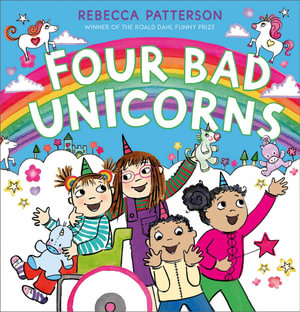
Frankie and Connie just love playing unicorns.They dream about the animals while they sleep, Connie has her hair tied up by dad in a unicorn rainbow, while Frankie puts on her unicorn socks. She downs her cereal in fourteen seconds and waits while dad feeds Connie. They are going to play unicorns all day long and are very excited. Unicorn Farmers is their favourite game but just as they are about to start, Ada and Colin come in from next door. They want to play too but Ada’s idea of playing unicorns is quite different from the game Connie and Frankie intended to play. Being polite they go along with Ada dominating the game. She takes on the role of queen, using Frankie’s glittery shoes. She orders them all to make a wall, Connie in her wheelchair being made part of it. Ada insists they all dance for her then complains when they are not very good and sends them all to unicorn prison. By now readers will have become sick of Ada and her orders, and they will cheer, when the other three break out of prison and walk out. They make themselves into a unicorn train and go through the front door, Ada remonstrating that the train has no sparkles.
When she realises how serious they are she breaks down. The others relent, and decide to be good unicorns together. When the children returned home for lunch, Connie and Frankie keep on playing unicorns all afternoon and into the night, enjoying every minute.
All the while, everything unicorn is added to this charming story. Bright colour filled illustrations will draw in the readers and they will get a thrill from seeing so many unicorns on the pages and the things associated with them, but also get the message about playing together, about sharing ideas, giving and taking, about friendship.
So begins The Leviathan, an atmospheric and deeply unsettling debut by author Rosie Andrews. Set in one of the most turbulent periods in English history – the Civil War of 1642 to 1651 – The Leviathan tells the story of reluctant soldier Thomas Treadwater, who makes his way home from battle to a family and community in crisis.
Summoned by his sister Esther’s increasingly urgent letters, Thomas arrives at the family’s farm to find his father gravely ill, their livelihood on the brink of ruin and a sister caught up in religious zealotry. To Thomas’ shock, witchcraft is being investigated in his small town and his sister is the one pointing the finger. As Thomas strives to unravel the complex intertwining of events, personalities and relationships, he begins to realise that his preconceived notions of what is real and possible are about to be shattered.
Told from two perspectives at the prime and the end of Thomas’ life, The Leviathan is a horror novel that expertly combines the supernatural with the historical reality. Andrews’ medieval England is dark and chilling and the language and setting used is faultless. At heart a mystery novel with a fantastical twist, The Leviathan is a tense and slow-burning story which ends with a superb twist.
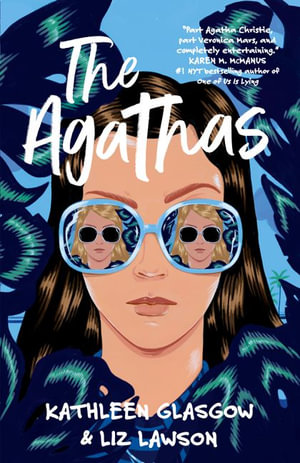
Fans of Karen McManus and Holly Jackson will be thrilled to find another mystery to enjoy. Set in the upmarket seaside town of Castle Cove, secrets seem to abound, not least the disappearance of Alice Ogilvie for five days, just as her hero Agatha Christie had once disappeared. Like Agatha Christie she is not saying where she has been. Then her ex-best friend Brooke Donovan disappears after an argument with Steve who was once Alice’s boyfriend. Alice believes that something has happened to Brooke and when Steve is accused of murdering her, she is not convinced that he is the culprit. Meanwhile Iris, who is her tutor, listens to Alice’s arguments, and reads some of her Agatha Christie mysteries. Together they start trying to unravel the events of the night that Brooke disappeared.
This was a fast-paced mystery that was very hard to put down. It was written from the point of view of the two main characters, Alice and Iris, in alternating chapters, giving the reader an insight into the feelings and motivations of the pair as well as the minor characters in the book. Alice is rich but is virtually ignored by her parents, while Iris is struggling with the Thing, a violent man in her and her mother’s lives. Both keep secrets from each other, which hinder the path of friendship between the two, but their curiosity and determination to find Brooke’s killer keeps the two working together.
A highlight of the story are quotes from Agatha Christie’s books at the beginning of each chapter. These are sure to tempt readers to pick up her books.
I finished this book in a couple of sittings as the twists and turns of the mystery were compelling, with many red herrings slipped in to keep the murderer’s identity a secret. And a hint in the Epilogue that there may be another book featuring The Agathas gives mystery fans something to look forward to.
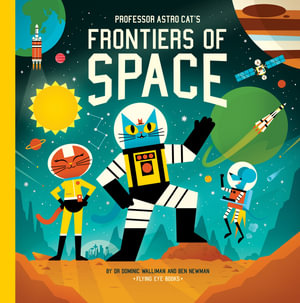
First published in 2013, Professor Astro Cat’s Frontiers of Space, has been revised and updated for publication in 2022. This attractive and brightly presented edition will appeal to the young space enthusiast. It has gorgeous endpapers showcasing Professor Astro Cat and six friends who will take the reader on a journey through all things space related.
The book begins with a contents page followed by the introduction and the opportunity to read about how Professor Astro Cat will lead the reader to discover the Frontiers of Space. Each chapter is set across a double page spread with quirky and humorous illustrations in a bold and colourful palette. The information is either organised into text boxes or surrounded by plenty of coloured space with clearly labelled diagrams, tables and images.
Chapter one gives an explanation of The Universe, leading to The Birth of a Star, followed by Galaxies, the Sun, the Solar System finally ending with the Future of Space. Other chapters include Early Space Travel which mentions Laika the dog, a rhesus monkey named Albert 2, a chapter on Space fashion which shows the suit worn in 1963 plus the Apollo Moon suit of 1969 and a very enlightening chapter on Space Junk. At the end of the book is a page titled Factoroids which gives some very handy facts plus a glossary and index.
This will be a popular read for primary school aged children as it has facts presented in a fun and engaging way and will be a book to go back to time and time again.
Themes Space, Facts, Questions & Answers.
Kathryn Beilby
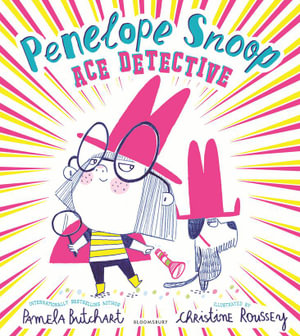
Penelope Snoop Ace detective by Pamela Butchart. Illus. by Christine Roussey
An adventurous dive into the imaginative world of a 4-year-old child’s life, where the mystery of the disappearance of Sidney the sock snake is needing to be solved. Sidney is Penelope's special toy that goes with her everywhere - while she brushes her teeth, as she is eating etc. Penelope is the best “finder outer” in the world and, with her side-kick Carlos the dog, she gets her Finder-outer kit and goes through the clues to realize that Sidney must have been stolen. We are then treated to a delightful romp through the house, the garden, the treehouse, and even to the moon, and back again, only to discover that Mum knows more about Sidney’s disappearance than the frog fountain in the garden. Christine Roussey has used child-like pencil drawings to create bright and busy illustrations with generous splashes of neon pink that make Penelope’s lively personality pop out of the book.
A quirky fun book that will encourage children to use their imaginations and explore the world around them during play.
Themes Play, Mystery.
Gabrielle Anderson
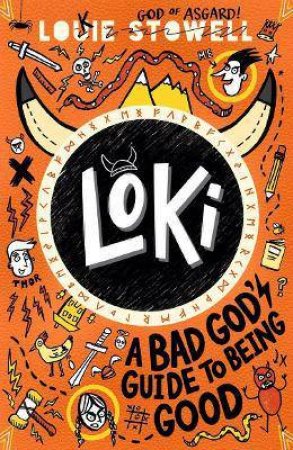
Loki: A bad God's guide to being good by Louie Stowell
Loki: A bad God’s guide to being good is about Loki who has been banished to earth by his father, Odin as punishment after he performs one nasty trick too many in Asgard. Louie Stowell has taken the Norse god of mischief from mythology and written a very funny story to explain the steps Loki must take while on Earth, to clean up his act and avoid eternal life in a torturous pit of angry snakes.
Loki uses the first part of the book to explain what life is like for a Norse god who is trying to make do in a very human household as a weedy 11-year-old boy, what school is like, and how a family works. Although he is monitored closely by an interactive diary that keeps his score, Loki finds it difficult to stop playing pranks, and soon his score is so low he has to find a very grand gesture to redeem himself and avoid eternal unpleasantness. Along the way, he learns about friendship and loyalty, and what it means to trust someone to be a friend.
The book is in diary style, part text and part cartoons that will appeal to Middle primary students, with lots of illustrations, jokes, and speech bubbles. Stowell is releasing a sequel to this book later in 2022 called Loki: A bad god’s guide to taking the blame. The publisher has provided detailed Teacher notes which are helpful when using this book in a classroom situation.
Lolo Wright is a bright, 14 year old living in a Brooklyn public housing neighbourhood with her 16 year older brother James, her grandma and her father who has started a business “The Wright Movers”. At school Lolo gets some name calling for being a good student but nothing like the rejection Michael “Runt” Warner experiences when he wants to join the football team and is told by the coach to come back when he has grown. The rejection leaves him angry and open to the offer of joining the gang of powerful “Skin” who is planning to expand his local protection and drug ring. When Michael bumps into Lolo in the school corridor on his way to confront Skin’s gang, Lolo has a moment of mental connection with him and she experiences his anger and power. Later, when James and Lolo call in to a local shop on their way home they are unaware that it has just been held up. When the police arrive they assume James is the criminal and wrestle him to the ground. Lolo is so angry she explodes with power forcing the officer to release her brother. The supernatural powers shock and scare Lolo and her brother tells her that their absent mother told him baby Lolo had energy flowing through her, "The Holy Current”. Lolo dismisses this as her mother was crazy, however Skin soon becomes aware of Lolo’s powers and wants to sign her up to his gang, using pressure on the family she loves. As Lolo learns to master her power and navigate the threats to her family she also has to deal with the expectations of school and friends. As she grows into her powers she learns to stand up for herself and others while making the right decisions. Her father’s high expectations and firm but kind upbringing see the family reach out to the less fortunate and withhold judgement while offering support.
There is enough violence and action to appeal to comic lovers and move the story on at a fast pace but it is always balanced by more thoughtful interactions. The strong colours and quality production make the most of Brittney Williams’ excellent graphic style with interestingly detailed urban backgrounds and settings with dark, menacing bad guys and consistent, well developed characters. Keys and Weiner offer teenagers a hardworking heroine finding her power in a difficult world, a good role model attractively packaged.
Themes Identity, Family, Superpowers, Gang violence.
Sue Speck
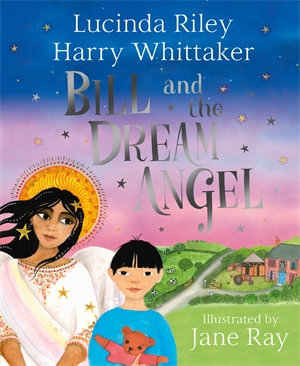
Bill and the dream angel by Lucinda Riley and Harry Whittacker. Illus. by Jane Ray
Award-winning author of adult books, Lucinda Riley wrote this picture book with her son Harry Whittaker as part of the Guardian Angels series of picture books before her death in 2021. The books are based on stories she used to tell her children when they faced challenging situations. Bill and the Dream angel is the second book in the series, the first being Grace and the Christmas angel and a third called Rosie and the Friendship Angel. This story involves a young boy called Bill and his family, who have moved from a small flat in the city to a large, converted barn on a farm. Bill is frightened by some strange noises he hears during the night and wishes to return to his old home in the city. The Dream angel hears his call for help and puts in motion the events that prove to Bill that the monsters he thought inhabited his new home are just noises that will turn out to be a wonderful, heart-warming discovery. Moving house can be a stressful time for families and this book could help to reassure children and assist them to settle into their new environment.
The illustrations by Jane Ray are beautifully executed, showing in great detail the process the family uses to unpack and arrange things to make Bill feel comfortable in his new surroundings. The inclusion of some wordless double-page spreads encourages discussion and provides details for young readers to come back to time and time again. An angel place marker ribbon is an added feature of this gift edition hardback book.
Themes Moving house, Fear, Owls, Farm life.
Gabrielle Anderson
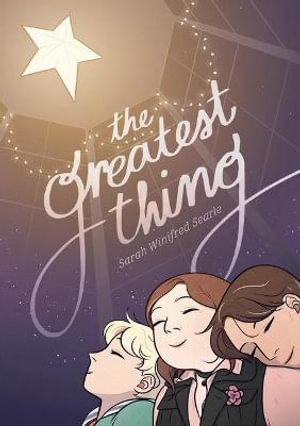
The greatest thing by Sarah Winifred Searle
Allen & Unwin, 2022. ISBN: 9781250297235. (Age:12-17) Recommended with guidance.
Winifred is a shy year 10 student and the start of this school year is even more difficult without her two best friends who are attending different high schools. Feeling alone and anxious she is approached by Mathilda Martel, who asks her to join their group. Tilly and Win used to be friends but had drifted apart, now she introduces Win to her friends and takes an interest in her wellbeing. The highlight of Win’s day is her independent study period with a favourite teacher who will mentor a personal project, making comics, in return for Win helping out other students in photography class. Her other love is Art class. Unexpectedly Win finds she enjoys helping other students and develops a new friendship with outgoing confident students April and Oscar who break through Win’s armour of anxiety, depression and low self-esteem, while acknowledging their own. The three harness their individual talents, Oscar the writer, Win the illustrator and April publisher to create a series of zines. Although they all are wrapped up in their own problems, the stories are a great success. The darkroom becomes a safe zone where they can discuss some of their issues with supportive friends, but sometimes that is not enough and outside help is needed. Supportive teachers, parents and professionals make an important contribution to their wellbeing.
Art is central to this graphic novel and the quiet colours are central to the emotional tone; night scenes and the rosy glow of the photography darkroom are important in the characters’ journey as they go through the uncertainty of discovering who they might be. Win’s self-effacing posture is consistently portrayed and her round face and big eyes contrast with the slender, beautiful people she admires. This is a colourful, complex, engaging story about troubled teens with a raft of issues but there is an overarching bravery in the characters courageously facing an uncertain future. There is a content note at the beginning warning of triggering aspects and at the end there is a page of mental health resources and a note from the author about this being a fictional account of some issues she had in high school. There is also a page about her zines and a section of the book describes how a zine is produced. Some guidance might be wise when recommending this book as the challenging content is not immediately apparent.
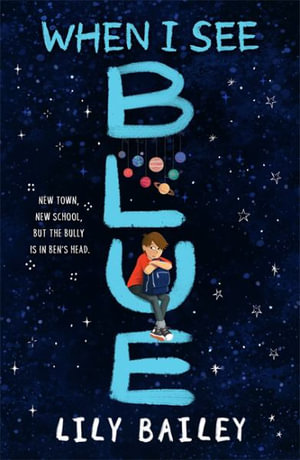
Ben is 12 years old and he has OCD (obsessive compulsive disorder). His family have moved to London for his father’s new work and they all hope for a fresh start. Ben’s OCD manifests itself in his constant need for things to be in multiples of 4, wearing particular clothes and arranging food on a plate so it doesn’t touch. These behaviours are done to prevent bad things from happening. At his new school he struggles to not draw attention to himself so he can avoid the bullying he experienced in the past. However, his mother is an alcoholic and no amount of attending to his rituals can save the worsening family relationships. Fortunately, April, a fellow student, has some insight into Ben’s situation. She takes him under her wing and encourages him to take risks and get counselling. Gradually he challenges his own thinking, has greater self-acceptance and inner strength. Things come to a head when April becomes very distressed and ends up in a life-threatening situation.
I found this very serious story compelling reading. The author, Lily Bailey, has personal experience with OCD and campaigns for people to understand it better. She writes respectfully and convincingly and since it is written in the first person you can really get into the way Ben thinks and changes. At times the neglect of his mother and father and the cruelty of other students is believable and heartbreaking. However, the friendship with April, care by some of the teachers and the therapist are heartwarming. Ben and April are such great young people. This story is an important vehicle for developing empathy for those with OCD and for sufferers themselves to have hope. Considering the mature themes of When I see Blue, I believe this book is best suited to young middle years readers. It is similar in themes and tone as Kate Gordon’s book Aster’s Good, Right Things.
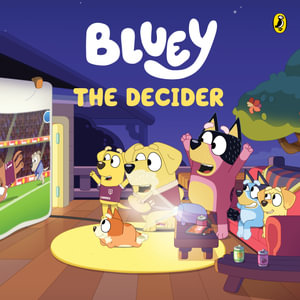
The award-winning Bluey is back with a jigsaw book that will be fun for fans of the TV show. Each double page spread has a small section of text describing the puzzle and asking the reader to see what happens when the puzzle is turned over. The four puzzles are of familiar Bluey episodes. There is a fairy ring, Bluey and Bingo play Mum and Dad, a cheeky bin chicken watches Bluey and Bingo sneak up on Mum and Dad and finally Bingo is dreaming about an adventure in space.
The puzzle pieces are large and made of heavy cardboard and fit into the page. Adults might have to be careful to keep the pieces of each puzzle separate so that young children could do the puzzle.
I can see grandparents who love jigsaw puzzles having a lot of fun with this book, teaching their grandchildren how to complete a puzzle, and in this case, have the fun of turning it over and having a second picture completed.
Themes Jigsaw puzzles, Games.
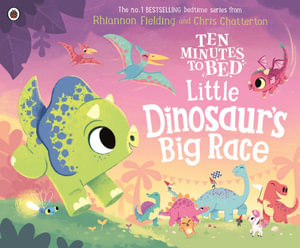
Ten minutes to bed little fairy by Rhiannon Fielding and Chris Chatterton
The Ten minutes to bed series is very popular, and the latest in the series, Ten minutes to bed little fairy is sure to captivate little children and send them off to bed in ten minutes. Poppy is a little fairy who has very small wings that make it hard for her to fly high. She flies low to the ground, then onto a flower and finally when it is only a few minutes to bed her confidence grows and she can fly into the night sky. Then she spies a little gnome who is lost and can light his way home, just before the ten minutes to bed is over.
This series is very appealing. The rhymes make it an enjoyable read aloud and the idea of ten minutes before it is time to get into bed is one that parents could enjoy. It is good to see that Poppy grows in confidence and begins to challenge herself as she flies and the fact that she can help the gnome find his way home is joyful.
The illustrations are bright and cheerful and have lots of minute details that children can find. There are tiny fairies on mushrooms, frogs in a pond and a ladybird and bees to find on many pages. Spiders lurk amongst the leaves and Poppy’s happy expressions as she flies higher are lovely to follow.
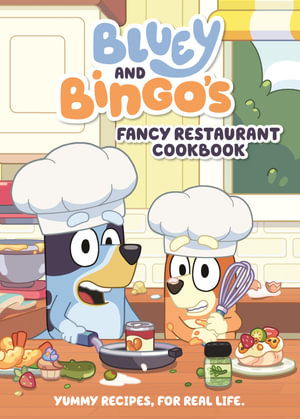
Bluey and Bingo's fancy restaurant cookbook by Bluey
Penguin, 2022. ISBN: 9781761045769. (Age:4+ with adult support) Recommended.
Parents, grandparents and children will be familiar with the well-known and much-loved Bluey series on ABC KIDS. All over the world, the Bluey phenomena is further heightened by the huge marketing range of books, toys, clothes, games and more. Now there is a newly released cookbook titled Bluey and Bingo’s Fancy Restaurant Cookbook. This bright, colourful and humorous book is presented in a spiral bound format with easy-to-wipe-clean pages. The book begins with tips to be read with an adult about safety, hygiene, allergens and mess. This is followed by a page of all the things needed including a whiteboard marker to tick off the ingredients. Recipes included are omelettes, Shadowland cupcakes, poffertjes, Nana’s ice blocks, Bingo’s fairy bread, sausages and salad, fish and chips, prawn kebabs, pizzas, spring rolls, curry, ice cream, pavlova and a challenging duck cake. All recipes have a difficulty rating, a list of required ingredients, plus clearly set out numbered steps to follow the recipe. Throughout the recipe pages are engaging illustrations and comments from Bluey, Bingo and friends. There is a page for creating your own menu as well as your own recipe.
An entertaining cookbook best shared between an adult and young child.