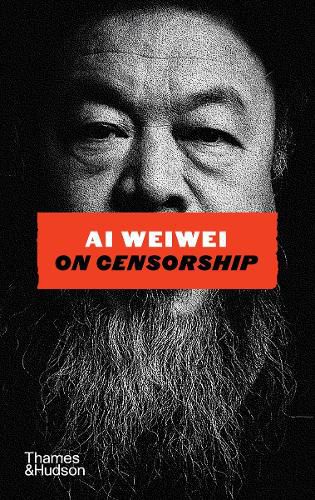
In this latest publication, Ai Wiewei argues that at its core, censorship functions in fundamentally the same way under authoritarian regimes and in so-called free societies. Ai Weiwei is a Chinese artist and activist with a long history of provocation of ideas about art, life and politics. He has experienced censorship in both his home country and in the western world where exhibitions in Paris, London, Berlin and Boston have been cancelled based on comments he has made in social media. Australian readers are only too aware of the penalties for outspoken artists following the cancellations of talks by Randa Abdel-Fattah at various writers’ festivals. Censorship of free speech in Western democracies may be more covert than the censorship based on the official narrative propagated by the state, but censorship continues nevertheless in the suppression and elimination of dissent.
Ai Weiwei has personally experienced China’s discriminatory practices against all artists and particularly those who practice free expression. At the same time, in Western societies censorship communicates that ‘certain thoughts, speech or expressions are forbidden’ and are often attributed with some form of anti-social characteristic; for example, any criticism of Israel’s actions in Palestine is labelled ‘anti-Semitic’.
Such actions compel people to ask: who wields this god-like power to shield obvious darkness and obscure the light of justice, preventing it from approaching fundamental truths and social fairness?
Reading On censorship would be useful for students studying Ai Weiwei’s impact on art, and his social and political activism, providing further context for his body of work. However much of it reads like blanket statements that would have been enriched by more examples from his experience as an artist. For me that was largely compensated by the fascinating photographs he provides of his surveillance by undercover police and cameras, the detectaphone found in his studio, and images from his self-surveillance project. Most iconic is the image of his middle finger gesture to the cameras outside his studio, the gesture of defiance that is an undercurrent to all his work.
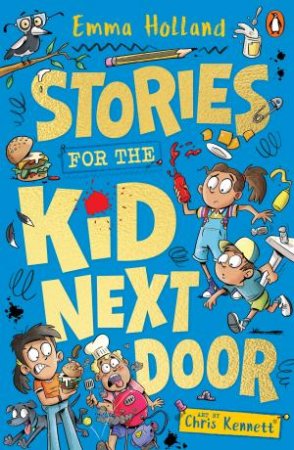
This collection of short stories and poems is fabulous. With a huge cast of quirky characters and wild adventures this book is sure to keep the reader entertained. I saw one comment that described the illustrations as a perfect brain break from the text, but I think that this accurately describes this book perfectly, as the short stories are finished quickly and create a buzz that makes you want to return to the book and read it again.
I have always loved collections of short stories as they allow you to feel a sense of accomplishment when you finish each story, and this collection is so funny, unpredictable and weird that it was hard to put down. It is hard to describe the story or discuss the characters in this type of book as the characters are diverse and challenged in different ways according to the story, there is no repetitiveness or a feeling of having read it all before, and the illustrations complement the words perfectly, helping to move the story along and follows the action perfectly.
I can see this being a favourite of independent readers but would also work well in a class room or as a read aloud at home because of the format and the touch of absurdity in each story. This is definitely a book I would recommend and revisit personally too.
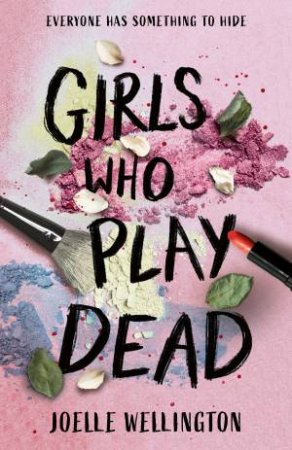
Joelle Wellington, author of Their vicious games, brings fans another searing thriller, where Mikky and his sister Kyla, try to find out who murdered Kyla’s best friend Erin. Girls who play dead opens with a memorable chapter showing Kyla tending to her friend’s body in the funeral home that her father owns. Mikky comes home to small town Prophets Lake, to support his sister. He goes back to the High School he hoped he had left forever, but therapy has given him survival strategies and he is not prepared tochange his clothes or his nail polish. Things have changed since he left. Mikky finds it hard to get close to Kyla, who is now the leader of the cool, mean, cheerleaders. He knows that he must find Erin’s killer and try to help Kyla in her grief. But as he investigates, he finds that everyone has something to hide and that the beauty industry that is the livelihood of the town has its secrets as well.
Wellington’s portrayal of mean girls and how they operate is unforgettable. It is hard to like Kyla’s nasty behaviour; at the same time the reader can feel sorry for her loss and the work that she is doing to keep the funeral home going. Mikky is a likeable young man, open about the therapy that has helped him accept that he is gay and the slow burning romance with Nasim, his classmate, adds another dimension to the story.
The in-depth descriptions of life in High School form a solid background to the murder investigation. There are multiple red herrings, leaving the reader wondering what the motivation was behind the murder. Was it the boyfriend? What role did the beauty industry and drugs play? How much was Kyla hiding? The tension builds up to a surprise denouement, leaving the reader breathless with the suspense.
Girls who play dead is a unique, twisty mystery that is sure to prove popular with older teens.
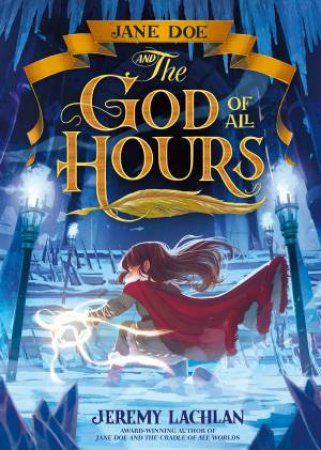
The Jane Doe Chronicles follows Jane as she navigates a deadly labyrinth between worlds on a quest to rescue her father before a villain gets to him.
In the fourth book Jane has vanished, she is taken to the entrance of the labyrinth and told to run. This is Jane’s last chance to find her friends and father and save the Otherworlds.
I have not read the other Jane Doe books but after reviewing this book I really want to go back to the beginning and read them all. The writing and story had me hooked in a way that I hadn’t expected. I am not a huge fantasy reader, but this book was so real, and characters faced unexpected challenges in a very human way. The interconnectedness of the Otherworlds in the book is done so well and the difficulty in accessing doors to move between worlds adds to the suspense and action of the story.
I really enjoyed the relationship between the characters and the friction that occurs as this feels realistic for human friendships and relationships and made the book believable and showed the reader that while you might not like a person or always get along you can still work with them for the greater good or to save the universe!
I would highly recommend this book as the characters are brilliant, the villain is truly evil and will send a shiver down your spine, worlds interconnect and compel you to keep reading. It is perfect for independent readers who enjoy fantasy, adventure, and good/evil themes.
In Flanders fields the poppies blow Between the crosses, row on row, That mark our place; and in the sky The Larks, still bravely singing, fly Scarce heard amid the guns below… (John McCrae 1872-1918)
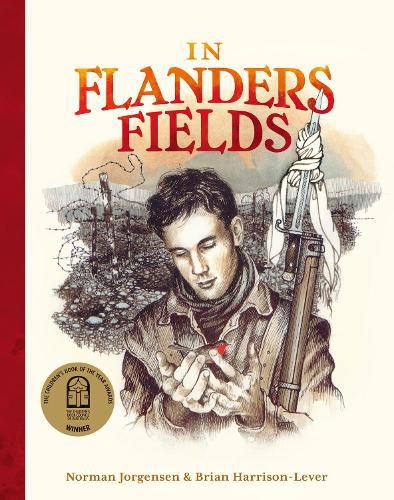
In 2003 In Flanders Fields, was awarded the Children’s Book Council of Australia (CBCA) Picture Book of the Year. This beautifully written and deeply poignant story, inspired by a true event, offers a small yet powerful glimpse of humanity in a war of unforeseen horror and brutality.
This anniversary edition is ready for a new generation of readers to gain an understanding of the devastating impact of war. It recounts a moment on Christmas Day 1914, when both sides stopped firing as a young soldier risked his life by venturing into no man’s land to rescue a robin caught in the barbed wire. Both sides watched and waited as he warmed the robin in his hands and set it free. Soon after ‘Silent Night’ was heard from both sides, sung in English and German.
The depth of the illustrations beginning with the striking cover in muted tones of black, brown and grey with the pop of red from the robin and the title, are continued throughout the book. The front endpapers depict the Allied forces in the trenches while the back endpapers mirror the same with the German forces. With the rich and detailed illustrations on each page telling their own unique story, there is much to be learnt from this recount.
With its renowned striking imagery and moving narrative, this new edition once again captures of a snapshot of wartime history, enabling readers to gain an appreciation of a moment of compassion that tells a different story from more distressing World War One accounts. Teacher's notes are available.
Themes World War One, Christmas Day 1914, Flanders Field, Battlefields, Humanity, ANZAC DAY, History, Soldiers.
Kathryn Beilby
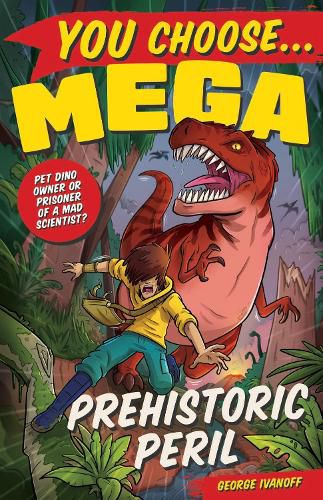
You choose Mega: Prehistoric peril by George Ivanoff
Prehistroic Peril is set in a dinosaur themed education centre and the reader is part of a school trip.As with other You Choose storylines, the reader must select where they will take the story with many different storylines available.Will they visit the robot dinosaurs, the research lab or accidentally get transported back in time? All of these are options when you start reading.
Each time the reader starts the story they are taken in a different direction as they can choose the way the story develops through the choices they make at the end of each page.
George Ivanoff is the master of You Choose books and this one does not disappoint with so many options and stories developing.I really enjoyed the Mega aspect of this book with so many twists, turns and different storylines and endings.The story also felt more detailed and engaging without being too heavy or hard to read.Each story was longer than the traditional You Choose books – although I still died very quickly at times!
I have always enjoyed reading You Choose books as they allowed the reader to create a series of short stories around a common theme, the characters remain the same, but the reader gets to choose what happens to them although at times with a surprise twist that keeps you coming back for more.
I really enjoyed the longer and more in-depth nature of this book and know that independent readers will enjoy these aspects too.As with any You choose, this book is bound to be a favourite with readers as they experience the excitement of this style of book for the first time or as a new book in the series.This book could be used as a read aloud in the classroom with students making choices either as a group or individuals.An excellent book for all readers.
Themes Dinosaurs, School, Friendship, Adventure, You Choose, Choose Your Own Adventure.
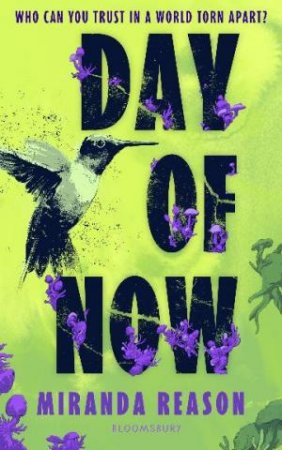
Prepare to become immersed in Day of now, a gripping dystopian thriller. Dayna and Pax are siblings who have been brought up by their father to be self sufficient, able to survive in a harsh environment after a fungal pandemic has changed the world forever. When their father get sick, attacked by a zombie like person who has been infected by the Pink Mist produced by the fungus, they contact the outer world, hoping to get help for him. But they are betrayed and he is taken by the Hummingbirds, a group of soldiers, to a scientific facility where experiments are taking place to find a cure for the fungal infection. The children face terrible conditions trying to reach their father and save him. Travelling across country, they meet Jason, a young teen, who joins them and together they forage for food in abandoned houses, hide from the soldiers who are trying to find them and try and navigate a landscape with no communication and means of transport.
The character of Dayna stood out for me. She is a pre-teen, but she is the leader of the group, the one who makes the decisions and who has the skills to keep her little group alive. Pax her brother provides some light relief with his naïve outlook, but he is smart and able to pull his weight with his scientific knowledge and skill with a slingshot. Jason, although older, does not have the survival skills of Dayna and Pax, but he does understand the danger that the Hummingbirds could bring to the trio.
Although the main characters Dayna and Pax are young, some of the themes in Day of Now are very mature. They encounter a cult with a charismatic leader who preys on young girls and they are faced with making decisions about the ethical use of science. These themes make it more suitable for older teens, 14+.
Day of now is a gripping, thought-provoking story and I look forward to its sequel. Readers who enjoyed it might like to try Sunny at the end of the world by Steph Bowe and Anomaly by Emma Lord.
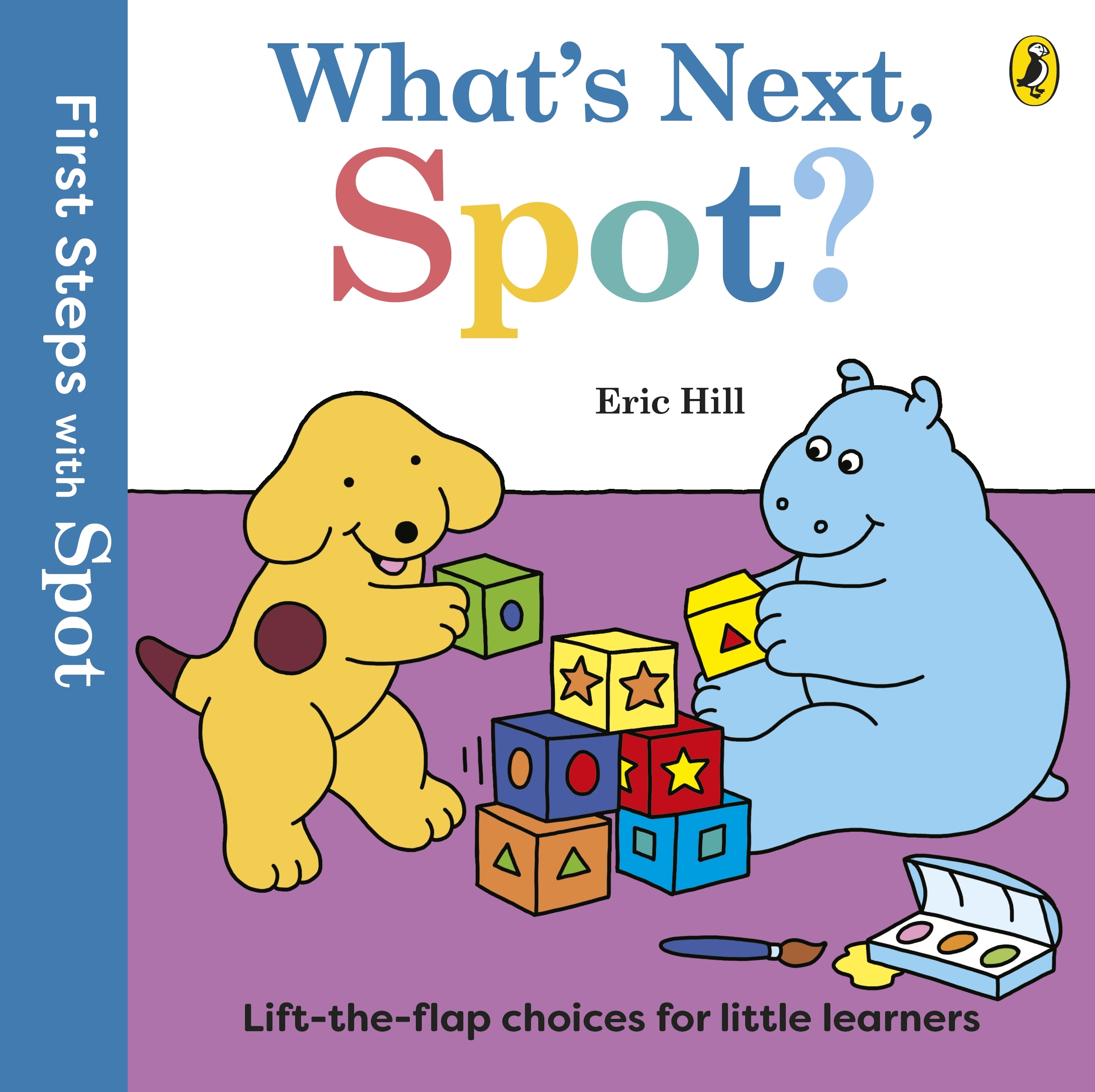
Who does not love Spot books! The first, written by British-American author and illustrator Eric Hill (1927-2014), was the beloved lift-the -flap book Where's Spot?(1980). Published now by Penguin Random House, the Spot books have continued to be loved by generations of children globally. The gentle and positive stories feature the happy puppy called Spot who has all sorts of everyday adventures. The illustrations are brightly coloured with the subjects boldly outlined in black. The books are often interactive.
The interactive format of What's next Spot? is important because on every double page, the child makes a choice for Spot by lifting the flaps. The book is full of joy and vitality. "It is the start of a new day and Spot has lots to do. What will Spot choose for breakfast?" The child has the chance to make a decision for Spot about what he might like for breakfast. There is a multiple choice (of 4) for the child to make on each page. Behind each flap you see Spot enjoying the choice and making a positive affirmation such as, "I love fruit." At the bottom of each page there are two questions for the child to answer that reinforce the focus concept - (in this case) breakfast food choices. The book continues in this manner through a typical day for a preschool age child and finishes with choosing a bed time story for Spot. The concepts of order (first and next) are reinforced along with the idea of choice and agency.
What's next Spot? is derived from the original series of works created and written by Eric Hill and the moral right of Eric Hill has been asserted. This boardbook is strong and happily the flaps are also board so they don't rip. It is made to be durable for little hands. This is so important as many lift-the flap books are destroyed very quickly. This book will withstand much handling. The format is comfortingly repetitive and choices that children make are within the categories of breakfast food, clothes, activities, costumes and stories.
What's next Spot? is a delightful board book to add to your Spot book collection.
Themes Making choices, Preschool daily routines, Parent/child bond, Friends.
Wendy Jeffrey
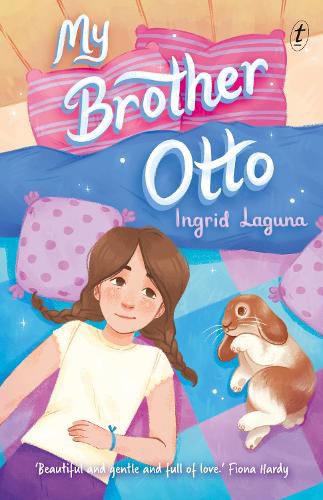
My brother Otto by Ingrid Laguna
Text Publishing, 2026. ISBN: 9781923058729. (Age:8-11) Recommended.
Quinn is not happy with the news that there will be a new baby in her family. The disruption will mean she will have to share a room … and what will happen to her precious lop-eared rabbit who currently lives with her in her space? Quinn is not prepared for the change in her family dynamics at all, and feels the sense of loss of her security. She can throw herself into story writing and cuddles with her rabbit, but she is not really happy. The new baby, Otto, arrives far too early and his life is held by a thread in the hospital NICU, and Quinn and her parents must live with the topsy-turvy uncertainty of the neo-natal life. Will Quinn ever be ready or even able to welcome her brother home and has the tiny baby managed to wrap his finger around her heart?
This story has the lived-experience heart of the author’s own grief and loss, and anyone who has travelled the route of a premature birth in their family will instantly feel the struggle of this story. Written from the perspective of a child, it carries a naive winsome quality that recognises a child’s emotional responses to a significant family change. There is grief as part of the story, so some children reading this may struggle if they do not have the emotional capacity to deal with the big issues of beginnings and endings in life. The story is moving and my own memories of watching my niece struggle after her very premature arrival were instantly at the forefront for me. Make sure that a young reader in the 8-11 age group has sufficient support if they have their own grief to bear or even if a new baby is expected in their family, but it is a beautiful story with a resonance of love that is quite profound. This is written for young readers, and it raises big issues - but books are sometimes the best places to help children see that the world is not always ‘rainbows and rabbits’ and stories do not always have a happy ending.
Themes Grief and loss, Premature birth, Siblings, Emotional growth, Rabbits.
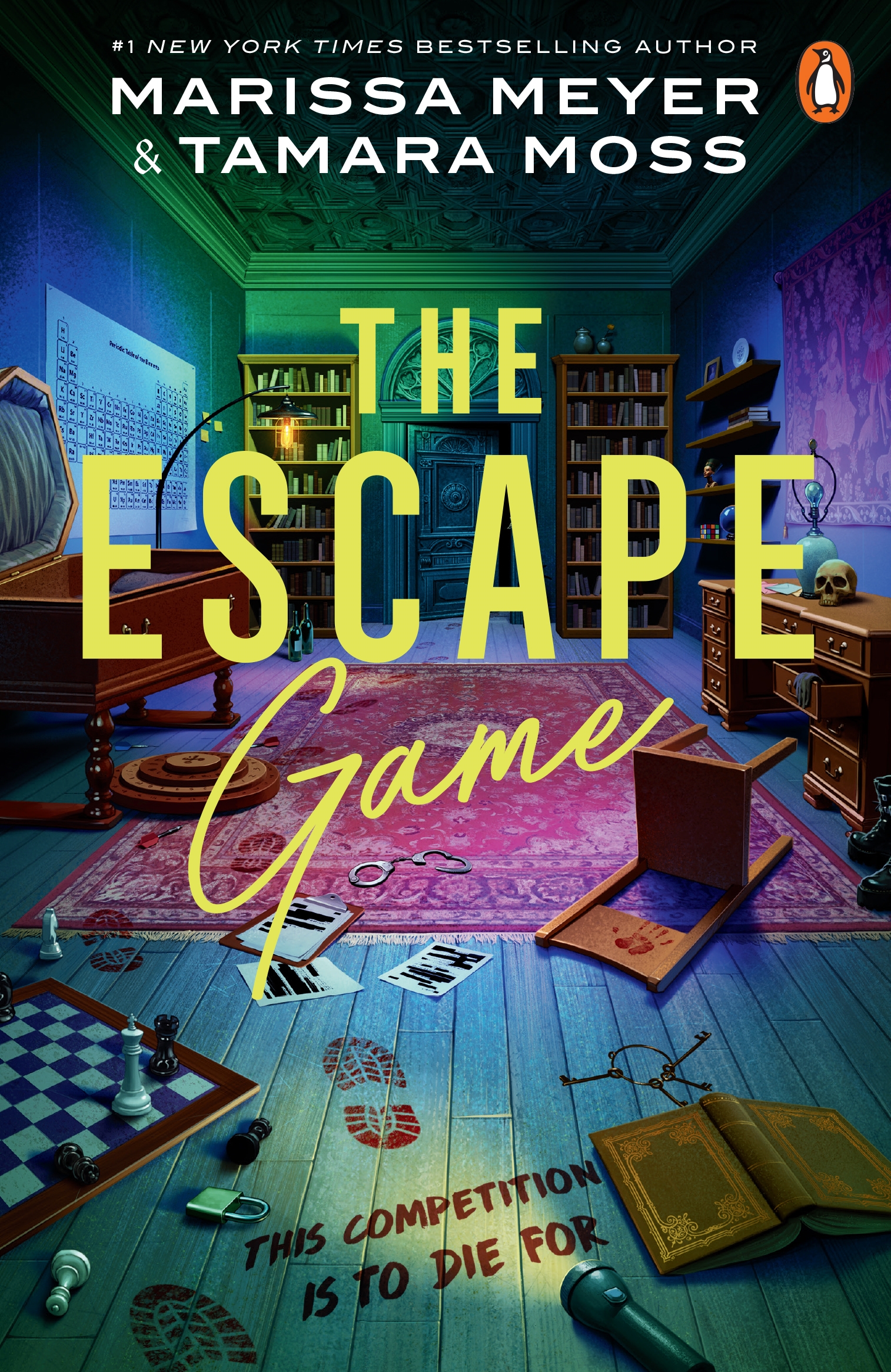
I love mystery stories and eagerly picked up The escape game, intrigued by its unique premise – a murder of a young woman, Alicia Angelos, on the set of an escape-room themed reality game show. A new season is set to go with contestants excited awaiting the beginning of the show. There is Carter, whose online name is Kick it Carter, a math whiz, Beck who designs his own escape rooms, Adi who is great at cryptography and Sierra Angelos, the sister of the murdered girl and who everyone believes is her murderer. As the show progresses it is obvious that someone is behind the scenes manipulating clues and keeping Sierra’s team guessing about what happened to her sister.
Marissa Meyer is the successful author of many novels including The Lunar Chronicles, while Tamara Moss has written adult mysteries under the name of Tamara Moss Bailey, and their collaboration results in a thrilling read, where the reader is taken from one escape room to another. Sierra, Adi, Carter and Beck must use their unique skills to escape the rooms and learn to trust each other, while all having different agendas and needs as contestants. As well as the challenge of unpicking clues, deciphering codes and escaping locked rooms, they face danger as it becomes increasingly clear that someone is out to get them. They are locked in a freezer, Carter’s drink is spiked and Adi must face the machinations of his manipulative mother. And will Sierra find out who murdered her sister?
It is told from multiple viewpoints, with flashbacks to the previous season when Alicia was murdered. The reality show hosts, contestants and behind the scenes workers are vividly described as the reader gets to know the inner thoughts and dreams of the contestants.
The Escape Game is a gripping thriller and the tension is kept up to the stunning conclusion. And there is a sequel to follow with more adventures for the team! Fans of The Inheritance Games series by Jennifer Lynn Barnes are sure to love this.
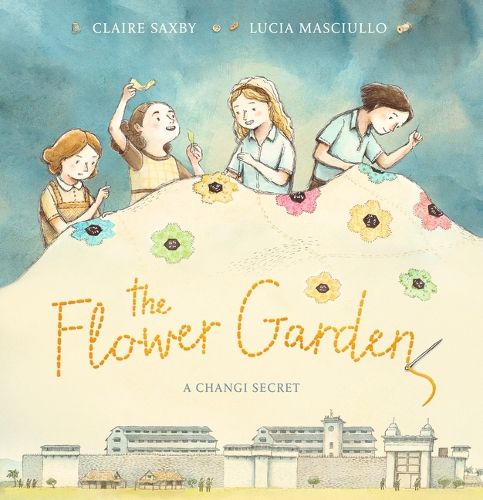
The flower garden - A Changi secret by Claire Saxby. Illus. by Lucia Masciullo
Walker Books, 2026. ISBN: 9781760657352. (Age:7+)
I have a secret – we have a secret – in this place where secrets are not allowed.
Imagine you're a child with all the natural curiosity, imagination, energy and exuberance that goes with childhood. But instead of being able wander and explore the world around you, that wall is bounded by high walls and barbed wire, patrolled and guarded by brutal soldiers who did not hesitate to impose their power - even on little children. Such was the life of many children and their mothers who were long-time residents of Malaya and Singapore but who, with the fall of both countries to the Japanese in February 1942, were herded like animals into the notorious Changi Prison, and treated as such. Days were spent tending the gardens to grow food for their captors in the morning and then on rows of hard benches learning "numbers, words and formulas" and secret songs under the watchful eyes and ears of gun-carrying soldiers in the afternoons. Not until dusk fell was their time their own.
But in that time, the women tried to make life a little more normal for the children, and one in particular, Mrs Elizabeth Ennis, an army nursing sister began a secret Girl Guides group and taught them how to take their minds, if not their bodies, far beyond the prison walls. So as her birthday approaches, it is time to make a special present, and in this sensitive, softly illustrated story, Saxby and Masciullo not only divulge what that gift will be but expose the lives of those who made it and the risks they took to do so.
The horrors of Changi have been on my radar since my own childhood because even though my dad was a POW in Germany and eventually force-marched across Poland as part of the Germans' human shield, even in those days long before television, let alone the internet, the atrocities and barbarities of Changi were known, and the brutality of the captors was being revealed by those like my future father-in-law who miraculously survived the men's camp, as well as in stories like Nevil Shute's A Town Like Alice, and movies like The Bridge on the River Kwai(where my f-i-l ended up). Yet from the depths of the darkest despair, the human spirit soared and stories like the making of this precious gift have emerged.
As I read this book, including the author's note that offers a short background history of the time, I wanted to know more and a simple search brought many links including stories of those who helped make it, a history of the quilt itself, including close-up photos of it in the Imperial War Museum, as well as information about the other quilts that were made, including the Australian quilt.
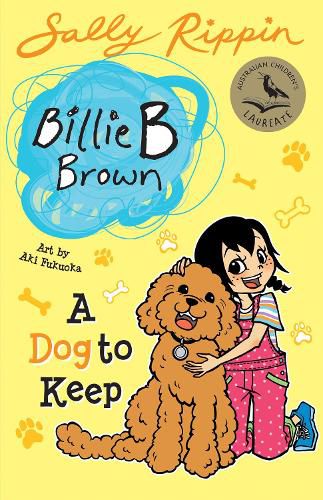
In this latest adventure, Billie meets Otto, an adorable foster dog that everyone in her neighborhood loves but no one can adopt. Billie is upset that no one can give Otto a forever home even though they all want to. This book looks at the solution and shows that sometimes using your imagination can help you tackle a new challenge and find a solution that is a little out of the ordinary.
I have always enjoyed reading the Billie B Brown books and I really liked this story for the problem solving that Billie does and the way that the neighborhood works together to find a solution that works for all of them but especially Otto.
Billie B Brown books are the perfect first chapter books for newly independent readers and are wonderful as a read aloud too as they are short but still have a great story that encourages discussion. The illustrations really help to engage the reader as does the fact that each book has familiar characters throughout, including Billie’s best friend Jack.
A dog to keep also introduces the idea of foster dogs and adopting rescue dogs. The language is child friendly, and the story is engaging and shows that sometimes thinking outside the square can help to find the perfect solution. I really enjoyed this book and think it is one of my favourite Billie B Brown books.
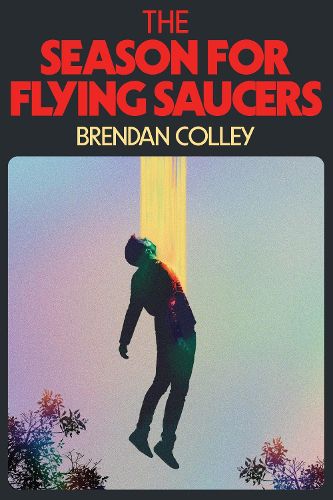
Having read the brilliant novel The signal line (2022) about a ghost train arriving in Hobart (there are no trains in Hobart), I was hardly surprised to discover that Colley’s second book is about a father abducted by aliens. The book cover image shows a figure being uplifted by a beam of light. Noah, the son, has grown up with regular ‘prepping’, sitting watching the sky in a state of readiness for the next thing. He writes poetry in obsessive preparedness to also visit another world – and the reader suspects it’s probably the reason his wife Sarah has just left him. He is alone living in the childhood home he has bought, ever a skywatcher, along with his neighbour Malcolm, and other curious people, waiting for the flying saucer lights to descend again.
In the Endnotes to the novel, Colley writes that there’s a ‘steep history of UFO sightings in Tasmania’; he references the sightings reported in documents of the Tasmanian Unidentified Flying Objects Investigation Centre across six decades. It was during one of those visitations that Noah’s father Warwick left his family. But with his departure from Earth, each of the family members seems to be touched with a special gift; for Noah it is an obsession with poetry writing, his mother Patricia sees the spirits of dead people and his sister Martha communicates with dogs.
Noah’s family has all split up; his wife has left him, and he is alone in an empty house with only his neighbour Malcolm interested in also sitting and watching the skies for alien visitors. It is a time of loneliness, but gradually the family reassembles, and with hope comes a feeling of home. It is a bizarre but touching story of humans slowly reconnecting and respecting each other.
If you are interested in reading something out of this world, with a gentle touch of humour, this book is for you.
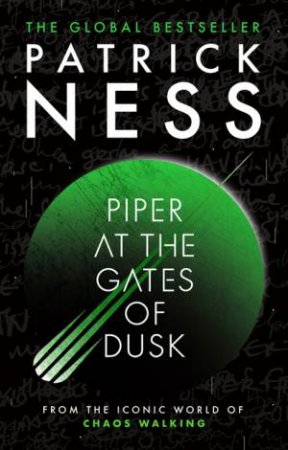
I was thrilled to read that Patrick Ness had a new book, Piper at the gates of dusk, the first in the New World trilogy, set in the world of the series Chaos Walking, which was a memorable read for me. It is twenty years after the devastating events that Todd and Viola had experienced and they have settled on a quiet farm with their sons, Ben and Max. Ben is looking forward to continuing his studies at a higher level, while Max loves being on the farm where the chooks love him, chasing after him as if he were a deity, saying ‘Max, Max, Max’. A cure has been found for the Noise that had originally affected the men, but it had left Ben mute, having to use a communicator to converse.
Ness immediately drags the reader in with his first page, written in many typefaces: 'everyone thinks you’re a freak. You’re nothing’ and other negative thoughts that the Noise brings into the waking world. Then the reader follows Ben as a god comes screaming out of the woods, a giant alight with flames, burning everything around it and then plunging into the lake and disappearing. Is this apparition linked to the horrible nightmares that Max and other young people are having? An uneasy peace has settled between the Land the original inhabitants of the planet and the settlers, but racism is still an issue and some people find it very easy to blame the Land for bringing in this new threat.
Told in the voices of Ben and Max, short chapters often end on a cliff-hanger, leaving the reader breathless and wanting to continue reading, although at the same time needing to spend time thinking about the words of wisdom that Todd gives Max about being brave and doing the right thing and the problems that can arise in family relationships.
In his letter to readers at the front of the book Ness beautifully summarises the themes of this fabulous read. Piper at the Gates of Dusk is 'a story about storytelling, a story about feeling different and left out, a story about how we are reflected in our parents but how we have to find our own way. A story about brothers.' It is not to be missed.
Simon & Schuster, 2026. ISBN: 9781761633324. (Age:15+) Highly recommended.
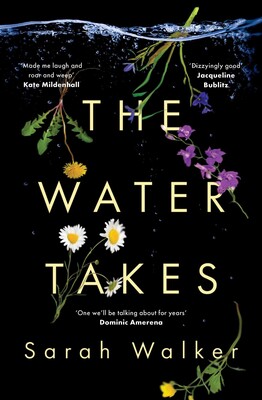
In a world of cavernous sinkholes opening in the ground, swallowing people and buildings, and water sloshing everywhere, two unlikely friends are thrown together: the cantankerous old recently widowed, Pam, and the curious spark of a ten year-old girl, Charlotte. When Charlotte’s home disappears, Pam has no option but to care for Charlotte, finding food, and protecting her from marauding looters.
But gradually the roles are reversed as Pam's mind starts to drift, and Charlotte, eager to find friendship and safety, has to overcome the fears of the old woman and find her own solutions. It is a beautiful story of love and kindness in a chaotic dystopian world.
Sarah Walker says that she likes writing about ‘anxiety, intimacy and absurdity’. Her debut novel is both menacing thriller and tender story of friendship. It’s one of those books that will stay with you long afterwards.
Themes Dystopia, Human nature, Ageing, Youth, Optimism, Caring.