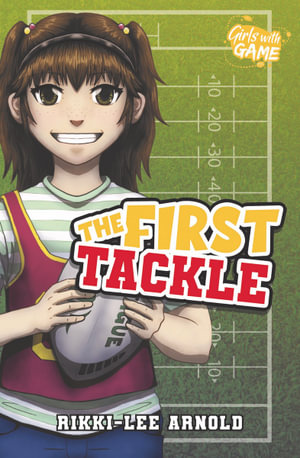
Daniella (Dani) Murphy is determined to play rugby league, but she keeps getting the message that girls don’t play footy. She is determined to play like her brothers, but since her mum passed away her grandma says no, and her dad says nothing. Dani is determined to show them that she is as good as any of the boys and can play. She has been training with her older brother and is getting good until a terrible accident that threatens her dream.
Dani doesn’t give up and with the inspiration of another local girl playing footy she is determined. Her brother comes up with a ploy to help her prove to her family that she has what it takes. Once her family see how passionate she is and that she can play they are reluctant but willing to let her have a go. Dani realizes that her family are not being mean when they say no, they are just overprotective since her mother passed away. In the end Dani is able to follow her dream and prove that girls can play footy.
This book highlights that you can achieve your dream if you are willing to work for it. Teacher's notes are available.
I recommend this book.
Themes Rugby League, Girls, Sexism, Persistence.
Karen Colliver
Coco and the bee by Laura Bunting and Nicky Johnston
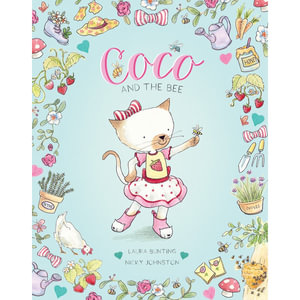
Coco and the Bee is the third book in the series and this book does not disappoint.Coco is a little kitten who is living in a new house and discovering lots of new things. She is interested in gardening but doesn’t like bugs so is unhappy when she sees a bee on her strawberry plants.
Coco has moved to a new house in a new town and when her mum invites the boy next door over for a playdate Coco is concerned they will have nothing in common.Through the course of the book not only does Coco learn that friendships grow from not only our shared interests, but our differences and she also discovers that bees are very important and that there are many different bees in the world.
The Coco books are beautifully written with illustrations that support and enhance the text; the books have more words than a typical picture book and this makes them great as a classroom read aloud or bedtime story.The font is easy to read, making them a great first read alone book as well.
I adore the Coco series for its gentle stories and the real-life challenges that are solved through experiencing life from different perspectives. There is a lot of information in the book about bees however this doesn’t feel like an information book.The facts are woven into the story in such a way that the reader can learn new information while considering the other aspects of the story such as acceptance, presumptions and adapting our thinking for a happier outcome.
I genuinely believe that this series will be a classic in years to come as children and their families share the stories together.I also think that this book would be a great introduction for teachers to use in the unit on minibeasts or bees.The text is simple enough for children to understand and the story will engage students as they discover new facts about bees.
Mertales: The mysterious rainbow thief by Rebecca Timmis
Albert Street Books, 2022. ISBN: 9781760526580. (Age:6+) Recommended.
This was a Fin-tastic book.
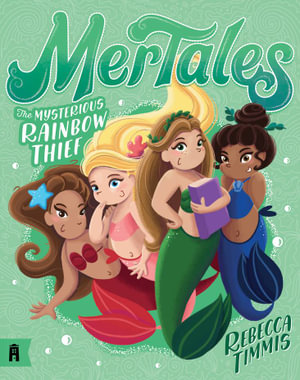
Four friends, Pear Periwinkle, Shell Shimmerfins, Coral Clearwater and Sandy Starfish are faced with a mystery – all of the colour in Cockleshell Cove is disappearing. The friends decide they need to try and solve this mystery before all of the colour disappears and everything turns grey.
Sandy thought she could catch the colour thief by herself, she has read all the Merlock Holmes books and believes she can solve this herself. As the colour continues to disappear Sandy starts to realize she can’t catch the colour thief by herself. This is too big a job for one mermaid. Once Sandy accepts her friends' help and the four friends work together combining their individual strengths, they are able to catch the colour thief and restore colour to Cockleshell Cove. Sandy learns that working as a team can help get the job done.
The fin facts at the back of the book adds an extra element to this novel. The fun illustrations in this book also add another element to the story.
This book can be used to support the concept of working as part of a team to achieve a collective goal.
I recommend this early novel to anyone who likes mermaids and enjoys fishy puns. There are three more books in the set so if you enjoy this one I am sure you will enjoy the others.
This is a book with heart. It is an opportunity for children to hear words of encouragement from someone who has both struggled with poverty and racism, and also succeeded in sport. The author of this book is a global superstar playing soccer at an elite level for England and Manchester United. This career gives him a platform to be noticed, but in this book, he reveals his own personal history as a child of poverty and the people from his past who have made a big difference in his journey. He is also famous for missing a goal in a critical game in penalty time. The disappointment of letting down a nation is not something that is easy to forget, but Marcus Rashford shares in this book the truth that everyone makes mistakes and learning from them is also possible. The remarkable voice of kindness also flows through his life and his benevolent care of children in poverty via his food charity initiative is also used as an example for young readers.
The voice within this book is gently encouraging and personal. It reveals a man of heart who understands struggle, but also can inspire others to be the best version of themselves. He highlights the value of team, the opportunities for kindness, the value of small moments and the way to rise above disappointments and negativity, and all of this directly addressed to young people. Soccer players will be most likely to pick up this book because of Marcus Rashford’s name on the cover. It is a book that will be enjoyed by persistent readers, not because it is hard to read, but because kindness is not compelling to read about, even though kindness is naturally attractive. However, this is worth recommending if only to encourage kindness in our young. Presentation includes illustrations and highlighted quotations in black and white, and also end of chapter action points.
Themes Positivity, Resilience, Kindness, Soccer, Racism, Marcus Rashford.
Carolyn Hull
An arrow to the moon by Emily X.R. Pan
Hachette, 2022. ISBN: 9781510102989. (Age:14+)
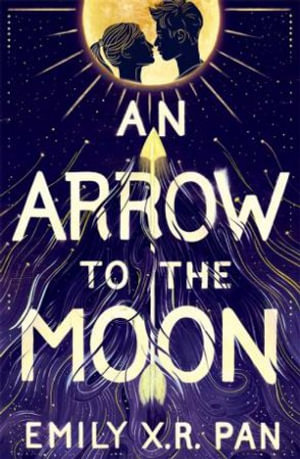
Luna Chang has a picture perfect life - loving parents, financial freedom, perfect grades. Enter Hunter Yee - financially challenged, struggling student, disgruntled family. The Yees and the Changs are enemies, a seemingly long forgotten wrongdoing has caused the two families to never see or speak of each other, ever since Hunter and Luna were young. But now Hunter attends the same high school as Luna, even rides the same bus as her - their paths are crossing everywhere. They even discover they have the same birthdate... Ever since the night they met and accidentally brushed hands, strange things have been happening in their hometown of Fairbridge. Fireflies flock to Luna, cracks appear in the earth, rivers run wild. Could it have anything to do with the stone the Hunter's father has tucked away for safety? And Hunter's family is running from something, or someone... And even though they know they aren't meant to have anything to do with the other, they can't help being drawn to each other...
Written from multiple character view points (including main characters, parents, siblings, and more), this urban fantasy myth novel jumps seamlessly from one perspective to the next. Essentially a Romeo and Juliet reinterpretation with romance, magic and Chinese mythology, readers will find the book has a unique feel, while still being relatable. Little bits of history are sprinkled into the book as a fun little taster of Chinese history, with many cultural aspects being included, including Chinese medicine. Fans of cultural books such as The Girl Who Fell Beneath The Sea by Axie Oh and Parachutes by Kelly Yang will find this an enjoyable read.
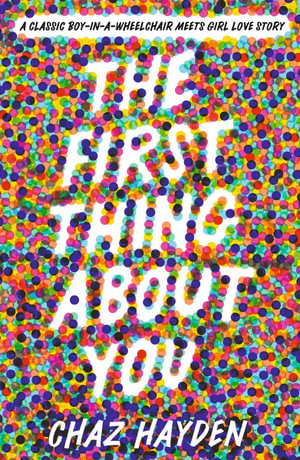
When his family moves from California to New Jersey, Harris must start at a new school at age 15, trying to make new friends, meet girls, find classrooms and complete homework. He is also navigating the usual teen-age rites; going to parties, getting drunk, watching sport, preparing for college. Except Harris has spinal muscular atrophy, so uses a wheelchair and has a carer with him constantly, either the attractive young student-nurse Miranda, or his over-worked mother Clare.
This is the sweet story of a teenager acutely aware that others judge him on his disability. His unorthodox opening question, 'What is your favourite colour?' is his way of evening the score and making his own assumptions about others.
He is determined to upend his current image as a lonely wheel-chair-bound boy. This involves working through his relationships with his distant brother Ollie, his one nerdy friend Zander and new romantic interest, classmate Nory whose refusal to divulge her favourite colour is a source of frustration as he becomes more attracted to her. He also needs to weigh up the relative benefits of associating with either the geeks or the football jocks.
The secondary characters are highly engaging. Miranda, alumnus of Harris’ school, makes Harris feel valued, but she is preoccupied by the memory of her best friend’s death and the increasingly controlling behaviour of her boyfriend. Clare does a wonderful job of appearing laid-back when with him at school, but becomes a regular, if flawed mother at home.
As might be expected in a gritty coming-of-age story, there is some profanity, alcohol and drug use and implied coercive control, however this fitted within the characters’ personalities and was not gratuitous.
Hayden writes from experience, having SMA himself, and demonstrates the daily battles that a person with SMA must deal with; health issues, mobility, access to education, harassment, challenges with personal care etc. Some of these issues will be an uncomfortable eye-opener to many readers, but they are an essential part of Harris’ story, often explored in detail, but without feeling didactic.
The First Thing about You, ‘a classic boy-in-a-wheelchair meets girl love story’ is a powerful read, written with humour and insight. Teacher's notes are available.
Themes Disability, Friendship, School-days, Own voice.
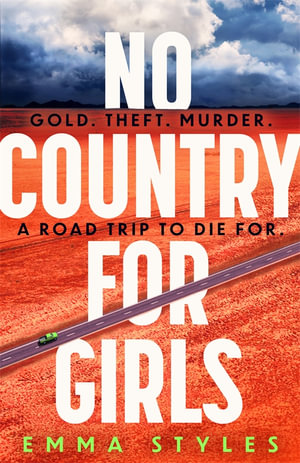
Charlie, hot-headed and street-wise, and Nao well-off and university-educated seem an unlikely pair, but they are on the run, bound together in an escalating series of law-breaking escapades.
One evening 17 year-old Charlie comes home to find a distressed young woman, Nao, on her doorstep, pleading for a place to stay. Inside, they find Charlie’s sister Geena’s drop-kick boyfriend Daryl waiting for Charlie, and demanding the return of the gold bar that he accuses her of stealing.
Within the first chapter we have Daryl dead, and Nao desperate to hide a secret. From there, events spiral and the two girls are forced to take extreme measures to try to stay one step ahead of people out to get them, and their duffle-bag of gold. Styles has written a fast-paced crime adventure with two mismatched, but gutsy heroines barrelling in stolen vehicles through the WA outback. Her descriptions of the heat, dust and sheer distances are vivid, and compliment the tensions of the plot, while the references to mining, the stolen generation, land rights and Aboriginal cultural knowledge anchor it as a contemporary Australian story.
The story in told in chapters alternating between Charlie, Nao and Geena’s points of view, and the tension is heightened as the unsavoury connections between them are uncovered. Despite Nao’s privilege, her absent mother and controlling step-father have made life increasingly difficult for her, while Charlie’s strained relationship with her father is mitigated by the fiercely loyal bond she and Geena share.
Not much is missing in this outback adventure; several murders, physical assaults, abduction, a crooked cop and his mates, stolen gold, car chases, a tracking device, and a smattering of sexual tension make for a riveting read, as the girls make decisions born of desperation, and begrudgingly begin to look out for each other.
'Don't forget to focus on what is right in front of you'.
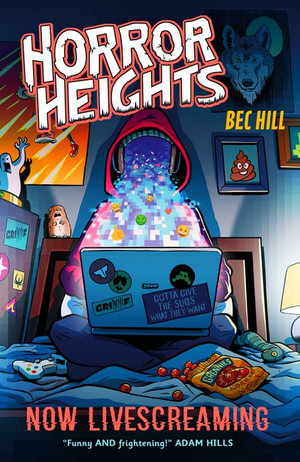
Ryan is obsessed with livestreaming everything. He wants to get as many followers as his idle Grimmf. Ryan becomes so obsessed with his online world and building his number of followers that he overlooks his best friend, Ishaan.
As Ryan’s obsession grows Ishaan tries to remind him that the friends he has in real life who are there to help and support him when he needs it are more important than the number of anonymous online followers who would drop him the second his content is not of interest anymore. Ryan is not listening to his friend and says some mean things to him. He then finds himself drawn more and more into the online world until one day it really happens.
Ryan finds himself in Grimmf’s studio; he believes that his sister has drugged him and is playing a prank on him. As he slowly realizes it is not a prank, Ryan starts to worry about how he is going to get back home. Will his best friend talk to him and help him or has he gone too far? He finds that he is unable to say or type his own name from the online platform. Ryan is finally able to enlist the help of his best friend and sister to get him home and to help all of the others who have been trapped in Grimmf’s online world to also get home.
A well set out easy to read book, I would recommend it to anyone obsessed with gaming.
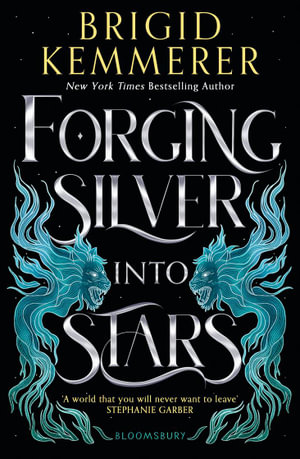
Set after Kemmerer's Cursebreaker books, this is a cleverly written book, with the chapters written from the perspective of the different characters. As the reader slowly gets to know each of the characters you feel you can relate to their individual stories, and this changes the reader's opinion of the different characters. You start to feel like you know one of the characters and then you get more information from another characters point of view and your opinions change. As you read this book you are constantly changing and reassess the characters, are they good or bad, which side are they really on, are they loyal to the King or Queen or against them? As you start to learn more about the characters from the other character's points of view it you start to questions their motives.
Callyn and Jax are fighting to save their family businesses and get caught up in something that is much bigger than they realise.
Magic plays a big part of this story, as the story progresses Callyn and Jax are left to question is magic really as bad as they have been led to believe growing up or is there a good side to magic.
This book explores some of the character's innermost feelings as they struggle with what is happening around them and what they have always believed to be right. As the characters grow throughout the book and they start to form their own beliefs, not just relying on what they have always been told, the characters start to see what is really happening around them.
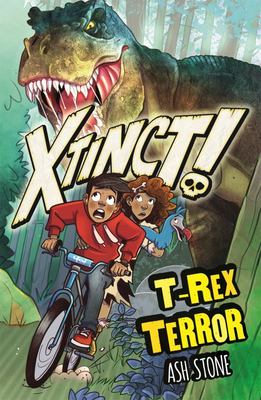
Jeevan was not happy about having to move to a new home because of his mum’s work, but he did share her interest in fossils, and he loves dinosaurs. While riding his bike in the forest he came close to several cool creatures and he let his mind run away with him a bit thinking there were dinosaurs in the forest when they were just ordinary animals. He also encountered some hunters and was able to save a deer from them, but this put him in danger. He manages to escape and get back to his mum’s lab. That night there is a accident there which manages to bring some of the fossils that were left on her bench to life.
Jeevan then realizes with the hunters in the forest they would love to get their hands on a trophy like a T-Rex so he needs to ensure that the T-Rex is safe and also that the people around are safe from it. With the help of the Neanderthal girl, dodo and someone who lives in the forest, Jeevan is able to find a safe place for the T-Rex to live where it can't hurt anyone and where the hunters will never find it.
This is an easy to read novel and the illustrations add another element to the story.
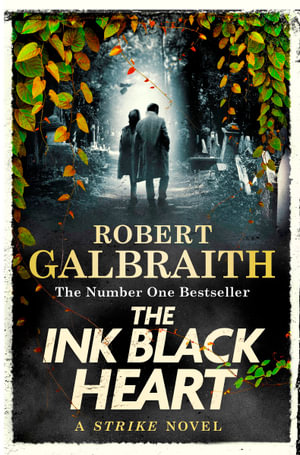
When first faced with the huge tome of 1012 pages, I put it aside, wondering if my arthritic hands would be able to hold it up to read, but once commenced, I had to use every spare moment I had to finish the book. The sixth novel in the Strike series kept me reading on two levels – what was going to happen with the Strike and Robin relationship, and just who is Anomie, the strange moderator of Drek’s Game.
When Edie Ledwell, the creator of a popular cartoon The Ink Black Heart, appears in the office desperate to find out the identity of Anomie who is persecuting her online Robin turns down the case because of too many work commitments. But when she discovers that Edie has been murdered in Highgate Cemetery, the setting for the cartoon she and Strike are drawn into a search for the identity of Anomie. This leads them into unknown and dangerous territory, as they try to work out who are the online players in Drek’s Game and on social media, and who has the most to gain from the death of Edie. Meanwhile, there is some movement in the relationship between Strike and Robin, as both come to a deeper understanding of their own emotions.
Not only is the novel very long, but it is also a challenge to read. The chat transcripts are often in two or 3 different columns on the page and can go over a few pages, and with a multiple of characters with difficult online names to remember, it can be a challenge to sort out what is happening. But of course, that is what makes this novel stand out – it is different, clever and every chat and tweet can be a potential red herring or real clue to bamboozle the reader.
With current themes of cyberbullying, politics, and social media drawn together with the tantalising relationship between Strike and Robin and a complex murder plot, The Ink Black Heart is sure to be enjoyed by fans of the Strike novels including Career of evil , Lethal White and Troubled blood.
Themes Mystery, Crime, Thriller, Social media, Detectives.
Pat Pledger
The Wintrish girl by Melanie La'Brooy
University of Queensland Press, 2022. ISBN: 9780702265631. (Age:10+) Highly recommended.
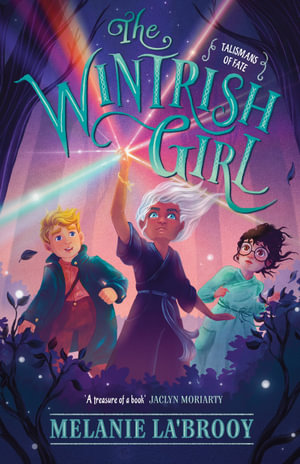
The Wintrish girl offers high interest level and literary value to Middle School readers. It represents the best of fantasy adventure writing. Move over Harry Potter! We have our own Australian fantasy writer now, Melanie La’Brooy, with The Wintrish girl being her first novel for children.
In La’Brooy we are treated to a writer who draws from a depth of worldly and otherworldly knowledge gained from parents who gave her “a childhood overflowing with books…” and from experience drawn from living in Africa, Asia, Europe and the Middle East. Evidence is in the allusions to creatures that may have been inspired by the myths, folk and fairy tales of multiple cultures. There is a plethora of mysterious talismans, unexpected realms, loopholes, “Eminent Marvels,” royalty, Night Hags, princesses and much more in The Wintrish girl.
In addition to the magical strangeness of the characters, settings and events is an obvious joy in the use of language. La’Brooy is a self-confessed word nerd and editor. Her writing plays out, in its energy and vitality, as a vital demonstration of good literature and a celebration of things that count for something - like libraries, librarians, clever kids, sharp thinking, courage in the face of fear and precision in the use of language. Clever word play dances through every description and piece of dialogue. We have “Malevolence” and “Malevolents” and “Marvelance” and “Marvellous”. We have the panthera (altogether much scarier than a panther). “When will people learn that precision in language counts for something?” (Portentia p. 328).
The core of the book could be when Arthur explains why he and his friends are a threat to the Arylians (p. 343) … “Because we’re different. And if there’s another way of being, then their way isn’t the only way. If there even is such a thing.” A commentary on our times may be within Portentia’s statement… that “The Sword of Destiny is no guarantee that boy will become mighty warrior… both Warriors and Kings must make their own destiny… time passed, and illiteracy and ignorance came into fashion…” (p.329)
The Empire of Arylia is divided into distinctively different realms each severed from the other by impenetrable barriers. Loopholes are found by accident and through magical means. Evil has to be overcome. Our heroes, each different and outcast, form a crew as they face dangerous enemies and discover their separate abilities. The settings and action sequences are cinematic and freshly imaginative. Could a film-maker recreate the escape in dragon’s eggshells down molten rivers of lava, smacked on the way by a Laviathon’s tail or the slow-moving maze of teetering books, precisely “organized according to the Hypatian system, which is based on the mathematical system that all knowledge leads back to the One” in the Librarynth?
Penn, Arthur and Juniper are our thoroughly likeable and courageous heroes. They are, in this book, only just beginning to find that they have talismans and learning about their individual powers. La’Brooy has the reader hanging on the edge of their seat throughout the action-packed The Wintrish girl (Talismans of fate book one)
Readers will impatiently await The Wintrish Girl (Talismans of fate Book Two). Teacher's notes are available.
Fire Reads, 2022. ISBN: 9781728222325. (Age:Young Adult) Recommended.
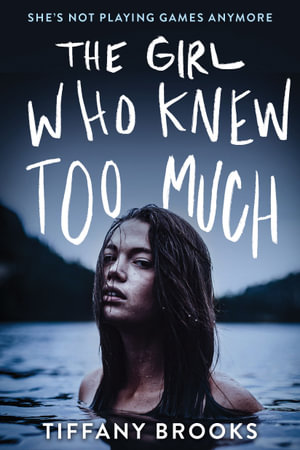
After a high-school prank goes wrong, leaving her vilified on social media, 18 year-old Riley Ozment decides that the best way to redeem her reputation is to sign up for a reality TV show that she hopes will portray her in a more positive light.
Transported to the TV set on a small island off the coast of Brazil, she and nineteen other teenage contestants must divide into two teams to complete challenges, and avoid eviction. They also learn that the island may harbour a deadly curse, as well as a hidden cache of Spanish gold that they can search for using an old map and cryptic clues. In this, Riley is ahead of the game, as she had previously visited the island with her treasure-hunting father and mysteriously murdered godfather, and has access to an internet-based treasure-hunter chat group.
Written from Riley’s point of view, she is soon as concerned about how she will appear to the other contestants and the TV viewers, as she was about her social media profile. She is constantly worried about making and being abandoned by friends, misplacing trust, and being judged. In this, she and several of the other characters are drawn realistically and sympathetically, mirroring what many of today’s teens experience.
The plot itself is convoluted, with a large cast of characters and a number of surprising twists as their schemes and motives are slowly revealed. The descriptions of behind-the-scenes conditions and machinations are a sobering insight into reality TV. The daily challenges and clandestine dashes around the island following the treasure clues keep the plot moving, and as alliances are formed and romances develop, manipulation, deception and rejection follow.
Originally published as Reality Gold in 2018, the book was promoted as Survivor meets Lord of the Flies. Readers expecting something as edgy as either of these, may be a little underwhelmed, but it is a well-paced adventure with enough action to keep you turning the pages.
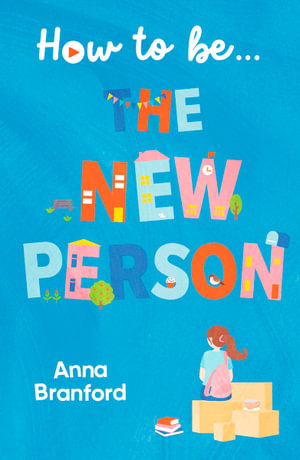
With the mobility of population in our current age, increasing numbers of children face a lot of change. For schools a mobile student population is so common that it is unremarkable. This does not however diminish the fact that being that new person is always difficult. Hence there is a growth in numbers of books that deal with change. How to be the new person by Anna Branford is such a book.
Branford is author of the equally delightful series about Violet Mackerel. How to be the new person, is told through the clear eyes of ten-year old Hazel Morrison. Hazel loves to secretly make up instructional videos for doing all sorts of things. In the opening of the story this habit is becoming quite frenetic as Hazel feels the residual effect of her family going through a very hard time with Hazel’s older sister Tess. The reader gains a small, limited window into Tess’s issues as would be the appropriate and normal perspective for a young sibling narrator such as Hazel. Extreme bullying resulting in mental issues for the victim (Tess) is alluded to. So serious is the issue that the family have had to relocate. With such an upheaval and such concern for the vulnerable Tess, the younger sibling (Hazel) is quite ignored. We as readers though have a very real insight into Hazel’s problems which seem to go unnoticed by her parents. Hazel becomes increasingly reliant on repetitive list making and increasingly agitated.
The transition to a new school is skillfully described including the all too common uncomfortable, forced buddy system where the embarrassed newcomer is paired up with an unwilling student “friend”. Because How to be the new person is partially set in a current real-life classroom, projects and books typical of current class work are mentioned including Pearl versus the universe and the verse novel Toppling by Sally Murphy. Literally toppling maybe symbolic of what is happening to Hazel. Both Branford and Murphy beautifully evoke small protagonists learning how to deal with the hard realities of life.
A special aspect of How to be the new person is the important and protective friendship that develops between Hazel and the old lady next door called Veronica. The message that change is not confined to when you are young but rather is a life-long issue that has to be faced again and again is an important one.
How to be the new person is a delightful and easy read for mid-primary school age students and an instructional book about learning to accept and deal with change.
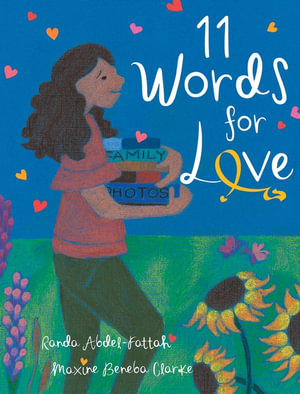
There are eleven word for love in the Arabic language and each of these is shown in this impressive picture book, as a family flees their homeland for safety in another country. They carry only a small suitcase, but it is full of the love shared between the members on the family. Their journey reveals the love between friends, that sudden feeling of love when a new baby appears, or the love of strangers showing kindness. Each form of love is shared with the readers, showing the Arabic word and calligraphy for that word. So kindness is al-Hanaan, love between friends, al-Wid. The family knows all the words for love as they become refugees searching for safety. In fleeing they recall cherished moments, particularly of people who have died, and of those who have died on their journey. They recall the love that hits you, the love that keeps growing, the love that makes you yearn for your homeland left behind, but wanting to go back one more time.
All the words relate to someone leaving their country for another, forced to flee, but taking memories and a connection with them that will stay forever in their heart.
The dazzling illustrations reveal a family with a suitcase of love, pictured in postcards and images from an album, underlining the transient nature of their journey, sending cards to loved ones left behind, taking photographs to send to relatives in their homeland to show they have arrived at their destination and as a record of their family together.
There are more than 50 words describing nuances of love in the Arabic language. And this remarkable book focusses on just eleven. Teacher's notes are available.