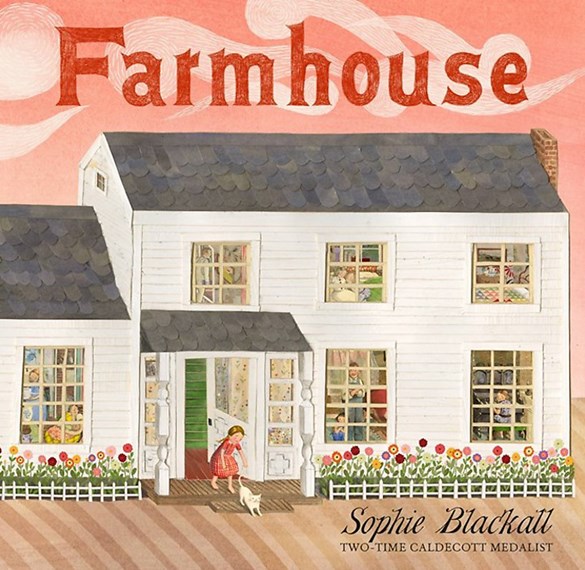
Excited readers are invited in to watch a family live and work in the farmhouse and its environs, marvelling at the intricate detail on each page, stopping to look at the scenes before their eyes with astonishment. Caldecott winner Blackall has created a homage to the family, winning over the readers as they turn each page to reveal a new vista. Like peering into a doll’s house, the scenes resemble something in miniature, and are engrossing, familiar and intimate.
Blackall came across the deserted farmhouse and bought it, searching through the generations of detritus left by the owners. Amongst this she found memories of a large family, a grandfather clock, an organ, kitchen dresser and equipment, clothing and furniture. All of these excited her imagination in such a way that she needed to recreate what she had found, in some way to honour their memory. An afterward tells of her journey and photos on the end paper shows what she found. Young and old readers will delight in the revelation of this farmhouse seeking out the familiar and equally intrigued by things no longer seen.
Several pages show the farmhouse in its fields, roads leading to the house in the distance surrounded by sheds and silos. We are introduced to the family, the twelve children posing for a photo in the hall. At night they sleep in the attic, beds in a row against the wall. During the day work is to be done, cows milked, eggs collected, hay to toss in the dray, fish to be caught and apples picked. All of the children help their parents with the chores. The images of the kitchen will ensure readers take notice of the family, as mum cooks the fish caught in the stream, and the children sweep the floor and set the table, afterwards washing the dishes. Readers will love looking at the detail on every page and the kitchen will take their interest as it shows the style of a kitchen rarely seen today. The wonderful kitchen range is put to good use as a huge pot of soup boils, fish are cooked, vegetables steamed and bread baked. All to be placed on the serviceable kitchen table for all to eat together, some children needing to sit at a smaller table nearby. But the family is very much together, eating together, helping each other, taking some responsibility for the work that needs to be done in the house. The rhyming text parallels each of the wonderful images, revealing a life from the past, a lifestyle no longer pursued, nostalgia oozing from every page. Children will love following the lives of this family, watching the cats in the house, seeing what each child does, and coming near the end see what happened to them all, as the last child leaves her home and the house is abandoned. Blackall includes herself in the text as she discovers the place, describing what she found in words and images, inspiring her to recreate what she found.
This is an enchanting book that many readers will want to revisit and talk about. The rhythm of life meanders through every page, enabling readers to think about their own family and the journey it will take.
Themes History, Nostalgia, Family, Life events, Farming.
Fran Knight
My best friend is a dinosaur by Roger Priddy. Illus. by Sian Roberts
Pan Macmillan, 2022. ISBN: 9781838991388. (Age:Pre-school) Recommended.
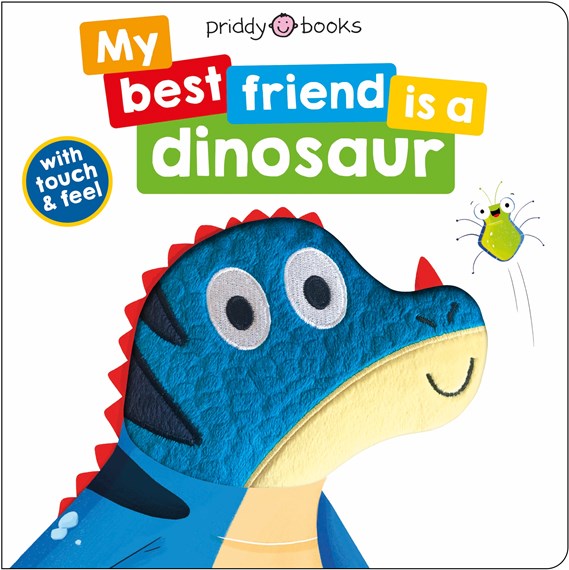
This durable board book with have instant appeal as toddlers instantly reach for the soft skin of the dinosaur on the front cover. Opening up children will find a range of things to touch and feel from shiny paper to fur, glitter and woven straw. Each page will delight and amuse as the dinosaur and his best friend do all sorts of things dinosaurs are certainly not usually seen doing. From cleaning the house, with many accidents, to dancing and cooking, the dinosaur and his best friend, the little mouse, make their way through the book in rhyme, encouraging young readers to predict the rhyming words and join in with the reading of the text. From cooking, cleaning, dusting, to just lolling around, the dinosaur is attractive, and with the added incentive of feeling something different on each page, the book is sure to win readers. Priddy Books promote ‘big ideas for little people’ and as dinosaurs are all the rage in junior primary classes, this is a must have for pre-school kids as well.
Bold, bright and colourful, the book will be eagerly picked up by toddlers as they peruse their book collection.
More can be found about the illustrator, Sian Roberts here.
Themes Dinosaurs, Humour, Touch and feel book.
Fran Knight
Out of the pouch by Laura Hamilton. Illus. By Nandina Vines
Little Steps, 2022. ISBN: 9781922358431. (Age:3-6) Recommended.
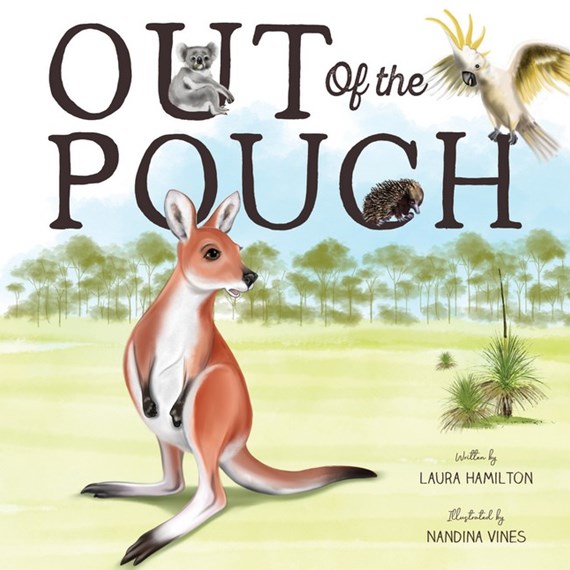
Poppy is an inquisitive joey who likes nothing better than to explore the bush outside her pouch. She heads off, zig zagging all over the place until she realises she has wandered too far away from her mummy. Poppy becomes anxious and worried and begins a search to find her. She asks some other bush creatures for help along the way and the kookaburra, koala and echidna are all friendly but too busy eating so are no help to Poppy at all. Thankfully the yellow-crested cockatoo has seen Poppy’s mummy searching for her and leads Poppy on a journey to safety.
This book is a thoughtful and gentle read with gorgeous illustrations. Children may be able to identify with that big feeling of worry when they may have lost the adult who is looking after them.
Themes Australian Animals, Australian Bush, Being Lost & Found.
Kathryn Beilby
Peg-Leg pedicure by Eliza Ault-Connell and Aimee Chan. Illus. by Angela Perrini
Little Steps, 2022. ISBN: 9781922358424. (Age:5-10) Highly recommended.
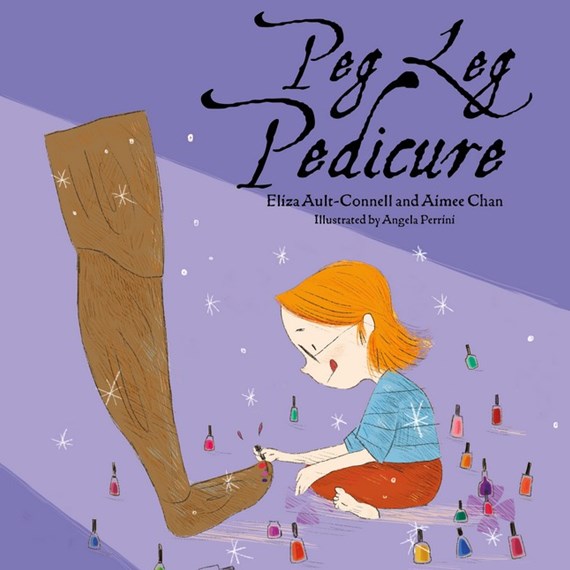
Eva and her Mum have a close relationship so much so that Eva does not even realise her Mum has a disability. Her Mum can do everything that any other Mum can do especially running. However, in the way that children can do, Rishab’s unkind comments on Eva’s Mum’s legs that are made out metal, cause Eva to feel sad and uncomfortable. She has always grown up with her Mum talking openly about her legs and pretending that she is a pirate with peg legs. Eva and her Mum decide to talk to the class about her different legs. In class Eva’s Mum uses her best pirate voice to share information and talk about her legs. She speaks about differences and the class all begin to point out how each of them is different and interesting in one way or another and it makes them all unique. After the discussion the whole class has fun doing a peg leg pedicure where they decorate Mum’s old peg legs. At the end of morning, they all have a race and Eva’s Mum wins. Even Rishab is surprised at how good peg legs are.
One of the co-authors, Eliza Ault-Connell, is a wheelchair track athlete who has competed at the highest levels for Australia. The other co-author is Amiee Chan who wrote My Grandma is 100.
This beautifully illustrated picture book that shares information about diversity and difference in such a sensitively written manner would be a valuable resource for all school and public libraries.
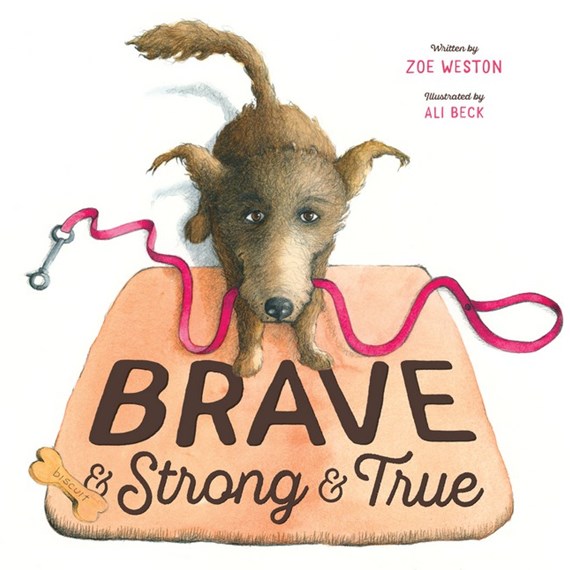
Brave & strong & true by Zoe Weston. Illus. by Ali Beck
Little Steps, 2022. ISBN: 9781922358578. (Age:3-8) Recommended.
This very gentle story with delightful illustrations is a wonderful introduction to the work of the RSPCA. Ellie lives in a house with lots of other dogs and shares her story with the reader of the only life she knows. The dogs are not cared for as well as they could be and are all eventually removed by workers from the RSPCA. Ellie is separated from her puppies and placed in a cage where she struggles to adjust to the changes. She is well fed and looked after but refuses to look at the people coming in search of a new companion for their home. Ellie is eventually reunited with her puppies in the home of one of her carers and begins to feel safe. Two very kind and patient women decide to take Ellie home with them and after a shaky start Ellie learns to trust and become part of a caring family.
Themes Dogs, RSPCA, Animal Care, Safety, Kindness.
Kathryn Beilby
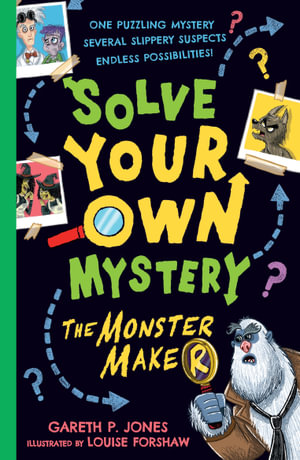
Solve your own mystery: The monster maker by Gareth P. Jones. Illus. by Louise Forshaw
Funny, magical and quirky! Yeti Private Eye, Klaas Solstaag, works with his human partner to solve mysteries. In this mystery they have been employed by Dr Franklefink to find a missing ‘Monster Maker’ that disappeared at the time of Monty Franklefink’s 9th birthday party. Attendees and employed entertainers and caterers are all suspects, and all are somewhere on the fantasy spectrum – witches, vampires, werewolves, goblins, ghosts, zombies. At the same time there is a local community election about to take place and it might be possible that this is why the Monster Maker has gone missing, as long-term and bitter rivals vie for election. And with magic a possibility and silly behaviours a given, this is just a frolic through a strange and bizarre world.
The writing style in this unusual book has a few peculiar features. Written as a Choose-your-own-path story with opportunities to follow different lines of inquiry in the investigation, this also gives personal interactivity in attempting to solve the mystery. The other unusual feature is that it is written as a second person narrative. The human partner to the yeti main investigator is referred to at all times as ‘you’, but this gives the opportunity for the young humans who read this book to connect to the story as if they too were partners in solving the crime. This technique is unusual in its approach for young readers, but worth highlighting for educators who might be looking for examples of second person narratives. Sometimes I am reticent to promote books with ghouls and monsters when they might frighten young readers, but this is so cheeky in its approach that there is no ‘fear-factor’ in this story, it is just mischievous and filled with humour. As an example, the Private Investigator’s dog has been magically ‘transformed’ into a car and now transports the detective while still displaying some dog-like behaviours – watch out lamp posts! This unique book will be enjoyed by readers aged 8-12, but slightly older readers will also find some entertaining irony and enjoyment in the pages.
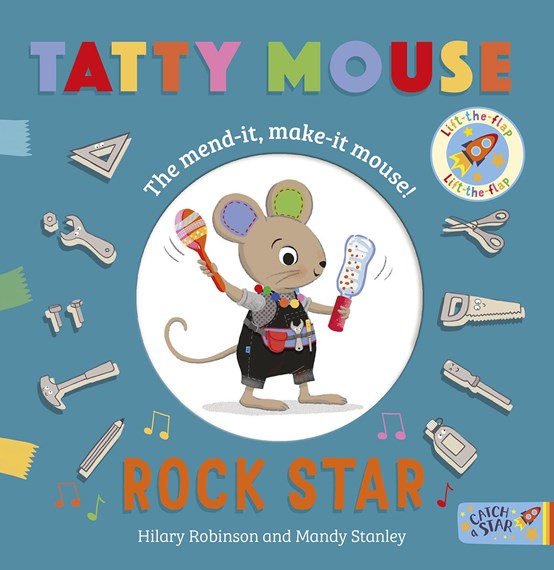
Tatty Mouse Rock Star by Hilary Robinson and Mandy Stanley
Catch a Star, 2022. ISBN: 9781922326553. (Age:1-3) Recommended.
A solid hard paged book for toddlers, Tatty Mouse is one of a series about this ‘mend it make it’ mouse. An energetic recycler, Tatty Mouse always takes her tool kit along wherever she goes, alert for recycling things she finds discarded.
The cute mouse illustrations will appeal while lifting the flap on many pages will further engage the readers.
Inside the front cover the reader is introduced to Tatty with an array of equipment shown around her, including a set square, ruler, pencil, saw and glue. Tatty Mouse wants to play in her brother’s band and is making some maracas with rice and paint and sand. She looks in the cupboard and finds some tins and tubs, and after washing out all the crumbs sets about decorating the containers. Once decorated the containers are filled with the sand and rice to make a sound and on the last page the lifted flap shows Tatty using her new musical equipment as part of the band.
Young readers will love following Tatty’s journey from wanting to be in the band to collecting things to make an instrument to making it and then using it in the band. The model of how to make a simple musical instrument is shown for young and old to emulate. The bright energetic illustrations will engage the reader as they follow Tatty’s scheme from collecting rice to playing the maracas. Children will love recognising the musical instruments shown and follow the ‘did you find’ on the bottom of each page.
Look out for more in the series of books about Tatty Mouse by Hilary Robinson, a London based author of nearly seventy books for children, and is best known for Mixed Up Fairy Tales.
And the illustrator, Mandy Stanley is an award-winning illustrator, who works her studio at home in Beccles.
Naomi, a psychologist specialising in domestic abuse-related trauma repeatedly goes the extra mile for her clients but this results in her crossing professional boundaries, reliving her own childhood trauma and jeopardising her marriage.
When Naomi’s client Jacob decides that he has to escape his abusive wife, Naomi offers him the use of their holiday apartment without consulting her husband. A series of interactions seem to lead Jacob to believe that Naomi has romantic feelings for him, and when he goes missing Naomi begins telling a string of lies to both the police and her husband in an attempt to stay in the clear.
Naomi also offers refuge in her house to client Anna and her children and at the same time a series of unexplained events occur; locked doors are found unlocked, a patient’s file goes missing. A panicked Naomi begins to fear that her murderer father and/or bitterly estranged younger sister have tracked her down from New York to her new life in England, but maybe the threat is much closer to hand.
It transpires that at least one character is not really who they say they are, and Naomi begins to question the identity and relationships of the other characters, as her deceits and misgivings take their toll.
Jones has written a fast-paced thriller, with regular unexpected twists and turns. These keep the reader engaged, if only to find the outcome of the highly implausible behaviour and unethical professional behaviour of the cast of unlikeable characters.
Themes Domestic abuse, Thriller.
Margaret Crohn
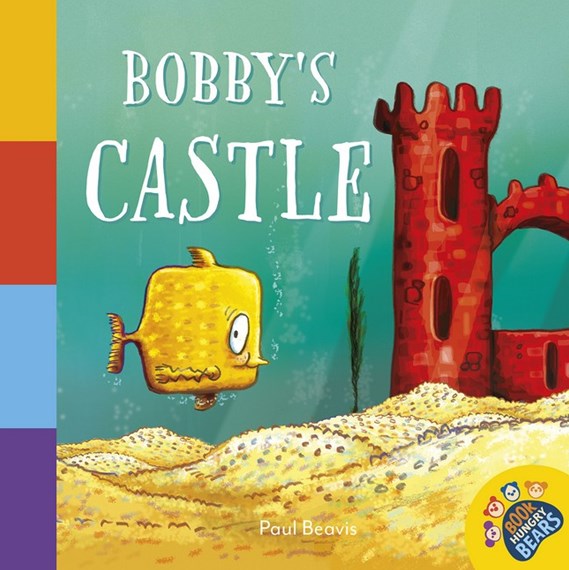
Bobby's castle by Paul Beavis
Little Steps, 2022. ISBN: 9781922678492. (Age:4+) Highly recommended.
Bobby is set in his ways; he likes his familiar routine and then one day Salma arrives and changes everything. Salma wants to play, Bobby doesn’t. Bobby reluctantly starts to play hide and seek with Salma, at first it is easy but when he can't find her he all of a sudden realizes he does want to play.
This book has bold simple illustrations that support the story well.
This book can support conversations about change and accepting new things and building new friendships. Teacher's notes are available.
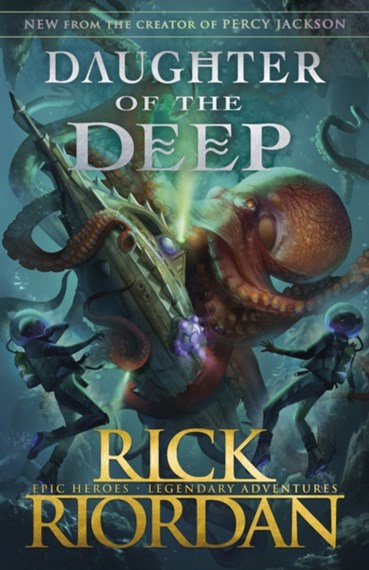
Ana Dakkar’s family are part of the fabric of the Harding-Pencraft Academy, an institution focused on training new generations of oceanographers and explorers, with additional defensive capabilities. Ana, as the youngest child in her family is still working out her place and purpose in this phenomenal school with its long history. She becomes a witness to a devastating attack on the school and then is thrust into the leadership of her fellow surviving classmates as they discover the long-lost vessel, the Nautilus, made famous in Jules Verne’s incredible tale of the 20000 Leagues under the sea. The rise to leadership comes with great responsibility and she must overcome her own insecurities and her own personal grief to work out what to do. The setting includes underwater action and creatures to love and fear. Ana also must rely on and encourage her classmates and friends as they reveal their talents in the technology and oceanography field. The growth in them all and the power of friendship over personal glory is revealed as the excitement and tension ramps up.
Rick Riordan really knows how to write a compelling adventure and woven within this amazing story are snippets and insights of the classic detail of Jules Verne’s original story. Even though I have not read the original (apologies to lovers of Verne’s writing), this reimagining in a modern and technology-rich world has all the right ingredients to be loved and cherished by a new generation of readers. There are moments of humour mingled amongst the high tension and action, and many characters to love. I can envisage that this book will not stay long on our library shelves and will be avidly peer-recommended amongst young readers.
Fire Reads, 2022. ISBN: 9781728239132. (Age:15+) Highly recommended.
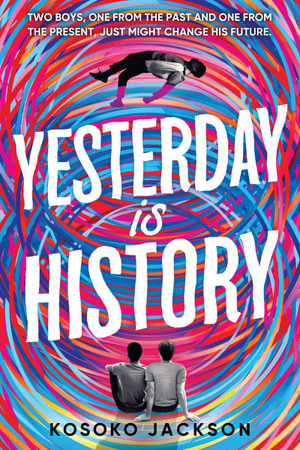
When 17 year-old cancer patient, Andre, is gifted a life-saving liver transplant, he also acquires the ability to time-travel, and sets in motion two love stories that span 50 years.
Andre finds himself travelling back to his neighbourhood in Boston, 1969 where he meets 18 year old Michael and the two form an instant attraction. Back home, in 2021, Andre is being tutored in time travel by his donor’s brother Blake and despite some initial antagonism, as Blake grieves the death of his brother, those two also begin a romantic relationship.
Dramatically, there comes a point where Andre’s life is again under threat and he must decide whether to stay with Michael, or return to Blake.
These three characters are flawed but extremely likeable, and the relationships that develop are both tender and tense, totally realistic and a delight to follow as they progress to their inevitable end.
This is the story of a gay black youth working out who he wants to be and realising that he can determine his future, both personal and career, to achieve this, rather than follow the path that well-meaning family have planned for him.
Writing from his own identity as a gay black man, Jackson uses the time travel element to make the reader aware of the conditions that gay men experienced in the late 1960s, and the reality of being black in contemporary America; as issues of safety, discrimination, identity and privilege arise in both.
Throughout the novel, Andre ponders the importance of scientific thinking and knowledge, and observes ways of dealing with death, grief and alcohol/drug use as the various characters work through these issues.
Essentially a YA romance, this is an enjoyable read with enough social commentary to flesh it out and make it a highly recommended read.
Themes Cancer, Time travel, Romance, LGBTQI, Own voices.
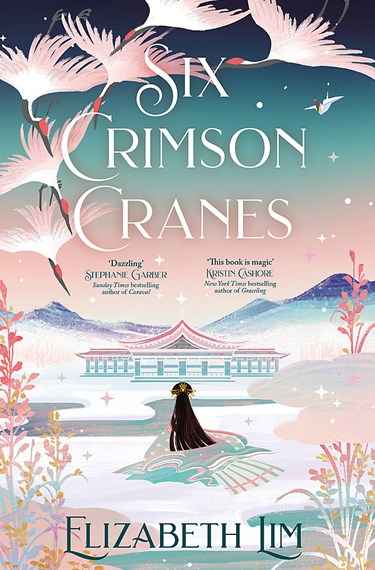
Shiori is the only princess of Kiata and is determined not to marry the son of a barbarian lord in the north. She has concealed the magic that runs in her veins until the day of her betrothal when she runs away from the ceremony. Her stepmother Raikama has dark magic and banishes Shiori, while turning her six brothers into cranes with crimson crowns on their heads. Raikama also puts a wooden bowl on Shiori’s head and warns her not to speak – any word that passes her lips means that one of her brothers will die.
Shiori is a feisty, determined girl and manages to find work, toiling in an inn in the north, while trying to find her brothers. Forced to get to know the boy that she did not want to marry, she uncovers a plot to unsettle the kingdom and must embrace her magic to save her family and the empire.
Lim has taken elements of the well-known fairy tale and given it a fascinating Asian background. The addition of Kiki, a talking paper crane, a 17-year-old dragon prince Seryu, magic dragon eggs and pearls enhance the story. Her vivid writing keeps the reader in suspense about the fate of the six brothers and the difficulties that Shiori has in remaining mute. She also overturns the trope of the wicked stepmother.
Readers who enjoy fairy tale retellings will be drawn to this fast-paced story with its well-developed characters and wonderful landscape. They may want to read others by Lim like Spin the dawn and Unravel the Dusk, while those who would like to read a western version of The six swans by Grimm, could try Daughter of the forest by Juliet Marillier.
Themes Fantasy, Fairy tale retelling, Romance.
Pat Pledger
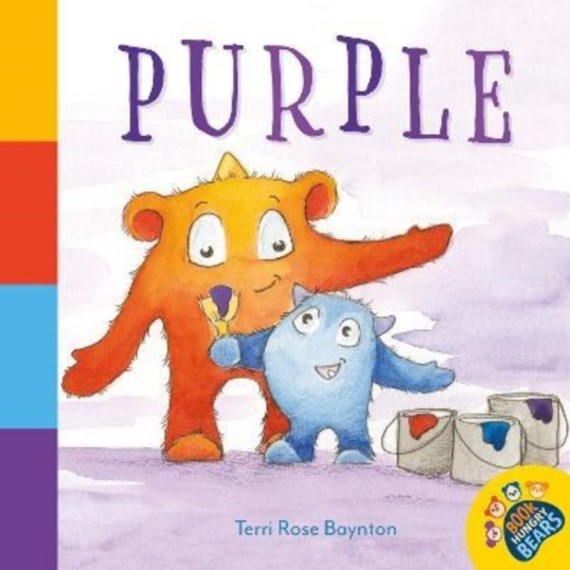
Purple by Terri Rose Baynton
Little Steps, 2022. ISBN: 9781912678693. (Age:3+) Highly recommended.
Monster one likes red and monster two likes blue. Monster one only paints with red and monster two only paints with blue. But when a blob or red ends up in the pot of blue they mix the colors together and make purple. They find out that they both like purple.
The clear illustrations with bold colors make this book more engaging.
It can be hard to try new things but sometimes trying something new can lead to an exciting outcome. This book can support with conversations about change and trying new things. Teacher's notes are available.
I highly recommend this book.
Themes Monsters, Colour, Painting.
Karen Colliver
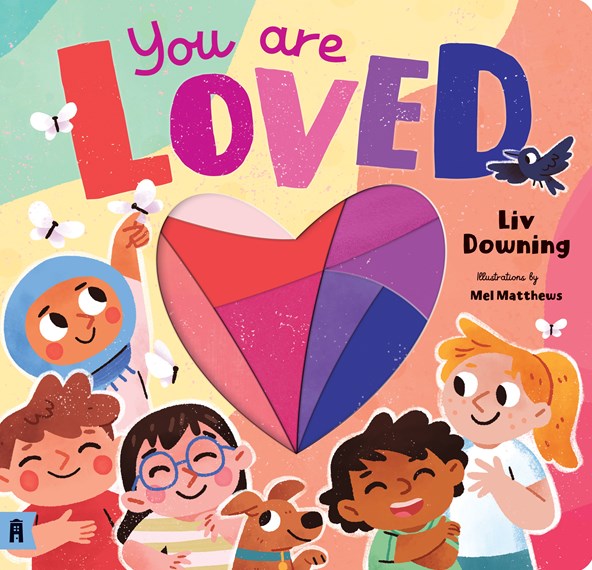
You are loved board book by Liv Downing. Illus. by Mel Matthews
Albert Street Books, 2022. ISBN: 9781760878146. (Age:1-3)
A large board book suitable for parents to hold when reading to their small child, the words and pictures all underscore the fact that the child is loved. Rhyming stanzas contain opposite lines, one where the child is loved for doing what is asked, followed by a line which is the opposite but reprising the fact that they are loved. Loved when teeth are cleaned, and loved when they are not, loved when they win the race and loved when they don’t. The underlying theme for any child to pick up is that love is unconditional, love is given freely, love is always there.
Any child having this book read to them will feel comforted and comfortable in knowing that those about them love them. The book itself has a heart in the centre of each page, with overlapping pieces giving an almost kaleidoscope effect. This will draw in the reader wanting a closer look at the effect it gives, trying to understand heart that is shown. The resulting hole cut out in each page is part of the illustration for that page and will intrigue readers as they listen to the text paralleling what can be seen.
It is quite a heavy book so is more for adults to hold to read to the children or for the book to be flat on a table with eager faces poring over it. The large illustrations and cut out pages will be a draw card as well as the reassurance that every child is loved.
Themes Love.
Fran Knight
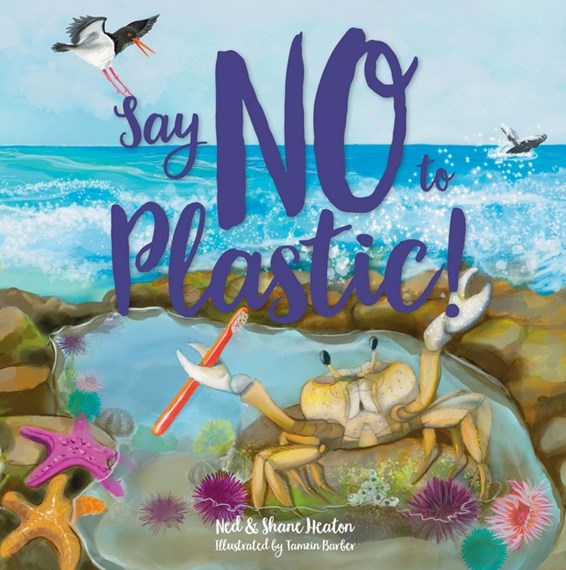
Say no to plastic by Ned and Shane Heaton. Illus. by Tamzin Barber
Little Steps, 2022. ISBN: 9781922358646. (Age:4-10) Highly recommended.
The overuse of plastic and the long-term environmental damage to sea life created by this usage is beautifully presented in this rhyming picture book with gorgeous illustrations. Young Australian Entrepreneur of the Year and environmentalist Ned Heaton along with his dad Shane, founders of The Turtle Tribe, have written an entertaining and clever story that will provide young readers with an easy-to-understand look at the damage plastic is causing in the marine environment.
The main character Roy, his Nan and Heidi the Peidy, share their concerns about the danger the sea creatures face from plastic at their local beach and take them all the way to New York to where the world nations meet. The message of the story is that leaders from all over the world are responsible for caring for our environment, but we also can all play a part in restricting our use of plastic. The book includes a Turtle Tribe logos search, as well as a double page asking the reader to find out how many ways there are to reduce plastic, with answers provided on the final page.
A visit to The Turtle Tribe website Bamboo Toothbrushes - The Turtle Tribe adds another important and impressive layer to the story and is well worth viewing for both children and adults.