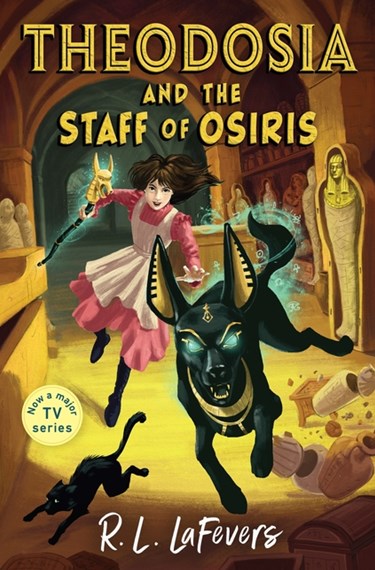
Theodosia has an unusual life and unique skills, talents, and interests in Egyptology. It helps that her father is a museum curator with a significant Egyptology collection and that her mother is an archaeologist. In this second book of the series involving this feisty and intelligent young 11-year-old, she is again inveigled into an investigation involving a powerful and magical Staff that she has discovered in the museum basement, that has power to both animate and destroy. It even has the capacity to enable London’s collected mummies to ‘waken’ and relocate! If the ‘Serpents of Chaos’ get their hands on the staff before her own investigative team (already introduced in Book 1, in their role as secret protectors of society) can uncover the truth of their nefarious plans it could mean world-wide conflict.
This is the second book in the Theodosia series (the book has been re-released for a new audience who will have been introduced to the main character via the TV series that has been produced in 2022). It is action-packed, and filled with Ancient Egyptian myths, curses and superstition over-laced with supernatural possibilities and secret societies. A truly exciting journey into the past and as Theodosia is a girl from 1907, there is very limited intrusion of technology! Information is gathered remotely using a local friendly ex-pickpocket recruited ‘for good’. Interestingly, her heroics are also designed to protect the world from war. The museum has its own difficulties and her family is intriguing - especially her grumpy and stuffy grandmother. Learning who can be trusted is also a challenge. The fast-paced action will appeal to young readers aged 10-14, and those who love ancient cultural intrigue and magical fantasy will be especially interested. I really enjoyed the journey into social life of the early 1900s with the complications for an intelligent female, but also the fascination of Ancient Egyptian mythology. This is exciting and full of potential interest. ( Those who enjoy the Percy Jackson series may also enjoy this mythology fantasy.) Ancient cultures are part of the Australian Year 7 curriculum, and the mythology of the ancient Egyptian culture makes for captivating content in this fantasy adventure.
Themes Egyptology, Spells and curses, Secret organisations, Museums, Magical fantasy.
Carolyn Hull
Loki A bad god's guide to taking the blame by Louie Stowell
Walker Books, 2022. ISBN: 9781529501223. (Age:8+)
Loki is a mighty god (of trickery), in the body of a puny mortal, sent to earth to learn how to be good - but he has to go to school! With his intellectual diary, in which he must record all his actions and the diary will provide a running tally of his point score, Loki makes many attempts to be good. Then he's accused of theft, of his brother's hammer no less - his brother is Thor, god of thunder and the sky. When no-one believes Loki that he didn't steal the hammer (including his own diary!), he sets out to discover who has framed him and make them pay! Or, make them tell the truth at least. Can a god of mischief and trickery become good?
The second in Louie Stowell's hilarious series (Loki: A bad god's guide to being good), this light hearted novel is perfect for fans of Marvel (where movies have been dedicated to these characters) and the series by Jeff Kinney, Diary of a Wimpy Kid. Not to be taken too seriously, there are still a few hidden morals about how to treat others and about being a good friend. Filled with illustrations throughout, the story is written evenly and the images assist with moving the story along. Told from the point of view of Loki, with the diary throwing in its perspective, readers will enjoy the silly fun that the author has infused throughout the story.
Themes Humour, Fantasy, Comedy, School Life, Friendships, Families, Truth.
Melanie Pages
Where? by Jordan Collins. Illus. by Phil Lesnie
Allen & Unwin, 2022. ISBN: 9781760526382. (Age:All) Highly recommended.
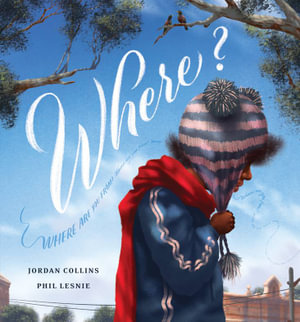
The question, ‘where are you from’ was so often asked of the author, that while a teenager they wrote a poem underlining the commonness of us all. In this poem they highlight the beginnings of the universe, the big bang, the void and cosmic dust, the cataclysmic creation, the clouds, the oceans and the earth. We share common ancestors who decided to get up on two legs and walk, we shared voyagers and men and women who painted on cave walls and created their religions. The timeline of humanity includes all of us.
But they is often asked ‘where are you from’ because of the colour of their skin and hair, and affronted they say, ‘you see skin and I see supernovas, you see hair and I see nebulae’, impelling people to see that we all from the same place, so there is no need to ask again.
The word ‘where’ implies an overtone of racism as the questioner sees this person as not belonging. They are being questioned not about where they are from, but more why are you here? They are an ‘other’, someone not part of us, someone who does not belong.
This passionate poem draws readers’ attention to the idiocy of the question often heard. We are all born from the same seismic happenings in our universe, we share a common ancestry. For readers the story opens a slew of questions and observations. They will question the notion that people are ‘from’ somewhere other than the place they are at right now. The question of inclusivity and diversity will pop up, but overall the main thrust will be our common source. They do not want to be seen as ‘other’ but a human being like everyone else.
Performing this poem at a poetry event led to its publication, and along with the stunning illustrations by Phil Lesnie, will have an assured place in all school libraries. And I came across a new expression, slam poetry or poetry slams, where poems are performed to an audience, often loudly, and then judged by a panel. Typing ‘slam poetry’ into the internet gives you a range of performed poems at a slam.
For a wonderful synopsis of the book coupled with some heartfelt comments about its themes see here.
Lesnie’s illustrations are awe inspiring, as they show the universe in its magnificence, from the big bang to the swirl of cosmic dust, nebulae, moons, planets and suns, the seas and then the land upon which we first walked. He is able to give the impression of the sweep of the universe with his digital illustrations done on an iPad!. And the touches of Jordan’s lonely walks are heartfelt as he wanders along the highway or sits on a playground swing, walks along the beach leaving his single footprints on the sand. Through his journey his black cat is by his side, oblivious to the questions being asked of him, but a loyal and constant companion. The other child on the swing shows in his facial expressions the antipathy the question often reflects, while the faces on the audience at the poetry reading reflect sympathy and solidarity. An interview with Phil Lesnie can be found here.
This stunning contribution to the discussion about racism will draw in teachers and adults wanting to reconsider and discuss, while children will sympathise with Jordan and their journey tackling the big issue in all of our lives. An interview with Jordan can be found here.
Themes Racism, Inclusivity, Universe, Big bang, Loneliness.
Exquisite, like the music wrought from a precious musical instrument, Meehan’s latest book is rich in melodic language, telling the story of the acclaimed musicians, the Forquerays father and son, in the time of Louis XIV in Paris, France.
The story is recounted by Charlotte-Elisabeth the mute sister of Jean-Baptiste, a child prodigy cruelly and brutally forced by his father Antoine to be his successor as the most acclaimed violist of the royal court. He is a child compelled to play the music of his father, music never written down; constrained to be the unique perpetuator of those original compositions. Jean-Baptiste’s sole existence is to be the ongoing voice, the instrument, for his father’s music.
Voice is a recurring theme of the novel: Charlotte-Elisabeth is mute from the age of seven, in stubborn defiance of her father’s demands. She draws out the unsaid words of the other characters, the secret cache of hidden passions, as she narrates their story. She is one of a number of women who find a different way to resist the stifling oppression of men.
Other interweaving chapters detail the meticulous hand-crafting of an absolutely beautiful viola by an ancient craftsman who has gathered precious pieces of timber throughout his life. The viola created for Jean-Baptiste is a work of art in itself - another unique voice threatened to also be crushed by the savagery of the father; for the son’s subservience leads him to always seek the love and approval of the oppressor and he is compelled to reveal his treasure.
Meehan’s exceptional work of historical fiction has created a thing of beauty and mystery giving voice to music, art, beauty and passion, the voice that struggles to rise above cruelty and oppression. As Jean-Baptiste learns ‘Our aim is not harmony and perfection. Our aim is energy. This is what music is about. Not as a creation but as an action of creating, of driving pleasure and energy and power into the hearts of all who listen’.
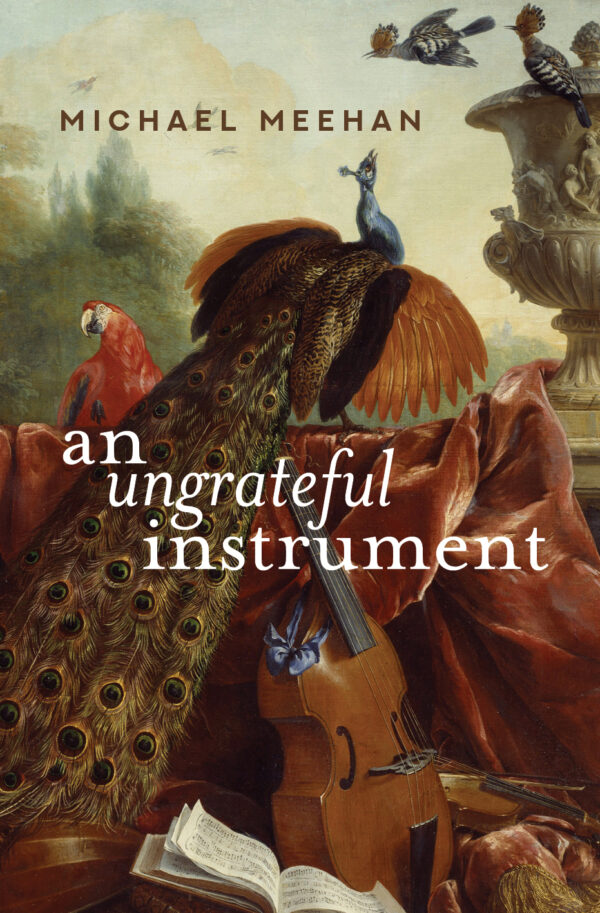
An ungrateful instrument is a joy to read. The themes of the book are complemented by its beautiful presentation; it is a hardback volume with marbled endpapers, a ribbon bookmark, with the cover image from a painting by Alexandre-Francois Desportes. This is a book to keep and treasure.
Violin & cello by Catherine Greer. Illus. by Joanna Bartel, music by Alexander Lau
EK Books, 2022. ISBN: 9781922539274. (Age:4+) Recommended.
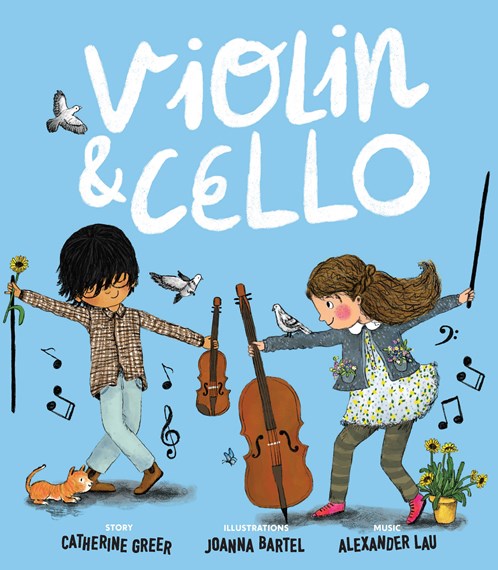
Side by side in an apartment tower live two budding musicians. He plays a violin which is kept in a violin case, while she plays a cello kept in a backpack. They practise alone, and are taught by different music teachers on Saturdays. On one balcony sits a ginger cat while the other balcony has a lovely garden. One day the boy writes a piece of music, an allegro, and makes it into a paper plane which he throws across the balcony. She picks it up. Everyone loves listening to the music but they are still alone.Then she write a piece took and sends it back across the balcony. Her piece is an adagio.
But they are still alone.
The readers will anticipate their coming together and be happy when they finally make the move.
One day they decide to play their pieces together. They sit on their balconies and they first play the adagio, quick and zippy, then the allegro, dreamy and slow. Everyone in the street stops to listen. And the mystery friends become real friends. They visit each other, eat together and make music together.
This lovely story will creep up on the children as they see the possibilities of the two musicians, living next door to each other, but neither making the first move to share their music. All sorts of possiblities will pop into the readers’ minds; will the cat get them together, perhaps their love of the garden, what about the other neighbours, will someone not like their music, and so on. Prediction will be in the minds of the readers as the story gathers steam.
The repetition of the position of the violin and cello too will encourage thoughts about these instruments and how they need protecting, and the information about the music too will inform the readers and encourage a greater interest in what is written on a page of music. A tryout of the music offered in the story will be a must.
The illustrations reflect the children’s isolation as they practise their instruments alone. And the attention to detail will enthral readers as they pore over each page showing the detail of living in an apartment in a tower block.
And some wonderful sayings to do with music could be discussed: music is the soundtrack of your life; when words fail, music begins; music is the language of love; music can change people.Teachers' notes are also available.
Themes Violin, Cello, Musical instruments, Music lessons, Friendship, Apartment life.
Fran Knight
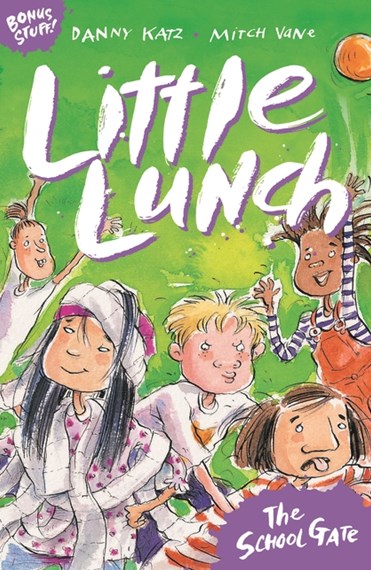
Little lunch: The school gate by Danny Katz and Mitch Vane
A very welcome reissue of Danny Katz’s funny and well observed set of stories based on the happenings at recess time, or play lunch, that fifteen minutes that breaks the morning in the classroom. The group of kids get up to all sorts of adventures, which involve friends, learning limits, learning strategies, problem solving and not a few moral issues lightly touched upon along the way. Each story covers about 20 pages and is littered with Mitch Vane’s hilarious illustrations.
The first story in this book sees Manny looking at his play lunch dropped on the footpath outside the school. Mrs Gonsha has a strict instruction that no child will leave the school, so Manny and his friends all try to get the parcel, each finding a stick with which to drag the bag closer to the fence, each friend adding another stick to the first one which is not long enough. Eventually the bag is dragged in, the problem solving has worked. Manny is so grateful he offers his play lunch to those who helped, depriving himself to the treats he imagined were inside.
The second story, 'The girls’ toilet' will again have readers recognising situations and places within their school grounds. Here the girls are making paper crowns using the toilet paper after Amba finds Debra-Jo crying in the girls’ toilet. Unable to placate the girl, after she is called some choice names Amba begins to wind the paper around her head telling her she looks like a princess.
The third story sees the group Rory, Melanie, Atticus and Amba kicking the ball to each other in a circle. Bored with this they make numerous attempts to try something different, each proving to be involved and problematic.
Adding to the fun of the stories is a series of pages at the end, the Little Lunch Bag containing puzzles and jokes, riddles and games all designed to keep young readers laughing.
Themes Humour, Playground, School, Recess time, Friends.
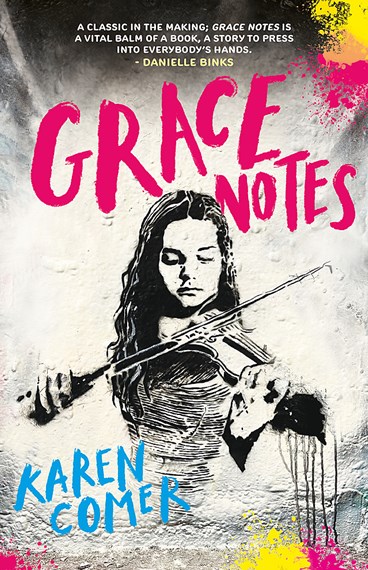
‘Follow your heart’ – this is the essential message of Comer’s verse novel about two young teenagers, each with artistic talent, but each struggling with the differing expectations of their parents. Grace loves the violin and wants to pursue music performance after high school. But her parents push her to excel in more career oriented subjects. Similarly Crux’s parents want him to put his education before his passion for street art. Opportunities open up: for Grace it is the chance to play violin with her music teacher in a bar in the evenings; and Crux gets invited to join a group of street artists working on painting commissions. When by chance, their paths cross, the two young people develop a close friendship built around their shared love of music and art. But everything they do seems to meet with parental disapproval.
The setting is Melbourne, 2020, with people becoming increasingly anxious about the threat of Covid-19.The chapters, alternating the voices of Grace and Crux, in a melodic easy-to-read verse form, or in brief text conversations, are at times followed by a ‘Corona chorus’ providing updating COVID statistics and accompanying online comments. So just when Grace and Crux get the chance to explore some of their dreams, their difficulties are compounded by lockdown and isolation.
Comer’s novel presents a very realistic portrayal of the impact of the coronavirus epidemic on young people’s school life, on essential workers, on the arts industry, on family life, and on aged care homes and hospitals. It adds another layer of problems to the struggle that Grace and Crux are already experiencing in trying to work out their relationship and their aspirations.
The resolution provides really good messages about honesty and assertive communication. The characters are mostly acting from good motives; the conflicts can only be resolved by talking and listening, and being open to each other.
Themes Music, Street art, Emotions, Parent and child, Coronavirus.
Helen Eddy
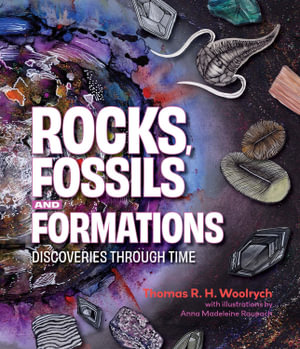
Rocks, fossils and formations: Discoveries through time by Thomas R. H. Woolrych. Illus. by Anna Madeleine Raupach
It is clearly stated in one section of the Science component
of the Australian Curriculum version 9.0, that by the end of Year 8, students
will be able to ‘compare processes of rock formation, including the timescales
involved’. Rocks, Fossils and Formations: Discoveries Through Time published
in 2023 and written by science communicator and exploration geoscientist Thomas
R. H. Woolrych is an informative and important book to support students from
Year 4-8. Readers in the lower years of this range will benefit from key facts and
new concepts being shared and discussed with an adult but older students will
be able to successfully use this book as a resource for research and further
learning.
The book begins with a forward from Dr Steve Hill, Chief
Scientist of Geoscience Australia, who introduces the concept of a time machine
to learn about the formation of Earth, and Australia. This is followed by acknowledgements
and finally the introduction where geoscience is explained clearly. The
contents pages highlight each Eon or Era of time beginning with Chapter One,
the Hadean Eon (4600-400 million years ago), and ending with Chapter Six, the
Cenozoic Era (66 Million years ago-present day).
Each chapter begins with a light-hearted personal message
from the time machine as it moves into a new eon or era. The chapters contain
different coloured pages with detailed information, clearly segmented and
labelled, diagrams, images, cross sections, maps or timelines, all
strategically placed to support the text. There are well written stories or
short passages throughout to explain a more complex concept and add to the
understanding of the readers.
In the final pages there is an Epilogue, discussing Geoscience
of the future, plus a very useful glossary where bold words from the text are
explained, and comprehensive index. For
those older children, and indeed adults who are interested in fossils, rocks,
minerals and earth’s formation, this is a well-researched and easily accessible
publication that provides an opportunity to gain a greater understanding of
this fascinating topic.
Detailed teacher resources for Rocks, Fossils and
Formations: Discoveries Through Time are available.
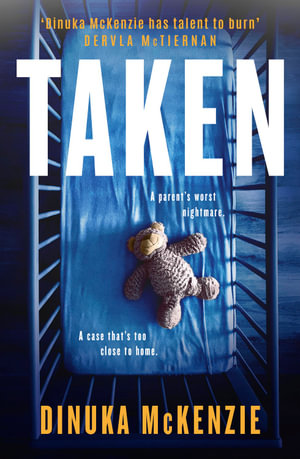
A baby goes missing. The mother is depressed. The husband is away. The grandmother is aloof and defensive. There is a previous bad relationship, domestic violence and abuse. First response from the police is that it is a custody battle gone wrong. It’s the first case assigned to Detective Sergeant Kate Miles, just back from maternity leave and struggling with the aftereffects of a traumatic incident that has left her with a shoulder injury. The more she investigates, the more she is convinced that the story is not as simple as it might appear.
Kate is under a lot of pressure. She wants to prove that she is up to the job, despite the obvious lack of confidence from her superior, competition from colleagues, the ongoing demands from her husband and young family, and on top of that, it seems that her father is going to be implicated in a political scandal. She is aware of the news media all to ready to pounce. It is this pressure that builds a lot of the tension, and then on top of everything, there are the vicious threats from the criminal Veliu.
Into the mix, McKenzie adds occasional chapters from another anonymous voice or voices, the inner thoughts of someone drawn to the baby in her bassinet. We don't know who it is - the thoughts of one of the characters we have met, or someone else. These pages add to the intrigue, the sense that there is another perspective to the mystery.
In Kate Miles, McKenzie has created a detective hero that many can empathise with – with her moments of stress, uncertainty and vulnerability. But Kate has learnt to trust her instincts, to take things slowly and calmly, and to work things out carefully. That is what wins her case in the end, the ability to empathise, reason and persist. This is the second book in the Detective Kate Miles crime fiction series by debut author Dinuka McKenzie, and it has the potential to be one of many more to come, a series that will be enjoyed by many followers of Australian rural crime drama.
Allen & Unwin, 2023. ISBN: 9781761180026. (Age:3+) Highly recommended.
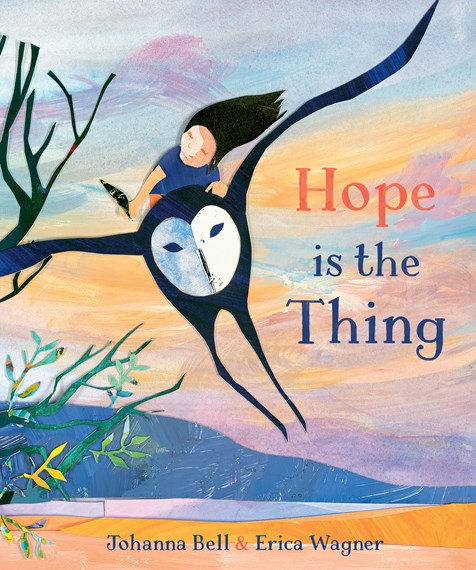
I love picking up a new book and reading the publication page and the blurb learning about its background before I begin to read. I always feel excited reading about a book and being alerted to some of the things in the author and illustrator’s minds as they worked. To find a poem by Emily Dickinson quoted on the acknowledgement page and referenced as a main influence in this story piqued my interest and had me seeking out more of her poems.
The poem quoted, ‘Hope is the thing with feathers’, underlines that ever-present impetus deep in the soul, a hope that keeps us all going. A fitting introduction to a book which grew out of the 2019 bushfires when hope seemed lost. A young girl wanders through the book, as each line begins, ‘Hope is..’ then relates that hope to a bird or animal affected by the fires. So hope is a kookaburra singing to the sun, or an emu on the run, a song on a mound, a cockie with a mischievous beak, an albatross taking off, a curlew migrating south. Each page has one or two lines to read aloud and ponder, and children may like to make up their own ‘hope is …’ line to add to the book.
The illustrations are marvellously executed, drawing the eyes to the multitude of media used in the collages. Again a blurb on the publication page points out the way the illustrations were created, and I found it hard to resist taking another look to track each down. The birds pictured fly against a sweep of watercolour across each page, the images made up of old artwork, scripts of paper, pieces torn from books, images of leaves, along with gouache, acrylic and ink.
I had to find examples in the illustrations and like re-reading Emily Dickinson’s poems, this added another layer of interest to this positively glowing book.
To find hope where it seems all is lost is an underlying theme throughout the book, as the birds resume their natural routines after the fire has passed, watching the regeneration of the landscape, offering help to the child who watches them.
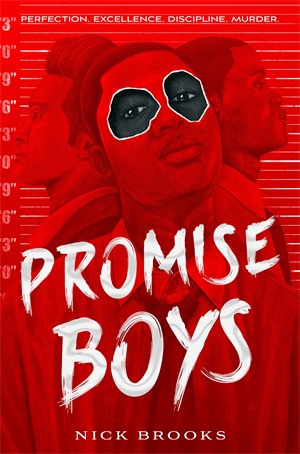
Urban Promise Prep is a school based on the vision of its founder and principal, Kenneth Moore, to create a place that lifts youth out of the ghettos and gangs, and instils discipline and hard work. It sounds great, and is the reason that many poor black families struggle to send their child there, but the reality turns out to be an authoritarian regimental approach that seems more likely to break the spirit and instil fear. So when Moore is shot in his office one day, suspicion turns to three young ‘troublemakers’ who were supposed to be in detention: J.B., Ramon, and Trey.
The themes of racism, profiling, police intimidation, ghettos and violence will be familiar to readers of Angie Thomas (The hate u give, On the come up) or Tiffany D Jackson (Grown), but the thing that makes Brooks’ novel so compelling is the unique structure which begins with short chapters by minor characters telling what they know or have heard, and the rumours and conjectures that are going the rounds, before we even get to meet the main characters. Then we have the three boys’ versions of the day, interspersed with other snippets including text messages, news articles and police reports. It all combines to cleverly bring to life the warped environment of social media, where speculation, gossip and prejudgment run rife.
Gradually the three boys begin to realise that there could be other possible suspects, and if they want to prove their innocence, they each have to follow their own leads and share what they know. So we are given more possible murderers and motives to untangle – which makes for an intriguing puzzle right until the end.
Promise boys is a murder mystery, detective type novel, with a thread of romance thrown in. The chapters are short and attention grabbing and keep you flying through the pages. The underlying themes are serious, revealing the barriers that Black and Latino youth face, and how difficult it is to overcome racism. But the messages are positive, with honesty, friendship and strong family ties being the qualities that get people through.
An interesting question we are left with afterwards is to consider what would truly make an empowering school, one that would build confidence as well as achievement. A foreword to the book is a quote from John Talyor Gatto’s Why schools don’t educate: ‘The truth is that schools don’t really teach anything except how to obey orders’. Clearly Moore’s Urban Promise school becomes more like a prison, based on the continual threat of further punishment. The model that is suggested at the end has student government, mental health advisors, full ESL staff, and a sensory or chill-out room. It also advocates for continual research on what works better. The school motto becomes one that has more emphasis on self-empowerment and collaboration:
We ask from the world what we give to the world: respect, wisdom and grace. We are each other’s hope.
Themes Murder, Racism, Black Americans, Profiling, Schools, Surveillance, Social media, Gangs, Poverty.
Helen Eddy
Emily Wilde's encyclopaedia of faeries by Heather Fawcett
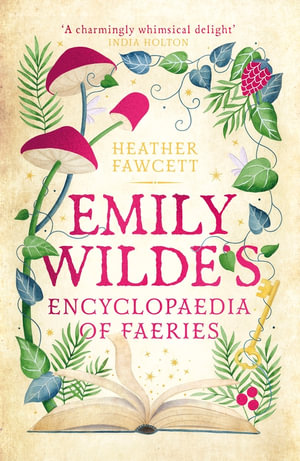
Emily Wilde’s Encyclopaedia of Fairies is a delightfully cosy fantasy novel by Canadian author Heather Fawcett. The story is set in an alternate early twentieth century where the fae live alongside the human population. Emily Wilde is an ambitious and hardworking adjunct professor of dryadology – the study of faeries – at Cambridge University. Emily is also prickly, awkward and hard to get along with, traits that sometimes make it difficult for a scholar who travels to far flung places all over the world for her research. We meet Emily as she arrives in Hrafnsvik, a remote village in the extreme north, where she is hoping to complete the research needed to finish the final chapter in her proposed faerie encyclopedia. Emily is determined that the publication of this lifetime of work will finally lead to the success and fame she needs to secure a tenured professorship.
Before long however, Emily has managed to accidentally insult the village chieftain and turn most of the population against her. She is not quite sure how to proceed until the unexpected – and unwelcome – arrival of Wendell Bambleby, her infuriatingly lazy, successful and charming rival from Cambridge. To Emily’s surprise, Wendell proposes that the two work together for mutual gain. She reluctantly agrees and braces herself to be hampered and outwitted at every turn as Wendell sets himself to charm the villagers and root out their faerie knowledge. What Emily does not realise however, is that Wendell has a secret and he has a reason for being in Hrafnsvik. But how much of that reason has to do with her? And can she admit that she is enjoying his company more than she expected?
Emily Wilde’s Encyclopaedia of Fairies is the first in a planned series following Emily’s adventures among the fae. Although fairly predictable, this first instalment is a heart-warming and cosy read with a sprinkling of danger and romance to liven up the plot. A perfect cold weather read, it will make you want to snuggle up next to a fire, while rain and wind howl outside your window.
Fire Reads, 2022. ISBN: 9781728215198. (Age:15-18)
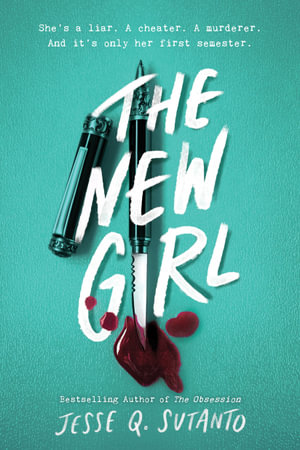
Lia Setiawan has just entered Draycott Academy on a scholarship and is desperate to live up to her family’s expectations to be successful on the running track and in class. However, corrupt teachers and toxic social media make life in the prestigious boarding school extremely difficult; bullying and racism are rife and a culture of drugs and cheating is firmly entrenched.
Billed as a mystery/thriller, The New Girl involves a series of over-the-top escapades narrated by the self-absorbed Lia as she makes a series of poor choices that propel her from one disaster to another including clashing with the reigning track queen, confiscating a dealer’s drugs, breaking into a teacher’s room, hiding in his car, exposing a cheating scandal, attempting to frame a rival classmate and accidentally killing a teacher. Entertaining rather than believable.
The plot does involve a number of serious social issues but they are allowed to go unchecked, rather than being addressed by students or staff. I found it farfetched that a school administration would allow social media to get so out of hand, and turn a blind eye to corrupt staff and cheating students, all problems that are central to the plot.
Lia and several of her peers are of Indonesian/Chinese descent and cultural references and snippets of conversations in Bahasa Indonesia and Mandarin add a layer of interest to the story, but the characters were somewhat typecast; mean girl, computer nerd, scholarship student, gorgeous boyfriend, incompetent police. As the narrator and a poor judge of character, Lia is unable to take the reader past these initial stereotypes and it is hard to feel for the privileged characters and difficult to believe the lavish situations that they get themselves into.
As a prequel to Sutanto’s The Obsession, this is an easy read with a farfetched but entertaining plot and characters you will love to hate.
Themes Racism, Bullying, Boarding school, Social media, Drugs.
Margaret Crohn
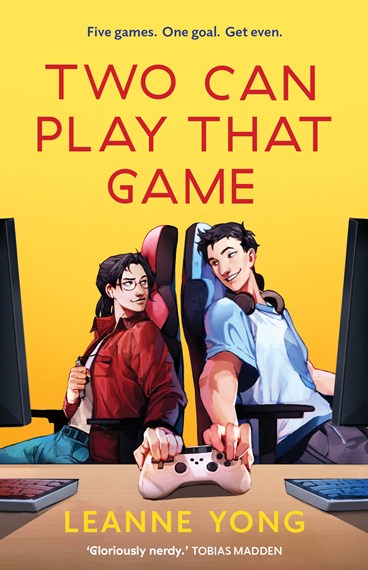
Two can play that game by Leanne Yong
Allen & Unwin, 2023. ISBN: 9781761063374. (Age:12-17) Highly recommended.
A novel for gamers, this story centres around a competition between two young gaming enthusiasts to win a ticket to an exclusive Art of Game Design workshop held in a major pop culture convention. For Sam Khoo it is the chance to learn from the experts and showcase her own game design, and maybe win a sponsorship. For Jay, it would be a present for his talented art and gaming enthusiast brother Ansen. The ticket is actually part of a special buy from GamesMasters, but Sam and Jay grabbed the kit at the same time, and so after some dispute, they decide to undertake a 5 game challenge, with the winner keeping the workshop ticket.
Leanne Yong is an escape room creator who has designed internationally recognised games, so has inside knowledge of the gaming world. Readers who are into computer games will enjoy the descriptions of the different gaming challenges that Sam and Jay take on. And readers who like some romance will enjoy the familiar enemies to friends trope.
The extra layer to Yong’s story is the portrayal of the whole Asian-Australian family dynamic, and the parental expectations of excellence and success. Sam and Jay are both from Chinese Malaysian families, where their every move is monitored and commented on, often leading to humorous scenarios. Similarly, the sibling rivalry in each family, between the good older child and the rebellious or more demanding younger one, is given a very realistic rendition.
But the thing that really carries the novel along, is the sparring dialogue between the two antagonistic teenagers, each master of the perfect come-back line. Their conversation and their text messages become another kind of combat, each trying to outsmart the other - which only makes it more poignant when moments of true friendship and kindness break through.
A thoroughly enjoyable novel about competition, individual passion, and family expectations, Yong’s novel about gamers shares some themes with Comer’s Grace notes about teenagers trying to follow their passions in the face of conflicting parental expectations. Both novels emphasize open and honest communication, because in the end families and friends do care about each other.
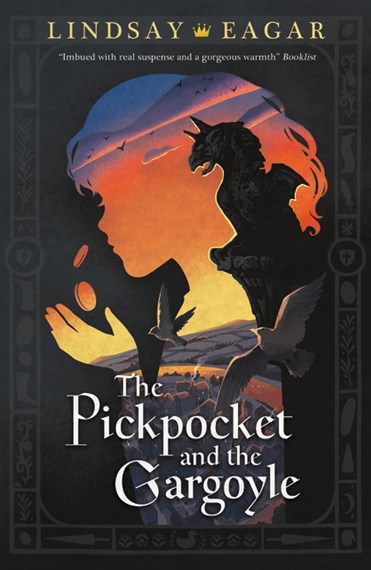
This story is brilliant! It is endearing and disquieting, and absolutely worth reading. In many ways it feels like a fantasy Dickensian drama (Oliver Twist-esque), in which a young girl named Duck, has been watched over by the Gargoyle in the unfinished and crumbling cathedral in the riverside town of Odierne. In fact, even when as an infant Duck fell from the cathedral walls into the river, the gargoyle watched powerlessly. Rescued and ‘adopted’ by the local gang of thieves (the Crowns) she lives in poverty and uncertainty, stealing and struggling to survive. When the Crowns’ leader, Gnat, plots to have her apprenticed to the local Baker, her life and concept of ‘family’ changes, but her thieving continues for the benefit of the Crowns. Trying to juggle her allegiance to her thieving family and her new employer creates many challenges for the young girl. Can she resolve where her loyalty should lie, or is it only about where the next meal comes from?
This book won me over immediately as it began with the unusual voice of the stone Gargoyle – the stolid and grumpy carved statue who can only watch and never act. His grumpiness is quaint and his view of the world before him gives unique setting detail and adds an intriguing voice to the tale of Duck (her name has been lost, so she keeps the nickname gifted to her by her thieving troupe). Most of the story is told in the voice of Duck (although the Gargoyle contributes occasionally), and we see inside the sadness of the homeless youngster, but we also see loyalty and friendship. Her time as an apprentice to the local baker, an almost blind and generous widow, gives her new opportunities for connection and practical skills, and the chance to keep her friends from starvation. This young girl changes from a fearful 6-year-old to a feisty and intelligent youngster and the transformation is not just about size and age. Letting down her ‘original family’ is not in her vocabulary, and hurting her new loving employer is also unappealing, but it is inevitable that she will not be able to keep all of them happy. I loved the journey back in time to a fictional place, but also into the heart of the homeless orphan. I will be recommending this book to confident readers aged 10 - 14. It is not hard to read, but neither is the story light-hearted – light-fingered, but not light-hearted. There is sadness and struggle, danger and gang-related crime, but it is infused with heart!