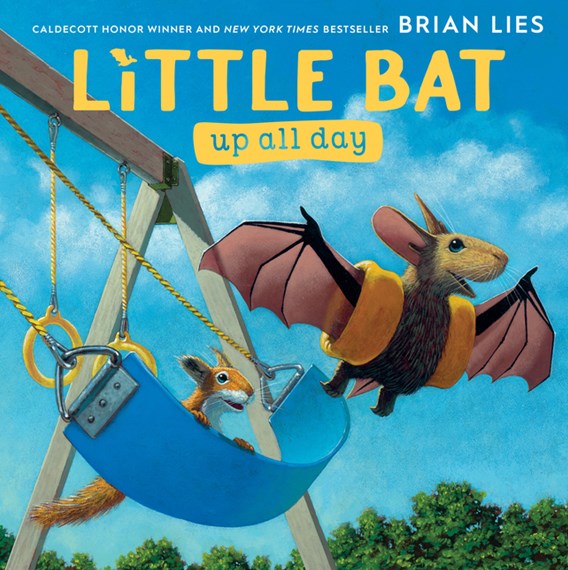
Inquisitive Little Bat wants to know what happens in the daytime. After all he sleeps through each day, only coming out at night to search for food. He meets a squirrel who saves him from the hawk circling overhead, and the pair become friends spending most of the day together. Little Bat has some difficulty however with the sun and seems to want to go to sleep, only to be wakened by the squirrel, Rusty. Rusty shows him over the neighbourhood which seems quite familiar to Little Bat who sees it only at night. They play in the fountain, Rusty surprised that bats know about this place, but Little Bat becomes so warm he begins to fall asleep. Ruse wakes him and they play on the swing, play with the soccer ball, play on the post box, all the while Squirrel telling Little Bat what it is like to be around during the day. But Little Bat dozes off and Squirrel is concerned that they cannot be friends as they both are awake at different times. Their waking hours do not correspond. Rusty watches over Little Bat, his practical measures keeping the bat safe, while Little Bat is eager but unprepared for what the day may bring.
In the end a very neat resolution gives their friendship a solid grounding.
This story is a subtle look at friendship and making friends and what friends bring to the relationship. It shows in the end that some sort of compromise may occur if their friendship is to continue, which they both want.
One of a group of books about Little Bat, this one gives readers a great deal of information about bats and squirrels as they read the fictional tale. A YouTube clip gives readers an interview with Brian Lies and more information about Little Bat.
The illustrations exude realism and warmth as the pair do things together, cementing their friendship. Several others of award winning author/illustrator Brian Lies’ books offered Little Bat as a background figure but now he takes centre stage in several recent books.
Little Brown, 2022. ISBN: 9780356512716. (Age:14+) Recommended.
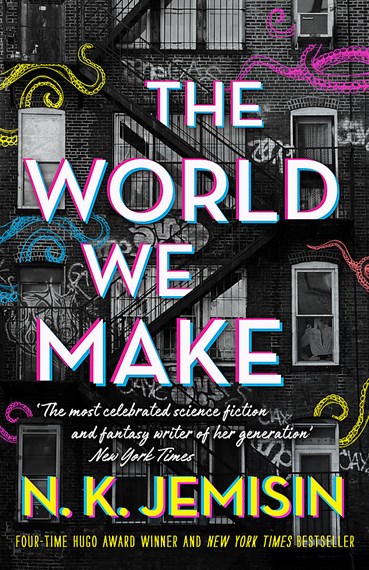
This sequel to The city we became (2020) sees the New York city avatars reunite to save the world from annihilation by the Woman in White who is providing support to the racist xenophobic elements in society. The idea of human avatars representing different sections of New York was introduced in Jemisin’s first book, with each of the distinct boroughs of the city having a definable character represented by the personalities of Manny (Manhatten), Brooklyn (Brooklyn), Padmini (Queens), Bronca (Bronx), and Aislyn (Staten Island). Aislyn has timidly aligned herself with the Woman in White so Veneza (Jersey City) has taken her place in the team alongside Neek, New York’s primary avatar. The six of them have to use all their powers to convince other cities in the world to unite against the evil that threatens them.
People familiar with the boroughs of New York will probably find the characterisations easy to recognise, but for others, it may be advisable to start with the first book to slowly put together the whole picture. But the main themes are ones that will resonate with all who are concerned about the rise of fascism, racism and bigotry, and the intolerance of diversity. In The world we make, Panfilo, the mayoral candidate for New York, is a Trump-like demagogue who incites racial violence. Brooklyn puts herself forward as an opposing candidate, standing for the downtrodden, the poor neighbourhoods, the immigrants and diverse gender groups. In many ways this is an expose of similar issues to Vincent Tirado’s Burn down, rise up, with references to historic events such as the urban planning that saw homes of Black and Hispanic people destroyed. It is a political conflict between the powerful corporations and the powerless, something that is familiar to many countries around the world. Jemisin’s novel, though set in a sci-fi future, puts a spotlight on current issues and proposes a solution that involves courage, communication, and collaboration.
I haven’t read the first book in Jemisin’s The great cities duology, but I suspect that the first one is the one that really captures the imagination with its portrayal of human avatars of cities, and The world we make, while it can be read on its own, is really a more satisfying read for enthusiastic fans of the first novel.
Themes New York, Cities, Avatars, Racism, Xenophobia, LGBQTI+, Science fiction.
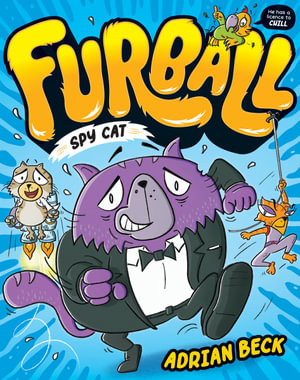
The World's GREATEST Spy - Furball, is truly amazing - just ask him! Though, he'd rather be napping, or maybe having a nice snack. After yet another amazing, and rather spectacular, saving of the world, it's back to the office. Along with his spy friends, Jade and Kit, they visit the waterpark on a rare day off, a treat from their boss. BUT, something is fishy - and not the snack bar. One of Furball's worst enemies from the evil organisation, Klaws, is at the waterpark and he's using the waterpark as a secret base! Can Furball and his friends stop the baddies before they destroy the city?
This delightful, light book is highly illustrated and is a great introduction to chapter books from picture books for younger readers. Puns abound throughout the whole book, some of which may go over young readers heads, but any adults assisting in the reading will appreciate. The characters are all a variety of animals, primarily cats, they are the spies and using gadgets and saving the world. Told from the point of view of one of the sidekicks (Kit), the humour and action are consistent throughout. Fans of the series The Bad Guys will enjoy this new series. Can see this taking off as other series in this particular niche have, as it is that right mix of light hearted and action packed.
Little Brown, 2020. ISBN: 9780316418423. (Age:14+) Recommended.
Seventeen-year-old Aderyn (‘Ryn’) is a gravedigger in a small village, but with the disappearance of her father and uncle and the villagers cremating their dead, both her family and her job are in jeopardy. Meanwhile in the forest the dead, known as Bone Houses, are starting to rise and seem to get worse when Ellis, a young mapmaker, arrives in the town. When Ellis offers Ryn money to guide him through the mountains, she hopes that it will help the family’s finances and perhaps solve the problem of the Bone Houses. Together they embark on a perilous quest to find the mythical cauldron that if destroyed, could stop the dead from rising.
Fans of horror will relish The bone houses, with the descriptions of the terrifying zombies rising, but will love the zombie goat, whose appearance lightens some of the dark action. Ryn and Ellis face the dangerous journey with courage, each helping the other overcome weaknesses, and both grow in knowledge about themselves. Ryn’s loyalty and love for her family shine through the book and her hope to find her father is heart-rending. Ellis must work through the chronic pain in his shoulder as well as the emotional pain of not knowing why he was found alone as a child in the forest. Their journeys to maturity and understanding are just as riveting as the quest to find the cauldron.
The slow burning growth of feelings between the two is handled sensitively, while the perils that the two face keep the reader in suspense. Can the pair find the cauldron and stop the dead?
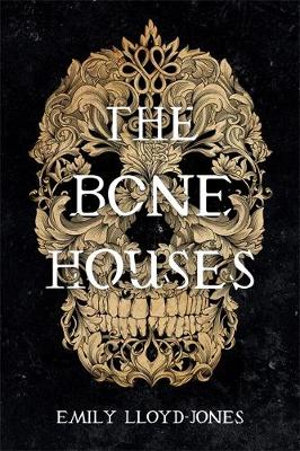
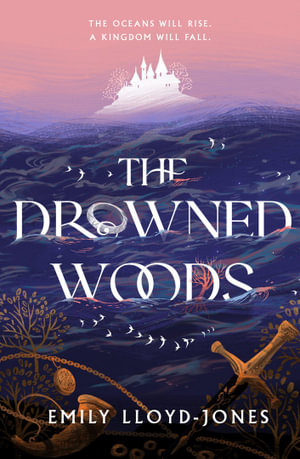
This is an ideal book to promote to readers who like horror mixed with mythology and was awarded a YALSA Best Fiction for Young Adults in 2020. The cover with its wonderful gold skull will entice readers, who may like to read The drowned woods, a YALSA Best Fiction for Young Adults in 2023 and a companion novel by Lloyd-Jones also set in Wales.
Mereid is running from the prince. The last water diviner in the kingdom of Wales, she unwittingly located wells for the prince, who had them poisoned, killing hundreds of people. She knows that she must disappear or he will use her again, but when Renfrew, the sorcerer who took her from her parents as a young child, appears and offers her one final job - destroy the prince by taking down his magic well – she cannot refuse. Renfrew gathers more allies to his cause, including the fae-cursed Fane, his Corgi, Trefor and Mer's ex-girlfriend thief Ifanna. This motley crew go on a quest to gain peace for the kingdom and freedom for themselves.
Imbued with Welsh mythology and magic, Lloyd-Jones maintains a cracking pace, as this unlikely group set out find the magic well and bring down the prince. Mer is a fascinating character, beset with guilt about how her power has been misused and determined to escape and finally settle down. The growing feeling between her and Fane, and the angst over her failed romance with Ifanna, are handled well by Lloyd-Jones, and the author brings some slippery characters to life as well. Not least is the cute little Corgi Trefor, who provides comic relief and will appeal to dog lovers.
A YALSA Best Fiction for Young Adults 2023 and a great escapist read The downed woods is sure to appeal to lovers of adventure and heist novels. Readers may like to read The bone houses, a companion novel or Spindle and dagger by J. Anderson Coats which is also set in Wales.
Themes Welsh mythology, Heists, Fantasy.
Pat Pledger
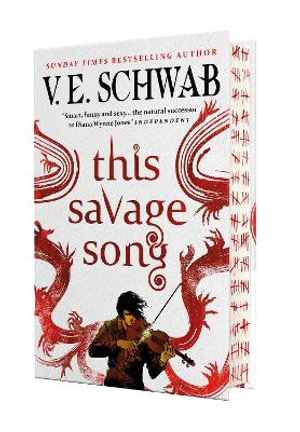
This savage song by V.E. Schwab
New South, 2022. ISBN: 9781803362144. (Age:14+) Recommended.
2017 Locus Awards nominee. In a world that has been invaded by monsters, Kate Harker and August Flynn find themselves together on the run. There are three types of monsters: Malchai who drink blood and are made when there is a murder, Corsai who eat flesh and bones and are formed from violence and Sunai who feed on the souls of sinners and are formed from a major catastrophe like a school bombing. August Flynn is a Sunai, but longs to be less of a monster. His adopted father, Henry Flynn, runs one side of Verity, while Kate Harker's father runs the other side. However the truce that Flynn and Harker had made is beginning to come apart at the seams and August is sent to spy on Kate in an effort to find out what is going on.
The setting of Verity and the formation of monsters from evil acts is quite original and made reading This savage song quite different. Kate's feisty nature and need to please her crime boss father contrasted with August's attempts to be less monster-like. When they both are attacked at their school, they have to rely on each other to work out what is happening and to escape the attempts to kill them. Although there are slight hints at a Romeo and Juliet type of relationship, this is minor to the plot, which is action driven, while posing questions about morality and ethics.
There are some very thrilling and frightening scenes as the monsters chase Kate and August through the underground tunnels and Schwab manages to surprise with some unexpected twists and turns. The conclusion is satisfying but leaves plenty of opportunity for expansion in Our dark duet, the second in the series.
This was a compulsive read with unique characters and magic. Readers who enjoy Holly Black's books will want to read this collector's edition.
Original review August 2017 Updated March 2023
Themes Dystopian fiction.
Pat Pledger
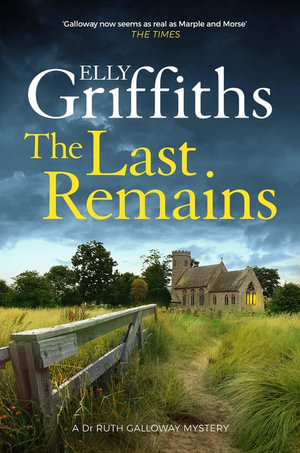
The Last Remains by Elly Griffiths
The Dr Ruth Galloway Mysteries: Book 15. Quercus Books, 2023. ISBN: 9781529409734. (Age:Adult - Senior secondary) Recommended.
A fan of the Ruth Galloway series, I grabbed The last remains, really wanting to know where the relationship between Ruth and DCI Nelson would go – as well as wanting to read a well-constructed and engaging mystery. I was happy with both the relationship slant and the mystery and can recommend the book to fans of the series.
In The last remains, Ruth is faced with another skeleton, that of a young woman, Emily Pickering, who has been bricked into the wall of what was a café. She had been a young archaeology student missing since 2002, a time when Ruth’s friend Cathbad was part of her student group. As Nelson and his team investigate, suspicion falls on Emily’s Cambridge lecturer and the other students, who had all been on a weekend camp when she disappeared. Then Cathbad disappears and it doesn’t look good for him. Will the truth come out as Ruth is drawn into a dangerous game in some Neolithic flint mines in her pursuit of the murderer?
In the meantime Ruth is faced with the prospect that her department may be closed and she could lose her job, while Nelson is coming to grips with his marriage as his wife and young son come back to live with him. The relationship threads are engrossing, but so is the well written mystery, with the puzzle about who committed the murder plotted so well that it is very difficult to spot the culprit.
It is best to start the series at the beginning with Crossing places, to get to know the main characters, but then the books have a stand-alone mystery in each. I hope that this is not the last in the Ruth Galloway series but fans of Elly Griffith’s mysteries could turn to the novels with Harbinder Kaur as the detective, The Stranger diaries, winner of the Edgar Award for Best Novel, 2020, The Postscript murders and Bleeding heart yard.
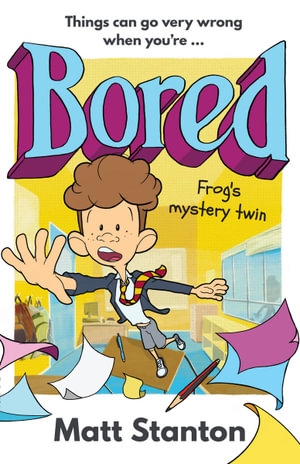
This is the second in Matt Stanton's Bored series, where each installment is told by one of the children living on the same street, Turtle Place. This one is told by Frog; he's creative, thick-skinned and just doing his best to fit in as a Year 6 at a new school. Short on other ideas to make everyone like him he decides to do a giant tortoise ballet to bring some energy back to a bored class of kids. Trouble is, it kind of backfires. Luisa starts picking on him, Evie seems to think he is crazy and Milo is grumpy about something. Maybe telling everyone he has a twin brother would make everything better? It doesn't, but it makes for a great story!
Frog is a well-rounded and likable character from the beginning and is easily admired as he used to be bullied but is determined not to let this change his personality. Stanton is masterful at drip-feeding new details about each of the kids so we get to know them more and more throughout the book and across the series. Each character is incredibly relatable, especially when we are able to look at the world through their perspective. Each one of them have something going on in their lives under the surface and contexts that have made and are making them who they are. Luisa is clearly bullying Frog and she is a refreshing departure from stereotypical bully figure in many children's books. She is not one-dimensional and we find out later on that she is dealing with a stressful situation in her own personal life. This is a wonderful reminder to children that everyone is capable of acting out/emotional outbursts/making mistakes but that we are able to learn from them and move on. It reinforces that our circumstances and our environment affect our actions and gives strategies for understanding others and their behaviour. Fans of Stanton's Funny Kid series will be obvious readers, but this really is a series that should be put into the hands of all tweens.
*This is fine to read as a standalone, without having read the first in the series.
Themes Humorous stories, Friendship, Empathy.
Nicole Nelson
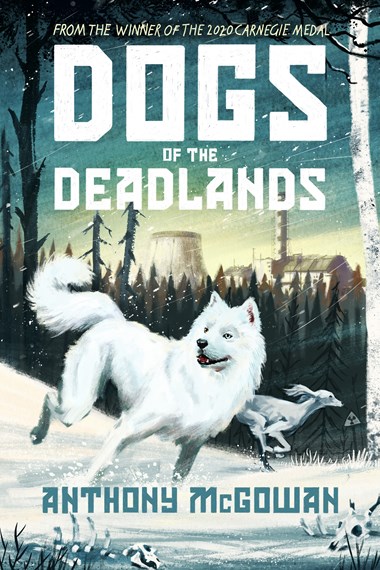
Dogs of the deadlands by Anthony McGowan
Rock the Boat, 2022. ISBN: 9780861543267. (Age:12-15) Highly recommended.
What an amazing book! Filled with heart and emotion, and with power and ferocity, this is an amazing story involving a young child’s passion for her Samoyed-cross puppy, and then its survival struggle when left behind at the time of the Chernobyl disaster. Travelling with the child through her struggles, but more particularly with the female dog and her wolf-cross puppies as they live wild in an environment that is harsh and filled with threats, we are left wide-eyed for all. There are many bleak and cruel realities for the dogs as they strive to feed themselves and save themselves from attack from a variety of wild threats. The ‘personalities’ of the dogs and their canine and lupine abilities come to the fore to enable them to grow and develop as a family unit in a harsh environment. With occasional interactions with humans, there is also an unusual ‘circle of life’ story in this life and death tale set within the dark aftermath of the Chernobyl disaster.
This is a tale that does not gloss over the violence of a wild dog's life. There is aggression and bloodshed in order to maintain hierarchies and to find food. McGowan does not hold back in his descriptions of the attacks and the wildness exhibited in the dogs’ lives. For those who are squeamish about animal attacks, this may cause distress. The story is excellent, but it is not for very young readers because of the violence. However there were many times when tears would well as we were led to ‘watch’ as loved dog-troop members faced death. This is a book written with incredible skill and it is a compelling insight into the animal world. It will resonate on many levels and will be hard to forget. Highly recommended for readers aged 12 – 15.
Hachette, 2022. ISBN: 9780733646010. (Age:Adult - Young adult)
Seattle orthopaedic surgeon Tom and his new wife Heather are visiting Australia on their way to a conference in Melbourne. Tom is recently widowed and remarried; this trip with his kids, Olivia, 14 and Owen 12 is to be a family bonding experience and they have included Sydney and Uluru in their itinerary. Before the conference the kids want their dad to take them to see some real Australian animals. “They are child soldiers in the war between generations” p. 24, especially difficult since their mother’s death, so the family drive their Porsche Cayenne rental car to the Mornington Peninsula for the day, stopping at a picnic stop where they meet a Dutch couple and a man with a koala in a cage at the back of his Toyota. Matt says he is from Dutch Island, a private Island just across the bay where there are lots of native animals. Visitors are not welcome there but he and his mate Jacko agree to take them on the 15 minute ferry trip for $900. They split the cost with the Dutch couple and they set out. Once on the island they don’t have much luck seeing animals but driving back to the ferry they have an accident that will change their lives. We are given a taste of the horror to come in a pre-chapter where Heather is murderously clutching a rusty machete while her stepdaughter lies on the ground in front of Jacko, a helpful nudge forward in the story which lacked momentum in the first half. As an Australian reader I baulked at the concept of an isolated clan, a law unto themselves (think Deliverance which is 50 years old now) living so close to Melbourne and the idea that the island was a complete communications blackspot, necessary for plot reasons but difficult to believe. It is ridiculous that they would pay money to a couple of dodgy blokes rather than visit one of the wildlife sanctuaries in the area and I wondered why the CFS didn’t turn up as soon as fire started on the island. It was hard to take seriously when the predictable encounters with spiders, sharks and snakes turned up but that said, the pace picked up in the second half with plenty of action, torture, manhunts and guns so if the reader can suspend disbelief, lovers of this genre will happily go along for the ride.
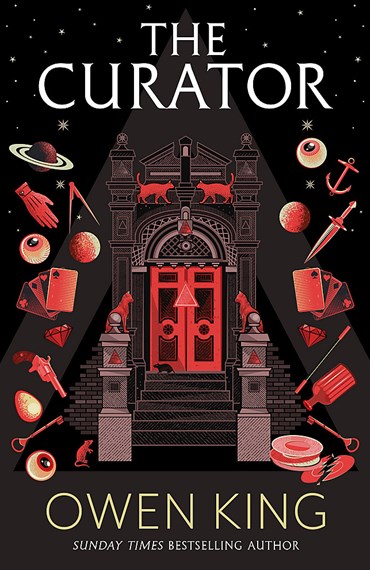
This book has been described by some reviewers as Dickensian, and it is a world of various eccentric characters, so many at times, that it is hard to keep track of them. For me it was the character of the charming independent minded Dora that kept me engaged, allowing me to let the rest just flow. Scenes and bits of stories are interleaved with Dora’s story, like small vignettes with strange seemingly unrelated people; but going with the flow, eventually all the little pieces come together to create the bigger picture. It’s a bit like looking through the apparatus in the National Museum of the Worker that Dora curates, to see the strange fragments and scenarios down the spyglass and not knowing what it all means.
Dora, a maid who takes charge of her life, and captures the heart of her ‘Lieutenant’, a university rebel in the revolution that is taking over the city, becomes the curator of the neglected Museum of the Worker, a safe place to stay at least, though what she really wanted was to work at the Society for Psykical Research, the place that she thinks is linked to the death of her brother Ambrose, a mystery she wants to solve.
There are many dark and horrible characters in this story: the brutish Sergeant van Goor, and the sadistic Captain Anthony, are just a couple, and there are scenes of gruesome torture and death. On the other hand, there is the naive Lieutenant, simple and foolish, and Dora with her droll but caring contemplation of him. And then there is also Ike, the smart, quick-witted boy of the streets, who takes two young orphans under his wing. These characters are very likeable and help to sustain the interest of the reader through the meanders of the story.
It is world of revolution, upheaval, chaos, and cats. The cats are numerous, worshipped by some, and despised by others. Perhaps it is the cats who see all and understand all. We can only follow the threads and try to work it out. The curator is a fantastical story, completely unlike other works of fantasy, and will appeal to readers who are prepared to be baffled even until its enigmatic but romantic conclusion.
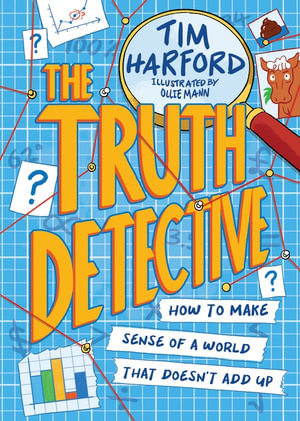
Tim Harford, British economist, journalist and presenter of BBC Radio 4's More or Less, has written his first children’s book, The Truth Detective: How To Make Sense of a World That Doesn’t Add Up. This book is described as 'an investigative adventure packed with tips and tricks to help you hunt down the truth about the world around you - using the power of numbers and your own brilliant brain.'
The book is divided into three sections: The Truth Detective Mindset, The Skills of a truth Detective and How to Crack Difficult Cases. There is a contents page and introduction preceding the sections and the book contains easily accessible information with plenty of white space surrounding the text. Throughout the book, orange, black and white are the predominant colours used, and draw the reader’s eye to bold headings, images, tables and important questions and information. The reader is encouraged to observe, deduce, look at clues, use tips, tools and tactics, look at trustworthy sources and fake news in solving or understanding the situations posed.
One of the tables presented include the Hundred-Billionaires list of four, all men of course. The author then poses the question what does that tell us about the world? After this table he introduces the Forbes Fictional 15 list -the richest people in novels and films; which includes characters such as Willy Wonka, Lara Croft and Jabba the Hutt. His conversation then involves a discussion about wealth, poverty and uses the example of the Melinda and Bill Gates Foundation and what it has achieved.
This book is not a quick read. So many examples and scenarios are shared that may interest older middle grade to secondary even adult readers. This book certainly makes the reader question and think deeply about what is going on in the world.
Themes Numbers, Data, World Events, Truth, Investigation, Curiosity, Humour, Deep Thinking, Problem Solving, Money Issues, Justice.
Kathryn Beilby
The Ivies by Alexa Donne
Ember, 2022. ISBN: 9780593303733. (Age:YA)
The Ivies is a YA boarding school murder mystery firmly set in well-to-do America. The plot hinges on the importance of excelling in entrance essays, exams and extra-curricular activities, if a student wants to gain entry into an Ivy League college.
A group of five girls at exclusive $65,000/year Clafin Academy have been plotting to ensure their admission to the colleges of their choice, mainly by sabotaging their peers’ efforts with cut-throat competitiveness. This backfires spectacularly when one of the ‘Ivies’, as they are known, is found dead after receiving notice of her acceptance into Harvard.
Feeling that the police are incompetent and school administration corrupt, Olivia the narrator teams up with her co-editor of the school magazine in an attempt to discover her friend’s killer. In the process they unearth illegal scams, IT hacks and underhand sabotages that the Ivies have perpetuated on classmates and even on members of their own group.
A number of the aspects of how the school is run border on the unbelievable if not illegal and the ultra-rich lifestyles of the students is over-the-top, but if you can overlook or revel in this, you have an easy-read thriller with so many red herrings that one-by-one most of the main characters fall under suspicion.
There are potentially interesting subplots concerning racism and class differences but these are not explored in any depth. However, having worked informally in college admissions consulting, Donne understands how high-stakes and involved this is. She has used this knowledge and experience to write a fast-paced YA novel, based on the antics of a gang of entitled girls.
Warnings: Drug use, language, death, bullying.
Themes Boarding school, Thriller, Mean girls, Murder mystery.
Margaret Crohn
Bad Grammar: a school for gentlemen by Nathan Luff
Bourkely Boys Grammar, aka Bad Grammar, is hardly a school for gentlemen, more likely a school for thugs, as Marcus soon finds out when his parents and his teacher determine to send him there, mistakenly driven to this extreme measure by Marcus's obsessive preoccupation with computer gaming. On the bus, before he even arrives at the school, he has a run-in with the hardened bully ‘Scarface’, and it is not long before Scarface has found the way to blackmail Marcus into subservience.
But Marcus is not beaten. His computer gaming experience see him step up to the challenges that face him, and with his sidekicks, Fred and Trent, he sets about finding a way to escape from the prison he is in, defeat the monsters that beset him, and solve the mysteries of Bad Grammar.
This is a rollicking read for junior readers, fast paced and very funny. The chapters are titled Level 1, Level 2, etc, as the Marcus advances through the game world he creates out of his situation. In the end, Marcus, formerly Marcus No Friends, finds out what it takes to be a true warrior, leader and good friend. It’s a lot of fun, and is certain to be a winner with readers who are looking for the next level up from Luff’s Nerd Herd books.
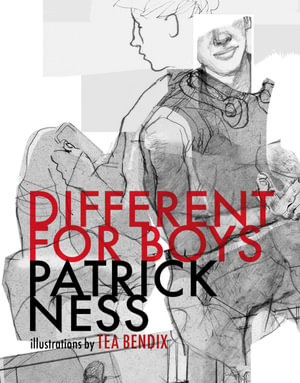
Ant Stevenson muses on what it takes to lose your virginity if you are a boy who likes boys. There are 5 levels he defines but he muses that he has done all five, could still be a virgin and knows what loneliness means. The reader must imagine the key words in the list because they are blacked out, as he tells his friend Charlie, “It’s that kind of story. Certain words are necessary because this is real life, but you can’t actually show ‘em because we’re too young to read about the stuff we actually do, yeah?”p10. Ant, Charlie Freddie and Jack are old friends, always seated together alphabetically at St Michael’s Boys school, but Jack has recently re-joined the group in year 11 after 7 years away. Ant and Charlie play football together but Freddie is now trying to persuade Ant to play rugby with him. Jack is physically smaller and does drama and choir, falling into the stereotypical ‘camp” classification by the other boys. But all is not as it seems, Charlie and Ant have been secretly having sexual encounters; Charlie insists they are ‘just goofing around …just a release until we get girlfriends”p32 but Ant would like to kiss him, something Charlie will not allow. When Freddie keeps asking Ant to join him for Rugby training encouraged by Jack, Charlie’s jealousy gets the better of him and things fall apart. This short novella is beautifully illustrated by Tea Bendix but, disappointingly, I didn’t find the images enhanced the text. There was a nice feeling for adolescent boys and classrooms but the pictures didn’t line up with the characters except for a sulky looking Charlie. The redacted words were a bit gimmicky, a distraction as the reader imagines the forbidden words and there is no such restriction on the use of homophobic expletives. But overall this is an interesting exploration of the enduring power of friendship and acceptance in the face of jealousy and betrayal. Fans of Patrick Ness's books will embrace this one. The book treads a fine line where school libraries are concerned, the words might be removed but the story and illustrations are still about young people having sex.