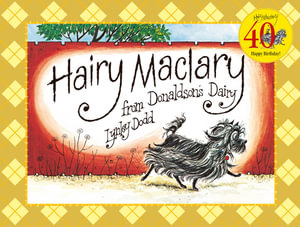
A reprint of the classic tale from New Zealand author, Lynley Dodd is a very welcome addition to any library. Republished in recognition of its fortieth year this edition will greet newcomers and old fans alike, replacing the old well used copies at home or in the library. Even those people who have not read the book will recall the lilting refrain heard walking down the street or passing a library or school.
Hairy Maclary goes for a walk into town, inviting all his doggy friends to join him. A procession of neighbourhood dogs follows: the horse sized dog next door, the lean and bony greyhound bitzer, the spotty Bottomley Potts, hairy Muffin Mcleay, and the low hung Schnitzel. Each dog walks along the street, some sniffing at things they pass, some scratching, some looking at each doorway. All seems quite normal for a small group of friendly dogs ambling into town. That is until they spy their mortal enemy, the streets’ biggest and most ferocious cat, Scarface Claw.
Without hesitation the bevy of confident dogs disappear in a tangle of tails and paws, rushing back to where they came from and Hairy Maclary falls into his bed covering himself with his blanket.
The looks on all their faces are priceless, contrasting with that of the bullying cat who knows exactly where he belongs. Told in wonderfully evocative verse form, children will love predicting the rhyming words, learn some of the verses with their favourite dog as its focus, ready to repeat it as it comes around, following the tale with the adult reader. Funny, laugh out loud rhymes will entreat the readers and listeners to this tale, readers will love reading it out loud and seeing the effect it has upon the audience, while young listeners will delight in its humour and cleverly observed animal behaviour.
A treat for all ages.
Themes Dogs and cats, Walking, Verse, Read aloud, Humour.
Fran Knight
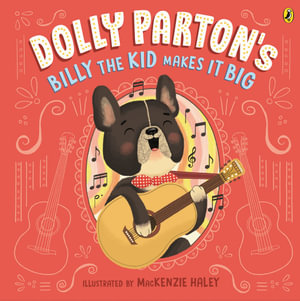
Dolly Parton's Billy the Kid makes it big by Dolly Parton. Illus. by MacKenzie Haley
Penguin, 2023. ISBN: 9781761342837. (Age:4-8)
Country music icon Dolly Parton uses her own life experiences as well as her real-life dog Billy the Kid as inspiration for this story about making friends, not making fun. The term 'making fun of' is not used as much in Australia as 'teasing' but the context of this relatable tale makes it clear. Billy the Kid loves music so he heads off to Nashville in the hopes of finding some band mates. His first encounter is with an unkind trio of dogs ("You're clearly not a true muttropolitan like us") but eventually he finds his crew. When the bully dogs tease one of his bandmates Billy the Kid and the rest of the band teach them a lesson and re-educate them. "You weren't havin' fun. You were makin' fun...And makin' fun ain't funny", they assert. Billy and his mates show that having a laugh at someone else's expense is not funny and that sticking by and standing up for your friends is just as rewarding as winning a trophy.
Dolly Parton makes an appearance in the illustrations when she comes onstage singing "Let's celebrate our differences instead of makin' fun" and also included at the end of the story are song lyrics from Makin' Fun Ain't Funny, as written by Dolly herself.The song and video with lyrics are available on streaming services and YouTube. There is a nice simple message carried through the book and lots of dog puns to keep things fun. The dogs are all different sizes, shapes and colours providing the diversity that is a true reflection of human society. A great choice for educators and parents who are Dolly Parton fans and little ones who are auditory learners but also for those children who need some help learning that making fun of and having fun with others are very different.
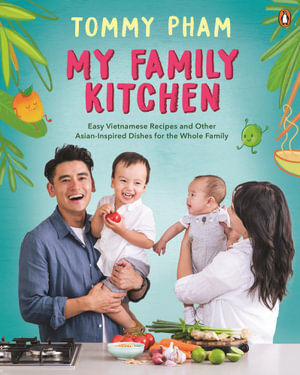
MasterChef fan favourite from seasons 13 & 14 Tommy Phan, shares his love of cooking in this comprehensive and beautifully presented cookbook. With a glowing foreword from MasterChef Judge Melissa Leong, an introduction and bio from Tommy himself, this cookbook has a place in the homes of passionate cooks, both experienced and inexperienced. There is a well set out contents page with recipes divided into the following chapters: Main Meals, Protein and Veg, Soups, A Full Meal, Noodles, Snacks, Sweets and Hacks. Before the recipe pages, the author shares recommendations and tips about ingredients and equipment.
The emphasis in this cookbook is on family cooking so each recipe often mentions the dish serves are for 2 adults and 2 littlies. Before each recipe is a personal comment from Tommy regarding the dish to be created and often an extra ‘Tommy’s tip’. Most dishes are presented across a double page spread with the first page being the recipe set out in the familiar procedural way and a glossy photograph of the dish/dishes on the adjacent page. Some of the longer recipes such as B?n Thang (Hanoi Chicken Noodle Soup) is spread across four pages. One dish sure to please is the Quick Fruit Ice Cream which sounds delicious. The only ingredients required are 3 cups frozen mango cubes, 1 cup coconut milk, 1-3 tablespoons honey. The method is to blend all the ingredients until smooth, then eat immediately or freeze for an hour for a thicker texture. Sure to be hit with both children and adults. Also shared throughout the book are a number of photographs of Tommy and his sons, enjoying kitchen and cooking time together. In the final pages are ‘Play in the Kitchen’ activities for children to do plus a detailed index, and acknowledgements.
For those who love Asian-inspired dishes and learning more about Vietnamese cooking and culture this cookbook is a must-have.
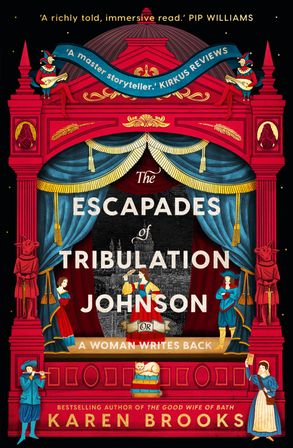
Set in 17th century London, Karen Brooks’ latest novel vividly brings to life an era when women were chattels, their intelligence derided, and their best future prospect was to secure an advantageous marriage. Tribulation Johnson, however, manages to escape a hideous marriage proposal and is sent to stay with a cousin, a woman, who turns out to be an infamous writer of plays and tracts. And so Tribulation enters the sphere of Aphra Behn, an independent woman, who makes her living from her writings, an actual historical figure, who rightly should be credited with writing the first novel in English.
Tribulation enters the world of the theatre, at a time when women had just taken to the stage, though at cost to their personal reputations. It is a lusty bawdy world, and women have to manoeuvre the unwelcome attentions of both lords and drunkards. The streets of London are dark, full of stench and filth. Yet Tribulation relishes her freedom and the opportunity to learn from Aphra, her kind and caring mentor.
The subtitle ‘A woman writes back’ succinctly presents the main theme of the novel: women taking up the pen, and asserting their opinion, and themselves, in a way they hadn’t been able to before. Following Tribulation’s ‘escapades’ makes for an exciting ride: there are a number of mysteries to resolve, including a dark handsome stranger with his own secrets. Although the novel is long, at over 500 pages, the story rips along, with short chapters titled ‘scenes’ within the main Acts, making for the kind of book that is hard to put down. This is historical fiction at its best.
Themes Historical fiction, Women, Writers, Theatre, Political intrigue.
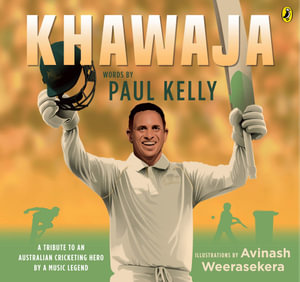
Khawaja by Paul Kelly. Illus. by Avinash Weerasekera
A tribute to one of Australia’s greatest sporting heroes, Usman Khawaja, presented first on Youtube by singing sensation Paul Kelly is brought to life on the printed page for younger readers.
Khawaja always wanted to play for Australia and practised long and hard, becoming opening batsman in the U19 Championships in 2005, followed by U19 World Cup in 2006, then first class cricket opened with New South Wales in 2008. Given the baggy green in 2010, he went on to play 60 tests, as well as playing in the Big Bash League, Pakistan Super League, the IPL and county cricket in England. A look at his statistics on Wikipedia is astonishing.
Paul Kelly penned his tribute to Khawaja after he made a pair of centuries at the SGC, called up for Australia after being sidelined two years before. It is a tribute to a man of perseverance, determination and talent. The selectors said no for two years, then yes when Khuwaja was 35, not expecting to play again for Australia. But play he did, making a pair of centuries that resonate throughout the cricketing public world wide.
Readers will love to read of this man, born in Pakistan, arriving in Australia when he was four, aiming to play for Australia, and working on his game until he did. He was the first Muslim, Pakistani born person to join the Test team and stunned everyone with his effort in 2022 at the SGC.
Kelly’s song reads well as a ballad or poem and kids will love to hear it read aloud, and after hearing the musical version, learn to sing along with Paul Kelly, screaming out the refrain of 'Khawajaaaaa' at top voice.
Illustrations by Weerasekera support the text showing almost photographic like portraits of Usman Khawaja and the playing style he made famous, alongside the sporting fixtures on which he played. Each double page has a story to tell, and will encourage children to think about his life and the determination needed to achieve what he did. An inspirational look at a great Australian cricketer.
Themes Cricket, Khawaja, Determination, Test cricket.
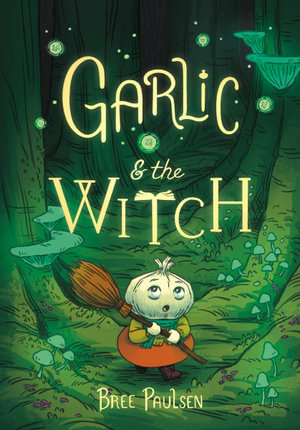
Brave little Garlic is back in this standalone companion to Garlic and the Vampire, with another tale of friendship, magic, and self-discovery.
Garlic loves spending time with Witch Agnes, Carrot, and her new friend, the Count, who has proven to be a delightful neighbour to the village of vegetable people rather than the scary vampire the village feared in the first story,. But despite Agnes's best attempts to home-brew a vegetarian blood substitute for Count, the ingredient she needs most can only be found at the Magic Market, far from the valley.
Before she knows it, with a broomstick in hand, Garlic is nervously preparing for a journey.
But Garlic is experiencing another change too - finger by finger, she appears to be turning human. Witch Agnes assures her that this is normal for her garden magic, but Garlic isn't so sure that she's ready for such a big change. After all, changes are scary...and what if she doesn't want to be human after all...
As with the first one, this is not a complex read - cheerful rather than chilling - with a subtle message about believing in stereotypes and rumours, readers will still need to have the reading skills necessary to interpret a graphic novel, seamlessly integrating the illustrations with the plot because there are many passages where there is no speech. That said, with its warm colours, and faces which are friendly rather than frightening, this is a gentle introduction into both the format and fantasy.
A fresh, new series to entertain readers who are looking for something a bit different.
Allen & Unwin, 2023. ISBN: 9781761068911. (Age:8+) Highly recommended.
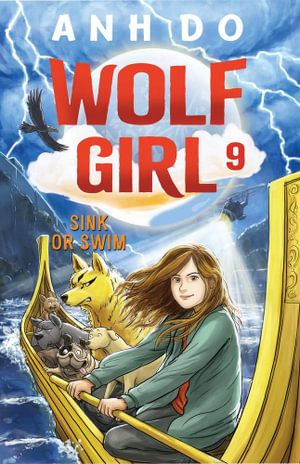
Sink or Swim, is the ninth book in the popular Wolf Girl series. Once again Gwen and the pack are on the river being chased by the Hornets in a helicopter while navigating fast-flowing stormy waters. Eventually making it safely into a tunnel, they are thwarted by a grate blocking their escape and are at the mercy of the rising flood waters. Clever Pirate discovers a gap and after some trouble they manage to swim underwater through to the other side. The storm though is relentless, and they watch in horror as a tiny village is partially destroyed. Gwen and the pack help those villagers who have fallen in the water and are rewarded with food and shelter for the evening. They decide to remain and support the villagers with rebuilding the village but the deadly Hornets and Braxans arrive and take the adults away. With local village boy Jarrod, Gwen and the dogs hatch a plan to try and bring the adults back. This involves a journey to the Championship Games where the winning prize is any wish to be granted. What surprise awaits Gwen at the Games? Will she win?
This is another exciting fast-paced read that will continue to engage fans of the Wolf Girl series. Detailed illustrations by Lachlan Creagh provide a strong visual connection to the text. Book Ten will be published soon.
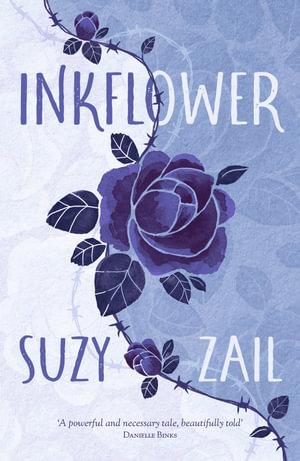
Diagnosed with motor neurone disease and given six months to live, Lisa’s father Emil begins to share his childhood story with his family. The atrocities he endured and overcame during the Holocaust make for torrid reading, and are confronting for his children who were unaware of his background. However he continues with weekly instalments, determined that history will not be forgotten, and hoping that evils will not be repeated.
The chapters alternate between Then and Now; Emil’s survival leading up to his migration to Australia, and 16 year-old Lisa’s family and school life in 1982 suburban Melbourne.
The novel is based on Zail’s own father’s desire to tell the story of his escape from WW2 Nazi Europe, and his decline and eventual death from MND. This was recorded by Zail in her 2006 book, The Tattooed Flower; a memoir. In Inkflower his story is fleshed out by the contemporary narrator, Lisa, who has kept both her father’s illness and her Jewish background a secret from her best friends and boyfriend.
Young readers may have come across general descriptions of the Jews’ transportation by cattle trucks, existence in concentration camps, the forced death marches and associated hunger, beatings and killings, but recounting them from an individual young person’s perspective give them extra weight. If this is a reader’s first introduction to the Holocaust, Inkflower will be a harrowing read.
Both strands of the novel stress the importance of family, friendship and supportive relationships. They also explore how we construct our own identity and how aspects such as names and religion define us. Lisa and her father were examples of how we often tell ‘lies by omission’, and adjust our perceptions of ourselves as we learn more about our family’s history and background.
The Author’s Note on how the book came about, and Further Resources for both the Holocaust and MND are valuable additions.
Themes Friendship, Family, Identity, Holocaust, Motor Neurone Disease.
Margaret Crohn
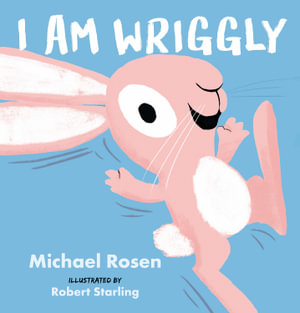
I am wriggly by Michael Rosen. Illus. by Robert Starling
A wriggling rabbit leaps out at the readers and inside they follow their antics as they show their whiskers wriggling, then their ears, and how they wriggle on the chair and wriggle with the toy bear. Readers will have joined in with the zany movements by now, transported by Starling’s illustrations of just how wriggly the rabbit is. With a bright cheeky smile, they wriggle round and round, wriggle on the ground, while a change of pace sees them joggle and juggle, as they bobble in the boat, and ride the wobbly car. A change of words again sees them with their squiggly kite, and higgledy piggledy toys, and each change of words will be sure to keep the readers on their toes, listening intently to the rhythm and sounds of the new words if read aloud, and trying them out for themselves while reading alone. As their feet beat out a tune, they can’t stop wriggling, giggling, popping and hopping. But they say, they must stop otherwise they will burst. And so they do.
Children will adore reading about the wriggling rabbit, copying their antics as they read through the book, saying the words out loud, predicting the rhymes as they read, listening to the way it is read to them, and perhaps creating a video to match the words.
The exuberance of the text and movement in the illustrations will appeal to all those kids who cannot sit still and those who who would live to be spontaneous.
The infectious words will be said over and over agin, children trying them out, working out what they mean, enjoying the humour in their depiction by Robert Starling. His illustrations are deceptively simple, showing the rabbit in various poses across the pages, making use of the white space to frame what the rabbit is doing. Colour pops up sparingly, giving it an impact and a wow when it appears, as with the balloons, and the toys and the socks. I love the last few pages with the rabbit wriggling across the white background, finally lying down exhausted, hopefully ready to sleep.
A wonderful story for the classroom or home where a wriggling child can be exercised into some down time.
Themes Activity, Wriggling, Humour.
Fran Knight
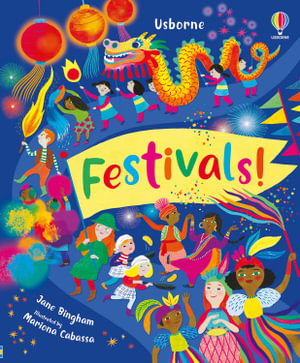
Festivals! by Jane Bingham and Mariona Cabassa
HarperCollins, 2023. ISBN: 9781803702902.
Festivals are times for fun and excitement, bring communities together to celebrate and commemorate. And there are many books about the most common that are held in different cultures, religions and societies so that most students have a basic knowledge of a lot of them, particularly those that are important to their school populations.
But what sets this book aside apart from its vibrant presentation is that the festivals themselves are collated not by date or purpose but by action. So there are collections of those where throwing things like gumboots and tomatoes gathered together under the heading SPLAT!; others collected under headings such as Boo!, Crackle! and Parade!, even Splosh!
Amidst the eye-catching illustrations, only two or three festivals are featured and there is just the basic information about them, but this is expanded a little in pages at the back, making this an ideal text for young readers. Who wouldn't want to find out more about a festival that features giant ice castles that sparkle, or one that has a parade of giants or even one wear everyone wears a mask? And then, just in case you missed something there are look-and-find pages that encourage the readers to go back and find particular celebrations.
Time and again throughout my reviews I have said that Usborne really know what makes an interesting, engaging non fiction book and this one is no exception. And, as usual there are Quicklinks to investigate individual festivals further but for me, the power of the book is the similarities in the way that we express joy and delight as we remember and recall, and that in itself, brings communities together as much as any individual focus.
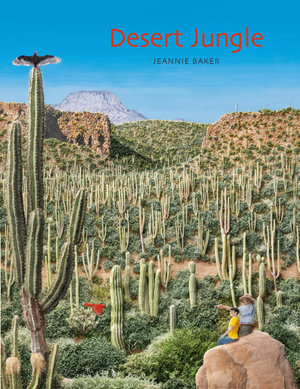
Despite being surrounded by mountains of rock and cacti, the boy prefers to sit inside and experience the world through the screen of his tablet. He fears going far from his home because he has heard the coyotes howling at night and the village dogs barking.
But then he goes to stay with his grandpa in a place far away, much more isolated than even his tiny village, but it still has internet coverage and so his tablet remains his friend. Until the night a coyote steals the bag with it inside, and in his search for it Chico's life changes in ways he will never imagine...
Set in the Valle de los Sirios in the Sonoran Desert in Baja California, Mexico, Jeannie Baker's magnificent and magical collage artwork brings to life an environment that shows that the desert is not necessarily the barren, desolate, lifeless place we envisage but one which is rich in flora and fauna and history. While the landscape she portrays is a specific part of the Mexican desert, nevertheless she raises the possibility that this could be a desert anywhere, just as rich in biodiversity if only we took the time to look and appreciate.
In her notes, she refers to "nature-deficit disorder," where children are indifferent to their natural surroundings because they are isolated from it and ignorant about it, and thus they are likely to fear what they don't know, and what they fear, they will destroy. So this book has a much wider application than just introducing the reader to the wonders of a particular piece of this planet. Even the juxtaposition of the words in the title is significant as it evokes two totally different images in the mind at the same time, neither necessarily as compatible as the title suggests, and those who are familiar with the author's work know that there will be many layers to explore in both text and illustration. For while it is the story of the boy's individual growth as he learns to love the environment and those feelings of wonder and protectiveness follow him home - the lizard unseen on the rock at the beginning becomes a thing of fascination at the end - it could also be the stories of many who are given the chance to experience Nature at her best in the raw and in the wild first-hand. How many city kids have never seen a dark sky glistening with stars because the city lights keep them in permanent twilight? How many country kids have never felt the sea foam tickle their toes or been in awe of the power of the waves crashing on the rocks?
There are so many books for young readers that focus on sustainability and the need to protect the environment, but this is a masterpiece that shows them just what it is they are protecting. And if not here, then where?
It is nearly seven years since we were gifted Circle, and the wonder and beauty of Desert Jungle has been worth the wait.
Themes Deserts, Sustainability.
Barbara Braxton
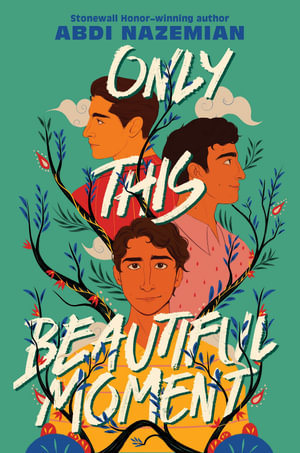
Only this beautiful moment by Abdi Nazemian
University of Queensland Press, 2023. ISBN: 9780702266256. (Age:Young adult) Recommended.
Mahmoud Jafarzadeh (Moud) lives with his father in Los Angeles and is in a gay relationship with Shane Waters whose podcast, "Down with America?" hosts debates on current issues. Nothing risky or special for 17 year-olds in 2019 but when his dad Saeed tells him they are to travel to Iran as his grandfather is ill with cancer the boys have to adjust their social media communications as homosexuality is illegal in Iran. Confident, authoritative Shane has a lot to say about Iran but for Moud it is a chance to connect with family and culture missing in his life. The narrative shifts to Tehran in 1978 when Saeed was 17 and an engineering student. He risks everything to attend student protests against the brutal regime of the U.S. supported Shah. He sees a girl there, Shirin, and instantly falls in love, they meet up again at a nightclub but when the next student demonstration is violently crushed, Saeed is sent away by his father to the US for safety. The third thread of the narrative goes back to 1939 in Los Angeles where 17 year-old Bobby lives with his mother and stepfather Willie. They form the Reeves Trio performing in clubs and bars around Hollywood hoping Bobby’s good looks and talent will be noticed. When his mother gets him a screentest Bobby’s main worry is that he is passionately in love with his friend Vicente; homosexuality is illegal and would violate his contract. Three generations of this family suffer loss and experience injustice, corruption and poverty that is not confined to one country. Through family bonds, food, music and poetry father, son and grandfather work their way through their stories: “It is impossible to build a future when you don’t know the truth about your past” p176. Moud, Saeed and Bobby have to learn to live in the moment “not holding on to the past. Not consumed by the future” p328 and at the same time realise that love is built on time and trust. Using the three voices of similar aged boys Abdi Nazemian explores father son relationships and the importance of love and community. The beautiful descriptions of how Persian culture suffuses Iranian lives, especially the mouth-watering traditional foods and the quotes from poetry strongly contrast with life in Los Angeles. There are also some lessons about gay history and Iranian politics that help to reinforce the main messages of love, support and community. I did think that the character of Baba (Bobby) was amazingly spry for someone suffering from terminal cancer who was a teenager in 1949 and the ending was a bit contrived but by then I was willing to be in the moment and enjoy the book. Teacher's notes are available.
Themes Belonging, Iran, Love, Family.
Sue Speck
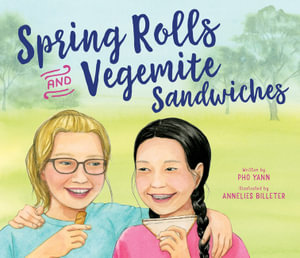
Spring rolls and Vegemite sandwiches by Pho Yann. Illus. by Annelies Billeter
Little Steps, 2023. ISBN: 9781922358639. (Age:5-10)
Clearly influenced by the author's own experiences, Spring Rolls and Vegemite Sandwiches is a celebration of food and how it brings people together. Like the author, the young Kim Tran in the story was born in a refugee camp in Thailand before coming to Australia. Kim and her best friend Amy are ten years old. The story compares and contrasts the two families before showing the passing of a week with a specific focus on food, zigzagging between the lives of Kim and Amy. Kim's life is filled with Vietnamese food such as banh mi and goi cuon (rice paper rolls) and involves shopping for fresh coriander while Amy's family indulge in 'taco Tuesday' and bake Anzac biscuits. They are both having birthday parties soon so celebration foods are also compared. Food brings these friends and their families together, particularly on Sunday when they eat together.
While this might resonate with many kids who grow up feeling that their food culture is a bit different to most I can't help but feel that this is a little heavy-handed on stereotypes considering the melting-pot of diversity we mostly find ourselves in these days. Amy's pork roast, meat pie, chocolate crackle existence seems hard to swallow, as does the cliche of Kim's parents owning a noodle restaurant. Sentences like 'Every morning we get off the bus and meet at the school gates and show each other our school lunches' are difficult to believe. There is also an obvious mistake in one of the illustrations, wherein the text reads that Amy is ordering an apple juice but her lunch bag says 'strawberry milk'. This is a nice concept and would have been brilliant twenty years ago but, unfortunately, it just doesn't seem meaningful in the current climate.
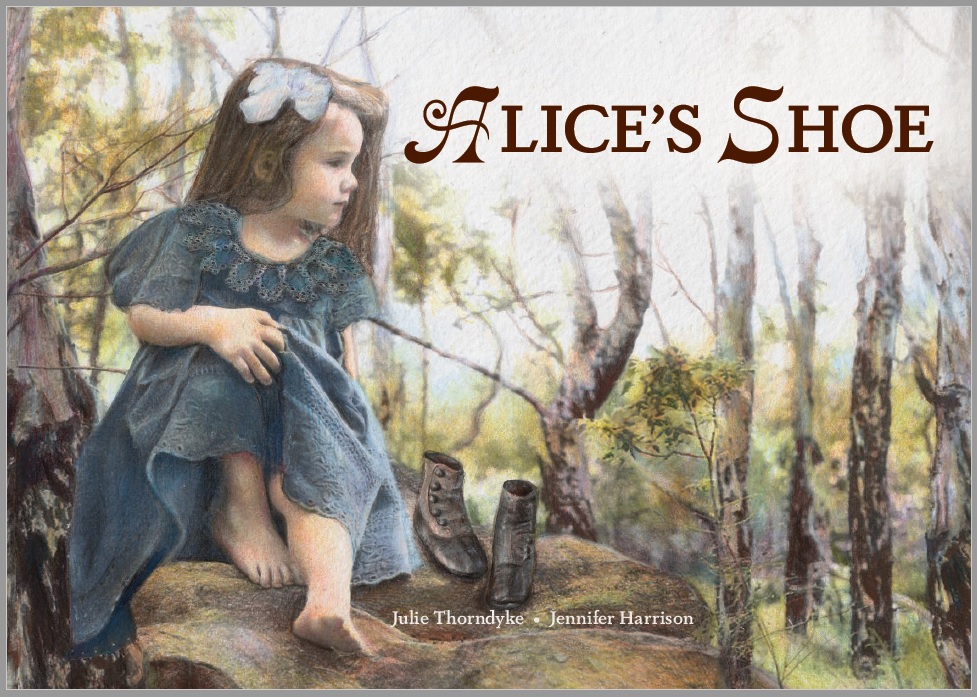
Alice’s Shoe written by Julie Thorndyke tells the story of Alice Mary Betteridge (14 February 1901 – 1 September 1966) who was an Australian woman known as the first deafblind child to be educated in this country. Born in Sawyer’s Gully, NSW, Alice became deafblind at the age of two after a childhood illness.
The opening pages of this beautifully illustrated picture book with expressive and lyrical language, showcase the sounds and colours of the farm and surrounding forests experienced by a very young Alice: the green world of cedar forests, the golden world at sunrise, the crimson world at sunset, the noisy brown world of her brothers. One night though Alice falls ill with a fever. When she wakes everything is different for Alice. Sounds are muffled and images are dull. Alice is diagnosed in Sydney as deafblind and her mother takes her to the Deaf and Blind School at Darlinghurst where she is told to return when Alice is older. Back at home, Alice learns to rely on her sense of touch. In particular she loves the feel of textures beneath her feet and struggles to keep on her shoes.
At the age of seven, Alice returns to Sydney to begin at the Darlinghurst School. She is far away from what she knows and in particular cannot adjust to wearing shoes. Miss Reid, her teacher, makes four signs on Alice’s hand over and over again which Alice soon realises spells shoe. This is the first word Alice learns to finger sign and her learning begins. Alice masters the deafblind alphabet and then to read and write in Braille.
The striking illustrations by Jennifer Harrison in soft muted hues are full of detail and in perfect harmony with the era of the story. The sepia toned endpapers showcase important aspects of the Alice’s life journey. The author has thoughtfully included the Deafblind Alphabet and UEB uncontracted (grade1) Braille symbols. This gentle story is a joy to read and one that may encourage further research on Alice Mary Betteridge and deafblindness.
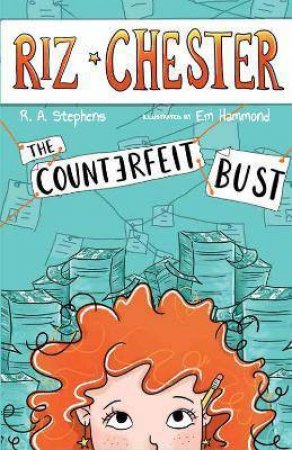
Riz Chester has highly tuned senses and notices things that most people don't, such as the brand of cheese being changed in the tuckshop lunches, the 10gram change in the size of the packets of chips, and the differences between identical twins Sabrina and Jenny. She keeps a note of the differences in her Weird Stuff Log because when she mentions them, people look at her funny.
But when she feels the difference in a $10 note that she is handed as change in a shop, she can't help but say something and so, sets in place an intriguing story of investigation that demonstrates the value of planning, thinking logically and recording what you discover in an organised way.
This is the first in a new series for newly independent readers - the second, The Fingerprint Code is due in November - that features ordinary kids working together to solve a puzzle using nothing but smart, logical thinking. No super powers, fantastic friends or timeslips so it will appeal to those who prefer to stay in the here and now.
With all the regular structures and strategies that support young readers, this is a series that will not only promote reading but with its back pages focusing on the what, why and how of forensics, might also inspire students to at least be more observant and appreciate the value of the research process, if not pursue a science career. One to earmark to get all the episodes.