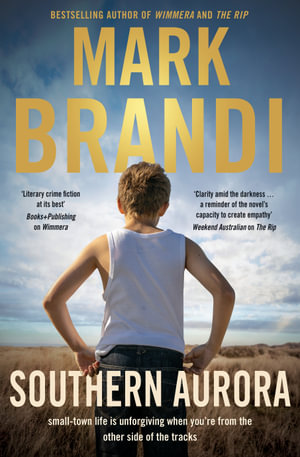
The 'Southern Aurora' is a really special fancy train that can take you from Mittagunda to the amazing cities of Melbourne or Sydney. But Jimmy isn’t going anywhere. He’s in Year 5, living on the poor street in a rural town with his mother whose best friend is the Kaiser wine cask, his younger brother Sam in Special School, and his older brother Mick in jail most of the time. Even his school friend Danny is someone he feels he has to keep on the right side.
Jimmy tries to hold everything together, keeping an eye on the Kaiser, and an eye on Mum’s unpredictable boyfriend Charlie, and looking out for Sam. It’s like treading on eggshells, never knowing when Charlie’s nasty mood will take over, and everything will turn wrong. Jimmy feels that if he is not ever vigilant, bad things will happen and he will be to blame. It’s always his fault.
If you have read Brandi’s other excellent novels, Wimmera, The Rip, and The Others, you will be prepared for a trip into the darker side of life, of people living on the edge. Brandi is a master of telling a story from a selected viewpoint, so you live that person’s life but at the same time, as a reader, you experience the tension and the dread of sensing things aren’t going to go well. In this case, it is the voice of Jimmy, desperately wanting things to be happy, assuming a responsibility that is beyond his capacity. Simple things like nice cooked food, or even a sandwich with ham and relish, rather than the usual Vegemite or peanut butter, are savoured with delight. His big brother’s hand on his shoulder, or the kindness of teacher are all special moments. But they also are moments that can well up with suppressed emotion.
If it sounds bleak, be reassured there are kind, supportive people nearby – especially Don, the elderly bus driver, but also Auntie Pam, the teacher Mr Battista, and the memory of Nan. Even Mick has good words of advice. Jimmy has to come to understand that he is not responsible for other people, and that he can let his feelings out.
Brandi’s novel draws you into another world, and keep you held with the brooding tension. Whilst violence may occur, he spares you the graphic details – there are just the hints of what may have occurred, and the aftereffects that impact the characters. Both adults and teenage readers alike will find this a compelling read. I wouldn’t be surprised if it is another award winner.
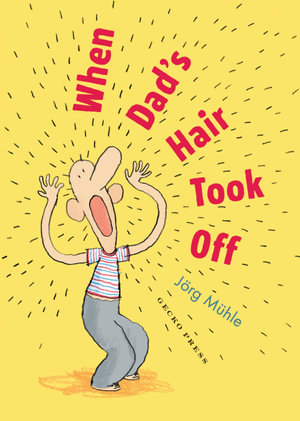
This is a quirky, fast-paced recount of a child's recollection of the day their father's hair up and left his head. Short chunks of text in almost poetry-like verses accompany full-colour, comical illustrations that work just as hard as the text and visually show the journey of Dad's hair across the town. 'Dad's hair was sick of being brushed and combed. It was tired of hanging around on his head. It wanted a life of its own. It wanted to see the world. One day, it coiled itself and sprang'. As seen on the cover, which is brilliantly eye-catching, each hair jumps clear off his head. He tries to get it back, pleading, begging and grabbing at it, but out the window it goes. He stalks his own hair, over the hills and into town, humorously armed with a net and wearing a dressing gown.
It touches on his attachment to his hair, all their shared experiences and what he needs it for: 'If he was scared it stood on end. It went to the dentist with him'. The hair makes it into everyone's soup at the cafe, into the barber shop, a pond, the pet shop. Eventually at the zoo, the hair is washed down a drain into the sewerage system. 'From that day on, Dad was bald. His beard still grew. And all the other hair that nobody needs - in his ears, and nose, for example'. His hair sends him postcards and selfies from Hairizona and Mount Hairverest, then one day it unexpectedly returns in a hair shower. Simple sentences recount the action without emotion and the child narration works really well, adding this spectacular sense of this event being a thing of family mythology: 'I don't know the details. He doesn't like to talk about it'. Written by a German author and translated into English, this is a spectacularly funny read for sharing or a quick, enjoyable read for independent readers of all ages.
Themes Humorous stories.
Nicole Nelson
The lucky shack by Apsara Baldovino and Jennifer Falkner
Working Title Press, 2023. ISBN: 9781922033154. (Age:5+) Recommended.
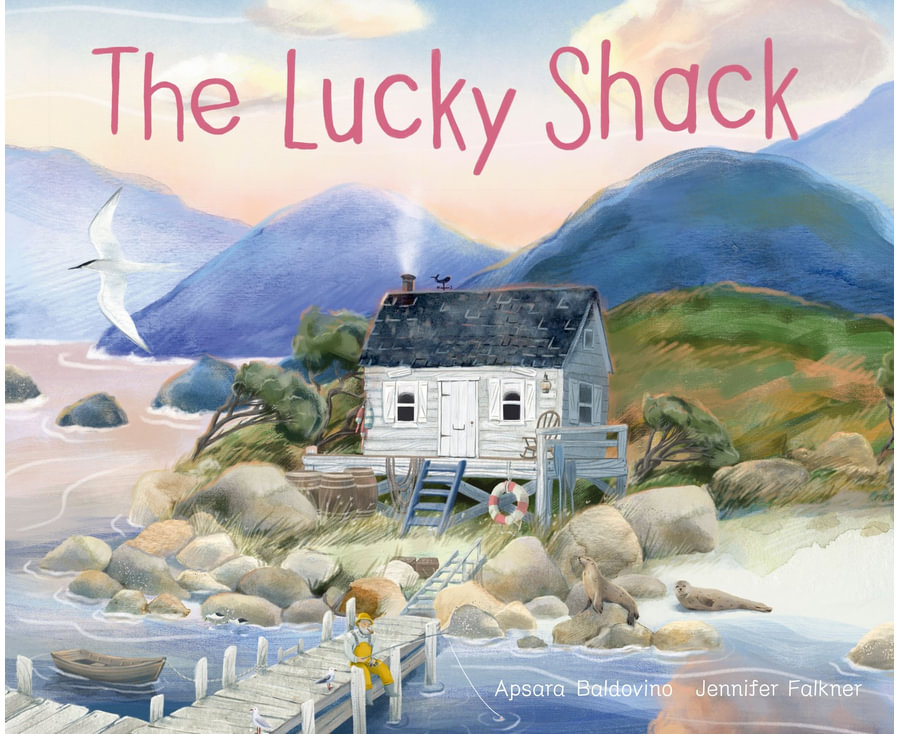
The trials and tribulations, highs and lows of life are reflected in the fortunes of a fisherman’s shack, tucked away on a small promontory, where it watches the small craft bobbing on the waves. Built by a fisherman who comes and goes, the two get along well, the fisherman seeing to the house’s joints, keeping it warm and snug through the night while the house is a refuge for the fisherman who scales his fish and studies his maps. Two shades of colour are shown, the green of the hills, and the blue of the sea. But one day the colours dissipate and all is black. The fisherman is not returning. The paint peels and the house misses the sound of boots on the floor, and the smell of fish and the wood fire.
The house deteriorates even more; a window shutter falls into the sea, and the house seems to give up. But the very next day someone appears and starts to renovate the old house using a bucket of paint, a tin of oil and saw and hammer. The house is taken back to what it was, loving the sound of boots in the floor, the warmth of the wood fire, the smell of fish and the sea. And it can see more than the two colours of before, now there is a range of colours for this lucky shack to absorb.
A delightful hymn to our lives, where the cycle of the seasons mingles with loss and abandonment and rebirth as the cycle begins again. It is fitting that the new owner has small children, the cycle of life is assured.
Beautiful painterly illustrations cover each page, watercolour used with Printshop create visual stunners. The hills slope down to the sea, where keen eyes will find a myriad of things associated with that lifestyle, and be heartened by the images of life and the continuity of the seasons. I love the different images of the little bay and the lighthouse, each quite different but of the same place. Hope for the future is engendered in the image of the bay shrouded in mists as a new boat makes its way to the shack. And then later the boat goes out to sea, fishing as the shack sits comfortably waiting. Indeed a lucky shack. Teacher's notes are available.
A new board book in the Usborne series, ‘That’s not my …’ will find its way into many small hands fitting comfortably in their palms while feeling the different surfaces presented as the pages are turned. Each double page gives the same statement, ‘That’s not my rocket’ and a reason then given to show that this rocket is different. Toddlers will love yelling out the repeated sentence, feeling the uneven surface on each page and looking for the differences shown in the bright illustrations.
This is a fun book for the very young, one to be shared with older readers, with a stress on the importance of feeling surfaces and developing some new words. Interactive play will be encouraged as an older child reads the book with the toddler, pointing out the differences, explaining what each rough surface might be, and comparing rockets.
Themes Rocket, Surfaces, Difference.
Fran Knight
The Breakfast Club adventures: The ghoul in the school by Marcus Rashford and Alex Falase-Koya
Pan Macmillan, 2023. ISBN: 9781529076660. (Age:8+) Highly recommended.
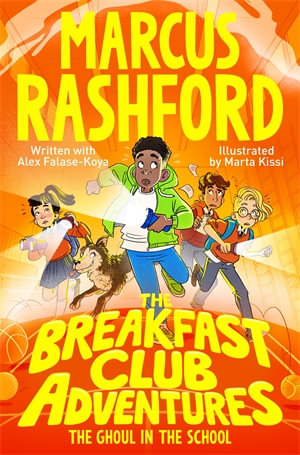
The Ghoul in the School is an exciting addition to the great new series, The Breakfast Club Adventures, written by talented duo, Marcus Rashford and Alex Palase-Koya. This book has captivating visual appeal with cool black and white illustrations by Marta Kissi and a variety of fun fonts throughout the easy-to-read text. This series will undoubtedly be a favourite for young adventurers and mystery enthusiasts.
Again, we join Marcus and his friends, Stacey, Lise and Asim who are all keen participants of The Breakfast Club Investigators, as they face another mystery. But since their famous last case, they haven’t had much success of late. Their rivals, the Journalism Club, seem to be outshining them by cracking every case before they can. Marcus and the gang are desperate to solve a crime, and Marcus is worried that failure will not only end the club but also put their newfound friendships at risk.
Complicating matters further, Mrs. Miller, their head teacher, is closely monitoring their activities and has issued a stern warning to disband the club if they cause any more trouble. However, when a new case emerges, involving a suspected ghoul that is casting a curse on the school's beloved basketball team, how can they refuse? Determined to save the day and prove their worth, Marcus and his friends embark on a race against time to solve the mystery before the crucial competitions begin.
The Ghoul in the School is a delightful blend of mystery, friendship, and teamwork. The book not only entertains but also imparts important values such as perseverance, loyalty, and the power of collaboration. Young readers will be engrossed in the clever plot twists and captivated until the very end.
Whether you're a fan of The Breakfast Club Adventures or new to the series, this book promises an exciting and enjoyable reading experience.
Hachette, 2023. ISBN: 9780349145761. (Age:Adult - Young adult)
South Boston in June 1974 is simmering not only in the heat but because a judge has decreed that local schools will be forced to desegregate by busing students between schools in white areas and black areas. Violent protests are breaking out everywhere. Included in the forced desegregation is Mary Pat's 17-year-old daughter Jules. They live in the Irish American enclave of Southie in the social housing projects known as Commonwealth, a self-contained world where the poor white population stick together and support one another, a world where poor blacks are not welcome. Mary Pat works two jobs and still just stays ahead of the debt collectors but the family is under the protection of the powerful Marty Butler and his minions who control the area. Her son came back from Vietnam damaged and died of a drug overdose now Jules is all she has so when she goes out one night and doesn’t come home Mary Pat starts looking. The same night Augustus Williamson is killed at a subway station in a white area and assumptions are made that as he was black he had to be a drug-dealer but Mary Pat knows he was a co-worker’s son and starts to question some of her long held racist attitudes. As she probes deeper into her daughter’s disappearance, tracking her to the same area where Augustus died, she finds those she relied on for support blocking her so she steps out on her own, even talking to a cop, Bobby Sheehan, inviting an outside eye into the neighbourhood and invoking the ire of Marty’s mob. Mary Pat is a brave mother with nothing to lose, brought up in the raw brutality of the poor area, drinking, smoking and fighting her way through life like all her contemporaries. Overlay this with the trauma of Vietnam, drugs and the disruption of the status quo and she becomes a force to be reckoned with.
Fast paced with in-your-face aggressive language, Lehane draws us into a world where the poor and the powerless are buffeted by life, surviving the violence as long as they keep their heads down and don’t make trouble. Full of rich detail, feisty characters, including Bess, Mary Jane’s 'piece-of -shit station wagon’ and a plot that thickens this is a tough read, full of violence, racism and exploitation but one which had me invested.
Being Jimmy Baxter, a moving and witty novel by Fiona Lloyd, takes readers on an emotional journey through the life of a young boy who finds himself in a situation he hadn’t envisaged. This compelling tale explores themes of resilience, family dynamics and the transformative power of connection.
The story follows Jimmy Baxter, a brave young boy who escapes an abusive household by moving away to the small town called Munga Creek with his mother. As they settle into their new life, Jimmy befriends Mac, a town outsider with a mysterious past. Their bond grows as they discover a mutual obsession for all things Elvis.
Cleverly written with wit and humour, this story carefully captures the emotions and struggles of each character with authenticity. Through Jimmy's eyes, we witness the challenges faced by a child who has experienced trauma, navigating the complexities of his new environment. The author skilfully conveys Jimmy's resilience and determination to find happiness amidst adversity, making him a truly relatable and endearing protagonist.
One of the novel's strengths lies in its portrayal of the relationship between Jimmy and his mother. Lloyd sensitively explores the mother's struggle to cope with the aftermath of leaving an abusive relationship while trying to create a safe and stable home for her son. This adds depth to the story, highlighting the complexities of family dynamics and the healing power of love.
Being Jimmy Baxter is a captivating tale that tugs at the heartstrings and leaves a lasting impression. Fiona Lloyd’s masterful storytelling, skilfully tackles sensitive topics, offering hope and inspiration to readers of all ages. The heart-warming novel is a testament to the power of friendship, resilience, and the ability to overcome adversity, making a must read for anyone seeking an uplifting literary experience.
Jimmy Baxter’s courage, tenacity and charisma is inspirational!
Themes Relationships, Resilience, Family Dynamics, Adversity.
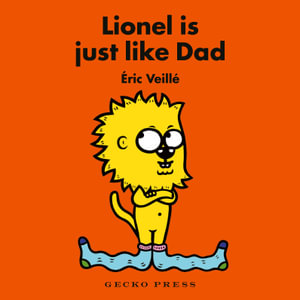
A sturdy board book for little hands underscores the strong relationship between a boy, Lionel, and his Dad. Whatever Dad does, Lionel does too. Lionel watches his father closely to be able to copy what he does. Dad combs his hair, so does Lionel, Dad taps his teeth, so does Lionel. One sings, the other sings too; Dad throws some things into the air, so does Lionel. But this time, something that Lionel throws into the air falls on Dad’s head. This time instead of being pleased that Lionel is copying him, Dad is unimpressed. Both say ‘ow’ as it hits Dad’s head, and the two turn away from each other. After having a think about what has happened the two go off and hide. A split has occurred in their relationship. But over the page, the two bounce back into each other’s arms, all is forgiven and both are very very happy.
This charming story of the unconditional love between a parent and a child, will reassure younger readers as parents are the major force in their lives. Dad and Lionel work together, doing things together, making mistakes but overcoming that unhappy moment with love and support.
The seemingly simple illustrations are clear and cute as lion Dad and baby lion, Lionel take a central place on each page. Their emotions are easy to determine as small changes occur on each page, revealing what each character feels.
Themes Love, Parenthood, Humour, Board book.
Fran Knight
The wager by David Grann
Simon & Schuster, 2023. ISBN: 9781471183683. (Age:16+) Highly recommended.
In 1742, two decrepit vessels land within six months of each other on opposite sides of the South American continent. Both ships are piloted by starving and desperate men. Both groups have made arduous journeys from the island on which they were shipwrecked months before. Both groups are peopled by sailors from the lost British warship the HMS Wager. Most importantly however, both groups have very different stories to tell of how they survived.
The Wager: A Tale of Shipwreck, Mutiny and Murder is an epic non-fiction tale of adventure, disaster, mayhem and endurance. From its almost comically ill-omened beginning as a member of a secret British naval mission to attack Spanish forces in Chile, to its careless running aground in Patagonia, author David Grann leads his readers on an astonishing journey onboard an 18th century warship.
We follow the crew of the Wager from recruitment by press gang in expansionist England, through severe typhoid and scurvy epidemics to the most dangerous passage for ships in the world: the journey around Cape Horn where the Atlantic and Pacific oceans meet. We witness a shipwreck, mutiny and murder before unexpected salvation, followed closely by an extraordinary trial, to determine, once and for all, the truth of what occurred.
Although backed up by both primary and secondary historical sources, Grann’s account of the events which befell the crew of the Wager reads like a fictional adventure story; so extreme are both the disasters and the displays of human endurance contained within its pages. The Wager is an incredibly entertaining and well-written piece of historical non-fiction and is highly recommended.
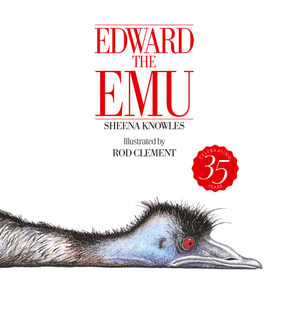
Edward is sick of being an emu. He wants to try other things. And so he does, but eventually realises that things are often better on his own side of the fence, particularly when he can share his enclosure with another emu.
His encounters with other animals in the zoo will create lots of laughter from the audience as they have the verses read to them. Predicting the rhyming words will add another layer of interest for the readers, and the other animals Edward tries to emulate will cause lots of comparisons and discussions amongst the younger readers.
Edward swims with the seals, balances a ball on his nose, basks in the sun and stretches for a fish. But he overhears a visitor saying that the lions are the best. So the next day he growls with the lions, snarling at the ladies watching on.
But again a visitor says the lions are good but not as good as the snakes, so next day, Edward joins the snakes. So he changes cages again. He hisses with the snakes, slipping over the rocks and curling himself round a tree, and still a visitor says that these are not as good to see as the emu. Edward pulls up short, ‘that’s me’, he says and decides to return to his own cage on the morrow. There he finds a surprise in store, one that makes his life more content.
Thirty five years since Edward the emu was first published, this new edition will be well received from both those familiar with the story and for a new generation seeing it for the first time. It will resonate with whatever audience picks it up. There are so many levels of interest: a story of envy, of trying to be what you are not, of bravery, of friendship.
And the illustrations are spectacular; Edward is the most human of emus, the expressions on his face and his body language tell of characteristics children will recognise. Children will love looking at the other zoo animals, checking out the detail with which they have been drawn. Each page is a delight, pointing out the differences between Edward and the animals he moves in with. I love the long suffering look on the lion’s face and the surprise on the snake's face, and the parallel images of the animals as Edward copies their behaviour are wonderful, while the two emus facing each other off a the end of the picture book is delightful.
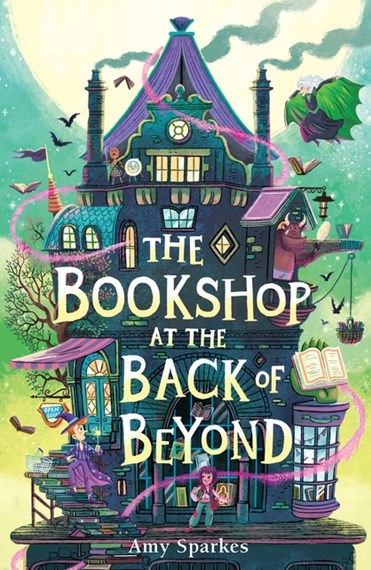
The land of Beyond is a place of extraordinary magic, with shops selling everything from powerful potions to books full of adventure. The Asking Stone at the Tower at the End of Time informed Nine and her friends that Professor Dish was to be found in 'Beyond', so they have travelled there - and are about to embark on their search for her. Before they will be able to leave Beyond however, they must purchase something from every store... so the challenge is on! Buy from every store all while looking for Professor Dish, and quickly, before an unpredictable witch has anything to say about it, for it looks like Flabberghast's aunt is looking for Professor Dish too!
The third in this utterly delightful 'The House at the Edge of Magic' series, The Bookshop at the Back of Beyond does not disappoint! All the favourite characters are back with their unique personalities readers have come to love, and a few new ones too. Quick paced and action packed, readers will not be able to put the book down as the book moves swiftly. So much quick wit and humour, along with heart, the perfect combination of funny and sweet. Perfect for fans of the Pages & Co series and the Harry Potter series. In order to read this particular book, I read the first two in the series, and now it is one of my favourite series - brilliant. Well written, relatable, humorous characters, magical, twisting story. While it is aimed at primary students, any age can read this - will be recommending to many people!
Feelings are wild by Sophy Williams and Gavin Scott
Albert Street Books, 2023. ISBN: 9781761180262. (Age:3+) Recommended.
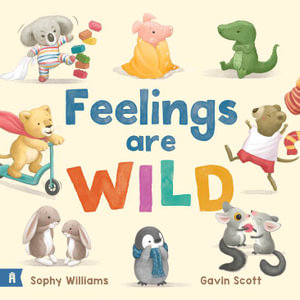
A counting book with a difference as every number from one to ten is linked to an emotion that sees the animal illustrated, frustrated or angry or upset. But when ten is reached the last half of the book counts back down to one, offering a positive solution to every negative feeling.
When some little possums are unable to get to the branch to eat the blossom, they are sad, but in the second part of the book they have worked out how they can retrieve the blossom, getting it down for everyone to have their fill. Similarly, four crocs are frustrated because they have run out of chalk to continue their hopscotch, but in the second part of the story, the four crocs are cheerfully playing with a ball instead.
The fractious, anxious and sad looks on the animals’ faces in the first half of the book contrast with the reassured, brave, cheerful and contented looks on their faces in the last half. Younger readers will recognise the times when they are feeling less than happy, when they are ashamed or worried, sad and grumpy and will see that the wonderful emotions of being happy and proud are attainable, often with a little time, a hug or a kind word, some support from friends or adults. Whatever is given, the animals have found that their wild feelings are acceptable and containable. Feelings are shown in all their variety in this counting book, a platform for further discussion and acceptance as well as being entertaining and enhancing learning.
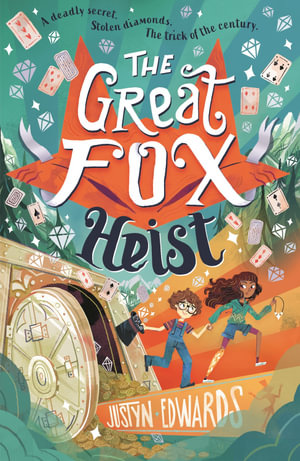
This is a book with amazing magical quality and intrigue! It is the sequel book to The Great Fox Illusion and reintroduces the young magicians Flick Lions and her sidekick Charlie, working as apprentice magicians alongside the Great Fox, in a competition that will decide who gets to be the Chancellor of the Global Order of Magic for the next ten years. Coming up against the ‘foes’ they met in The Great Fox Illusion they must identify and de-mystify the magic that is performed by the others and also bamboozle and mystify their opponents using their own magical and illusory skills – robbing the secure vault in the local Swiss Bank. The final magic and illusion must be cryptic and spectacular and prevent the final remaining team from guessing. The magical mystery must also try to solve the disappearance of Flick’s father and prevent the release of the mind-bending magic known as The Bell System (or Die Glocke) falling into untrustworthy hands. The only trouble with magic and magicians is that you can never truly trust what you have been told. For Flick, this requires many twists and thoughtful cogitation.
With fascinating chapter introductions that sometimes hint at magic ahead or distract from reality, the story unfolds with some impracticalities and conundrums that are unique and compelling. The delight of this book is that we as readers get to see behind the magical impossibilities shown to an audience and learn the art of illusion behind the banter. The twists and turns of magic and the struggle to trust the people around you make this book tensely mysterious. Fortunately, Flick is a strong main character, and we always want her to win. The fact that she has a prosthetic leg which sometimes impairs her mobility adds an additional point of difference in her backstory. I think readers aged 9-14 will warmly connect with this book as they discover hidden passages, tricky plot twists and some nefarious and underhand characters. The last pages of the book reveal a very complex card trick that readers might be able to perfect and add to their own magic repertoire.
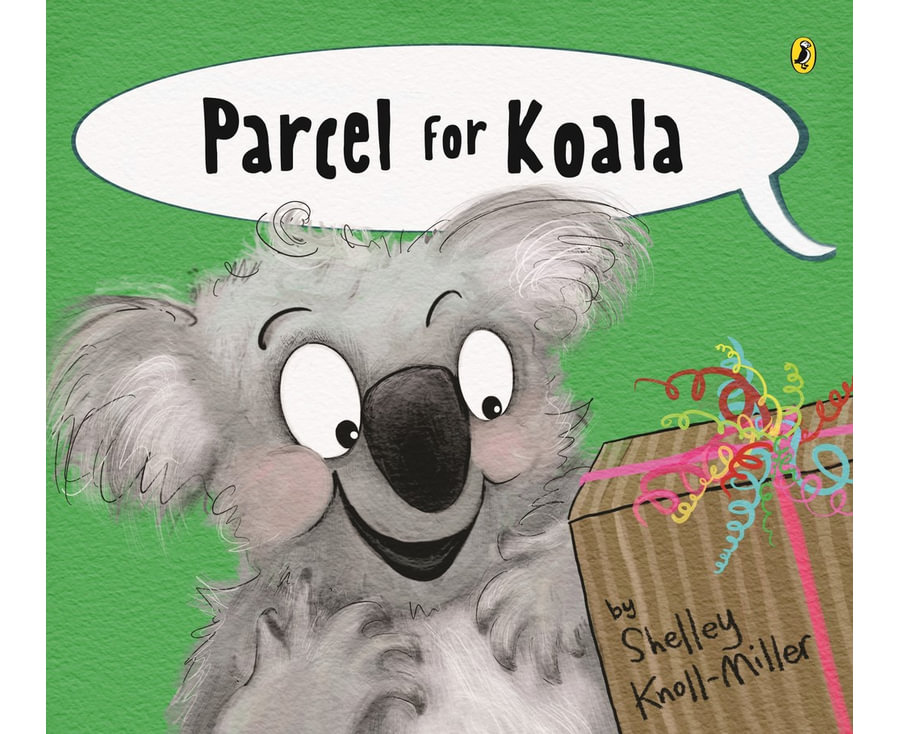
Anyone who lives in Australia knows of the noise made when a mob of white cockatoos passes overhead. The squark and speech of these animals is enough for anyone to cover their ears and hope they move on quickly. Pity then poor koala and his friends a bat and a possum. They cannot sleep with all the noise and when kangaroo comes along with a parcel for koala, no one can hear the name of the person who the parcel is for.
As koala begins to unwrap the parcel his friends suggest what may have been sent from turtle. Could it be a harp as a harp could play lullabies to get them to sleep, or a hammock in which to sleep, or perhaps ear muffs. The suggestions from koala’s friends are rejected and koala unwraps the parcel to reveal a skipping rope.
Parcel for koala presents a mysterious guessing game for young readers, as questions are asked for them to ponder and question.
Zany illustrations parallel the text with colour and movement. I love the end papers showing just how the cockatoos interrupt koala and his friends’ sleep.
The first book in the series, Parcel for penguin was released earlier this year.
Themes Australian animals, Sleep, Cockatoos, Humour.
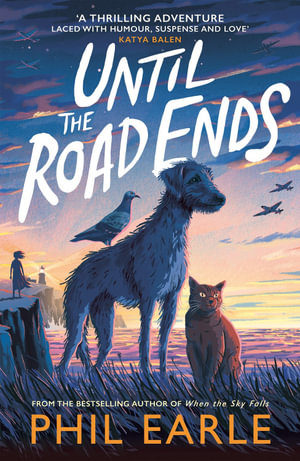
Phil Earle, author of While the Storm Rages and When the Sky Falls, has written a third novel based on events that took place during World War Two. While it is a fiction story, it is based on true events that happened during the most difficult of times. Beau, a stray dog surviving on the streets of London, is rescued from near-death by Peggy Alford who takes him home and begs her family to let her keep him. This is the beginning of a long and loving relationship for Peggy and Beau, but not all the family is happy about Beau’s arrival. Peggy’s brother Wilf and in particular his pampered rescue cat Mabel go out of their way to make Beau feel unwelcome. Fortunately Peggy’s love and her parents' realisation that Beau is no trouble allow Beau to find his own place in the family.
During this time the British Government instructed families in to put down their pets or send them to the country. The Alford family refused to comply and after Peggy and Wilf were evacuated, Beau joined Mr Alford in his rounds as an ARP warden. He soon becomes renowned for his ability to smell those trapped in rubble from bombings and becomes a celebrity. Sadly Beau’s life changes dramatically one evening and he and Mabel are left without the adult Alfords. With knowledge and support from ‘Bomber’ a homing pigeon, grudging and cantankerous companionship from Mabel, Beau sets out to find Peggy and Wilf. The three animal friends embark on a long and dangerous journey by train and on foot where they fight off rats, engage with a ferocious crocodile, are attacked by fox hounds and witness an horrific battle in the skies with devastating consequences.
This is a fabulous read where the author has cleverly interwoven historical facts with an engaging story and endearing animal and human characters. There are elements of terrible sadness and loss but also humour and great resilience. This would be a wonderful class novel for middle to upper primary school students.